
15 min 34 sec
Available in: English
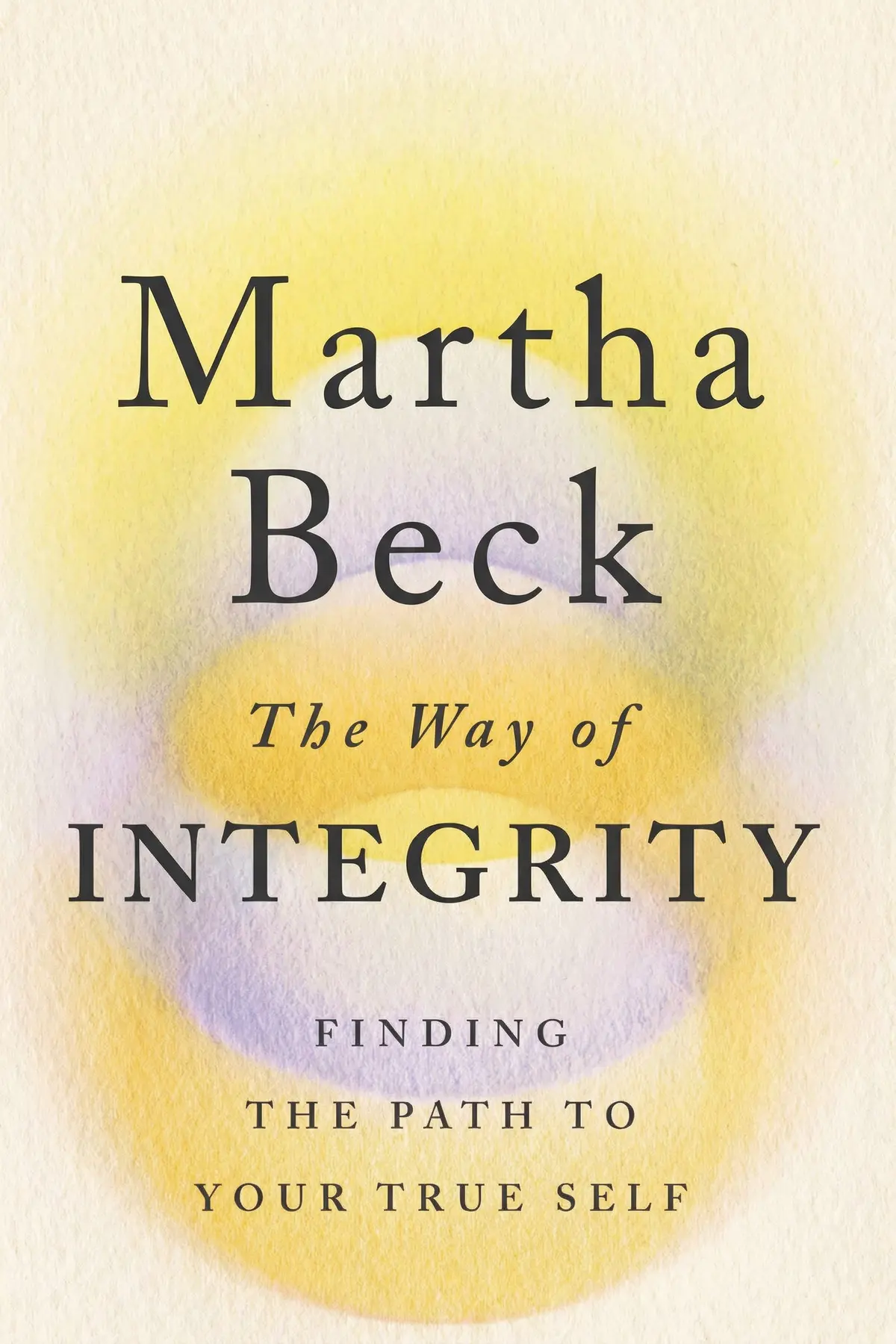
Beyond Anxiety: Curiosity, Creativity, and Finding Your Life's Purpose
By Martha Beck
Martha Beck shows how to stop fighting anxiety and redirect its restless energy into curiosity and creative practice, then follow those interests toward meaningful work and people who share your purpose.
Table of Content
1. Introduction
1 min 05 sec
If anxiety has become the background hum of your days, Martha Beck has an unusual proposal: stop fighting it and give its energy a creative job instead. In Beyond Anxiety, the coach and author starts from grim numbers. Worldwide, anxiety disorders rose by 25 percent in the pandemic’s opening year, COVID-19 having pushed the count from 298 million people to 374 million, and half of those aged 18 to 24 were still struggling as of 2023.
Beck does not offer a cure. Her claim is that the same restless, story-making mind that produces worry can be steered toward curiosity, and that curiosity leads, step by step, to creativity, purpose and the people who share it.
What follows is a practical route along that path: a way to read your own nervous system, a calm corner you can build this weekend, a method for spotting the interests worth following, and a gentler relationship with not knowing.
2. Turn the worry loop into a creative one
1 min 57 sec
The part of your mind that invents worst-case scenarios at 3 a.m. is not broken. Beck argues it is doing a real job badly, and that a single object on your desk can change what it produces.
3. Read your nervous system like a traffic light
1 min 41 sec
Knowing exactly what you are anxious about often makes it worse. Beck suggests treating your anxiety the way a horse whisperer treats a frightened animal, and offers three colors to track it.
4. A calm corner you can return to anytime
1 min 50 sec
A favorite chair, a scented candle and an old cardigan sound too small to matter. In Beck’s method they become the tools that bring a stressed body back from the edge.
5. Small creative acts that ease anxiety fast
2 min 00 sec
Young children score brilliantly on a creativity test that most adults fail. Beck explains where that ability went, why it never fully disappears, and how twenty minutes can start bringing it back.
6. Chase the squirrels that make life meaningful
2 min 02 sec
A service dog trained to keep his owner alive has one weakness he cannot resist. Beck reads that weakness as a lesson, and turns it into a question about what your own life is for.
7. Move toward work that fits you and brings joy
1 min 53 sec
Waiting for perfect conditions before changing course feels sensible. Beck warns it can mean waiting forever, and borrows an idea from Taoism to describe what work feels like once you stop forcing it.
8. Find peace in not knowing, and find your people
2 min 01 sec
Nobody can say whether matter created consciousness or the other way around. A neuroscientist’s stroke and a global climate project show why that open question can calm you, and who you might meet there.
9. Conclusion
1 min 05 sec
Beck’s book rests on a hopeful reversal. The restless, story-spinning mind that keeps anxious people awake is also the source of their best ideas, and it can be trained to follow wonder in place of threat. In her account, calm is where things begin. A settled nervous system makes room for curiosity, curiosity grows into creative practice, practice reveals the squirrels worth chasing, and those lead to work and to people that give a life its purpose.
None of it asks you to defeat fear first. When anxiety rises, rest your attention on one object and its texture, color and shape. Learn to name your light, green, yellow or red, and keep a chair with a few glimmers nearby to come back to. Then watch for the topics that make you lean in, and give one of them twenty minutes of play this week, without asking it to earn money or praise.
Griffin never stopped guarding Frieda. He just kept reminding her, now and then, that there were squirrels.
About this book
What is this book about?
Anxiety is now often described as the world's most common mental illness, and it rose sharply during the COVID-19 pandemic. Most advice treats it as an enemy to defeat. Martha Beck takes a different route. She argues that the anxious mind is a creative mind running on fear, and that the same energy can be steered toward curiosity and wonder. Beck links worry to the brain's left hemisphere and its constant hunt for control, and calm, inventive thinking to the right. From there she builds a practical sequence: learning to read your nervous system as green, yellow and red states, setting up a sanctuary stocked with comforting sensory cues, reviving the curiosity most adults lost in school, and following your passions, which she calls your squirrels, toward work that fits. The book ends on a larger note. Beck describes the peace of accepting how much nobody knows, and the strength that comes from finding your team, people driven to heal, create and connect. Readers get small tools for anxious moments and a longer path toward purpose.
Book Information
Who it's for
Anxious despite knowing why
People whose anxiety keeps spiraling even when they know exactly what triggers it.
Professionals in draining jobs
Professionals stuck in draining jobs who sense their real interests lie elsewhere.
No longer feeling creative
Adults who stopped thinking of themselves as creative and want calm, purpose and like-minded company back.
About the Author
Martha Beck
Martha Beck, born in Provo, Utah, is a coach and speaker who writes self-help, memoir and spirituality. She is known for a teaching style that blends scientific thinking, humor and a spiritual outlook. Her book The Way of Integrity went straight onto the New York Times Best Seller list and was chosen for Oprah's Book Club.
Ratings & Reviews
Ratings at a glance

What people think
Listeners find the book exceptionally useful, highlighting its abundance of exercises and practical guidance. They also value the anxiety-management techniques, including one listener noting how it transforms anxiety into creativity. Furthermore, the work receives positive feedback for its readability, its creative approach, and its motivational author. However, perspectives on the value for money are inconsistent.
Top reviews
Pruet
Martha Beck has this uncanny ability to make you feel seen, and 'Beyond Anxiety' is essentially a warm hug for the overstimulated brain. While many books focus on managing symptoms through rigid discipline, Martha suggests we should be befriending 'The Creature' within us and channeling that restless energy into 'The Creative.' The quilt metaphor she uses for building a life really resonated with me; it makes the process of self-discovery feel tactile and manageable rather than abstract. I found the exercises surprisingly practical, especially the ones designed to pull you out of a left-brain analytical spiral and into a state of curiosity. It’s a fast read, but the emotional impact lingers. Not gonna lie, I was skeptical about the 'finding your life’s purpose' angle, but her approach to creativity as a cure for dread is genuinely transformative. If you’re tired of the clinical approach and want something that speaks to the soul, this is it.
Show moreThawee
Finally got around to reading this, and frankly, the techniques for switching from a left-brain anxiety spiral to right-brain curiosity are pure gold. I’ve read a lot of self-help, but Martha Beck’s voice is uniquely soothing and authoritative at the same time. The way she breaks down 'The Creature'—our primal, anxious self—and shows us how to nurture it through 'The Creation' is brilliant. I loved the emphasis on curiosity as the ultimate antidote to fear. Some might find her stories about famous friends a bit much, but they illustrate her points about 'living your truth' effectively. If you are waking up with a sense of impending dread, the exercises in these chapters might actually give you a reason to get out of bed. It’s more than just a list of tips; it’s a total shift in perspective. Deeply motivational and highly recommended for anyone feeling stuck in a rut.
Show moreSiriporn
As someone who has lived with a low-grade hum of dread for years, Beck’s 'Beyond Anxiety' felt less like a medical manual and more like a map to freedom. I was skeptical about the idea that creativity could 'turn off' anxiety, but the way she explains the neurological impossibility of being both curious and terrified at the same time is fascinating. Her writing is easy to digest, yet it carries a depth that hits you when you least expect it. I specifically loved the section on 'The Creative,' which encouraged me to stop viewing my hobbies as wasted time. The exercises are plentiful and actually do-able, which is a rare find in this genre. Personally, I didn't mind the shift into broader cultural topics in the later chapters; I think it’s important to see how our personal stress is connected to the world around us. This book genuinely changed how I view my morning routine.
Show moreKiattisak
The chapter on 'The Creation' provided the exact kick in the pants I needed to stop over-analyzing my feelings and start actually making things. Martha Beck has a way of cutting through the noise of contemporary culture to remind us what actually matters: connection, expression, and joy. I’ve been a follower of her work for a long time, and this feels like a natural and powerful evolution of her message. The research-backed science in Part I provides a solid foundation for the more spiritual and creative leaps she takes later on. Not everyone will love the 'awakening' talk, but if you're open to it, there is a lot of wisdom here. It’s a book for the seekers and the dreamers who feel crushed by the 'productivity' requirements of modern life. I’ve already bought copies for three of my friends.
Show moreJackson
Why does our culture insist on productivity as the only metric of success? This book offers a compelling alternative by focusing on the 'Creature' and the 'Creative' to dismantle the anxiety spirals we all fall into. I particularly appreciated the section on WEIRD societies—Western, educated, industrialized, rich, and democratic—and how our specific cultural framework actually feeds our collective stress. Beck’s explanation of how anxiety and creativity run on different neural tracks was a lightbulb moment for me. However, I do have one minor gripe: there is a noticeable lack of a citations page or footnotes. As someone who enjoys digging into the primary research, I found myself wishing for more transparency regarding the neuroscience she references. Despite that, the motivational tone is infectious. She manages to bridge the gap between high-level sociological theory and everyday coping tools with remarkable ease.
Show morePierre
Picked this up on a whim after hearing Martha on a podcast, and I was immediately struck by her 'quilt' metaphor for life building. It’s such a refreshing way to look at our experiences—not as a linear path, but as a collection of patches we sew together. The book is organized into 'The Creature, The Creative, and The Creation,' which provides a nice roadmap for the reader. I found the specific strategies for managing anxiety spirals to be very effective in real-time situations. My only hesitation is that she sometimes speaks poorly of traditional psychotherapy, suggesting life coaching is the superior path. Considering many of the exercises she uses are actually rooted in third-generation therapies like ACT, that felt a little disingenuous. Still, the overall message about reclaiming our joy through creative expression is powerful and worth the read.
Show moreDen
Not what I expected from a book with such a buzzword-heavy title, but I found myself surprisingly moved by the discussion on 'WEIRD' societies. The central thesis—that anxiety is a signal for us to move into a creative state—is brilliantly argued in the first half of the book. I appreciated the practical exercises, although some felt a bit repetitive by the end. My main criticism is that the success stories she shares, like those of Elizabeth Gilbert or David Sedaris, are completely unrelatable to someone struggling to pay rent. Martha acknowledges this, but it still makes the 'creativity as a career' advice feel a bit out of reach for the average person. However, if you treat this more as a guide for internal peace than a business manual, there is immense value here. It’s a beautifully written, motivational call to action for the anxious soul.
Show moreArthit
To be fair, the first half of the book is a masterclass in understanding the neurobiology of stress through a lens that feels accessible. I enjoyed the framing of anxiety as a signal rather than a malfunction, and the exercises provided were helpful for immediate de-escalation. However, the second half felt a bit like a memoir masquerading as self-help. It stretches beyond practical advice into some very 'woo-woo' territory that won't appeal to everyone. Martha seems to suggest that we all need to master high-level creativity to find peace, which feels like just another thing to be anxious about! I struggled to connect with the chapters on awakening and ecosystem constellating. It’s a quick read and definitely has some valuable tidbits, especially if you’re already a fan of her work, but it lacks the focus needed to be a definitive guide on the subject.
Show moreNitaya
Ever wonder why a self-help book about anxiety suddenly pivots into a lecture on racial justice and wealth redistribution in the final sixty pages? I started this book with high hopes because the first half offers some genuinely interesting takes on the left-brain vs. right-brain struggle. The discussion on Internal Family Systems (IFS) was also quite enlightening and seemed practical for day-to-day stress management. But then, things got weirdly unfocused. She throws in Shamanism, environmental activism, and strange anecdotes about her wealthy, successful friends that just aren't relatable to the average reader. Why can’t creativity just be a hobby to help us get into 'the flow'? Why must it become a grand mission to save the planet and overhaul our entire financial lives? It felt like two different books mashed together, and the second one really lost the plot for me.
Show moreAnna
Look, if you want actual clinical psychology, keep walking because this is another life coach recycling third-generation therapy exercises as her own 'revelations.' She spends half the book talking down to psychologists and therapists, claiming they only want you to 'analyze' feelings while she offers the 'real' cure. The truth is, most of what she suggests can be found in any standard CBT or ACT workbook, just without the fluff about Shamanism and 'awakening.' She even uses the story of a woman who lost her left hemisphere to argue we should all just 'live in the right brain' more. It’s reductive and potentially dangerous advice for people with serious clinical anxiety. To me, it feels like she’s just packaging other people's hard work into a shiny, buzzword-filled box to sell more coaching sessions. Save your money and see a licensed professional instead.
Show moreQuestions about this book
What is the main idea of Beyond Anxiety by Martha Beck?
Beck argues that anxiety comes from a creative mind dominated by fear and the need for control, which she links to the brain’s left hemisphere. Instead of fighting it, you can redirect that energy toward curiosity and creativity, which she links to the right hemisphere. From there, curiosity leads to passions, purposeful work and connection with people who share your drive to heal, create and connect.
What are the green, yellow and red states in Beyond Anxiety?
Beck describes three nervous system states. Green is feeling safe, calm and connected. Yellow is stress, when fight or flight switches on. Red is collapse into hopelessness or shutdown. She does not expect anyone to avoid yellow and red. The skill is noticing which state you are in and practicing the move back to green smoothly and with some control.
What is a sanctuary with glimmers, according to Martha Beck?
A sanctuary is a physical spot where you naturally feel calm, such as a cozy nook or a favorite chair. Glimmers are sensory cues placed there that bring comfort or joy, like a scented candle, songs you love or a soft cardigan. You rest there, then calmly observe the stress that pushed you into yellow, reminding yourself you are safe, and practice returning to green.
How can I apply Beyond Anxiety in daily life?
Start small. When anxiety rises, focus on one object’s texture, color and shape. Name your current state as green, yellow or red. Build a sanctuary with a few glimmers. Try a short creative act, such as 20 minutes of coloring. Notice which subjects make you lean in when you browse or talk with friends, and treat those as the squirrels worth following.
Who should read Beyond Anxiety?
It suits people who live with persistent worry and want an approach that works with anxiety instead of against it. It also speaks to anyone in joyless work who wonders whether their interests could become a livelihood, and to readers open to spiritual ideas such as embracing uncertainty. Beck mixes practical calming steps with a broader case for curiosity, purpose and community.
Readers also enjoyed
ADHD an A-Z: Figuring It Out Step by Step
Leanne Maskell







A Guide to the Good Life: The Ancient Art of Stoic Joy
William B. Irvine


AUDIO SUMMARY AVAILABLE
Listen to Beyond Anxiety in 15 minutes
Get the key ideas from Beyond Anxiety by Martha Beck, plus 5,000+ more nonfiction titles.
- 5,000+ titles
- Listen as much as you want
- 7-day free trial
- Cancel anytime









