

59 Seconds: Change Your Life in Under a Minute
Richard Wiseman
 English
 ไทย
Shows how your attitude acts as a filter on every event, and how to reshape it through what you think, picture, commit to and say, and through the people you keep close.
59 sec
If small annoyances can ruin your day and setbacks leave you stuck, the trouble may be the lens you view them through as much as the events themselves. In Attitude Is Everything, Jeff Keller, a lawyer turned speaker and writer, argues that attitude works like a filter on every event, and that, unlike your circumstances, it is yours to change. Two people can get identical treatment in the same place and walk out with opposite days.
Keller’s case is that attitude is a habit built from what you think, picture, commit to, say and allow around you, so it can be rebuilt on purpose. Each idea that follows is one of those levers. Along the way come a novelist who wrote through the night for more than a decade, a man who turned bankruptcy into a business, and a teacher who left the classroom in her fifties for the stage. Each one comes with a small, specific practice you can start this week.
1 min 44 sec
Two customers, one waitress, identical service, and one of them storms out furious. Keller uses that ordinary afternoon to show where most of our good and bad days are really decided, and why it can change.
1 min 39 sec
A single hopeful thought feels good and then vanishes by lunchtime. Keller explains why short bursts of optimism rarely change anything, and what has to happen to the thoughts you repeat for a whole day.
1 min 38 sec
A five-year-old pictured herself before massive crowds, and a comedian wrote himself an enormous check long before reaching that level of success. Keller argues both were doing something practical, and that the films already playing in your head deserve a closer look.
1 min 51 sec
A busy lawyer and parent found four hours a night to write, for more than ten years, through rejection after rejection. Keller explains what separated that kind of decision from an ordinary good intention.
1 min 37 sec
A car crash, medical bills and bankruptcy look like the end of a story. For one man they became the start of a business that sold millions of products, and Keller traces how that turn happens.
1 min 58 sec
A man whose family lost everything in a hurricane refused to grumble, while most of us complain about slow coffee. Keller links that everyday habit to the friends we choose, and to where our ambitions end up.
1 min 40 sec
After three decades in front of a classroom, one teacher still dreamed of show business. What she did in her fifties shows why avoiding fear costs more than it seems, and how to stretch your limits gradually.
1 min 01 sec
Keller’s book comes down to a claim about ownership. Events arrive whether you like them or not, but the filter they pass through belongs to you. Sara and Sam were served the same lunch. Dave Bruno faced bankruptcy, and what he built next depended on how he chose to look at it. Attitude, in Keller’s account, is the sum of small daily choices: the thoughts you repeat, the films you run in your head, the promises you refuse to make conditional, the words you use about your problems and the people you let shape your mood.
That makes it something you can work on today. Catch one limiting sentence in your self-talk and replace it with one that supports you. The next time something goes wrong, ask what it can teach or give you before you tell anyone about it. And pick one small thing you have been avoiding out of fear, do a little of it, then do it again.
Dottie Burman’s fear did not vanish before she left the classroom. She faced it first, and then she performed.
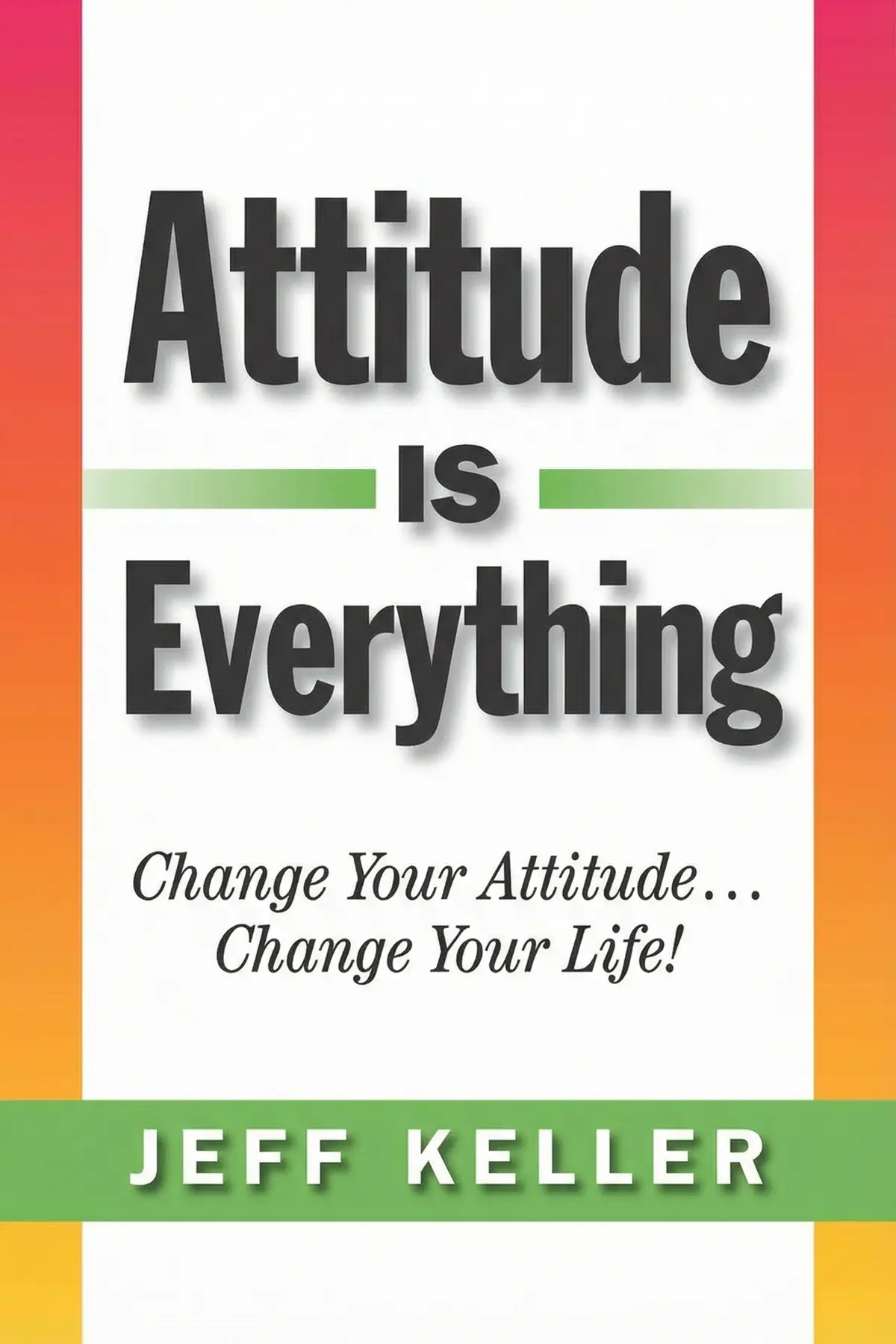
Two people can get the same treatment in the same place and walk away with opposite days. Jeff Keller, a former lawyer who became a speaker and writer, argues that the difference is attitude: a mental filter that decides what you notice, how you respond and what you believe you can reach. Keller's angle is that this filter is not fixed. It gets clouded over the years by criticism and disappointment, and it can be cleaned through daily habits: the thoughts that occupy your mind most often, the mental pictures you rehearse, the depth of your commitment to a goal, the way you talk about problems and the company you keep. He illustrates each habit with real people, from a novelist who wrote from 10 p.m. to 2 a.m. for over a decade to a man who turned bankruptcy into a business and a teacher who left the classroom in her fifties to perform. Readers get simple practices for catching limiting self-talk, finding value in setbacks, cutting back on complaining and facing fear in small steps.
People who notice that small setbacks sour their whole day and want a practical way to respond differently.
Professionals and students stuck in negative self-talk, complaining or draining friendships.
Anyone weighing a career change or a long-held dream who keeps holding back out of fear.
Jeff Keller began his working life as a lawyer before changing careers to become a speaker and writer. He is known for his focus on personal development and positive thinking, and his work examines how thoughts, words and actions shape the way people pursue success.

Listeners find the material simple to digest and value its incremental methodology, with one listener mentioning that it provides daily activities and practices. Furthermore, the book assists people in shifting their outlook on life so they can navigate each day with an optimistic mindset. They also appreciate the caliber of the information, with one listener highlighting its helpful suggestions and practical steps, while another enjoys the upbeat tone. The work receives favorable comments regarding its length, as one listener observes it’s not too long.
Ever wonder how someone walks away from a stable career as a lawyer to become a motivational speaker? Jeff Keller shares that journey here, and it’s honestly the most compelling part of the entire book for me. He doesn't just preach from a pedestal; he explains the exact burnout he felt and the mental shifts required to escape it. The book is incredibly upbeat and provides practical steps that feel attainable rather than just 'manifesting' vibes. I loved the emphasis on how our words shape our reality, reminding me to stop complaining about the small stuff. It’s short, punchy, and doesn't overstay its welcome with endless anecdotes. If you need a quick kick in the pants to change your perspective, this is exactly what you should grab.
Show morePicked this up during a particularly rough patch at work when my cynicism was at an all-time high. Frankly, I wasn't expecting much, but the daily activities and practices suggested by Keller actually helped me pivot my mindset within a week. It’s not just about 'thinking happy thoughts'; it’s about the discipline of choosing your reactions to external stressors. The book is structured in a very logical, step-by-step way that makes the transition from a negative to a positive attitude feel manageable. I particularly liked the section on surrounding yourself with the right people, as that's something I often overlook. For such a short book, it delivers a surprising amount of value without getting bogged down in technical jargon. Truly a breath of fresh air.
Show moreWow, this was exactly the kind of 'mental reset' I didn't know I needed this month. I love how Keller breaks down the transformation process into such a simple, easy-to-read format that doesn't feel overwhelming or academic. The information quality is top-notch, focusing on the quality of our thoughts and how they ripple out into every single area of our lives. It’s refreshing to read something that emphasizes daily practices over vague theories, giving the reader something to actually do every morning. Even though it touches on some spiritual concepts, it stays grounded enough in reality to be genuinely helpful for a professional setting. My favorite takeaway was the idea that we are responsible for our own reality, regardless of what's happening around us. Highly recommended for a quick boost.
Show moreJust finished this and the primary thing that stuck with me is how much energy I’ve been wasting on negativity. The book is incredibly helpful because it provides a clear framework for identifying those self-limiting beliefs that we all carry around. I found the sections on the power of persistence particularly moving, especially given the author's own background of pivoting careers mid-life. It’s an easy read that focuses on the quality of your internal monologue and provides practical steps to upgrade it. While some might find it a bit 'old school,' the principles are timeless for a reason: they actually work when you apply them consistently. It has definitely helped me change my perception of certain challenges I’m facing at the moment. A must-read for anyone looking to reclaim their enthusiasm for life.
Show moreFinally got around to reading this classic after seeing it mentioned in dozens of success forums. Truth is, the concepts aren't revolutionary, but Keller’s 'window to the world' metaphor really helps visualize how a sour mood clouds everything we do. It’s a remarkably easy read that manages to avoid the fluff often found in the genre by offering actual daily activities to test out. I appreciated the step-by-step approach to cleaning your mental window, even if some of the examples felt a bit dated. While the focus on financial success is a bit heavy for my personal taste, the core message about persistence is undeniably powerful. It’s the kind of book you can finish in one afternoon and start applying by evening. Definitely a solid choice for anyone feeling stuck in a rut.
Show moreThe chapter on how our language influences our success was worth the price of the book alone. Jeff Keller has this way of taking well-known concepts from people like Earl Nightingale and making them feel immediate and actionable. In my experience, most self-help books are three hundred pages of fluff, but this one is lean and focused on results. My only gripe is that it occasionally feels a bit too 'American sales-culture' focused, which might not resonate with everyone. That being said, the core principles of persistence and maintaining a clean 'mental window' are universal truths that anyone can benefit from. It provides a great map for self-development beginners who don't know where to start. I’ve already started catching myself before I voice a negative thought.
Show moreAfter hearing so many people rave about this, I decided to see if the hype was actually justified. Look, it’s not reinventing the wheel, but the upbeat tone is infectious enough to make you want to try harder. The book focuses heavily on the idea that your attitude determines your altitude, and while that’s a bit cliché, Keller’s practical steps make it feel fresh. I appreciated the quality of the information, especially the bits about facing your fears instead of letting them paralyze your progress. It’s a very quick read, which is perfect because you can go back and reference specific sections whenever you feel your motivation dipping. It might be a bit 'mumbo jumbo' for the skeptics, but there's real value here if you're open to it.
Show moreAs someone who usually prefers more analytical texts, I was surprised by how much I enjoyed this straightforward approach. The book basically serves as a map of the best ideas from the last century of self-improvement, condensed into a very readable package. You won't find groundbreaking new research here, but you will find a highly effective step-by-step guide to changing your outlook. Truth is, we often know what we should be doing, but we just need a gentle—or firm—reminder to actually do it. Keller provides that reminder with a tone that is encouraging without being overly preachy or annoying. It’s a short investment of time that pays off in a more focused and intentional daily life. I’ll likely keep this on my nightstand for those days when I feel my 'window' getting a bit dirty.
Show moreTo be fair, this book serves better as a refresher course for common sense rather than a deep dive into psychology. I found many of the suggestions to be a bit simplistic, bordering on that 'New Agey' manifest-your-destiny style that doesn't always account for real-world obstacles. There’s a lot of focus on earning money and sales targets, which might feel alienating if your goals are more centered on internal peace or creative fulfillment. However, the author’s writing style is engaging and the brevity of the chapters makes it very digestible for a busy schedule. It’s basically folk wisdom repackaged for a modern audience, but sometimes we need those basic reminders to stay on track. Not a life-changer for me, but it’s far from a waste of time if you want something light.
Show moreNot gonna lie, I struggled with the 'just think positive' approach at first because it felt a bit like toxic positivity in certain chapters. At times, the author suggests a level of self-hypnosis that feels a little detached from the complexities of mental health and systemic issues. That said, the writing style is very accessible, and I managed to finish it in under two hours without feeling bored. There are some helpful suggestions regarding how we speak to ourselves and others, which I've found useful to implement in my daily routine. If you can get past the 'get rich' examples and the somewhat simplistic 'success' metrics, there is a decent foundation of habit-building advice here. It’s a 3-star read for me—good as a basic primer, but lacks the depth of more modern behavioral science.
Show moreJeff Keller argues that attitude is a mental filter that shapes what you notice, how you respond and what you believe you can achieve. It is not fixed. Criticism and disappointment cloud it over the years, but you can clean it through daily habits: the thoughts you repeat, the images you rehearse, how firmly you commit, how you talk about problems and the people you spend time with.
Keller uses the term for the idea that the thoughts filling your mind most often steer your life. He builds on speaker Earl Nightingale’s line that we become what we think about. A brief positive thought cannot outweigh hours of doubt, so Keller says positive thinking has to become a habit, supported by better self-talk and uplifting books or recordings, and followed by action.
He treats adversity as a wake-up call that often hides an opportunity, citing Dave Bruno, who went bankrupt after a car crash and then built his Success Gold Cards business. Keller lists seven benefits of hardship, including perspective, gratitude, hidden strengths and new doors. His practice is to stop rehashing the problem and instead consider what lesson or benefit it might offer.
Start by catching limiting self-talk before a hard task and replacing it. Picture a difficult presentation going well instead of badly. Avoid joining negative conversations and seek out optimistic colleagues. When a project hits trouble, ask what it can teach you. If something frightens you, such as speaking up in meetings, do a small version of it and repeat it until the fear fades.
It suits readers who feel held back by their own outlook: people whose days are soured by small annoyances, who complain more than they act, who are surrounded by discouraging friends or who keep postponing a dream out of fear. Keller’s practices are simple and daily, so the book works well for anyone wanting a starting point in personal development.
Richard Wiseman





William B. Irvine


Andrew D. Thompson


Deepak Chopra
AUDIO SUMMARY AVAILABLE
Get the key ideas from Attitude Is Everything by Jeff Keller, plus 5,000+ more nonfiction titles.









