

59 Seconds: Change Your Life in Under a Minute
Richard Wiseman
 English
 ไทย
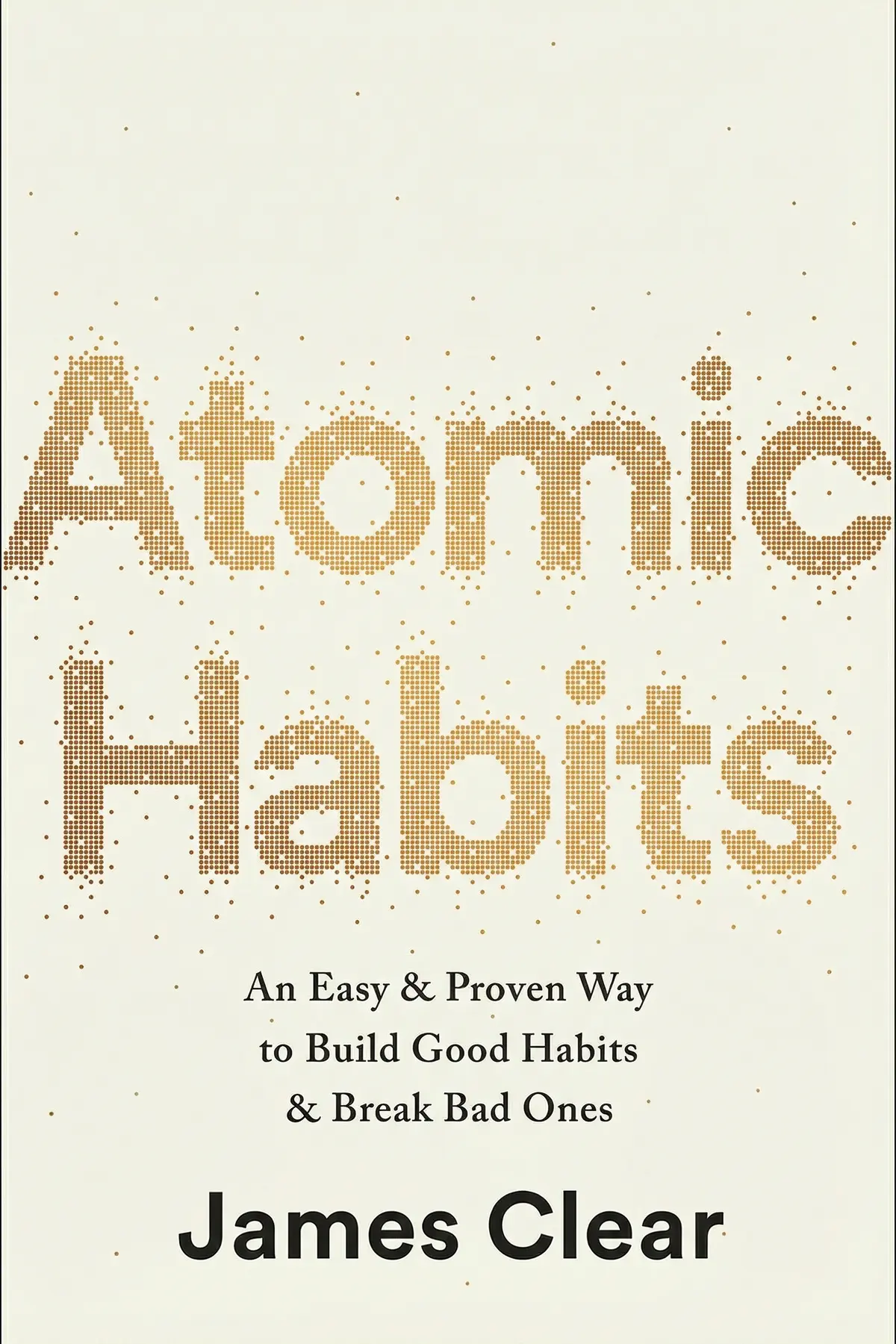
James Clear shows how tiny behaviors repeated daily compound into large results, and how to redesign cues, cravings, effort and rewards so that good habits stick and bad ones fade.
59 sec
If your resolutions tend to fade by the second week, the fix may be to aim smaller. In Atomic Habits, James Clear argues that a behavior too small to notice today, repeated every day, can carry your life somewhere new, the way a tiny shift in a pilot’s heading lands a plane in a different city. Clear builds his method on a simple loop. Every habit starts with a cue, sparks a craving, produces a response and ends with a reward, and each of those steps can be redesigned.
That is the case the ideas ahead will make: lasting change comes from tiny repeated actions, and they stick when you make them obvious, attractive, easy and satisfying. Along the way come a hospital cafeteria that sold less soda, a student who could only watch Netflix while pedaling, and a health team in Karachi that cut childhood illness with nicer soap. Each one becomes something you can try on your own routine this week.
1 min 42 sec
A plane leaves Los Angeles for New York, and nobody on board feels anything go wrong. Where it finally lands explains why your effort can seem wasted for months.
1 min 44 sec
A cat trapped in a box once taught psychology a lesson it still relies on. What changed between the cat’s first frantic minute and its six-second exit?
1 min 44 sec
A hospital served the same food and gave no health lectures, yet within three months people were choosing differently. The difference was hiding in where things sat.
1 min 43 sec
Rats in a 1954 laboratory stopped eating and drinking altogether. What their brains were missing explains why looking forward to something can matter almost as much as getting it.
1 min 40 sec
One person in Clear’s household never forgets to send a card, and the other almost always does. The difference sits in a small box kept at home.
2 min 00 sec
In one Karachi neighborhood, families already knew that washing hands prevents disease, and few did it anyway. A single change got them started, and nobody had to be persuaded of anything.
1 min 48 sec
A Nashville entrepreneur put 500 dollars on the line if he skipped one simple weekly task. The money mattered to him, but it was not what he feared losing most.
1 min 04 sec
Clear’s book is finally about systems. Big change, in his telling, rarely arrives as a breakthrough. It builds up from behaviors so small they feel pointless, repeated until they compound like the plane’s few degrees of drift. What makes them repeatable is design. You arrange the cue, the craving, the effort and the reward so that the good choice becomes the natural one, the way putting water by the cash register cut soda sales and lifted water sales without forcing anyone to decide to change.
That moves where you spend your energy. Instead of hunting for more willpower, look at what in your surroundings is steering you. This week, choose one habit and shrink it to two minutes. Tie it to something you already do every day, such as finishing your morning coffee, and leave its cue where you cannot miss it. Then cross the day off on a calendar, or tell someone who will notice if you stop.
None of this will look like much tomorrow. A year from now, the direction you chose today is where you will be.
Most people know what they should change. They want to eat better, read more or exercise, and their plans fade within weeks. James Clear argues that the problem is rarely a lack of willpower. It is a habit system built in the wrong way. His starting point is that small actions compound. A behavior too minor to notice today, repeated every day, can carry a life somewhere very different, just as a few degrees of drift can send a plane to the wrong city. Clear then breaks every habit into a four-part loop of cue, craving, response and reward, and shows how to adjust each part. The tools include implementation intentions, habit stacking, temptation bundling, the two-minute rule, habit tracking and habit contracts. The stories come from a hospital cafeteria in Boston, a handwashing program in Karachi, an Irish student's Netflix-powered exercise bike and Benjamin Franklin's nightly notebook. Readers get a practical method for building good habits, removing bad ones, and staying patient while results are still invisible.
Professionals whose resolutions to exercise, read or study keep fading after a few weeks.
Anyone trying to drop a stubborn habit such as late-night scrolling, snacking or smoking.
Managers and coaches who want simple, tested tools for helping people change their daily routines.
James Clear's subjects are habits, decision making and continuous improvement, which he covers in a weekly email newsletter and in talks he gives regularly at Fortune 500 companies. Born in 1986, he grew up in Hamilton, Ohio, and studied at Denison University and Ohio State University. His 2018 book Atomic Habits topped the New York Times bestseller list. More than 20 million copies have been sold around the world, in over 60 languages.

Listeners find this work incredibly useful and simple to comprehend, detailing the mechanics of habit-building in a sequential way. Additionally, the material is grounded in scientific research, resulting in an insightful and transformative experience. They value the direct presentation, with one listener observing that it's a real page-turner, while another remarks it is especially fitting for young adults.
This book is essentially a masterclass in behavioral psychology made accessible for the average person. James Clear avoids the typical "hustle culture" nonsense and instead offers a methodical, incremental roadmap for self-improvement. I particularly appreciated the 1% rule; the idea that tiny, microscopic improvements compound over time is a total mindset shift for me. Truth is, most self-help books are just fluff, but this one provides concrete tools like habit stacking that actually work in real-time. My daily routine has undergone a radical pivot since I started applying the four laws. While some might find the tone a bit clinical, the clarity of the instructions is exactly what I needed. It's an empirically grounded guide that turns the vague concept of "willpower" into a manageable system of environmental design. Highly recommended for anyone tired of empty motivation.
Show morePicked this up because I was tired of starting projects and never finishing them. Atomic Habits is remarkably straightforward, cutting through the noise to explain the science of how our brains actually wire themselves for consistency. The two-minute rule was a game-changer for my evening workouts; it's almost impossible to say no when the barrier to entry is that low. I found it hard to stop reading because each chapter flows logically into the next with actionable summaries. Frankly, it’s the perfect read for young adults who are just starting to build their independent lives and need a solid foundation. Even if you've heard some of this before on blogs, seeing it all laid out in this specific, step-by-step framework makes it much easier to implement. It’s a thought-provoking deep dive into the person you want to become.
Show moreWow, I finally understand why I’ve been stuck in the same cycles for years. This isn’t just another "believe in yourself" book; it’s a manual for restructuring your environment to make success the path of least resistance. Clear’s explanation of the "Plateau of Latent Potential" helped me realize why I wasn't seeing results immediately and kept me from quitting my new writing routine. The layout is incredibly user-friendly, with those little chapter summaries that help the main points stick in your memory. Personally, I think this is the most practical self-help book on the market because it prioritizes systems over motivation. It’s a life-changing perspective for anyone who feels like they’re constantly fighting their own brain. I’ve already bought copies for three of my friends.
Show moreLook, I know the market is saturated with "lifestyle hacks," but this book genuinely stands out because of how actionable it is. It’s a thought-provoking read that forces you to look at your smallest daily actions through a microscope. I found myself highlighting almost every other page because the insights into the "Four Laws of Behavior Change" were so clear and applicable. The two-minute rule has completely transformed how I approach my chores; I no longer let things pile up because I know I can just do the first two minutes. It’s rare to find a book that is both intellectually satisfying and practically useful from page one. For a young adult trying to find their footing, this is basically the ultimate survival guide for the modern world. It’s an easy, engaging read that avoids the typical fluff of the genre.
Show moreAfter hearing so much hype, I was skeptical, but Atomic Habits really is the gold standard for personal development. The way James Clear explains the neurological loop of cue, craving, response, and reward makes so much sense of our subconscious behaviors. This book provides a clear, research-backed path to making good habits inevitable and bad habits impossible. I loved the section on how to recover when a habit breaks; the "never miss twice" rule is such a simple but effective way to stay on track. It’s an easy-to-digest read that managed to be life-changing for my productivity without feeling like a chore to get through. Truly an essential read for anyone who wants to take control of their trajectory. The 1% better philosophy has completely removed the pressure of perfectionism from my life.
Show moreEver wonder why your New Year's resolutions always fail by February? James Clear argues it's because your systems are broken, not your goals, and he makes a compelling, research-backed case for this. I loved the breakdown of the "Identity-Based Habits" concept, which shifts the focus from what you want to achieve to who you wish to be. To be fair, some of the anecdotes felt a bit cherry-picked—like the story of the British Cycling team—but the core message remains incredibly potent. The writing is punchy and moves fast, though I did find a few sections a bit repetitive toward the end. Still, the practical strategies for "making it obvious" and "making it easy" are worth the price of admission alone. It’s a solid 4-star read that I’ll likely revisit when my discipline starts to wane.
Show moreThe chapter on habit stacking alone makes this book a worthwhile investment for your personal library. I've been trying to integrate meditation into my morning, and linking it to my first cup of coffee—something Clear suggests—actually made it stick. In my experience, the strength of this book lies in its simplicity; it doesn't try to be overly academic, yet it feels grounded in real behavioral science. My only gripe is that it occasionally ignores the structural barriers people face, assuming everyone has the same level of control over their schedule. Also, the bit about Benjamin Franklin was a bit misleading since Franklin actually struggled with his system, which the author conveniently glosses over. Regardless, the "Atomic" approach is a fantastic way to break down overwhelming goals into manageable bites. It’s a very high-quality guide for anyone looking to fine-tune their daily existence.
Show moreFinally got around to reading this after hearing my coworkers rave about it for months. I appreciate how Clear deconstructs the science of habit formation into a step-by-step process that anyone can follow, regardless of their current starting point. The concept of "temptation bundling"—pairing something you need to do with something you want to do—is genius and has made my treadmill sessions much more bearable. Gotta say, though, some of the writing style feels a bit like an extended blog post, and the repetition can be a bit much if you’re reading it in one sitting. I also noticed the author omits the parts of historical anecdotes that don't fit his narrative, which is a bit annoying. But if you can look past the occasionally "rehashed" feel, the frameworks are incredibly solid. It’s a 4-star book that delivers on its promise of helping you build better routines.
Show moreNot what I expected, in a good way! I thought it would be a bunch of "hustle harder" advice, but it’s actually very focused on making things easier for yourself. The idea that we don't rise to the level of our goals but fall to the level of our systems is a powerful truth that hit home for me. I’ve started using a habit tracker based on his suggestions, and the visual progress is surprisingly motivating. To be honest, I did feel like some chapters were a bit thin on new information, and I’ve seen some of these ideas in books like "The Power of Habit" before. However, Clear’s delivery is much more concise and easier to apply to real life. It’s a great choice for anyone who wants a "no-nonsense" approach to fixing their bad behaviors.
Show moreAs someone who has waded through dozens of productivity books, I found this to be a frustratingly privileged take on habit formation. Clear loves to use cute little platitudes like the one about boiling water softening potatoes and hardening eggs, but it feels like he's recycling basic common sense. The advice to simply "hire an assistant" or "pay for grocery delivery" to save time is great if you're wealthy, but it’s hardly practical for the rest of us. Not gonna lie, the writing feels a bit robotic and the reliance on quotes from Seneca and Lao Tzu makes it feel like a polished homework assignment rather than original thought. While the "1% better" concept is fine, the book is bloated with filler and anecdotes that don't always hold up to scrutiny. If you've ever read a single blog post about habit tracking, you’ve already seen 90% of what’s here.
Show moreClear argues that tiny behaviors, repeated daily, compound into large results that you cannot see while they are building. Every habit runs on a four-part loop of cue, craving, response and reward. To build a good habit, you make it obvious, attractive, easy and satisfying. To break a bad one, you can use friction in the opposite direction, adding enough of it that the unwanted behavior takes more effort.
It is Clear’s way of making any new habit feel manageable. You shrink the behavior to a version that takes two minutes or less, such as reading two pages a night instead of a book a week, or simply putting on running clothes after work. Starting matters most because it is the first step, and once you begin, you often continue.
Temptation bundling links a task you find important but dull to something you already enjoy. Clear tells of Ronan Byrne, an Irish engineering student who wired his exercise bike to his laptop so Netflix played only while he pedaled fast enough. Simpler versions include reading favorite magazines only at the gym or watching sports only after making a set number of sales calls.
Pick one habit and cut it down to two minutes. Write an implementation intention that names when and where you will do it, or stack it onto an existing routine like your morning coffee. Put its cue in plain view. Add a small reward for the same day, then cross off each day on a calendar or tell a friend who will hold you to it.
Richard Wiseman





William B. Irvine


Andrew D. Thompson


Deepak Chopra
AUDIO SUMMARY AVAILABLE
Get the key ideas from Atomic Habits by James Clear, plus 5,000+ more nonfiction titles.









