

A Bigger Prize: How We Can Do Better Than the Competition
Margaret Heffernan
 English
A governor's account of leading New York through the first wave of COVID-19, and the crisis habits it taught: check the facts, speak plainly, build missing systems fast and rally people to help.
55 sec
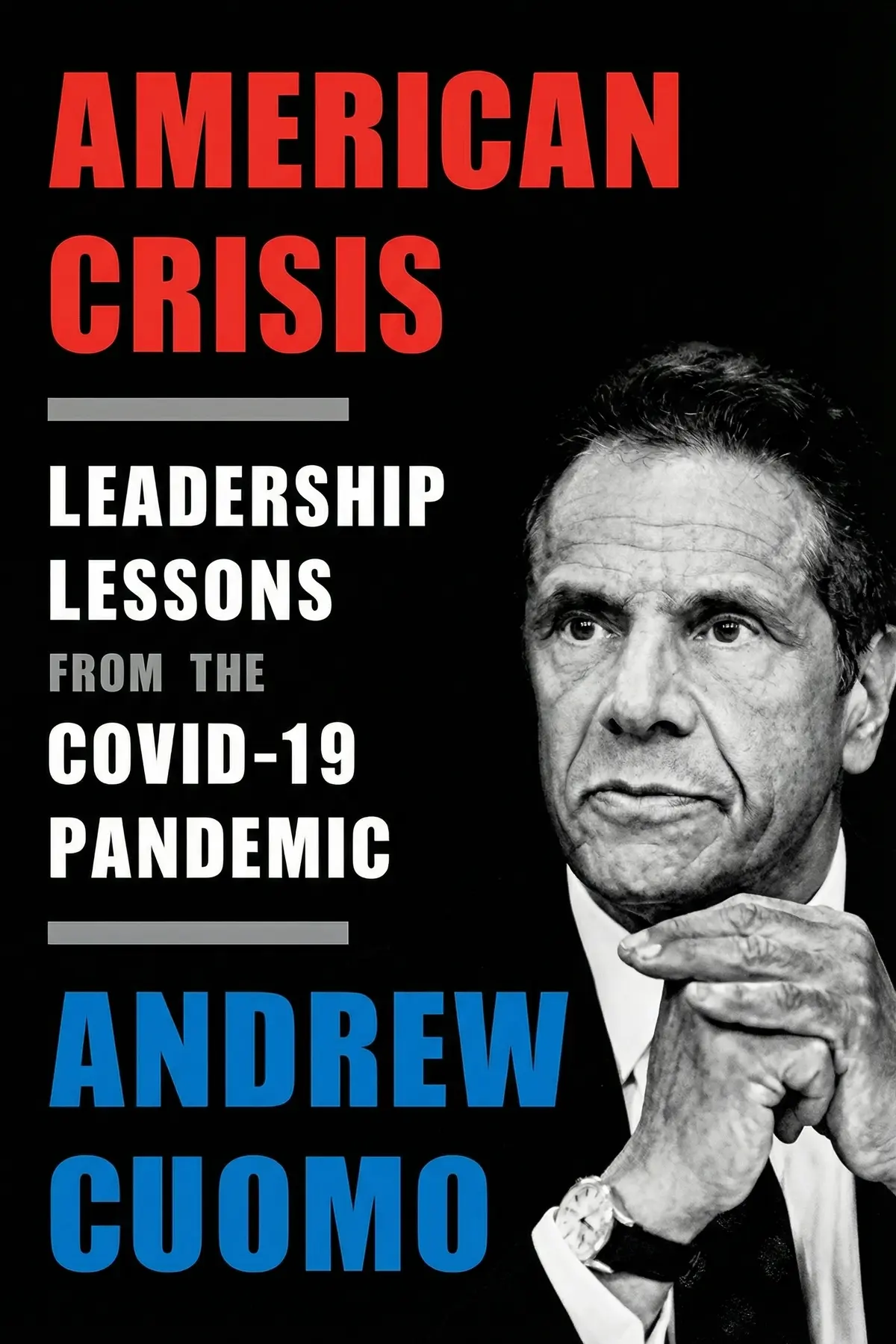
When a crisis hits, most leaders end up working from bad information, with broken tools and a frightened public hanging on every word. In American Crisis, New York governor Andrew M. Cuomo describes facing all three at once in spring 2020, when his state became the nation’s hot spot for COVID-19. His first lesson is an uncomfortable one: by the time the official first case was announced on March 1, the virus had already been spreading in New York for weeks.
Cuomo’s account makes one case from start to finish. When the systems above you fail, a leader has to find the real facts, say them plainly and humanly, build the missing tools fast, and then trust ordinary people to carry the load. The story runs from a homemade test to a hospital network built in weeks and a tear shed on live television. Each episode leaves a habit a manager can borrow for their own worst week.
2 min 12 sec
For two months, New York’s health department reported zero confirmed cases, and the reassuring count was wrong from the start. The reason was not one careless person, and it holds a warning for anyone who trusts a calm dashboard.
1 min 33 sec
Cuomo planned every briefing to keep people calm, yet one ordinary word made a whole town believe it was being locked in. The slip shows how easily a careful message can turn into a threat.
1 min 49 sec
New York needed more than twice the hospital beds it had, and even its public hospitals could not share a single patient. The fix Cuomo describes would normally take years to set up.
1 min 34 sec
Politicians are trained never to look vulnerable, and Cuomo had followed that rule for his whole career. Then a law named after his mother brought him to tears on live television, and he decided it helped.
1 min 39 sec
Just as New York’s cases leveled off, the most powerful person in the country wanted to reopen everything. Cuomo believed the move was too early and outside the law, and within a day of his appeal the president backed down.
1 min 44 sec
On the day Cuomo meant to announce New York’s reopening, a video from Minneapolis changed the country’s mood. He now had to back a protest movement while keeping a virus from spreading through its crowds.
1 min 36 sec
Experts doubted New York could bring its infections down quickly, partly because of neighborhoods where half the residents were infected. Cuomo credits the turnaround to something he asked for in plain words, and to how many people answered.
1 min 02 sec
Cuomo’s 111 days come down to a story about gaps. The federal picture was wrong, the national test was flawed, the hospitals were not connected and Washington wanted to reopen too soon. Each time, in his telling, New York answered by finding the truth, saying it plainly and building what was missing, and then by asking millions of people to do their part. A state that began as the nation’s hot spot ended with 100,000 health workers volunteering and its curve flattened.
The habits work well outside government. Before a hard announcement, test your key word on your most anxious listener, remembering what containment did in New Rochelle. Let your team see that you are worried while you show them the plan. And copy what Cuomo did on paper: reduce your role to three or four core responsibilities and keep them with you. He carried a notecard listing four, and one of them was to stay focused and positive.
In a crisis the demands multiply and the noise gets loud. People keep following the leader who knows the few things only they can do.
In March 2020, New York became the hot spot of the COVID-19 outbreak in the United States. Its governor had to lead with wrong federal information, a flawed national test and hospitals that had never worked as one system. American Crisis is Andrew M. Cuomo's account of those first months, told as a set of leadership lessons. Cuomo describes the daily briefings he used to keep the public informed without causing panic, including the one word that backfired in New Rochelle. He explains how New York built its own COVID test, how a plan called Surge and Flex linked hospitals in weeks, why he let his emotions show on camera and how he pushed back when the White House wanted to reopen states early. He also covers the protests after George Floyd's death and the 100,000 health workers who volunteered to help. Readers get a firsthand case study in crisis leadership, with habits that carry over to any team facing its worst week: question reassuring numbers, choose words with care and know the few responsibilities that matter most.
Managers and team leads who want a playbook for communicating when everything goes wrong at once.
Public servants and health administrators studying how New York handled the first COVID-19 wave.
Readers curious about how state and federal leaders clashed during the pandemic.
Andrew M. Cuomo served as governor of New York, the same office once held by his father, Mario Cuomo. A member of the Democratic Party, he was earlier secretary of the US Department of Housing and Urban Development under President Bill Clinton, and he was elected New York attorney general in 2006. In 2025 he ran for mayor of New York City and lost to Zohran Mamdani. His other books include All Things Possible, and he edited Crossroads.
Listeners find this work to be essential reading, commending its high-quality writing and engaging nature. They value the depth of the information provided; one listener mentions how the daily briefings offered both hope and clarity, whereas another emphasizes the strong presentation of data and key talking points. The title earns praise for its perspective on leadership, with one review highlighting Cuomo's successful management of the emergency, and its sincere tone, as one listener points out how it exposes his emotional vulnerability.
As a New Yorker who lived through those terrifying first months, I found this book incredibly grounding. I remember tuning into the daily briefings every morning just to feel like someone was actually in charge of the chaos. This book captures that same sense of organized urgency and provides a much-needed deep dive into the logistics of the crisis. Cuomo is surprisingly vulnerable here, discussing his family and his late father in a way that feels very human and heartfelt. Truth is, we needed a leader who could translate complex data into actionable steps, and he did exactly that when the federal response was failing us. Some might call it self-serving, but I see it as an essential documentation of a historic moment. The audio version is especially good because you get to hear that familiar voice again. It’s a compelling look at what it takes to manage a catastrophe in real-time.
Show moreEver wonder what was actually happening behind the scenes when the ventilators were running low? This book gives you a front-row seat to the most intense government operation of our lifetime. I found the chapters on the Javits Center and the USNS Comfort to be particularly gripping and well-paced. Cuomo’s writing style is direct and pragmatic, mirroring the way he handled those famous daily briefings that kept us all sane. Frankly, this should be required reading for anyone interested in public policy or emergency management. He manages to balance the hard data with personal anecdotes about his father, Mario, which provides some nice historical context for his leadership style. While he definitely spends some time settling scores with his political rivals, the core of the book is about the resilience of New Yorkers. It’s an inspiring read that reminded me why I felt so much hope during such a dark time. Truly a fascinating look at a leader under fire.
Show morePicked this up because I missed the sense of calm Cuomo provided during the height of the lockdown. This book serves as a permanent record of a time when we were all searching for a glimmer of truth. I love how he documents the daily grind of the crisis, from the early morning calls to the late-night strategy sessions. The information quality is top-notch, and he explains the science in a way that feels accessible without being condescending. In my experience, very few politicians are willing to be this open about their own emotions and fears. He admits to being controlling and sometimes grouchy, which just makes him feel more like a real person doing a hard job. The contrast between his methodical approach and the chaos coming out of the White House is startling. It’s a powerful reminder that competent government actually matters. This is a must-read for anyone who values facts and clear-eyed leadership.
Show moreThe level of detail regarding the state's logistical response is actually pretty fascinating. While I understand why some people are put off by the timing of the release, the actual content provides a solid blueprint for crisis management. Cuomo breaks down the communication hurdles with the White House and the frantic search for PPE with a level of clarity that is rare in political memoirs. Not gonna lie, there are moments where the self-praise gets a bit thick, but the data-driven approach he took is undeniable. It was interesting to see the behind-the-scenes friction between state and federal authorities during such a high-stakes period. He doesn't hold back on his criticisms of Trump, which makes for some very pointed and entertaining reading if you followed the news closely. It’s not a perfect book, and his defense of the nursing home policy feels a bit thin, but the insights into executive decision-making are valuable.
Show moreFinally got around to finishing this, and I have to say it’s a lot more emotional than I anticipated. Most political books are dry and filled with policy jargon, but Cuomo actually lets the reader see his internal struggle. The sections about his daughters and his concern for his brother Chris add a layer of humanity that made the political maneuvering more relatable. It’s clear that he was under immense pressure, and his frustration with the lack of federal support practically leaps off the page. I especially liked the focus on 'New York Tough' and how he tried to build a sense of community through sheer force of will. To be fair, the book can be a bit repetitive if you watched every single one of his press conferences. However, having all that information organized into a narrative structure is very helpful for future reference. It’s a strong testament to the power of transparent leadership during a national emergency.
Show moreNot what I expected, but in a good way. I went into this thinking it would be a dry recitation of stats, but it’s actually a very readable account of the spring 2020 surge. The way he presents the data and talking points makes the complex reality of the virus much easier to digest. You can tell he’s a policy wonk at heart, but he has a way of making the logistics of hospital capacity sound like a high-stakes thriller. My only real gripe is that he tends to pivot away from his own mistakes a bit too quickly. The nursing home section felt more like a legal defense than a heartfelt explanation, which was a bit disappointing. Still, his ability to stand up to the federal government's erratic behavior was impressive to revisit. He captures the exhaustion and the determination of that period perfectly. It’s a solid four-star read for anyone who wants to understand the 'New York model' of pandemic response.
Show moreAfter hearing so much controversy about the book deal, I wanted to see the content for myself. What I found was a very detailed and mostly persuasive account of how New York managed to flatten the curve. The book is structured around specific lessons in leadership, which makes it feel more like a manual than a standard autobiography. I appreciate that he gave credit to people like Mike Pence when it was deserved, showing a level of pragmatism that was often missing from the national discourse. Look, the book isn't without its flaws; it’s clearly written to protect his legacy. However, the sheer amount of information about the pandemic's early days is invaluable for history buffs. The pacing is a bit uneven, with some chapters dragging more than others, but the overall message is one of unity and grit. It’s a worthwhile read if you can separate the politics from the actual crisis management strategies being discussed.
Show moreWow, the level of transparency regarding his interactions with the Trump administration is wild. Cuomo doesn't pull any punches when describing the 'ambush' he felt the federal government was leading against the states. I found the presentation of data and the explanation of 'The New York Clean' initiative to be surprisingly engaging. It’s a fast-paced read that captures the frantic energy of a city under siege. To be fair, it’s a very one-sided account, and he definitely paints himself as the hero of the story at every turn. But then again, who doesn't in their own memoir? The book does a great job of explaining why certain decisions were made under extreme time constraints. Even if you don't agree with every policy, you have to respect the work ethic displayed here. It’s a fascinating look at the intersection of public health and high-level politics. I’d recommend it to anyone who wants to relive those 111 days of lockdown.
Show moreWhy publish this now? That was the question burning in my mind the entire time I slogged through these chapters. It feels incredibly tone-deaf to be taking a victory lap when the pandemic is still very much a daily reality for millions of Americans. The writing style is surprisingly flat and repetitive, often just echoing the same talking points we already heard during his televised briefings. Look, I appreciated his presence on TV during the spring, but this book adds very little new wisdom to the conversation. Instead of a deep dive into what went wrong, we get a highly curated version of events that ignores the most difficult questions. The lack of critical self-reflection regarding the nursing home crisis is the biggest glaring omission here. Personally, I think this should have been written five years from now when we have more perspective. It’s hard to take the 'lessons learned' seriously when the author is still in the middle of the fight.
Show moreIs this some kind of joke? Reading this felt like watching a masterclass in gaslighting while the bodies were still being counted in New York nursing homes. Cuomo spends hundreds of pages painting himself as the savior of the pandemic, yet he completely glosses over the devastating consequences of his own executive orders. To be fair, the prose is polished, but the lack of genuine self-reflection makes the whole thing feel slimy and prematurely self-congratulatory. It is frankly insulting that he found the time to secure a massive book deal while the state was still reeling from the second wave. If you’re looking for an objective historical account, look elsewhere because this is pure political fiction designed to bolster an ego. He points the finger at everyone else—the federal government, Trump, even the bus drivers—without ever taking real accountability for the lives lost under his watch. Skip this one and wait for a real history book to be written.
Show moreIt is Cuomo’s account of leading New York through the first months of COVID-19 in 2020, when the state became the nation’s hot spot. He covers the late discovery of the virus, his daily briefings, New York’s homemade test, the Surge and Flex hospital plan, his clash with President Trump over reopening, the protests after George Floyd’s death and the volunteers who helped flatten the curve.
Cuomo’s lessons include questioning reassuring numbers, since the official count missed weeks of spread, and choosing words carefully, as his use of containment in New Rochelle showed. He also argues for building missing tools fast, letting people see your emotions without acting on fear, holding firm on legal authority under pressure and making specific requests for help, such as his call that brought 100,000 health workers forward.
Surge and Flex was the plan Cuomo’s team built with experts when New York faced needing up to 140,000 hospital beds but had only 53,000. A central office coordinated capacity, and any hospital could call at any hour to request patient transfers, staff, protective equipment or ventilators. Live data showed which hospitals were nearly full. Cuomo says such a system would normally take years, but it was built in weeks.
The CDC kits that reached New York’s public health lab on February 8 produced false positives, and the chemicals needed to run them were scarce and sold only by the CDC. New York built its own test using more reliable reagents that could be bought commercially. That gave results within a day and allowed fast scaling, and the state soon led the country in tests per person.
The most direct advice in the book is to narrow your role in a crisis down to three or four key duties and put them on paper. Cuomo carried a notecard listing four, one of which was to stay focused and positive. You can also check who your data leaves out, read announcements as a worried listener would, and set up ways for overloaded teams to get help before they need it.
Margaret Heffernan



Miles Taylor






Tracy Rosenthal
AUDIO SUMMARY AVAILABLE
Get the key ideas from American Crisis by Andrew M. Cuomo, plus 5,000+ more nonfiction titles.









