

14 min 08 sec
Available in: English
Your Brain on Art: How the Arts Transform Us
Shows how colors, sounds, smells and simple acts of making art change your hormones, mood and even your brain. It also explains how to use that effect to lower stress, ease pain and recover.
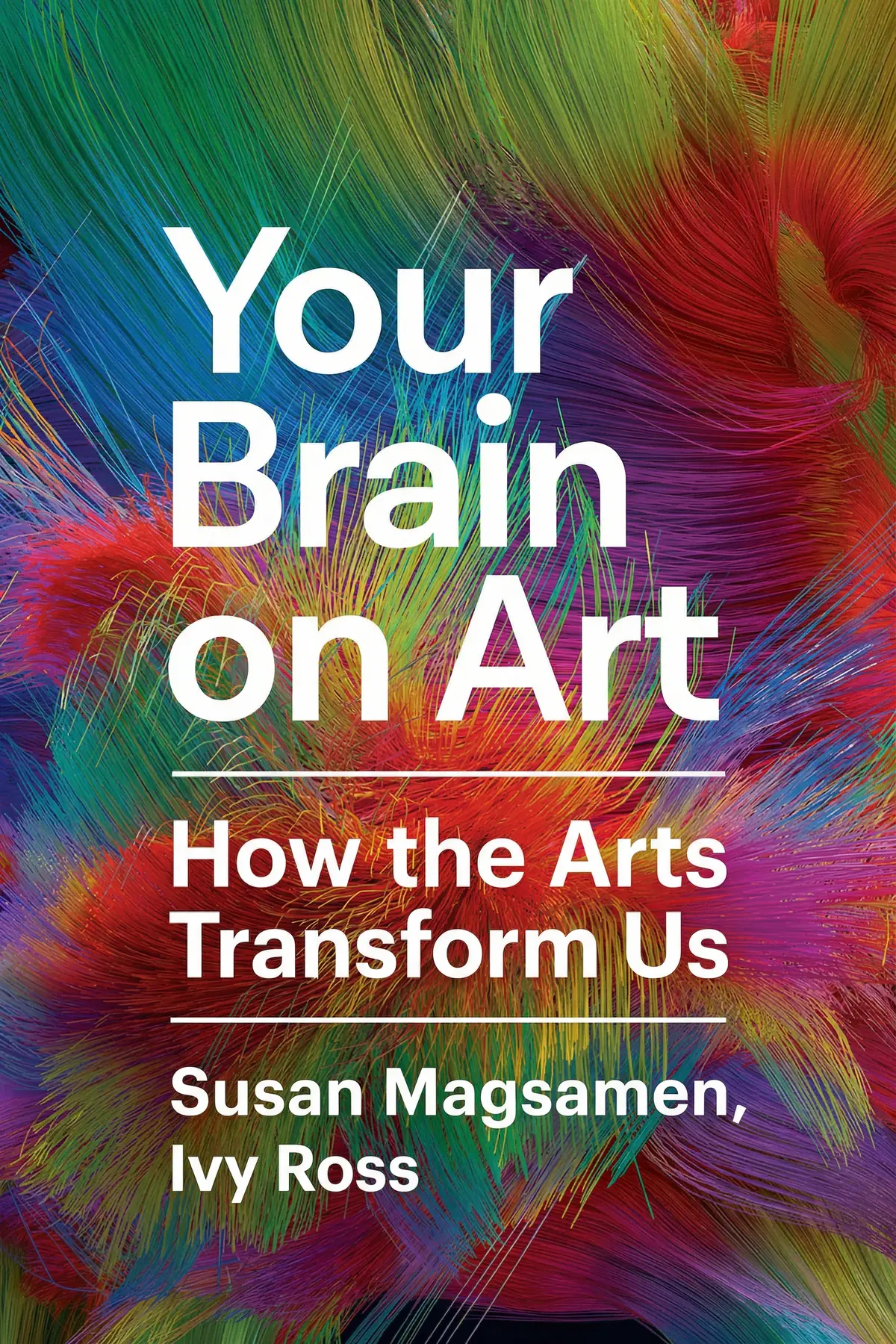
Table of Content
1. Introduction
1 min 07 sec
If stress has you stuck and you think art is only for talented people, start with this finding. In a study at Drexel University, 45 minutes of making art brought down the stress hormone cortisol, and artistic skill made no difference.
That result is at the heart of Your Brain on Art, by Susan Magsamen, who founded the International Arts + Mind Lab at Johns Hopkins, and Ivy Ross, a designer who leads hardware design at Google. They argue that the colors, sounds, smells and shapes around you are already changing your body and mood, mostly without your noticing. Once you learn to notice, you can use art on purpose: to calm stress, shift feelings that have stopped moving, work through trauma, ease pain and live more fully.
Their evidence comes from clinical studies, hospital wards and doctors’ own practice. By the end you will know how to read a room the way your nervous system does, which small art habits the research favors, and how to build an ordinary day that gives you energy instead of draining it.
2. Notice how every room is changing your mood
1 min 51 sec
The walls, light and background noise around you are acting on your body right now. Most of that happens out of sight, and seeing it is the first step to putting it to work for you.
3. Calm your stress hormones without any talent
1 min 52 sec
Plenty of adults stopped drawing after someone called them untalented. A study that measured a stress hormone suggests that old verdict has been costing them something real, and the fix takes less than an hour.
4. Break out of an emotional rut through your senses
1 min 53 sec
People can feel a vast range of emotions, yet many spend weeks stuck in one. An ancient circular pattern, tested against a blank page, shows which kind of art pulls a worried mind away from worry.
5. Give trapped trauma a way out through drawing
1 min 56 sec
Trauma can stay lodged in the body for years, ready to flare at the wrong moment. One drawing program reported a drop in symptoms large enough to make most people look twice at a pencil.
6. Turn color, music and dance into medicine
2 min 10 sec
A doctor who lost three limbs asks his patients to take photos of their better moments. Add a dance study that measured blood flow in the brain, and art starts to look like part of treatment.
7. Design an ordinary day that feeds your well-being
2 min 01 sec
A writer told a group of high school students that the key to a good life was neither ambition nor drive. The authors take his advice seriously and turn it into a day anyone could start building tomorrow morning.
8. Conclusion
1 min 18 sec
What Magsamen and Ross offer, in the end, is a wider definition of health. Most people treat their surroundings as background and art as a hobby for the gifted. The authors show both as forces already at work on your hormones, your blood pressure, the wiring of your brain and your mood, whether you choose them or not. Because nearly all of that work happens below awareness, the real step is noticing. Once you know what a color, a song or a smell does to you, you can choose it on purpose.
Look at how wide the evidence runs: cortisol falling after 45 minutes of making art, anxiety easing over a mandala, drawing programs cutting trauma symptoms, people with Parkinson’s walking better after dancing. None of it required talent.
Begin where BJ Miller asks his patients to begin. The next time you feel better during the day, look around, name what is different, and take a photo so you remember it. Give yourself a short, unjudged session of making something each week, and keep at least one concert, play or exhibition in your year. Over time, small choices like these shape a home and a routine that support you.
The room you are in is already doing something to you. You can decide what it does.
About this book
What is this book about?
Many people treat art as a pleasant extra: something for talented people, or for a free weekend at a museum. Susan Magsamen and Ivy Ross argue that this view misses what is already happening. The light, colors, sounds and smells around you work on your blood pressure, stress hormones and emotions all day, mostly below conscious awareness. The authors call the habit of noticing this an aesthetic mindset, and they show what it makes possible. They draw on clinical trials and peer-reviewed studies, from a Drexel University experiment on art and the stress hormone cortisol to research on mandalas and anxiety, drawing programs for trauma, and dance for people with Parkinson's disease. They also describe how hospitals and doctors such as BJ Miller already use color, music and scent in care. Readers learn which small art practices the evidence supports, why skill does not matter, and how to shape an ordinary day, from the morning light to an evening concert, so that it supports their health and helps them keep growing.
Book Information
Who it's for
Professionals near burnout
Stressed professionals close to burnout who want calming practices that need no artistic talent.
Coping and caregiving
People living with anxiety, chronic pain or past trauma, and those who care for them.
Curious about art's effects
Curious readers who want the science behind why music, color and making things change how we feel.
About the Author
Susan Magsamen
Susan Magsamen founded the International Arts + Mind Lab at the Johns Hopkins University School of Medicine, where she is on the faculty, and co-directs the NeuroArts Blueprint with the Aspen Institute. She is a Fellow of the Royal Society of Arts. Ivy Ross leads design for Google's consumer hardware and earlier held senior roles at Calvin Klein, Swatch, Coach and Mattel. She is also an artist whose metal jewelry sits in the permanent collections of 12 international museums.
Ratings & Reviews
Ratings at a glance
What people think
Listeners find this work both captivating and extensively researched, with one noting how it provides scientific credence to the material. Furthermore, they appreciate the evidence showing that art is demonstrably good for health and well-being, as one listener emphasizes the book's life-altering journey through neuroaesthetics. It also taps into creative potential while explaining how art affects brain processes, making it a vital resource for artists and teachers. Listeners also celebrate the physical quality of the book, with one specifically mentioning the lovely tactile pages.
Top reviews
Num
After hearing the authors discuss their research on a podcast, I knew I needed to hold the physical copy of this work. The book itself is a sensory experience; the tactile quality of the pages feels intentional given the subject matter of neuroaesthetics. It is an illuminating deep dive into how our biological systems respond to beauty and creativity. While some sections feel a bit breathless, the core message—that art is a physiological necessity rather than a luxury—is backed by fascinating data on synaptic plasticity. I was particularly moved by the idea that just forty-five minutes of creative engagement can drastically lower cortisol levels. It’s rare to find a book that bridges the gap between hard science and the soul so effectively. This is essential reading for anyone who feels that the modern world has stifled their innate urge to create.
Show moreFon
Picked this up because I’ve always felt that my creative hobbies were more than just a pastime, and this book finally gave me the language to explain why. It’s a masterful exploration of how neuroaesthetics can actually transform our neural pathways and improve our overall longevity. I was especially captivated by the story of Judy Tuwaletstiwa and the practice of whitewashing murals to let go of self-criticism; it changed how I view my own failed projects. The authors argue that we are conscious of only about 5 percent of our mental activity, which makes the sensory signals we absorb even more critical. Even if you aren't a professional artist, this book proves that your brain is constantly being rewired by the world around you. Truly life-altering if you're willing to embrace the slightly enthusiastic tone.
Show moreFang
As someone who has struggled with the long-term effects of childhood trauma, I found this book to be an incredible comfort. It feels like a natural companion to The Body Keeps the Score, but focuses more on the proactive, creative steps we can take toward healing. The way Susan Magsamen and Ivy Ross describe the arts as a perfect path to amplify health is both poetic and grounded in modern research. Look, some people might find the writing a bit too guru-ish, but for me, that earnestness was exactly what I needed. I loved learning about how our different senses—maybe even fifty-three of them!—interact with our environment to create saliency. It’s a wealth of information that has encouraged me to prioritize my painting again. A new favorite for my shelf.
Show morePhimwan
Honestly, I inhaled this in a single weekend. It’s a beautifully presented book that manages to make the science of the brain feel deeply personal and relevant to everyday life. I never realized that touch could register in the brain in just 50 milliseconds, or how much our environment dictates our mental health through sub-perceptual signals. The authors make a compelling case for why we should all be more intentional about the sensory signals we allow into our lives. While some of the advice—like keeping herbs in the kitchen or singing in the car—seems a bit obvious, the explanation of the biological reactions behind those actions is what makes it special. It’s a great gift for any creative soul or anyone interested in the intersection of health and culture.
Show moreSupachai
Look, I’m a sucker for a beautiful hardback, but the content here is what really shines. This book is a fascinating, if occasionally breathless, exploration of the human experience. I found the sections on the anatomy of the arts to be deeply researched, and I appreciate how it brings scientific credence to the idea that art is good for our well-being. The text moves at a fast pace, peppered with inspiring case studies and brief digressions into how we perceive the world. To be fair, I could have done without the overly optimistic, triumphant tone that pops up every few pages. It’s a bit much. However, the core message about rewiring our synapses through aesthetic experience is powerful. It’s a beautiful, tactile volume that encourages you to stop treating art as a hobby and start treating it as medicine.
Show moreNarumon
Wow. This was quite a journey. It’s not often that a nonfiction book about neurology feels this accessible, yet the authors managed to make complex concepts like synaptic pruning and salience easy to grasp for the layperson. Truth is, I started looking at my daily environment differently as soon as I put it down. The discussion on how our brains are wired for curiosity as a survival mechanism really resonated with me. I did feel that the conclusion was a little bit twee, suggesting we just sing in the shower to fix our lives, but the middle sections on trauma and recovery were profound. It’s a beautiful book to hold and read, though I wish the authors had explored the potential harms of art rather than focusing strictly on the positive.
Show moreAubrey
The chapter on Amplifying Learning was worth the price of the book alone. Finally got around to reading this, and I’m struck by the connection between music and the parts of the brain responsible for meaning-making. Listening to the authors explain how poetry can help us interpret reality through the same neural circuits as music was a lightbulb moment for me. I appreciated the sections on salience and how our brains filter inputs to form lasting memories. My only real gripe is that the book feels a bit like it’s sponsored by major tech companies at times, particularly when it pushes digital solutions for neurodivergent individuals. Still, for a creative person looking to understand the why behind their drive, this provides some very satisfying answers and brings scientific credence to our craft.
Show moreAnna
Ever wonder why a specific song makes you cry or why looking at a certain painting feels like a physical release? This book attempts to answer those questions by weaving together neurobiology and the arts. Personally, I found the chapters on healing the body to be the most compelling, especially the research regarding how we process sensory signals below our conscious awareness. However, I have to admit the definition of art used here is frustratingly elastic. When everything from gardening to drinking a cup of tea is categorized as an aesthetic experience, the argument starts to lose its teeth. It begins to feel a bit like a self-help book wrapped in a lab coat. Still, the presentation is gorgeous, and the scientific citations provide enough weight to keep it from floating away into pure woo territory.
Show moreSaengdao
Highly disappointing for those of us in the education field. In my experience, the authors present information that has been common knowledge in the arts for decades as if it’s some revolutionary discovery. The lack of specific citations for many of the groundbreaking studies they mention makes the whole thing feel academically flimsy. I was especially annoyed by the overly broad scope—if everything is art, then nothing is. They lean heavily on personal stories that, while charming, don't substitute for the rigorous scientific practice I was promised. It’s a shame because the physical book is lovely to handle, with beautiful tactile pages, but the content lacks the depth required to be a definitive text on neuroaesthetics. It feels more like a marketing brochure for wellness than a serious study.
Show moreOrm
Not what I expected at all. Frankly, I went in looking for a rigorous scientific examination of how the brain processes aesthetics, but what I got was a collection of anecdotes and new-age posturing. The authors spend an exhausting amount of time on David Byrne stories, treating them like peer-reviewed data points. Then, the book takes a bizarre turn by suggesting that people with ADHD or ASD should just use immersive video games or AI glasses as a solution. It felt like a betrayal of the earlier chapters on embodied art. To top it off, the writing tone is so relentlessly chirpy that it becomes grating. If you want a serious neurobiology book, look elsewhere; if you want a glossy, high-level manual that ignores the colonial history of art, this might be for you.
Show moreQuestions about this book
What is the main idea of Your Brain on Art?
Susan Magsamen and Ivy Ross argue that your senses constantly shape your body and mood, mostly below conscious awareness. Colors, sounds and smells can raise or lower blood pressure and trigger or calm stress hormones. By building what they call an aesthetic mindset, you notice these effects and use art deliberately to reduce stress, anxiety, pain and trauma and to support overall well-being.
Do you need artistic talent to benefit from making art?
No. The authors cite a Drexel University study in which 45 minutes of making art lowered cortisol, the stress hormone, and skill made no difference to the result. A 2020 University College London study also found that simply attending a cultural event at least once a year was linked to less mental distress and a better quality of life.
What is an aesthetic mindset?
It is the authors’ term for awareness of how your surroundings affect you, together with the readiness to use that. Art in their broad sense includes the pattern of a rug, the shape of a plant and the design of furniture. People with a strong aesthetic mindset notice lighting, sound and color and adjust them to support their health.
How can art help with anxiety and trauma?
The book describes a study in the Art Therapy journal in which coloring mandalas lowered anxiety more than free drawing, likely because the pattern holds attention away from worry. For post-traumatic stress, drama, dance, painting and sculpting help people express locked-away feelings, and one peer-reviewed study found drawing programs cut PTSD symptoms by more than 80 percent.
How can I apply Your Brain on Art in daily life?
Follow BJ Miller’s habit of noticing when you feel better and photographing what is different, whether a sound, a smell or a color. Set aside regular time to make something without judging it. Use light, scent and taste deliberately in the morning, spend time in nature, and share live music or theater with friends.
Readers also enjoyed

A Liberated Mind: How to Pivot Toward What Matters
Steven C. Hayes

A Life Decoded: My Genome: My Life
J. Craig Venter

A Planet of Viruses
Carl Zimmer


A Short History of Nearly Everything
Bill Bryson


A Thousand Brains: A New Theory of Intelligence
Jeff Hawkins

AUDIO SUMMARY AVAILABLE
Listen to Your Brain on Art in 15 minutes
Get the key ideas from Your Brain on Art by Susan Magsamen, plus 5,000+ more nonfiction titles.
- 5,000+ titles
- Listen as much as you want
- 7-day free trial
- Cancel anytime









