

14 min 34 sec
Available in: English
Working Backwards
By Colin Bryar, Bill Carr
Shows how Amazon turns customer obsession into repeatable routines, from mock press releases and silent memo meetings to outside interviewers with a veto. It also shows what went wrong when its own teams skipped those routines.
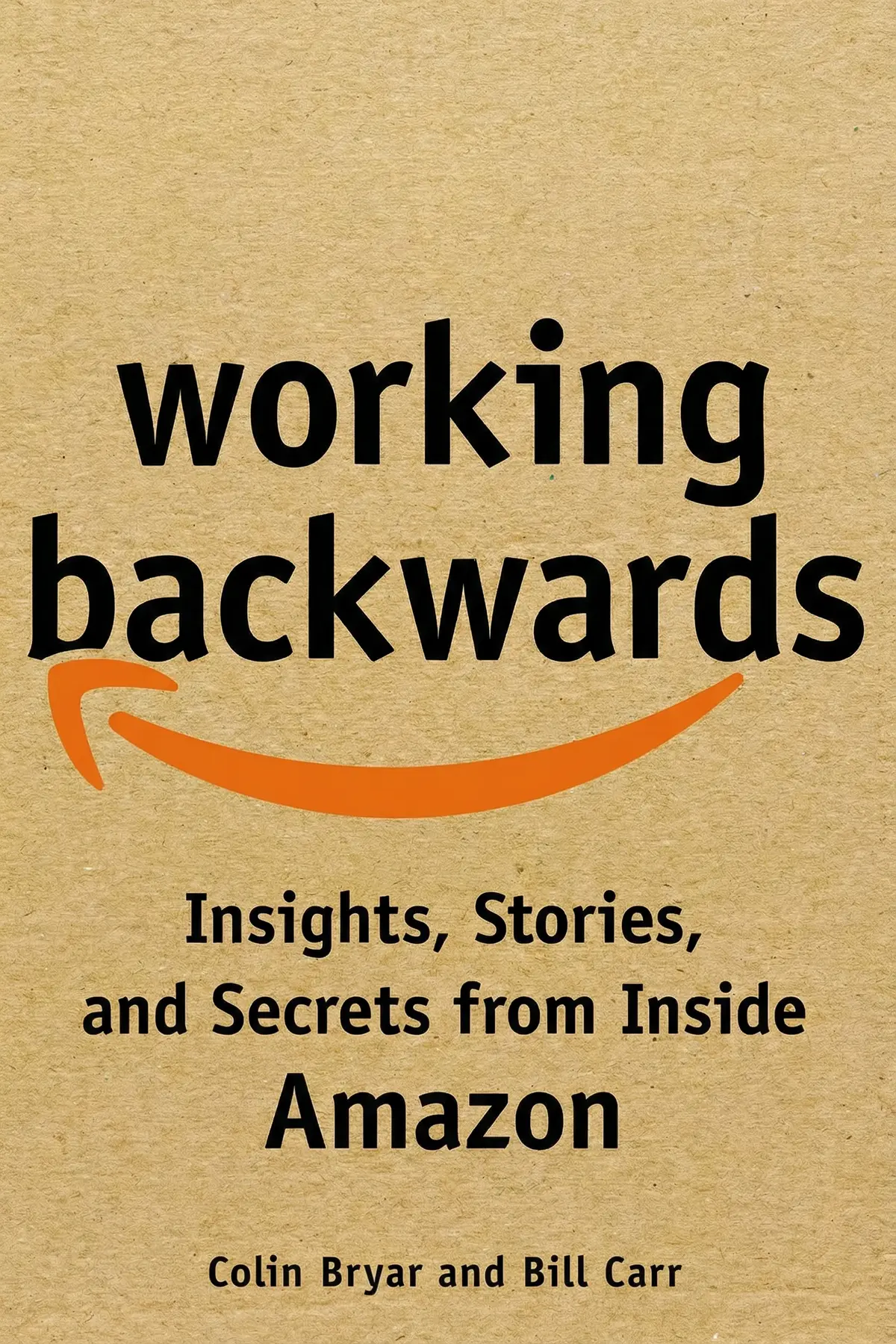
Table of Content
1. Introduction
57 sec
Most teams start with what they can build and only later ask who will want it. In Working Backwards, Colin Bryar and Bill Carr, two longtime Amazon vice presidents, describe a company that reverses that order on purpose. It pictures the delighted customer first, then works back to the product, the people and the plan. Bryar spent two years as chief of staff to Jeff Bezos, and Carr started and ran the digital music and video business that included Prime Video, so both watched these habits from close range.
Their case is that Amazon’s success rests on leadership principles turned into concrete routines, and that its stumbles came when people skipped them. The stories run from a Seattle basement to Prime, Kindle and an embarrassing upside-down movie. Four practices are worth borrowing this month: a press release written before the product exists, a memo read in silence, an outside interviewer who can say no, and written feedback before anyone talks.
2. Turn company values into everyday choices
1 min 44 sec
Most companies have values printed somewhere, and few employees could say how they changed a single decision. Amazon’s showed up in a basement office, some unusual desks and a shipping choice that cost money on purpose.
3. Write the press release before you build anything
1 min 48 sec
Plenty of products launch on time, work as designed and still sit unsold. Amazon screens every new idea with two documents written before a line of code, and one of them is never meant for the press.
4. Choose the customer when the numbers say wait
1 min 55 sec
Amazon was growing in every category and still losing ground. Fixing it meant walking away from the comfortable option and accepting a payback that might take years, a choice many managers would refuse.
5. Ignore the rival and build what customers miss
1 min 45 sec
When a competitor launches a hit, the pressure to answer it can be enormous. Amazon felt that pressure from an entire industry, spent six months on a different question, and then picked a fight with its own leadership team.
6. Spot the shortcuts that sink a good launch
1 min 42 sec
A senior team stood on stage to show off a new service, and the demo went wrong in front of everyone. The bigger problems behind that moment were ones the team should have dealt with before launch.
7. Swap slides for a six-page memo
1 min 51 sec
Amazon’s most senior meetings start with twenty minutes in which nobody says a word. The habit grew out of years of frustration with a tool almost every office still uses, and it changes who wins the argument.
8. Hire like you are buying a factory
1 min 41 sec
A team desperate to fill an empty seat is the worst judge of who should fill it. Amazon built two simple safeguards into every hire, one of them a person with the power to say no.
9. Conclusion
1 min 11 sec
What Bryar and Carr describe is a company that keeps asking one question in many forms: what would make the customer’s life better, and what must we do to get there? The desks made of old doors, the priority mail, the $600 million bet behind Prime and the decision to learn hardware for Kindle all answer it. So do the routines nobody outside sees, like the press release that is never published, the silent reading and the outsider with a veto. They stop a busy organization from sliding back to whatever is easiest for itself. Unbox shows the price of skipping them: a good idea undone by buggy software and four-hour downloads nobody had checked customers wanted.
None of this requires Amazon’s size. Before committing to your next project, write the one-page release and the hard questions behind it. Bring a written memo to the meeting and let people read in silence before the talking starts. Ask interviewers to put their judgment on paper before they compare notes.
The order is the whole lesson. Begin with the person you serve, and let every plan, budget and hire follow from there.
About this book
What is this book about?
Most companies build what they already know how to make, then ask marketing to find buyers. Colin Bryar and Bill Carr, who between them spent more than a quarter of a century inside Amazon, describe a company that deliberately runs in the opposite direction. It starts with what would make a customer's life better, then works back to the product, the budget and the people needed to deliver it. The authors show how a handful of leadership principles, among them customer obsession, frugality, bias for action and high standards, became concrete practices. Product ideas begin as a one-page press release and a tough FAQ. Meetings begin with twenty minutes of silent reading of a six-page memo instead of slides. Hiring runs through a bar raiser, an outside interviewer who can veto any candidate. The stories behind Prime and Kindle show these habits paying off. The awkward launch of Unbox, Amazon's first video download service, shows the cost of ignoring them. Readers get a clear picture of how Amazon makes decisions and a set of routines any team can adapt.
Book Information
Who it's for
Founders and product heads
Founders and product leaders who want a test that kills weak ideas before money is spent.
Managers
Managers tired of slide-driven meetings and rushed hiring decisions.
Curious how Amazon decides
Professionals curious how Amazon actually decides what to build, and what went wrong when it didn't follow its own rules.
About the Author
Colin Bryar
Colin Bryar joined Amazon in 1998 and spent 12 years there as it grew from a US bookseller into a global business. As a vice president, he served two years as Jeff Bezos's chief of staff. Bill Carr spent more than 15 years at Amazon. As Vice President of Digital Media, he started and ran its worldwide music and video businesses, including Prime Video. Bryar later became COO of RedMart and Carr became COO of OfferUp. Together they founded Working Backwards LLC, where they coach executives on applying Amazon's management practices.
Ratings & Reviews
Ratings at a glance
What people think
Listeners describe the book as extremely accessible and full of insights, and one mentions it is especially useful for conscientious business owners. Furthermore, the writing offers outstanding hands-on guidance, as one listener points out how it uses examples to clarify management methods. They also value the depth of detail, quality writing, and clear organization, with one listener remarking on how relevant it is for many different types of organizations. The material is praised for being easy to put into practice, and one listener specifically highlights its five specific processes.
Top reviews
Udom
Finally got around to reading this after hearing so much about the 'Amazon way' in my management circles. This book offers a remarkably transparent look into the decision-making engine of a global giant. Unlike many business memoirs that focus on glossy anecdotes, Bryar and Carr provide a granular, tactical breakdown of the mechanisms that actually drive results. The 'Working Backwards' process—starting with a press release before a single line of code is written—is a revelation for anyone tired of products looking for a problem. I particularly appreciated the detailed explanation of the 'Bar Raiser' hiring process. It explains how they maintain a high talent density even while scaling at a breakneck pace. To be fair, some of the processes sound incredibly intense, almost bordering on the bureaucratic. However, the logic behind the 'six-page narrative' instead of PowerPoint is undeniable. It forces clarity of thought that most corporate meetings lack. Highly recommended for any leader who wants to replace luck with a repeatable system for innovation.
Show moreAhmed
Ever wonder why Amazon seems to move so much faster than other legacy companies? This book provides the answer through a deep dive into their peculiar culture and rigid adherence to leadership principles. The chapter on input versus output metrics changed how I look at my own quarterly goals entirely. Instead of obsessing over sales figures—an output you can't directly control—the book argues for focusing on the controllable inputs like price and selection. The prose is clear, informative, and devoid of the usual MBA fluff that plagues this genre. I was especially fascinated by the 'Working Backwards' concept applied to the Kindle. It shows how customer obsession isn't just a slogan but a literal design constraint. Frankly, the level of detail regarding their weekly business reviews is staggering. It makes you realize that their success isn't just about Bezos’s genius; it is about a relentless commitment to a specific set of rituals and rhythms.
Show morePacharapol
The section on 'Single-Threaded Leaders' alone is worth the price of admission for any scaling startup founder. We often fail at new projects because we expect people to do them alongside their 'day job.' Amazon’s solution—giving one person one goal and nothing else—is simple but revolutionary in its application. This book is exceptionally readable and provides a clear roadmap for implementing their specific management styles. I loved the breakdown of how AWS was developed, showing that it wasn't just a lucky accident but a result of these core processes. The writing style is direct and professional, which fits the subject matter perfectly. It’s rare to find a business book that gives you actual templates you can use in your next meeting. I’ve already started experimenting with the 'no slides' rule in my department, and the difference in discussion quality is night and day. If you want to improve your operational excellence, start here.
Show moreYanin
Not what I expected in terms of prose—it's surprisingly readable for such a dense business manual. Most books by former executives are just ego trips, but Bryar and Carr focus almost entirely on the mechanisms of the company. The concept of 'Working Backwards' is a masterclass in product development. They walk you through the logic of why the customer experience must be defined first, which seems obvious until you realize how few companies actually do it. I found the chapter on the weekly business review particularly enlightening, especially the part about ignoring anecdotes in favor of data-driven charts. The book is well-structured, moving from abstract principles to concrete applications in the second half. It provides excellent practical advice for anyone trying to build a scalable, durable organization. It’s definitely earned a permanent spot on my shelf alongside High Output Management. A very informative and well-written guide for the modern manager.
Show moreDuang
Gotta say, this is one of the most useful business books I’ve read in years. It’s not just about Amazon; it’s about a philosophy of long-term thinking and extreme ownership. The 'Working Backwards' method has already changed how our team approaches new feature requests. We now start by asking, 'What does the press release look like?' before we even talk to engineering. The authors do a great job of explaining why these 'peculiar' practices work, even when they seem counterintuitive at first. For example, the idea of sitting in silence for 20 minutes to read a memo at the start of a meeting sounds weird, but it ensures everyone is on the same page. The book is well-written, clear, and provides a sufficient level of detail to actually implement these ideas. It is an essential read for anyone working in tech or any fast-moving industry. Truly a goldmine of operational excellence.
Show moreSaranya
As a tech lead who is tired of endless PowerPoint decks, the narrative approach described here felt like a breath of fresh air. The authors emphasize the power of the written word to expose flaws in logic that bullet points often hide. I found the section on 'Single-Threaded Leaders' to be the most practical takeaway for my own organization. It addresses the common trap of making innovation a part-time job for already busy people. While the book can feel a bit like 'Amazon propaganda' at times, the case studies on Kindle and Prime Video provide enough context to see how these principles function in the real world. I did find the second half a bit slower than the first, as it retreads some ground already covered by other Amazon histories. Still, the specific five processes outlined are easy to understand and provide a solid framework for any company. It is a well-structured manual for building a culture of high standards.
Show moreLook
Picked this up on a recommendation and was immediately struck by the rigor of the 'PR/FAQ' concept. The idea that you should write the product's launch announcement before building it is brilliant. It forces you to think through the customer's perspective from day one. I've read 'The Everything Store,' and while that was a better history, this is a much better manual for managers. The authors do a great job of explaining how the 14 Leadership Principles aren't just posters on a wall but are used in every interview and performance review. My only gripe is that the book makes Amazon sound a bit unempowering for the average worker. The Bar Raiser process, for instance, means even a hiring manager doesn't have the final say on their own team. It’s a fascinating look at a company that prioritizes long-term thinking over short-term comfort. This is a must-read for anyone in the tech industry trying to understand the DNA of their biggest competitor.
Show moreBrahim
After finishing Brad Stone’s 'The Everything Store,' I wanted something more tactical, and this delivered exactly that. While Stone covers the 'what,' Bryar and Carr cover the 'how.' The level of detail on the PR/FAQ process is fantastic, including actual examples of how they were used for Kindle. I did find the discussion on AWS a bit less engaging, perhaps because that story has been told so many times before. However, the insights into how Amazon manages its 'input metrics' were a lightbulb moment for me. They don't just talk about customer obsession; they show the math behind it. The tone is very professional, almost like a corporate handbook, which might be dry for some but I found it refreshing. It’s a great resource for thoughtful business owners who want to move beyond generic advice and implement specific, proven processes. Definitely worth the read for the leadership insights alone.
Show moreNoppadol
Look, I’ll admit I was skeptical of two former VPs writing what could have easily been a corporate puff piece. There is definitely a lot of 'Kool-Aid' drinking here, and the authors seem to suggest that Jeff Bezos is rarely, if ever, wrong. The constant references to being 'Amazonian' started to feel a bit cult-like after the hundredth page. In my experience, these types of high-pressure environments often come with hidden costs that aren't fully explored in these pages. They briefly mention the Fire Phone failure, but it's framed as a 'valuable lesson' rather than a systemic flaw. That said, the actual advice on hiring and document-based meetings is genuinely useful for any business owner. It is a well-written book that provides a peek behind the curtain, even if that curtain is carefully curated. If you can filter out the hero worship, there are some excellent operational nuggets to be found regarding how to scale execution without losing quality.
Show moreFatou
Truth is, I found the constant hero-worship of Bezos a bit grating by the third chapter. The authors present Amazon as this perfect meritocracy, but they completely ignore the human cost seen in their fulfillment centers. It feels very much like an insider’s view looking down from the S-Team balcony, detached from the reality of the average employee. The processes like the 6-pager and the Bar Raiser sound incredibly bureaucratic and potentially soul-crushing for creative types. Every decision seems to be buried under mountains of metrics and multi-hour meetings. While I appreciate the detail on the Kindle and Prime launches, the tone is too much like an authorized biography for my taste. It lacks the critical lens that a truly objective analysis would provide. If you love the Amazon corporate culture, you’ll love this, but if you’re looking for a balanced view, look elsewhere. It feels more like a recruitment tool than a candid reflection on business leadership.
Show moreQuestions about this book
What is the main idea of Working Backwards?
Colin Bryar and Bill Carr argue that Amazon succeeds by starting every decision with the customer and working back to the product, budget and people needed. Leadership principles such as customer obsession, frugality, bias for action and high standards are turned into concrete routines: a mock press release and FAQ for new ideas, six-page memos for meetings and a bar raiser for hiring. When teams skipped these routines, as with the Unbox video service, results suffered.
What is Amazon's press release and FAQ process?
Before building anything, a team writes a one-page press release imagining the product is finished and describing its benefits to customers. The Kindle release, for instance, praised the screen and easy book downloads. A roughly five-page FAQ follows, answering customer questions and internal ones, such as how many data scientists or developers would need to be hired. Colleagues read both documents to decide whether the idea is worth pursuing.
Why did Amazon replace PowerPoint with six-page memos?
In 2004 Jeff Bezos decided slides were hurting senior meetings. One idea per slide hid the links between ideas, and bullet points stripped out detail leaders needed. A six-page narrative memo carries about nine times more information, according to the authors, and meetings open with twenty minutes of silent reading. It also stops people from judging a proposal by the presenter’s speaking or design skills.
What is a bar raiser in Amazon's hiring process?
An interviewer with deep experience who sits outside the hiring team and has no interest in filling the role fast is known as a bar raiser. They conduct the final interviews and can veto any candidate. This counters urgency bias, where a team that wants someone fast overrates strengths and ignores weaknesses. Amazon also has interviewers write detailed reports before talking to colleagues, which prevents one person’s opinion from shaping everyone else’s.
How can I apply Working Backwards in my own team?
Start your next project with a one-page press release written from the customer’s view, plus an FAQ that faces hard internal questions. Replace slide decks with a few pages of prose and give people time to read before discussing. In hiring, add an interviewer from another team who can say no, and collect written feedback before any debrief. Before launch, test the assumption your product depends on.
Readers also enjoyed

A Bigger Prize: How We Can Do Better Than the Competition
Margaret Heffernan





A Year with Peter Drucker: 52 Weeks of Coaching for Leadership Effectiveness
Joseph A. Maciariello



Acting with Power: Why We Are More Powerful Than We Believe
Deborah Gruenfeld
AUDIO SUMMARY AVAILABLE
Listen to Working Backwards in 15 minutes
Get the key ideas from Working Backwards by Colin Bryar, plus 5,000+ more nonfiction titles.
- 5,000+ titles
- Listen as much as you want
- 7-day free trial
- Cancel anytime









