
A Planet of Viruses
Carl Zimmer
 English
A neuroscientist shows how love is built and run by the brain, why it sharpens thinking and protects health, how desire and love feed each other, and how to face grief when love is lost.
58 sec
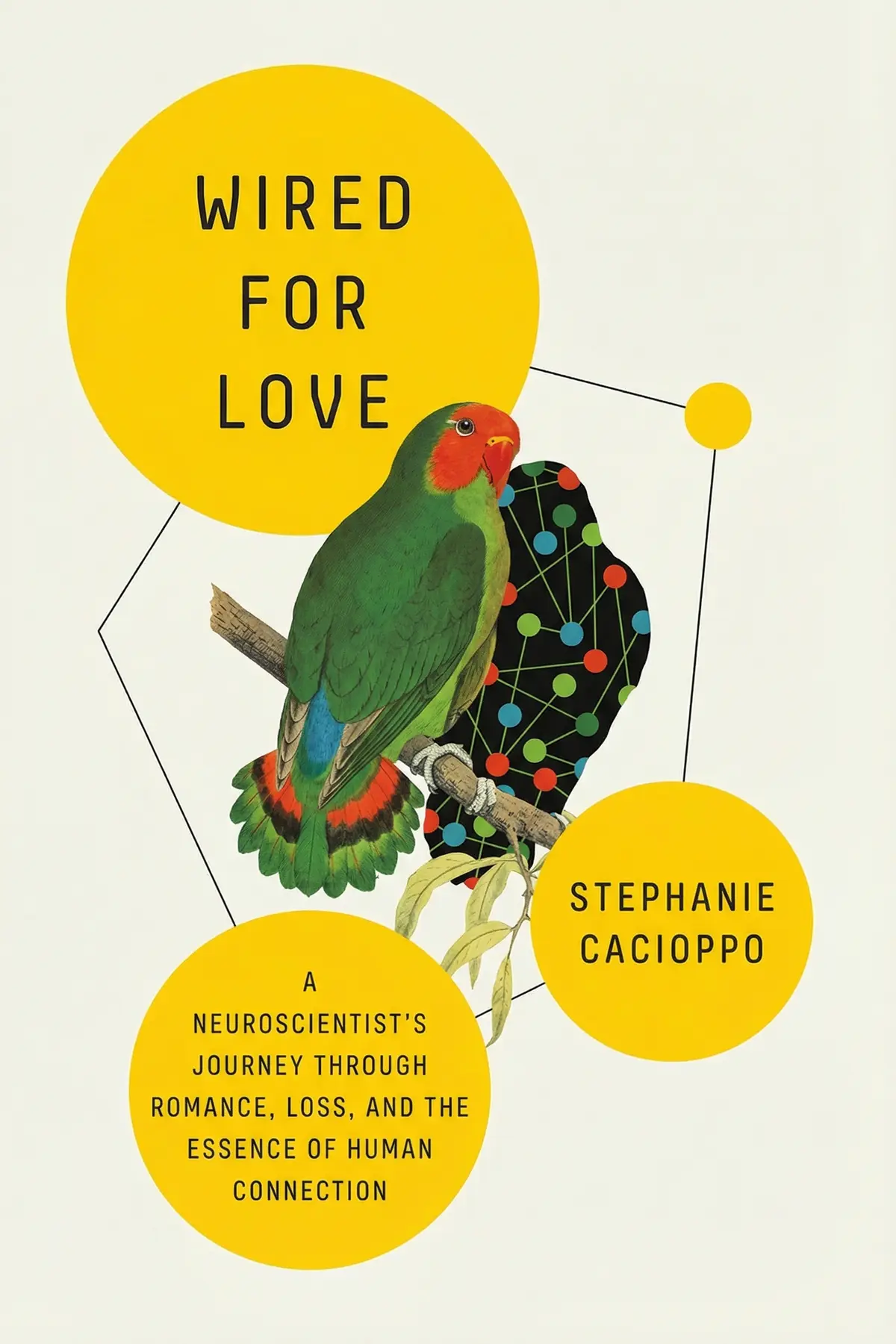
If love has started to feel optional, a distraction from work or a gamble on a dating app, the neuroscience says otherwise. Your brain decides whether someone is a possible partner in under 200 milliseconds, long before you form a conscious thought. In Wired for Love, University of Chicago neuroscientist Stephanie Cacioppo argues that love is a biological need, put there by evolution, and that it lives in the brain rather than the heart.
That claim carries a promise and a warning. Love sharpens the mind and protects the body, which is exactly why losing it can do so much damage. Cacioppo makes her case from her own lab, from a test that reads hidden preferences, and from her marriage to a fellow scientist and the loss that ended it. What she offers is a way to understand your own attraction, to keep desire alive over the years, and to meet grief without being broken by it.
1 min 50 sec
Attraction is decided faster than you can blink, and some of what drives it is strange: your own face, the smell of a stranger’s immune system, and a small brain region with an oddly fitting shape.
2 min 04 sec
A student torn between two men took a ten-minute computer test and learned which one she preferred before she knew it herself. The way her brain responded says something unexpected about love and intelligence.
1 min 59 sec
Two scientists met over a joke about snoring and talked until late at night. What pulled them together can be measured in the brain, and copied by anyone willing to move in step with someone else.
2 min 06 sec
Most people believe they can feel desire without love, or love without desire, and a survey of 500 people seems to agree. Brain scans tell a different story, with a practical lesson for couples whose spark has faded.
2 min 14 sec
Cacioppo’s husband survived a cancer with terrible odds and then died suddenly three years later. The science of what happened to her next explains why the first day after a loss is so dangerous.
2 min 02 sec
Some mourners are still trapped a year after a loss, and a brain scan can show why. Cacioppo found her own way out in an unlikely place, falling through the air above Switzerland.
1 min 11 sec
Cacioppo’s book adds up to one claim with two sides. Love is a biological need, as basic as food or sleep, and it repays us with quicker thinking, a stronger body and fewer strokes. The same wiring explains why a loss can bring on a heart attack within a day, or keep a mourner’s reward system waiting for someone who will never return. The benefit and the risk come together, and what you control is how you meet each one.
In her account, loneliness is a danger in itself, and it makes an early death 25 to 30 percent more likely. One remedy she suggests is volunteering with a local charity, which gives a sense of shared humanity close to what a romantic bond provides. If you know someone who is lonely, ask them to help you with something; being trusted to help restores their sense of worth. Inside a relationship, keep the seesaw between closeness and desire moving, even with something as ordinary as cooking a new dish together. And when loss comes, turn toward it.
Cacioppo found her way back from loss while falling through the Swiss sky, screaming all the way down, and she still loves the man she lost.
Half of American adults are now single, and many say they have stopped looking. Dating apps make every partner seem replaceable. It is easy to conclude that love has become optional. Stephanie Cacioppo, a neuroscientist who studies love in the brain, argues the opposite: evolution wired us for love, and it shapes how we think, how healthy we are and how long we live. Cacioppo builds her case from her own lab and her own life. She describes a ten-minute test that reveals which partner someone prefers before they know it themselves, brain scans showing that love and desire share one network, and studies of how grief floods the body with danger. Running through the science is her marriage to John Cacioppo, the scientist known as Dr. Loneliness, and his death from cancer. Readers learn what drives attraction in a fraction of a second, why being in love makes the mind faster and more creative, how couples can rekindle desire through shared pleasures like cooking, and why facing grief directly, even screaming at it, heals better than avoiding every reminder.
People who have stepped back from dating and wonder whether love is worth the effort.
Couples in long relationships whose physical spark has faded and who want a science-based way back.
Anyone grieving a partner, or supporting someone who is, who wants to understand what loss does to body and mind.
Stephanie Cacioppo teaches psychiatry and behavioral neuroscience at the University of Chicago, where she also directs the brain dynamics laboratory. Her research focuses on how love works in the brain and on the social self, and her scientific articles have been covered by the New York Times, CNN and National Geographic.
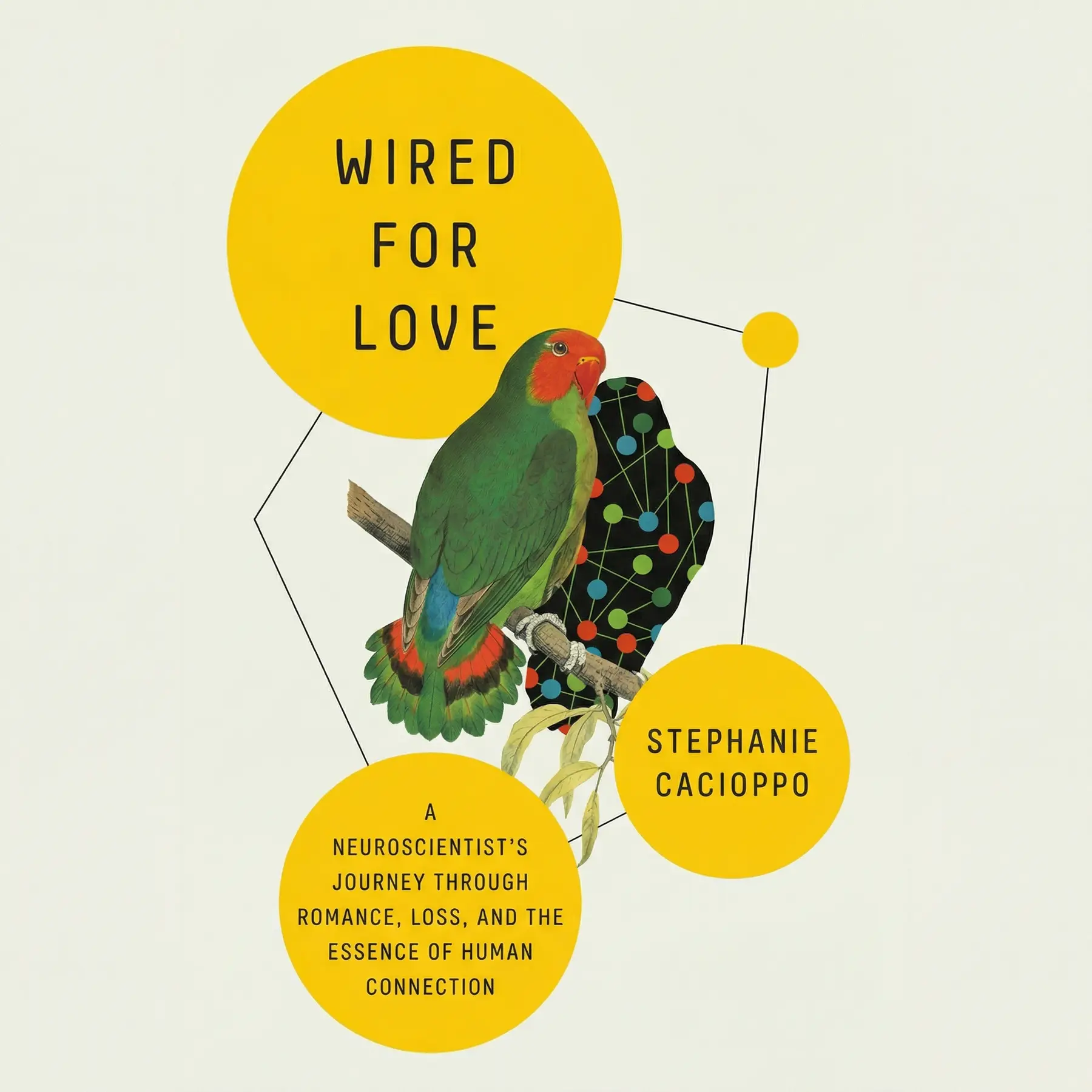
Listeners find the book to be high quality and appreciate its moving love story. They also value the insights provided, with one listener noting how it reveals fascinating details about the brain, while another points to its introduction to social neuroscience.
This book is a stunning intersection of raw emotion and clinical research. Stephanie Cacioppo manages to bridge the gap between complex fMRI data and the deeply personal experience of losing her husband, John. I found the GRACE acronym—Gratitude, Reciprocity, Altruism, Choice, and Enjoyment—to be a surprisingly practical takeaway for someone like me who usually avoids self-help tips. Truth is, seeing how the brain’s mammalian pleasure centers interact with our higher cognitive systems made the concept of love feel less like magic and more like a vital biological nutrient. The prose is accessible, and the narrative of 'Dr. Love' meeting 'Dr. Loneliness' is genuinely moving. It’s a short read but packs a significant emotional punch, especially when she discusses the angular gyrus and how our brains represent the 'self' through another person. Truly, it's a beautiful exploration of the human heart through the lens of a microscope.
Show moreWow. I wasn’t expecting a book about brain scans to make me cry, but the account of Stephanie and John’s relationship is absolutely beautiful and devastating. Seeing how two people dedicated to studying human connection found it in each other later in life was such a highlight for me. The transition from the 'high' of falling in love to the 'low' of navigating terminal illness and grief was handled with so much dignity and scientific curiosity. It's fascinating to learn that the brain processes love not just as an emotion, but as a cognitive necessity for survival. Some might find the focus on heteronormative romance a bit much, but as a memoir of a specific relationship, it works perfectly. It’s a testament to the fact that even 'Dr. Love' isn't immune to the heartbreak that comes with the territory. Essential reading for anyone who has ever loved and lost.
Show moreFinally got around to reading this and I've got to say, it’s a really unique blend of genres. You get the hard science of what’s happening in the insula and the striatum, but you also get a front-row seat to a very real, very moving love story. The 'Dr. Love' and 'Dr. Loneliness' dynamic is such a cool hook, and it’s clear the author has a deep passion for her field. I loved the short, punchy chapters and the way she uses Maya Angelou quotes to frame her research. It’s not a perfect book—it definitely ignores the platonic side of things too much—but for anyone currently in love or looking for it, it’s incredibly validating. The message that we are literally 'wired' for this connection is something I think we all need to hear sometimes. Highly recommended for the curious.
Show moreThe chapter on the biological necessity of love was a total game-changer for me. I’ve always thought of love as a 'nice to have,' but Cacioppo argues convincingly that it's as essential as food or water for our neurological health. The way she weaves her own story of meeting John into the research makes the data feel much more urgent and alive. I was particularly struck by the 'love machine' experiments and the discussion on how deep connections can reduce the risk of addiction and improve sleep. Not gonna lie, the ending is a bit of a tear-jerker, but it leaves you with a sense of hope and a better understanding of your own mind. It’s a must-read for anyone who wants to think more deeply about how their brain shapes their heart. You'll never look at a crush the same way again.
Show moreEver wonder what’s actually happening in your head when you fall for someone? This book offers a compelling look at the twelve brain regions that light up during that initial spark, blending hard data with a vulnerable love story. I appreciated how Cacioppo didn't shy away from the messy parts of her own life, specifically her marriage to John Cacioppo and the subsequent grief. The writing style is quite readable—not too bogged down in jargon, but enough to make you feel like you're learning something substantial about social neuroscience. My only gripe is that it feels a bit like a Hallmark movie at times, particularly the childhood premonition bit, which felt out of place in a science-heavy book. Still, the idea that love makes us cognitively stronger and physically healthier is an empowering message that I’ll be thinking about for a long time. It is a solid pick for science buffs and romantics alike.
Show morePicked this up because I’ve always been curious about why we feel the way we do, and the neurological explanations here did not disappoint. The way Cacioppo explains how love activates the brain's cognitive systems—not just the pleasure centers—changed how I view my own relationships. It’s not just about the rush of dopamine; it’s about how we literally map another person onto our own sense of self. The book is very readable, though I’ll admit the memoir portions sometimes overshadowed the actual science I was looking for. I enjoyed learning about the different neurotransmitters like noradrenaline and oxytocin, and how they contribute to that 'obsessive' feeling of a new crush. It’s a solid introduction to social neuroscience that feels personal without being overly academic, making it perfect for a weekend read for anyone interested in why we crave connection.
Show moreAs someone who finds neuroscience fascinating, I appreciated the way this book tackled such an 'unscientific' topic like love. Cacioppo does a great job of explaining why we shouldn't shy away from studying these messy human emotions under a microscope. The fMRI studies she describes are eye-opening, particularly the idea that love can actually improve our cognitive performance on unrelated tasks. However, the book does suffer from a lack of nuance regarding the aromantic and asexual spectrums, which felt like a missed opportunity to expand the 'wired for love' thesis. Personally, I found the chapter on grief to be the most impactful, as it used science to validate the physical pain of loss. It’s a well-written, if slightly biased, look at the most powerful human experience we have. I'd recommend it to anyone who enjoys a mix of memoir and psychology.
Show moreI really wanted to love this given the author’s credentials, but the narrow focus on romantic partnerships felt incredibly limiting. While the memoir aspects are well-written and the science of the 'love machine' is fascinating, Cacioppo basically ignores platonic and familial bonds as being secondary or even biologically inferior. Frankly, in a world where so many of us rely on deep friendships for survival, it felt a bit dated to read that romantic love is the ultimate key to human fulfillment. To be fair, the sections on grief and how she processed her husband's passing are deeply touching and provide great insight into the neuroscience of loss. However, the lack of inclusivity for aromantic or asexual perspectives makes the 'wired' argument feel incomplete. It’s a decent read for the science, just be prepared for a very traditional worldview that doesn't account for the diversity of human connection.
Show moreLook, the science is solid, but the tone of the memoir segments felt a bit too 'perfect' for my liking. Stephanie Cacioppo is clearly a brilliant mind, yet she writes about her personal life like she’s the protagonist of a romantic comedy, which made it hard for me to connect with the material at times. I found the anthropological claims about romantic love predating friendship to be pretty questionable and under-researched compared to the MRI data. That said, the sections on the GRACE model were genuinely helpful, and I’ve started trying to incorporate more gratitude into my daily routine. It’s a strange hybrid of a book—part rigorous study, part sentimental diary. If you can get past the somewhat narrow view of human connection, there’s some really valuable info here about how to maintain brain health through social bonds.
Show moreAfter hearing so much buzz about this, I found the final product to be quite a letdown in terms of modern perspectives. The author asserts a very rigid, cis-gendered, and heteronormative view of what 'fulfilling' love looks like, essentially dismissing anyone who doesn't prioritize a romantic partner. If you’re aromantic or just someone who values their friendships above all else, you’re going to feel pretty alienated by the first few chapters. The writing is basic and leans heavily on tropes that feel more like a romance novel than a groundbreaking scientific text. While there are a few interesting nuggets about the angular gyrus, I couldn't get past the feeling that the research was being cherry-picked to support a very specific lifestyle. It’s just too one-note for my taste, and I ended up skimming the last third. There are better books on connection out there.
Show moreCacioppo argues that love is a biological need wired into us by evolution, and that it begins, grows and ends in the brain, not the heart. Being in love activates advanced brain regions linked to creativity, language and imagination, and long-term relationships bring better sleep, stronger immunity and fewer strokes. The flip side is that losing love can seriously harm health, which is why grief needs to be faced directly.
It is the nickname for a ten-minute computer test Cacioppo developed. A partner’s name flashes for 26 milliseconds, too briefly to be consciously seen, and the person then sorts real words from fake ones. One student recognized real words almost 20 percent faster after one man’s name than after the other’s. Women deeply in love also did better after their partner’s name than after a longtime friend’s.
Cacioppo’s brain scans show that love and desire both activate the insula, with desire at the back and love at the front, so the two feed each other like a seesaw. Since the back of the insula also responds to food, she suggests couples invent recipes, cook together and share meals while paying close attention to the flavors, as a gentle way to restore physical connection.
Loss is physically dangerous. In the first 24 hours, the risk of a heart attack rises 21 to 28 times, and a 1960s study found British widowers 40 percent more likely to die within six months. Most people improve within six to twelve months, but about 10 percent develop complicated grief. Cacioppo argues that avoiding reminders makes it worse and that facing the pain, even by screaming, helps.
It suits readers curious about the science of attraction, couples whose desire has faded, and anyone coping with the loss of a partner. It also speaks to people who have given up on dating, since Cacioppo argues that love and connection are biological needs. Her advice reaches beyond romance too, such as volunteering to fight loneliness, which she says raises early death odds by 25 to 30 percent.
Carl Zimmer

Bill Bryson

Jeff Hawkins


Lisa Kaltenegger


AUDIO SUMMARY AVAILABLE
Get the key ideas from Wired for Love by Stephanie Cacioppo, plus 5,000+ more nonfiction titles.









