

A Thousand Brains: A New Theory of Intelligence
Jeff Hawkins
 English
 ไทย
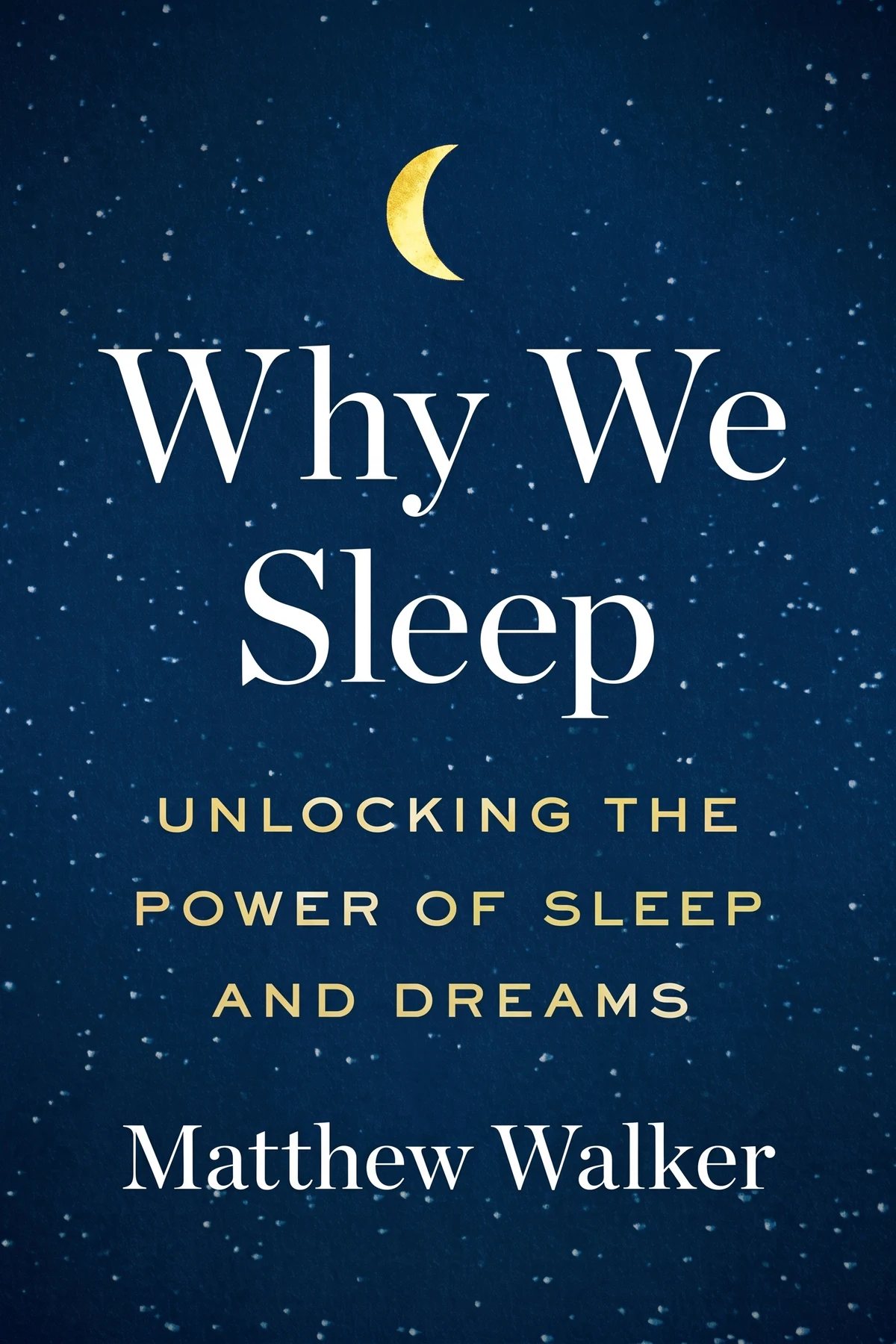
Shows what the brain and body do across each night of sleep, why regularly getting less than seven hours harms memory, mood and health, and which everyday habits and treatments help restore good rest.
1 min 00 sec
If you treat sleep as the hours left over once the real work is done, the neuroscientist behind Why We Sleep would say you have the trade backwards. Matthew Walker, who studies sleep and disease at the University of California, Berkeley, argues that every organ in the body is restored in some way while we sleep, and that the brain does some of its hardest work then. Ever since the light bulb arrived, much of the Western world has treated rest as an obstacle to getting things done.
Walker’s case is the opposite: seven to nine hours a night is one of the best investments in health and performance available to anyone. His argument is simple to state. Sleep is an active, carefully timed process, and short or broken nights cost the mind and body far more than the hours they seem to free. By the end, you will know what your brain is doing at each point of the night, which common habits quietly break that work, and which changes the evidence favors.
1 min 33 sec
You can feel exhausted at noon and wide awake at midnight. Two separate systems in the brain decide when sleep arrives, and a daily cup of coffee tricks one of them without removing the need it hides.
1 min 43 sec
Losing sleep in the first hours of the night and losing it at dawn look like the same loss. Walker shows they rob the brain of two very different kinds of work.
1 min 41 sec
Athletes and musicians often get better overnight without touching their equipment. The reason has little to do with their muscles, and it changes how anyone learning a new skill should plan the evening after practice.
2 min 01 sec
Short nights look like a personal trade of comfort for extra hours. The bill Walker describes reaches the office, the classroom, the immune system and even the odds of serious disease.
1 min 40 sec
The advice to sleep on a hard problem sounds like folk wisdom. Research on the dreaming brain suggests it does real work on feelings and puzzles, and that some sleepers can even steer the story.
2 min 01 sec
The drink that helps you drift off and the pill that knocks you out both come at a price. Walker explains what really breaks modern sleep, and what the evidence favors instead.
1 min 19 sec
Walker’s book reframes the night. The hours we write off as empty turn out to be some of the busiest of the day: memories moving into long-term storage, the immune system rebuilding, emotions being sorted, blood sugar and hormones being reset. Treating that time as optional is like sending a building’s maintenance crew home to save money. Nothing breaks at once. Then things start to break everywhere.
The response he supports is mostly about protecting what the body already knows how to do. Give yourself a window of seven to nine hours, and keep it at the same time each day so the internal clock and the build-up of adenosine pull in the same direction. Be honest about what you use to cope: the late coffee that hides sleep pressure, the drink that breaks the night apart, the screen that holds back melatonin. If sleep stays poor even when you have time for it, behavioral therapy for insomnia is the path he points to before pills.
Walker also looks past the individual, toward flexible work hours and sleep taught as a basic part of health. A society that guards its rest, he argues, becomes healthier, happier and more productive. The night does its work only when you let it.
Since the light bulb, sleep has often been treated as time stolen from work. Matthew Walker, a neuroscientist who studies how sleep connects to health and illness, argues that this gets things the wrong way round. Sleep, in his account, is an active process that touches every organ, and seven to nine hours a night is one of the strongest supports for health and performance. Walker explains the two forces that bring on sleep, an internal clock and the build-up of a chemical called adenosine, and the 90-minute cycles of NREM and REM sleep that fill a night. He shows how sleep spindles move memories into long-term storage, why skills improve after rest, and how dreams help process emotion and solve problems. He also sets out the costs of short sleep, from poorer judgment and dishonesty at work to weaker immunity, weight gain and a higher risk of disease. Readers learn why caffeine, alcohol, screens and sedatives undermine rest, what insomnia really is, and why Walker points to cognitive behavioral therapy for insomnia as a better path than pills.
Professionals who trade sleep for extra work hours and feel it in their focus and mood.
Students and anyone learning a skill who want study and practice to stick.
People who rely on coffee, a nightcap or pills to manage their nights and want better options.
Matthew Walker is a British neuroscientist, born in Liverpool, who is on the faculty at the University of California, Berkeley, where he teaches psychology and neuroscience. He holds a Ph.D. in neurophysiology. Before Berkeley, he was a professor of psychiatry at Harvard Medical School. His research looks at the links between sleep and human health and illness, and he has contributed to numerous scientific studies. Why We Sleep, from 2017, is his first book of popular science.
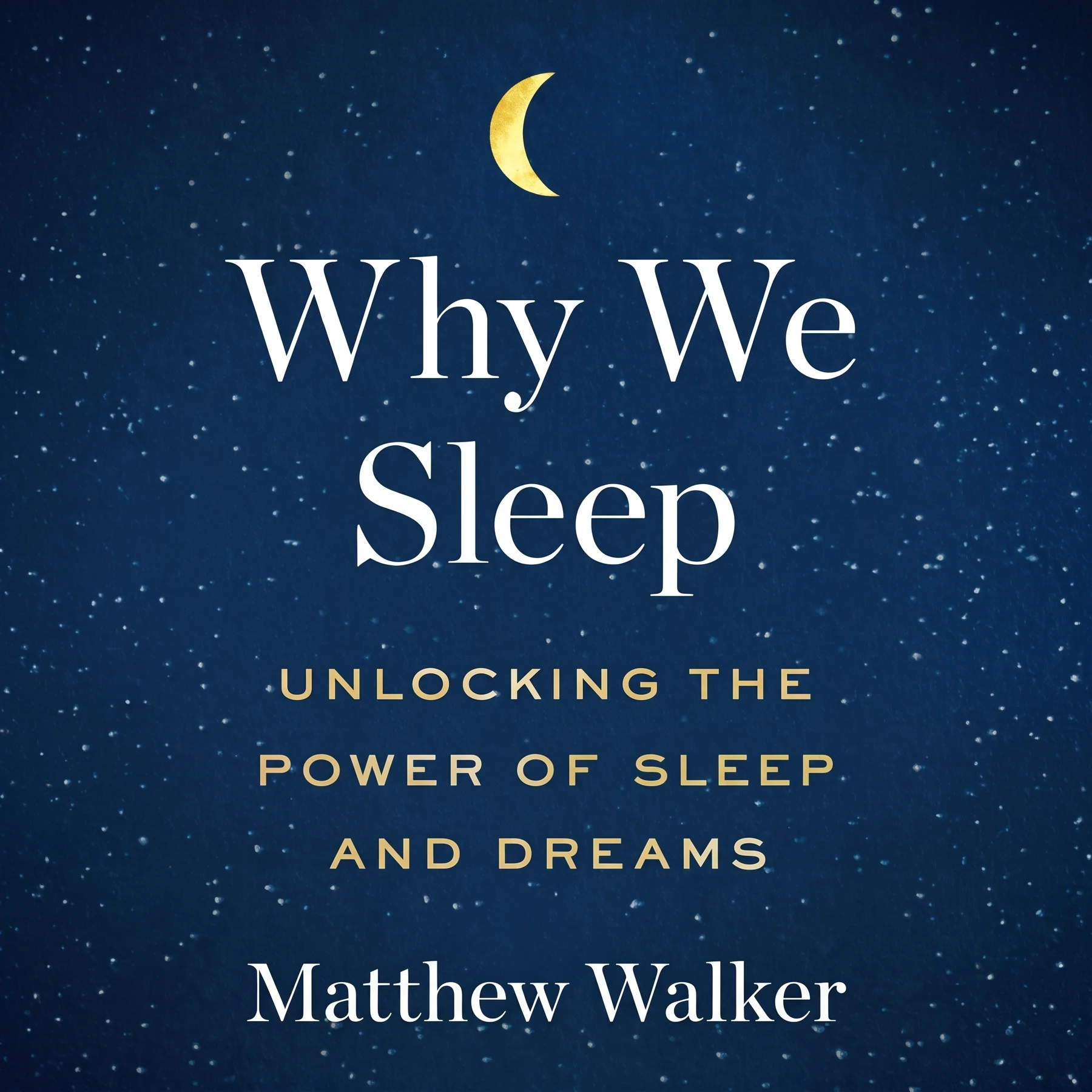
Listeners find this work highly accessible and well-crafted, noting its thorough research and engaging details. Furthermore, the text offers practical strategies for enhancing rest and clarifies various elements of sleep research. Listeners also note clear benefits to their general wellness and focus after listening, valuing the way the author synthesizes multiple scientific studies.
Picked this up after realizing my productivity was tanking, and it’s been a total game-changer for my daily routine. Matthew Walker manages to turn complex neuroscience into something actually digestible for a non-scientist, which is no small feat given the density of the research. I was particularly struck by the actionable advice on room temperature and cutting out blue light—small changes that have already improved my morning alertness. The way he weaves together various clinical studies makes the argument for eight hours feel less like a lecture and more like a necessary biological survival guide. I’ve started prioritizing my sleep hygiene over late-night scrolling, and the difference in my emotional regulation is noticeable. If you’re looking for a book that provides both the 'why' and the 'how' of better health, this is it.
Show moreEver wonder why every animal on the planet risks vulnerability just to shut their eyes for hours every day? This book provides a brilliant explanation of the evolutionary advantages that outweigh the risks of being unconscious and unable to hunt or defend yourself. Walker explains the 'neurochemical bath' our brains receive during rest in a way that makes you realize sleep is basically a superpower we’ve been ignoring. I loved the deep dive into how society has essentially engineered a sleep-deprivation epidemic through early school starts and 24/7 work cultures. The section on how even an hour of lost sleep can wreck your immune system was a wake-up call I desperately needed. It's a dense read but remains accessible throughout, making it a must-have for anyone interested in human biology.
Show moreMatthew Walker makes a compelling case for sleep being the third pillar of health alongside diet and exercise. The book is incredibly well-written, avoiding the dry, academic tone you might expect from a Berkeley professor. Instead, we get a fascinating tour of our own biology, from the mechanics of dreaming to the reason alcohol actually destroys the quality of your rest. I was shocked to learn that driving while tired can be even more dangerous than driving drunk because of micro-sleeps where your brain just checks out entirely. The actionable steps provided are simple but effective, and I've noticed a distinct improvement in my memory and focus since applying them. This is science writing at its best—informative, provocative, and genuinely useful for the average person.
Show moreGotta say, this book should be required reading for every doctor, teacher, and politician in the world. We have built a society that views sleep as a luxury rather than a biological necessity, and the consequences are clearly devastating. I was particularly interested in the discussion on night shifts and how they act as a literal carcinogen according to the WHO. Walker’s writing is clear and urgent, making the case for a systemic overhaul of how we handle work and education. My only gripe is that it can feel a bit repetitive towards the end, but the message is so important that it’s easy to overlook. Since reading, I’ve been much more protective of my eight-hour window, and my mental clarity has never been better.
Show moreAfter hearing about this on a podcast, I finally got around to reading it and I’m honestly blown away. The way it explains the role of sleep in creativity and problem-solving helped me understand why my best ideas always come after a good night's rest. It’s not just about 'resting'; it's about the complex processing our brains do while we’re out. The section on night owls versus morning larks was a relief to read, as it validated my own natural rhythms that never fit the standard 9-to-5 mold. The book is packed with interesting facts that you’ll end up quoting to everyone you know. It’s rare to find a book that is both scientifically rigorous and genuinely entertaining, but Walker pulls it off effortlessly.
Show moreIt’s genuinely terrifying to realize how much damage I’ve done to my body by neglecting sleep for the last decade. Walker doesn't pull any punches when describing how sleep deprivation destroys your ability to control your emotions and process stress. The link between lack of sleep and weight gain was a particularly 'lightbulb' moment for me. While the book is very well-documented, it can feel a bit like a horror novel at times because the stakes are so high. However, the actionable steps at the end provide a much-needed sense of control. If you care about your long-term brain health and want to understand the mechanics of your own mind, you need to read this. It’s a sobering but essential look at a modern health crisis.
Show moreFrankly, I didn't expect a book about sleep to be this gripping, but Walker writes with a sense of urgency that’s hard to ignore. The research regarding teenagers and their shifted circadian rhythms was particularly eye-opening for me as a parent. We are essentially torturing our kids by forcing them into classrooms at 7 AM when their brains are biologically wired to be asleep. While some of the connections he draws between lack of sleep and chronic illness feel a bit extrapolated, the core message is backed by enough evidence to be convincing. I've already swapped out my bedroom LED bulbs and started sticking to a stricter schedule. It’s not perfect—some parts feel repetitive—but the overall impact on my perspective regarding health has been massive.
Show moreLook, I used to wear my four-hour nights like a badge of honor, but Walker successfully shamed that habit out of me. The chapter on the Alzheimer’s link was probably the most haunting part of the entire book for me. Seeing how sleep acts as a 'glymphatic rinse' for the brain to clear out toxins really changed how I view my late-night work sessions. The book does a fantastic job explaining the difference between REM and NREM sleep, though I did find some of the animal studies a bit 'gee-whiz' in their presentation. Even if some of the more extreme claims have been debated in the scientific community, the foundational advice is solid. It’s a powerful reminder that we are biological creatures who can’t simply optimize away our basic needs.
Show moreWhile the writing style is undeniably engaging and fluid, I found the constant alarmism a bit much to handle as someone who already struggles with anxiety. The author paints such a dire picture of sleep deprivation that I actually felt more stressed trying to fall asleep after reading his warnings about cancer and Alzheimer’s. It’s well-documented and the facts about micro-sleeps are fascinating, but the tone leans heavily into fear-mongering to make its point. I appreciate the scientific deep dive into REM cycles and evolutionary biology, yet I wish there was more empathy for people with genuine sleep disorders. It’s a great piece of science communication, but proceed with caution if you’re prone to health-related worry. It might just keep you up at night for the wrong reasons.
Show moreTo be fair, the central premise that we all need more sleep is something I can get behind, but the execution left me feeling skeptical. I’ve seen some critiques online, like the ones by Alex Guzey, suggesting that Walker plays a bit fast and loose with the data to fit a specific narrative. For instance, the claim about the flu vaccine and sleep seems like a massive stretch that oversimplifies how the immune system works. The book is definitely easy to read and highly engaging, but as a reader, you have to keep a critical eye on the 'neurobollocks' that occasionally creeps in. It’s a good starting point for a conversation about public health, yet I wouldn’t take every single terrifying statistic as gospel truth. Useful, but take it with a grain of salt.
Show moreMatthew Walker argues that sleep is an active, carefully timed process that does essential work for the whole body. Across about five 90-minute cycles a night, the brain stores memories, repairs itself and processes emotion, while the body regulates blood sugar, hormones and immunity. Regularly getting less than seven hours, he says, harms attention, mood, judgment and long-term health, so seven to nine hours deserves to be treated as a priority.
Walker describes sleep as supporting learning at two points: beforehand it readies the brain to take in fresh information, and afterward it locks that information in. In stage 2 NREM sleep, short bursts of electrical activity called sleep spindles move memories from the hippocampus to the cortex for long-term storage. The same process improves physical skills, and athletes and musicians perform better after a full night of sleep or a nap rich in spindles.
Not according to Walker. Many people use a drink to wind down, but alcohol breaks sleep into fragments and disturbs both REM and deep NREM, the stages that handle emotion, creativity, memory and repair. Sedatives have a similar problem: they interfere with the brain’s natural sleep structure and can carry serious side effects. He favors cognitive behavioral therapy for insomnia, which builds better habits over time.
Walker defines insomnia as a lasting struggle to get restorative sleep despite having time for it, often driven by emotional stress. He presents cognitive behavioral therapy for insomnia as one of the most effective treatments that does not rely on medication. It works through long-term behavior changes, such as cutting caffeine and alcohol, improving sleep habits and keeping a consistent sleep schedule.
It suits anyone who trades sleep for work or study and wants to know the real cost: professionals worried about focus and judgment, students and learners who want practice to stick, and team leads who set the tone on late nights. It also helps people who rely on coffee, alcohol or pills to manage their nights and want alternatives the evidence supports.
Jeff Hawkins




Lisa Kaltenegger




AUDIO SUMMARY AVAILABLE
Get the key ideas from Why We Sleep by Matthew Walker, plus 5,000+ more nonfiction titles.









