

15 min 16 sec
Available in: English
Underbug: An Obsessive Tale of Termites and Technology
Lisa Margonelli shows how termites, despised as wood-eating pests, evolved into farmers and builders whose breathing mounds, fungus gardens and microbe-rich guts now guide research on evolution, clean fuel and swarm robots.
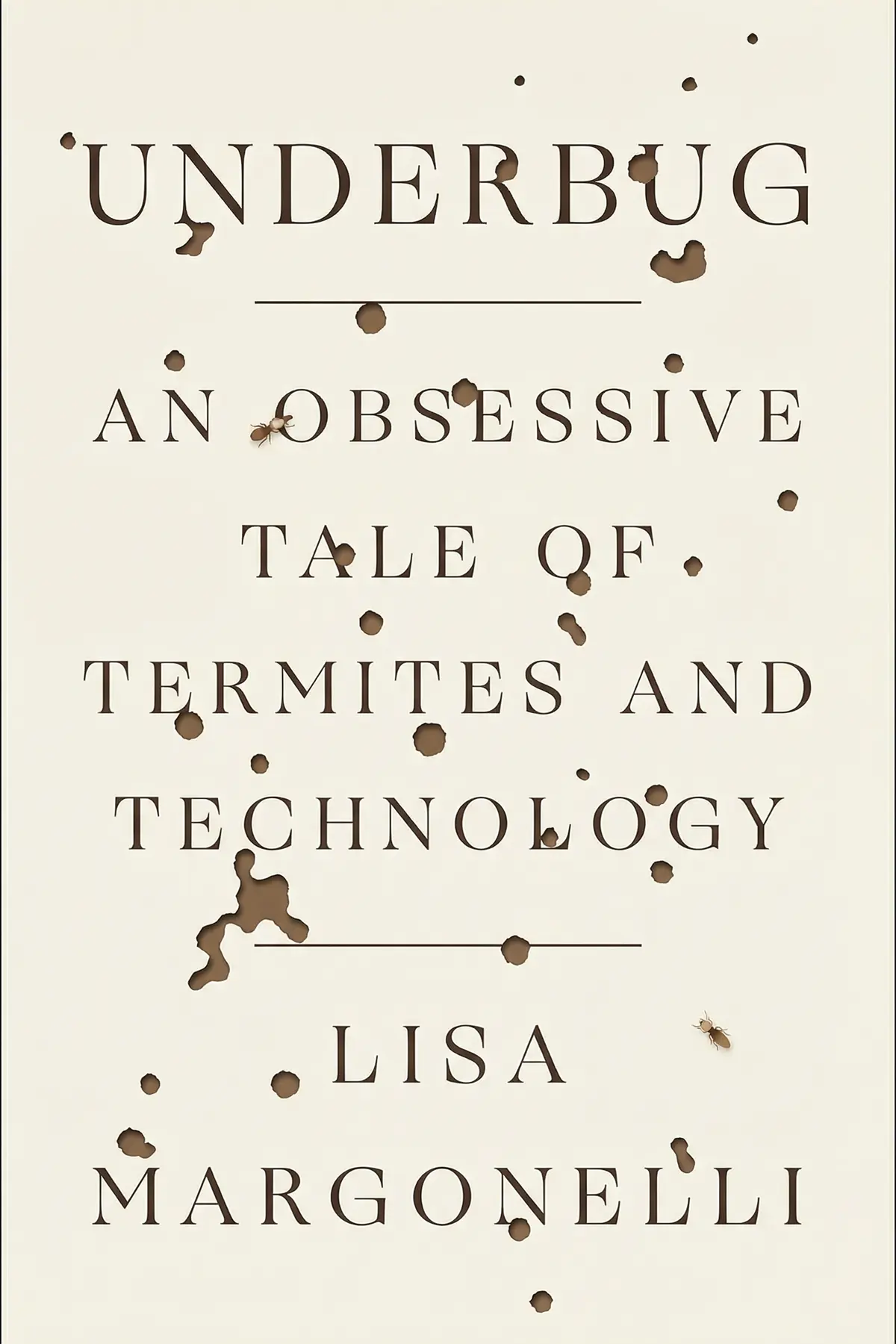
Table of Content
1. Introduction
1 min 02 sec
Most of us meet termites only as the bad news in a house inspection, yet these insects build mounds that breathe, grow their own food and rise up to 30 feet with no plan at all. In Underbug, journalist Lisa Margonelli tells how a 2008 invitation to a termite safari, taken as a short break from a stalled writing project, became ten years of interviews with termite scientists on three continents.
Her case is simple to state. Termites only begin to teach us something once we stop treating them as pests or as little copies of ourselves and look at them as the odd, collective creatures they are. Seen that way, a colony offers clues about how cooperation evolves, how a building can regulate itself, how plant waste might become fuel and how machines could one day work in crowds. An insect you never gave a second thought turns into a working model for teamwork and design.
2. Learn how a diet of wood turned loners social
2 min 00 sec
Termites cost the world billions and have even eaten bank notes. Yet the habit that makes them pests also solved an old survival problem, and solving it forced solitary insects to start living together.
3. Stop reading your own society into the colony
1 min 53 sec
For centuries, naturalists peered into mounds and hives and found exactly what they expected to find. The pattern repeated so often that even the scientist who warned against it fell into the same trap.
4. See the evolutionary logic behind sterile termite workers
1 min 50 sec
In a termite colony almost nobody has offspring, which seems to break the basic rule of evolution. Two biologists offered rival ways out of the paradox, and each changes how you count an individual.
5. See a termite mound as a breathing body
1 min 57 sec
Scientists assumed for years that termite mounds worked like chimneys. One researcher filled a mound with gas to check, and what he saw led him to a far stranger idea about what a building can be.
6. A fungus farm that digests like a cow
1 min 48 sec
Beneath fields of tilted mounds in Namibia, termites have tended the same crop for tens of millions of years. The partnership is so close that it is no longer clear who is farming whom.
7. What termite guts could mean for clean fuel
1 min 51 sec
Microbes found almost nowhere else on Earth could, in theory, turn grass into fuel for millions of cars. Scientists made real progress, cutting the cost of their biofuel to about $30 a gallon, but it still could not compete with gasoline and further efforts stalled.
8. Build complex things from simple rules
1 min 46 sec
Thousands of blind builders with no architect, no plans and no memory raise towers taller than a house. A Harvard lab copied their trick, and it suggests a very different future for machines.
9. Conclusion
1 min 09 sec
Margonelli’s decade with termites ends in a reversal. The insect best known for wrecking houses turns out to be one of nature’s most accomplished builders, farmers and chemists. Almost everything worth knowing about it came into view only when people stopped casting it as a king, a factory hand or a utopian dreamer. A blind bug the size of a nail clipping becomes remarkable in the millions: a mound that breathes, a fungus garden that eats like a cow, a gut that keeps its microbes alive by sharing them.
The book offers a few habits of mind. When a group seems to run itself, set aside the familiar picture in your head and watch what the parts actually do. When a project needs many hands, try clear local signals over central orders, the way a scent tells the next termite where to drop its mud. And when a natural system looks easy to copy, remember that JBEI cut a fuel’s price from $100,000 to $30 a gallon and still fell short.
The underbug was never unimpressive. We were simply looking at one termite at a time.
About this book
What is this book about?
Termites cause tens of billions of dollars in damage every year, and much of the science written about them is about how to kill them. Journalist Lisa Margonelli went on what was meant to be a short termite safari in 2008 and came back with a decade-long obsession. Talking to researchers on three continents, she follows the questions their work raises. How did loner cockroaches become intensely social? Should a colony be treated as one organism? Can a mound breathe, or a fungus do a colony's digesting? She also traces how people kept projecting their own politics onto insect colonies, from kings and aristocrats to factory workers, and what scientists began to see once they stopped. The book then turns to what termites might offer us: microbes that could turn grass into fuel, and simple building rules that are already shaping a new kind of robot. Readers get a vivid tour of an overlooked creature and a fresh way to think about cooperation, design and invention.
Book Information
Who it's for
Professionals curious about science
Curious professionals who enjoy science told through people, places and odd experiments.
Founders, engineers, team leads
Founders, engineers and team leads interested in how complex work gets done without central control.
Wanting fresh science angles
Readers following clean energy, biology or robotics who want a fresh angle from an overlooked insect.
About the Author
Lisa Margonelli
Lisa Margonelli is a journalist and author whose earlier book, Oil on the Brain: Petroleum's Long, Strange Trip to Your Tank, was a national bestseller. She is a senior editor at Zócalo Public Square, where she writes the Small Science column, and she held a fellowship at the New America Foundation from 2006 to 2012. Her articles have appeared in The Atlantic, Wired, Scientific American and The New York Times. She lives in Maine.
Ratings & Reviews
Ratings at a glance
What people think
Listeners find the book both intriguing and meticulously documented, calling it a compelling narrative about termites and the scientific world. Furthermore, the quality of the writing is lauded as an elegantly crafted work of literary journalism, and listeners enjoy its humor. Nevertheless, the depiction of the subject matter gets a divided reception; some listeners note it's about termites while others mention it covers only about 25% of the content.
Top reviews
Thitiwan
Picked this up on a whim after a recommendation and ended up staying awake until 2 AM finishing it. Margonelli has this incredible knack for taking a subject most of us ignore—the literal bugs under our floorboards—and turning it into a sprawling epic of modern science. It’s essentially a piece of literary journalism that reads like a travelogue, taking us from the red dirt of Namibia to high-tech labs. I found myself laughing out loud at the descriptions of the 'slacker' termites who don't seem to do much of anything. While some might find the tangents into drone warfare or biofuel a bit much, I think they’re what makes the book special. It’s not just a biology textbook; it’s a meditation on how we project our own human politics onto the natural world. This is top-tier science writing.
Show moreOak
Few books manage to make the disassembly and decay of the natural world feel so urgent and exciting. Margonelli has crafted a masterpiece of literary journalism that uses the humble termite as a lens to examine our entire technological future. I was completely gripped by the accounts of her 'termite safaris' and the bizarre, pulsing minds of the geneticists she shadowed. The book is accurate and dense with information, yet it never loses its sense of human warmth or wry humor. I especially loved the black ink drawings that separate the chapters; they add a lovely aesthetic touch to a book that is already beautifully written. It’s a quest that spans centuries and continents, proving that even the smallest creatures have massive stories to tell. Highly recommended for fans of Ed Yong.
Show moreCholada
This book is a fascinating, if occasionally dizzying, dive into the world of social insects and the humans obsessed with them. Margonelli’s writing style reminds me of Mary Roach or Ed Yong, blending hard science with a healthy dose of wit and personal anecdote. I particularly enjoyed the sections on swarm intelligence and how termite mounds might inspire future architecture. Truth be told, there were moments where the philosophical musings felt a bit self-indulgent and slowed the narrative pace. The focus shifts frequently from the biology of the bugs to the idiosyncratic personalities of the researchers she encounters in the field. Despite the 'oddness' of the structure, I learned more about 'grassoline' and genetic engineering than I ever expected. It’s a solid read for anyone who likes their science with a side of human eccentricity.
Show moreLucas
As someone who follows green tech, I had to see what the hype was about regarding termite-inspired biofuel. Margonelli delivers a deeply reported look at how these tiny 'underlords' might just save the planet or change how we think about intelligence. The way she describes 'grassoline' and the internal chemistry of a termite's gut is nothing short of poetic. I appreciated the nuance she brought to the discussion of swarm behavior, debunking the idea that these insects are just mindless robots. However, I’ll admit that the middle section dragged slightly when the focus stayed too long on the technicalities of DNA extraction. The prose is beautiful, and the humor is dry and sharp, which helps carry the reader through the denser bits of biology. It's a journey that stretches from the 16th century to drone warfare.
Show moreYulia
What I loved most about Underbug was how it exposed the ways we shamelessly impose our own social hierarchies onto the animal kingdom. We want to see termites as a socialist utopia or a rigid military machine, but the reality is far more chaotic and interesting. Margonelli does a great job showing how scientists often miss what’s right in front of them because of these preconceptions. The stuff about roboticists trying to mimic termite behavior was genuinely surprising and far more straightforward than the biology sections. My only real gripe is that the book can be 'tough sledding' if you don't have a background in science, as some of the technical descriptions are quite dense. Still, the author’s voice is so engaging that it's worth sticking with it through the more difficult chapters.
Show moreDome
If you enjoy the works of Mary Roach, you’ll find a lot to like in this obsessive tale of termites and technology. It’s a funny, thought-provoking, and occasionally frustrating journey that refuses to stay in one lane. Margonelli takes us inside the mounds and the strange minds of those trying to decode them, from Namibia to the American Southwest. The book is at its best when it explores the intersection of biology and human ambition, like the dream of turning wood into cheap energy. Some of the philosophical musings on the future of the planet felt a bit 'doom and gloom' for my liking, but the overall quality of the writing kept me hooked. It’s a deep, well-researched look at our 'underappreciated underlords' that will leave you looking at the ground a lot more closely next time you're outside.
Show moreRungtip
Ever wonder what’s actually going on inside a termite mound? You’ll get some of that here, but be prepared for a whole lot of other stuff as well. I went in expecting a straightforward nature book, but it felt more like a memoir about the author's ten-year journey through various scientific subcultures. Some of the chapters, like the one where she discusses her own home being eaten by termites, were absolutely riveting and full of humor. Other sections involving complex robotics and genetic mapping were frankly a bit of a slog to get through for a non-scientist. The organization feels somewhat scattered, hopping from Namibia to Nevada without much warning. It’s a deeply researched piece of work, but the ratio of 'termite facts' to 'author’s feelings' might frustrate those looking for a traditional entomology book.
Show moreNiphon
The chapter on the 'slacker' termites was definitely the highlight for me because it challenged every stereotype I had about industrious social insects. It turns out that termites have highly idiosyncratic behaviors, much like the humans studying them in this book. While the writing is undeniably high-quality and often funny, the narrative path is extremely winding. One moment you're in a mound in Australia, and the next you're pondering the ethics of drone warfare or the nature of consciousness. This 'swirling' style is clearly intentional, but it made it difficult for me to stay engaged over long reading sessions. I think a bit more focus on the bugs themselves and a bit less on the 'pop-philosophy' would have made this a better experience. It’s interesting, but frequently exasperating.
Show moreWin
I really wanted to love this, but I ended up putting it down about halfway through because I just couldn't stay focused on the diversions. There is a great book hidden inside here about the esoterics of termite civilization, but it’s buried under a lot of travelogue and biographical sketches. Margonelli's prose is top-notch—she has a way with a sentence that is truly enviable—but the organization is just too scattered for my taste. I enjoyed learning about the history of termite research and the potential for new technologies, but the constant slogging into and out of labs became repetitive. I suspect readers who enjoy long-form magazine features will appreciate the style more than I did. It’s definitely an 'odd book,' as some other reviewers have noted, and requires a lot of patience.
Show moreAir
Not what I expected at all, and unfortunately, not in a good way. I was looking for a deep dive into the natural history of termites, but this book is about 25% bug science and 75% profiles of scientists and the author's travel logistics. I found the descriptions of the various labs and field sites in the American Southwest to be incredibly tedious after a while. Margonelli is a talented writer, but she seems much more interested in the 'weirdness' of the researchers than the fascinating biology of the actual insects. By the time we got into the abstract philosophy and speculative futures of the planet, I found myself skimming just to get to the end. If you want a book about insects, look elsewhere; this is a book about the people who look at insects.
Show moreQuestions about this book
What is Underbug by Lisa Margonelli about?
Underbug follows journalist Lisa Margonelli’s decade of reporting on termites, which began with a 2008 termite safari. She shows how these insects evolved from solitary cockroaches into social colonies, how people long projected human politics onto them, and what scientists found once they stopped: mounds that breathe like lungs, underground fungus farms, gut microbes that might yield biofuel and building rules that inspired swarm robots.
How did termites become social insects?
According to Margonelli, early termites carried gut microbes that let them digest wood, but they lost those microbes every time they molted. To keep them, termites began passing a mix of droppings, microbes and wood bits, called woodshake, from one to another. That constant exchange preserved the gut community across generations and turned once solitary insects into intensely social ones.
Why does Underbug compare termite mounds to lungs?
The American physiologist J. Scott Turner pumped propane into a mound in Namibia and tracked the gas. Instead of acting like a chimney, the mound moved oxygen down to the nest and drew carbon dioxide up and away, much like a lung. Turner sees termites and mound as one self-regulating organism, an idea Margonelli notes is not widely accepted.
Can termites really help produce biofuel?
Termite guts hold microbes, about 99 percent of them found nowhere else, that turn wood into energy. Researchers identified 1,000 possible wood-digesting genes in a Costa Rican termite, and a US government institute cut its biofuel’s cost from $100,000 to about $30 a gallon. That is still too costly to compete with gasoline, and the microbes’ workings remain only partly understood.
What can managers or designers learn from Underbug?
The book’s idea of stigmergy shows how simple individuals finish complex work by responding to signals left in their surroundings. Harvard researchers used it to build TERMES robots that construct structures with no one in charge. The practical lesson is to put clear cues into the shared environment so work can move forward without every decision passing through a central boss.
Readers also enjoyed

A Life Decoded: My Genome: My Life
J. Craig Venter

A Planet of Viruses
Carl Zimmer

A Short History of Nearly Everything
Bill Bryson

A Thousand Brains: A New Theory of Intelligence
Jeff Hawkins




Alien Earths: The New Science of Planet Hunting in the Cosmos
Lisa Kaltenegger

AUDIO SUMMARY AVAILABLE
Listen to Underbug in 15 minutes
Get the key ideas from Underbug by Lisa Margonelli, plus 5,000+ more nonfiction titles.
- 5,000+ titles
- Listen as much as you want
- 7-day free trial
- Cancel anytime









