

15 min 03 sec
Available in: English
Trust and Betrayal in the Workplace: Building Effective Relationships in Your Organization
Shows why workplace trust erodes mostly through small, unintended slips. It then explains how to rebuild that trust by keeping your word, sharing information, respecting others' skills, trusting yourself and recovering from betrayal in seven steps.
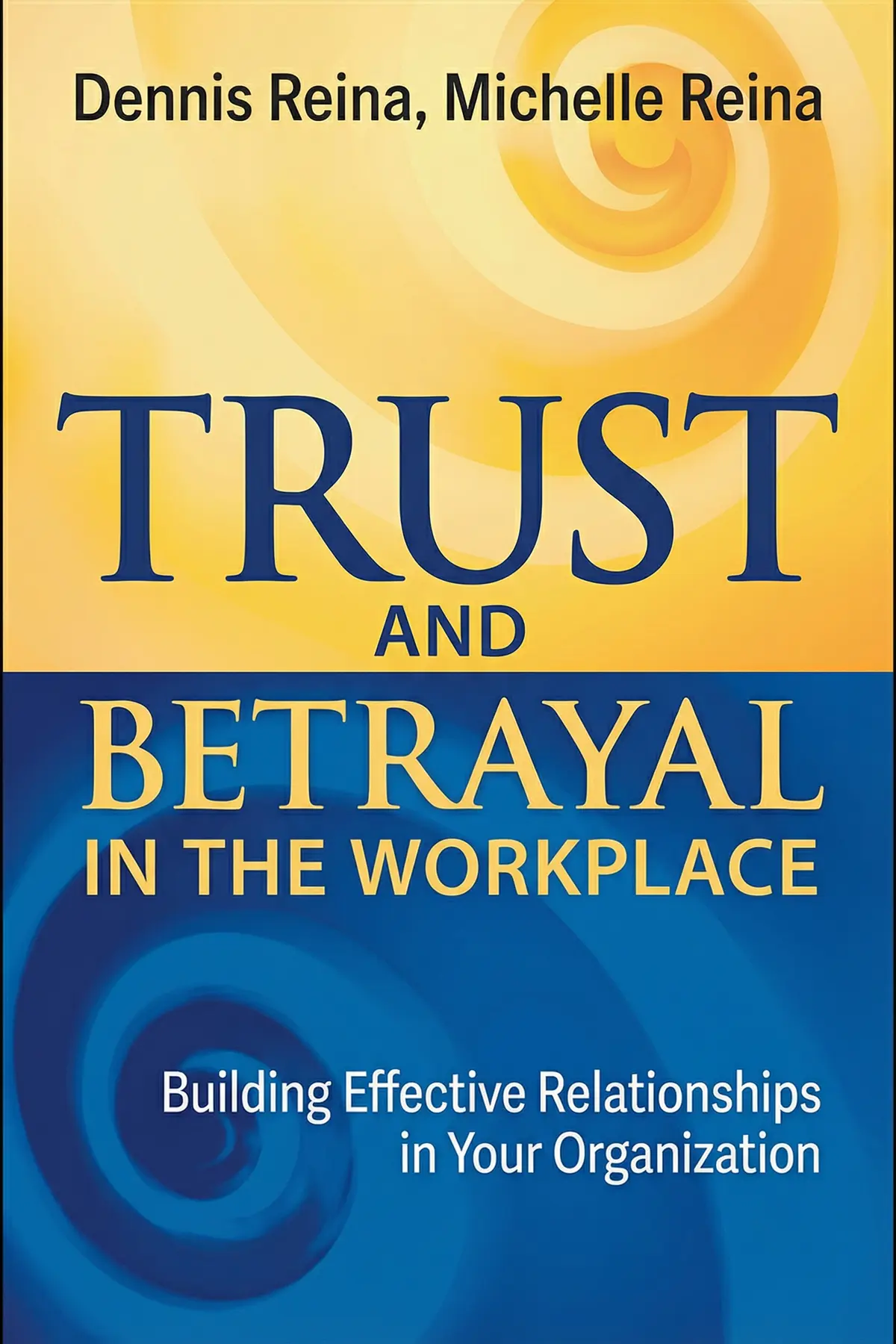
Table of Content
1. Introduction
1 min 06 sec
Trust at work can feel like something a team either has or lacks, but the Reinas offer a more useful picture. In their view it breaks mostly in small, accidental moments, and it can be rebuilt one behavior at a time. In Trust and Betrayal in the Workplace, psychologist Dennis Reina and Michelle Reina, co-founders of the Reina Trust Building Institute, argue that trust can be learned like any other skill. In the latest edition they estimate that about ninety percent of the behaviors that wear trust down are minor, fleeting and unplanned.
That moves the focus to the interrupted meeting, the unanswered email and the deadline set without asking anyone. The Reinas divide trust into three kinds: keeping your word, sharing information and respecting ability. They add a starting point beneath all three, which is trust in yourself. What follows shows how to spot each kind of breach and repair it, and how to recover when someone lets you down badly, whether you lead a team or work on one.
2. Catch the small slips that drain trust
1 min 48 sec
An eye roll, a canceled meeting, a reply that never comes. Each looks harmless on its own, yet together they can damage a team more than an outright lie, and the people causing them rarely realize it.
3. Give your team a shared language for trust
1 min 49 sec
Ask five coworkers what trust means and you may hear five different answers. The Reinas argue that this confusion is part of the problem, and they offer three plain words that make broken trust easier to discuss.
4. Keep your word by spelling out expectations
1 min 46 sec
Most broken promises at work were never really promises at all. They were assumptions nobody checked, and a few minutes at the start of a project can keep them from turning into resentment.
5. Share information before gaps fill with doubt
1 min 51 sec
A presenter with every skill she needed still looked unprepared in front of a client. The cause sat in someone else’s inbox, and it shows what silence does to a team’s confidence.
6. Step back so people's skills can grow
1 min 50 sec
Close supervision feels responsible to the person doing it. To the person receiving it, the message is very different, and the Reinas explain what people stop doing once they hear it.
7. Trust yourself first to earn others' trust
1 min 47 sec
Waiting for colleagues to become more trustworthy can take forever. The Reinas point to a starting place much closer to home, and it is open to anyone in the organization, whatever their title.
8. Recover from betrayal without excusing it
1 min 53 sec
Forgiving someone who betrayed you can feel like telling them it was fine. The Reinas draw a line between those two ideas, inside a seven-step path back from a serious breach of trust.
9. Conclusion
1 min 13 sec
The Reinas turn trust from a mood into a set of habits you can see. In their account it grows slowly and breaks easily, and most of the breaking happens in moments too small to register. Tony cancels again. Lisa works from last quarter’s figures. A manager hovers over work someone could do alone. Because those moments are small, they are also within reach. Nobody needs a title or a budget to stop causing them.
The three dimensions make repair practical. When something feels wrong, you can work out whether a promise slipped, information went missing or someone’s ability was doubted, and fix that one piece instead of the whole relationship. The book supports simple moves. Agree on expectations before a project begins, explain the reason behind a change, and hand over ownership along with an offer of help. When the damage is serious, the seven steps lead to forgiveness, and in the authors’ sense that means understanding, which is different from approval.
The Reinas hold that people have a basic right to trustworthy relationships at work. You can grant that right first by keeping your own small promises.
About this book
What is this book about?
Trust at work rarely collapses in one dramatic scandal. Far more often it wears away through missed deadlines, unanswered emails, interrupted colleagues and decisions announced without a reason. Dennis and Michelle Reina argue that most of these breaches are unintended. That is exactly why they are so hard to stop: the people causing them do not notice. Their answer is a shared language. The Reinas split trust into three dimensions. Contractual trust is about keeping your word and managing expectations. Communication trust is about sharing information truthfully and respectfully. Competence trust is about respecting people's abilities and helping them grow. Each rests on everyday behaviors anyone can practice, from a quick expectations check before a project to handing over real ownership instead of hovering. The authors add that trusting others starts with trusting yourself. When trust breaks badly, the book offers seven steps for healing, from acknowledging the hurt to forgiving and letting go. In their account, forgiveness means understanding what happened without excusing it. Readers learn to spot, name and repair the small breaches that drain a team, whether they lead one or work inside one.
Book Information
Who it's for
Team leads facing silence
Team leads whose people have stopped raising problems or offering ideas.
Hurt at work
Professionals hurt by a colleague taking credit or a manager breaking a promise.
HR and learning teams
HR and L&D staff who need a shared language for discussing trust inside teams.
About the Author
Dennis Reina
Dennis Reina is a psychologist, and Michelle Reina holds a Ph.D. Together they co-founded the Reina Trust Building Institute, a consultancy that builds and restores trust in workplaces. Dennis is its president and leads its research. He also developed the Reina Trust and Betrayal Model and its trust surveys. Michelle is its CEO, and her experience spans strategic planning, change management, team development and employee engagement. Both consult, speak, train and coach organizations in many countries. They also wrote a sequel, Rebuilding Trust in the Workplace.
Ratings & Reviews
Ratings at a glance

What people think
Listeners find this work to be extremely useful and accessible, with one person mentioning it makes intricate subjects easy to grasp. Furthermore, the content serves as a sequential roadmap for establishing trust, which one listener characterizes as an all-encompassing course. They also value the emphasis on fostering connections, as one listener points out its thorough investigation into deliberate professional relationships.
Top reviews
Wei
The Reinas have crafted something truly special here that goes far beyond typical HR fluff. This book essentially functions as a comprehensive course on professional intimacy and reliability, breaking down the mechanics of trust into a systematic methodology that anyone can follow. I was particularly struck by the '7 steps' for rebuilding trust; it’s a clear roadmap for those of us who have felt stuck in the wake of a workplace betrayal. The writing is accessible and keeps complex psychological concepts grounded in reality. It’s rare to find a business book that feels this intentional and human. Whether you are leading a massive team or just trying to get along with a difficult cubicle neighbor, the advice on everyday micro-behaviors is a game changer. It reminded me that trust isn't a static thing we have, but a practice we must actively choose every single day.
Show morePriya
This book resonated with me on a deeply personal level after I went through a major reorganization at my company. It’s a thoughtful, deeply insightful exploration of why we feel so drained when trust is broken. The authors don't sugarcoat how hard it is to fix things, but they offer a hopeful pathway that feels realistic. I’ve started applying the 3 Cs model—Communication, Capability, and Character—in my daily check-ins with my team, and the shift in morale is already visible. It’s all about those small, intentional choices. The Reinas remind us that while we can't control the actions of others, we have total control over our own integrity and how we respond to being hurt. It’s a beautiful, essential read for anyone who wants to lead with heart.
Show moreSam
Ever wonder why a team feels like it’s falling apart despite everyone being perfectly 'nice' to each other? This book answers that by focusing on 'micro-breaches'—those tiny, everyday slights like interrupting a colleague or missing a minor deadline. It’s an eye-opening look at how these small things erode confidence over time. I found the 3 Cs model to be a very helpful framework for evaluating my own behavior, not just looking at where others have failed me. To be fair, some of the sections feel a bit repetitive if you’re already well-versed in emotional intelligence literature. However, the practical focus on accountability and the specific 'how-to' of apologizing makes it worth the read. It’s a solid guide for anyone navigating the messy reality of professional collaboration and wanting to foster a culture of psychological safety.
Show moreSelin
Finally got around to reading this for a professional development goal, and the clarity of the writing really stood out. The Reinas avoid the usual corporate jargon, opting instead for a tone that is both professional and deeply empathetic. They make the case that trust is a practice, not a personality trait, which is a powerful shift in perspective. I specifically appreciated the chapters on the 7 steps for rebuilding trust after a breach; the emphasis on acknowledging mistakes instead of hiding them is a lesson many leaders still need to learn. My only minor gripe is that the formatting of some of the tables felt a bit dated in my edition. Still, the core message about intentional professional relationships is incredibly valuable in today’s remote and hybrid work world where communication gaps are more common than ever.
Show moreKom
The chapter on accountability alone is worth the price of admission. It’s refreshing to read a book that doesn't just blame 'bad bosses' for everything but asks every reader to look in the mirror. Can others trust me? Am I consistent? These are hard questions, but the Reinas make them easier to answer with their step-by-step guides. I loved the focus on how unintentional betrayal happens through simple misaligned expectations. In my experience, most workplace drama comes from people assuming they’re on the same page when they aren't. This book provides the language to fix those gaps before they turn into full-blown resentment. It’s a very readable, practical manual for building a much healthier work environment from the ground up.
Show moreKamol
After hearing about the Reina model in a leadership workshop, I decided to dive into the source material. It makes complex interpersonal topics easy to follow without stripping away their nuance. The focus on 'intentional professional relationships' is exactly what’s missing from most management training. We focus so much on KPIs and deadlines that we forget that trust is the actual engine that makes those things possible. The book is structured like a step-by-step guide, which I appreciated; it felt very actionable. I did think some of the case studies were a bit dated, but the underlying principles are timeless. It’s a solid 4-star read that I’ll likely keep on my shelf for reference when the next office crisis hits.
Show moreMonthon
As someone who has navigated a few toxic office environments, I found this to be a decent, if somewhat basic, primer. The authors do a good job of explaining how trust is fragile, but some of the solutions felt a bit idealistic for high-pressure corporate settings. Look, the advice is sound—being reliable and communicating clearly will obviously help—but I wanted more depth on dealing with truly malicious actors rather than just unintentional miscommunications. That said, the reflection questions at the end of the chapters were useful for personal growth. It’s a helpful starting point, but don't expect it to solve deep-seated systemic issues overnight. It's more about personal behavior than organizational overhaul.
Show moreTakeshi
Truth is, I went into this expecting a more analytical breakdown of corporate strategy, but it’s actually much more focused on interpersonal dynamics. The book explores how trust is often lost through simple neglect—like an unanswered email—rather than a giant stab in the back. While these insights are valid, the middle of the book dragged a bit for me. I felt like the same point about 'small acts' was made several different ways across three chapters. On the plus side, the section on recognition and appreciation was excellent. It correctly identifies how micromanagement is essentially a loud declaration of a lack of trust. It's a useful resource for new managers, even if it feels a little stretched out in parts.
Show moreSiriphen
Picked this up during a particularly rough month at the office. Frankly, it’s a bit of a mixed bag. The first half is incredibly strong, especially the parts about how everyday behaviors chip away at our confidence and engagement. However, the latter half, which deals with the internal process of forgiveness and moving on, felt a bit too 'self-help' for my specific workplace situation. I think the 3 Cs model is brilliant and easy to remember, which helps when you're in the middle of a conflict. I just wish there were more examples of how to apply these steps when the person you're dealing with has zero interest in rebuilding the relationship. It's good, but it assumes everyone is acting in good faith.
Show moreDarius
Not what I expected based on the glowing recommendations I'd heard. I found the tone a bit too 'counseling-heavy' for my taste, and it often felt like I was reading a textbook for a psychology 101 class rather than a business book. While the Reinas clearly know their stuff, the anecdotes felt somewhat generic and didn't always resonate with the fast-paced reality of my industry. Everything is framed around 'intentionality,' which is fine, but after a while, the advice starts to feel redundant. I was looking for more concrete case studies with complex data. If you want a very gentle, emotional approach to office politics, you might like this, but it just wasn't the right fit for my learning style.
Show moreQuestions about this book
What is the main idea of Trust and Betrayal in the Workplace?
Dennis and Michelle Reina argue that workplace trust is worn down mostly by small, unintended slips such as missed deadlines, interruptions and unanswered emails, more than by dramatic betrayals. In the latest edition they estimate that about ninety percent of trust-eroding behaviors are minor and unplanned. Because the people causing these slips rarely notice them, trust is hard to keep. It can be rebuilt, though, through specific behaviors that anyone in the organization can practice.
What are the three dimensions of trust in the Reina model?
The Reinas describe contractual trust, a trust of character based on doing what you say and managing expectations. Communication trust is about sharing information effectively and respectfully, through behaviors such as telling the truth, admitting mistakes and keeping confidences. Competence trust means respecting others’ knowledge and skills and helping them develop. Building all three can lead to what one paper calls transformational trust.
What are the seven steps for healing from betrayal?
The book’s path runs through seven steps: acknowledge what happened, allow yourself to feel it, get support, reframe the experience, take responsibility for how you move forward, forgive and let go. The Reinas separate forgiveness from approval. Forgiving means understanding what happened, not excusing it. Taking responsibility can lead to rebuilding the relationship or to deciding it is time to move on.
How can I apply the book's ideas at work?
Start by tracking your own small breaches for a week, such as delayed replies or interrupting colleagues. Before a project, state clearly what you expect and what you need. When plans change, share the reason as well as the news. Hand over one task you usually supervise closely, with a clear goal and an offer of help. The authors’ central advice is to change your own behavior before asking others to change theirs.
Readers also enjoyed




A Year with Peter Drucker: 52 Weeks of Coaching for Leadership Effectiveness
Joseph A. Maciariello





Acting with Power: Why We Are More Powerful Than We Believe
Deborah Gruenfeld
AUDIO SUMMARY AVAILABLE
Listen to Trust and Betrayal in the Workplace in 15 minutes
Get the key ideas from Trust and Betrayal in the Workplace by Dennis Reina, plus 5,000+ more nonfiction titles.
- 5,000+ titles
- Listen as much as you want
- 7-day free trial
- Cancel anytime









