

A Short History of Nearly Everything
Bill Bryson
 English
Explains why teenagers act reckless, moody and sleepy, tracing it to a brain that learns faster than an adult's but is easier to harm, and shows parents how to protect sleep, prevent addiction and spot real distress.
1 min 00 sec
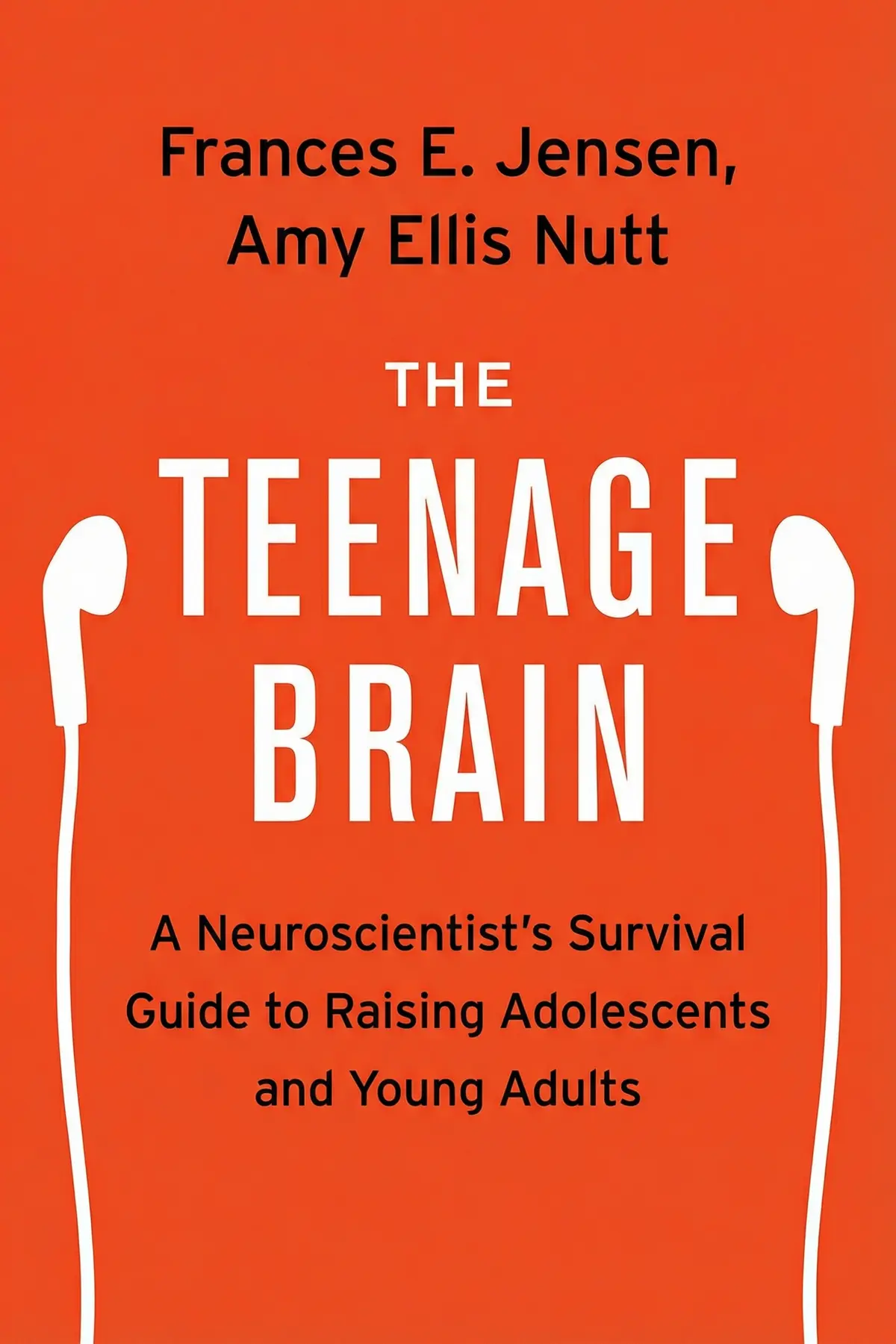
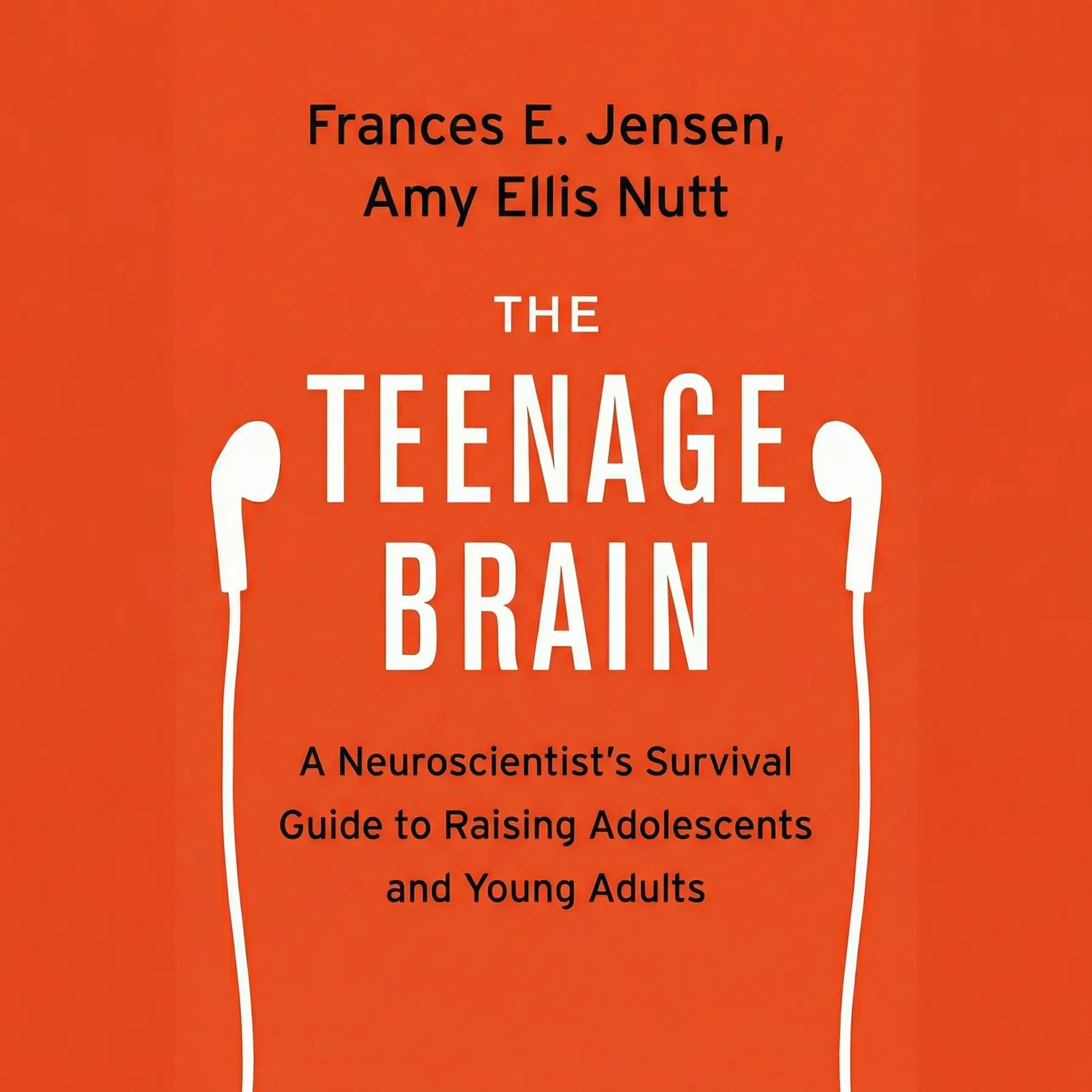
If the child who once chatted at dinner now slams doors, misses curfews and sleeps past noon, the usual reading is defiance. In The Teenage Brain, neurologist Frances E. Jensen and science writer Amy Ellis Nutt offer a different reading: much of that reckless, rude and forgetful behavior is a normal product of a brain still being built, and it is not the teenager’s fault.
The teenage brain, they argue, is extremely powerful and extremely vulnerable at the same time. It adapts and learns quickly, and that same rapid development makes it easier to hook on a substance, while too little sleep and stress take their own toll on it. That double edge is the thread through everything that follows.
Parents and teachers who grasp it can stop fighting the biology and start working with it: protecting sleep, choosing the right conversations, and watching for the signs that separate an ordinary bad week from something that needs a doctor.
1 min 50 sec
Nobody blames a toddler’s tantrum on raging hormones, yet that is the first explanation most adults reach for with a fourteen-year-old. The authors think hormones are only part of the story, and the missing part changes how you respond.
2 min 02 sec
A teenager opened a window in freezing weather to hide his smoking, and the wind gave him away. The same brain that made that blunder is, the authors argue, the best learning machine he will ever own.
2 min 10 sec
Teenagers who stay up late and sleep until noon on weekends look lazy to most adults. The authors see a body clock working exactly as designed, and a school schedule that quietly works against it.
2 min 20 sec
The same wiring that lets a teenager memorize lyrics in one listen can turn a first cigarette or drink into a lasting habit. The authors explain which exposures hit hardest, and one of them sits in every pocket.
2 min 25 sec
Every teenager has dramatic days, so how does a parent tell an ordinary rough patch from the start of a serious illness? One mother’s instinct about small changes in her son made the difference.
1 min 17 sec
The teenager who opens a window on a freezing winter evening while smoking and the teenager for whom guitar melodies come naturally are running on the same brain. That is what the book gives parents: one explanation for behavior that looks contradictory. A brain with this much plasticity learns fast, and for the same reason it is easy to wear down with too little sleep, easy to hook and easy to overwhelm. Recklessness and brilliance come from one source, and neither is a character flaw.
Seeing that changes what a parent does. Guard sleep as part of learning, and keep up steady talks about rest and study breaks in place of late-night cramming. Explain plainly why cigarettes, alcohol, pot and endless scrolling cost a teenager more than they cost an adult. Keep watching for changes that outlast a bad week, the way Calen’s mother did, and if medication enters the picture, ask hard questions before and after the prescription.
None of this requires a degree in neuroscience, only the habit of asking what a half-built brain needs. In the authors’ view, each good step taken for a teenager now becomes part of the adult they will be.
Many parents feel that the cooperative child they knew has been replaced by a stranger whose moods and choices make no sense. Frances E. Jensen, a neurologist who studies brain development, and science writer Amy Ellis Nutt argue that much of this behavior is a normal result of a brain still under construction, and not the teenager's fault. Their central point is a double edge. The adolescent brain has a peak of plasticity, so it absorbs knowledge and learns from trial and error faster than it ever will again. Its rapid development also leaves it quicker than an adult's to get hooked on tobacco, alcohol and marijuana, with heavy screen use raising similar worries, while its growth makes good sleep especially vital, and limited frontal-lobe access makes threats feel more intense, with strain on its stress system linked to depression. Readers get a clear picture of what changes in the teenage brain and body, from hormones and gray matter to cortisol and the body clock. They also get practical guidance: why teens need eight and a half to nine and a half hours of sleep, how to talk about substances, which warning signs go beyond normal moodiness, and what to ask before a doctor prescribes antidepressants.
Parents baffled by a once easygoing child who now seems reckless, moody or exhausted.
Teachers and coaches who want to understand why teens learn fast yet decide poorly.
Families worried about sleep, substances, screens or signs of depression and anxiety.
Frances E. Jensen is a physician who chairs the neurology department at the University of Pennsylvania's Perelman School of Medicine and has researched brain development from infancy into adulthood. She was earlier a neurology professor at Harvard Medical School and directed translational neuroscience and epilepsy research at Boston Children's Hospital. She is also a mother. Amy Ellis Nutt is a Pulitzer Prize winning writer who has covered health and science for The Washington Post and holds master's degrees from MIT and Columbia.
Listeners find this book essential for parents and those working with adolescents, offering fantastic neurological data and deep insight into the maturation of the teenage brain. Additionally, the writing is exceptionally well-crafted and approachable, using clear language, and listeners value the practical guidance and compelling anecdotes throughout. However, the tempo and reading speed receive varied feedback; while some find it incredibly fascinating, others consider it dull.
As a parent of two teenagers, I found this book to be an absolute lifesaver during a very turbulent time in our household. Jensen does a masterful job of breaking down complex neuroscientific concepts into clear, understandable terms that actually make sense to someone without a PhD. The explanation of why their circadian rhythms are shifted—making them late-to-bed and late-to-rise—was a total revelation for us. It turned our morning battles into moments of understanding. While some might find the science heavy, I appreciated having actual data to back up the behavioral changes I was seeing every day. It’s not just a 'survival guide' in name; it genuinely provides the ammunition you need to stay patient when things get heated. This is an essential read for anyone living with an adolescent.
Show moreWow. I wish I had read this five years ago. This book completely changed my perspective from one of constant frustration to one of genuine empathy. Learning that the part of the brain responsible for impulse control is the last to 'plug in' was a game-changer for my relationship with my daughter. The writing is exceedingly well-done and accessible, avoiding the dry, academic tone you might expect from a neuroscientist. I particularly appreciated the section on gender differences in brain development, which explained so much about the different social pressures my kids face. Personally, I think every middle school parent should be handed a copy of this at orientation. It’s an engaging, informative, and deeply necessary look at the most misunderstood stage of human life. It really helps you keep your cool.
Show moreThis book is basically a survival manual for anyone who interacts with adolescents. Jensen takes the 'mystery' out of teen behavior by showing the literal physical changes happening under the hood. Not gonna lie, some of the drug and alcohol sections are terrifying, but they are backed by rigorous studies on rat brains and epidemiological data. I loved the focus on the 'excitatory neurotransmitters'—it finally explains why teens are so prone to acting before they think. The writing is clear and avoids unnecessary jargon, making it a quick and engaging read despite the heavy subject matter. It’s rare to find a science book that is this practical. If you want to understand the 'why' behind the mood swings and the risky choices, this is the definitive book to read.
Show morePicked this up after my oldest hit puberty and suddenly turned into a different person overnight. Frankly, I was at my wit's end, but this book gave me the context I was missing. It turns out that 'acting out' is often just a byproduct of a brain that is literally pruning its connections to become more efficient. The chapter on the 'digital invasion' was particularly relevant, as it explained how social media affects the dopamine receptors in a way that is vastly different for teens than for adults. Jensen and Nutt have created something that is both intellectually stimulating and deeply practical for daily life. It’s a wonderful resource that promotes patience and understanding over punishment and anger. I’ve already recommended it to three other families in our neighborhood.
Show moreFinally got around to reading this after my son’s teacher recommended it, and I’m glad I did. The chapters on the biology of addiction and how the teenage brain is essentially 'wired' to learn faster—including bad habits—were incredibly eye-opening. Jensen explains that because the frontal lobe isn't fully connected yet, teens are essentially driving a fast car with no brakes. My only real gripe is that it can feel a bit repetitive in the middle sections, especially when she starts looping back to the same points about synaptic pruning. Still, the practical advice on prospective memory and why kids need planners was worth the price of admission alone. It’s a solid, evidence-based look at why they act the way they do, even if the tone leans a bit toward the cautious side.
Show moreEver wonder why your teenager can't seem to remember to bring their sneakers home from school even though they can memorize every line of a movie? This book dives deep into the 'white matter' versus 'grey matter' debate to explain exactly why that happens. I loved the section on multitasking—it’s a myth for adults, but it’s a total disaster for the developing adolescent brain. Jensen writes with a very accessible style that bridges the gap between a medical textbook and a parenting blog. To be fair, she does get a little 'D.A.R.E. program' in the chapters on marijuana and alcohol, but the underlying science regarding how these substances affect a brain that is still 'under construction' is hard to argue with. A very useful resource for any educator's bookshelf.
Show moreAfter hearing the interview on KQED, I picked this up to better understand my students. The insights into 'prospective memory' were a total 'aha' moment for me. Now I understand why my 7th graders genuinely forget their homework even when it’s right in front of them! The book is very well-written, though it does move at a mixed pace; some chapters are page-turners while others feel like a slog through data tables. I was particularly impressed by the chapter on concussions and sports, which provided a sobering look at how long-term damage happens. It’s a bit biased toward a certain demographic of high-achievers, but the core neuroscience is universally applicable. It definitely helped me restructure how I give instructions in my classroom to better suit the teenage mind.
Show moreTo be fair, the science here is top-notch, but the parenting advice felt extremely recycled. Most of the 'solutions' offered in the book boil down to 'stay involved' and 'be a good role model,' which isn't exactly groundbreaking information for most parents. I also struggled with the way the author uses extreme, terrifying anecdotes—like the story of a teen stealing car keys and crashing through a garage—to drive home her points. It felt like a 'scared straight' tactic for parents rather than a balanced look at adolescence. The chapters on sleep and digital distractions were the most useful for me, but I found myself skimming through a lot of the repetitive warnings about drugs. It’s an interesting read if you love brain chemistry, but as a practical guide, it’s a bit thin on new ideas.
Show moreLook, I really wanted to like this, but the catastrophizing was just too much for me. Jensen starts the book by describing her son coming home with blue hair as if it were a four-alarm fire. If that's her baseline for a 'crisis,' it’s hard to take her other warnings seriously. She claims teenagers today face more danger than ever before in history, which is just statistically untrue when you consider the risks of the past. The science bits are fascinating, especially regarding high plasticity and learning, but they are buried under a mountain of fear-mongering anecdotes. She even suggests chewing tobacco as an alternative if your kid won't stop smoking—as a scientist, she should know better. It felt more like a lecture from a panicked parent than a balanced scientific exploration.
Show moreThe truth is, Jensen is a brilliant neuroscientist, but she is completely out of touch with the reality of most families. This book should have been titled 'The Upper-Middle Class Teenage Brain' because it almost exclusively focuses on privileged kids heading to elite colleges. As a teacher in a socio-economically diverse district, I found her tone regarding 'emergencies' like a kid dyeing their hair blue to be absolutely laughable. She ignores how poverty and trauma impact brain development, instead choosing to focus on anecdotes about her own high-achieving sons. The advice to 'just be involved' is a luxury that many working-class parents working three jobs simply cannot afford in the way she describes. It’s a biased, elitist perspective disguised as objective science, and I honestly can’t recommend it to the parents I work with.
Show moreFrances E. Jensen and Amy Ellis Nutt argue that the teenage brain is both very powerful and very vulnerable. Its peak plasticity lets it learn faster than it ever will again, but that same openness makes it more sensitive to sleep loss, addiction and stress. Much reckless or moody behavior, they say, comes from a brain still under construction rather than from bad character.
The authors explain that the body clock shifts in adolescence, turning early-rising children into night owls. The teenage brain does not readjust when school forces early starts, so teens catch up on weekends. Because sleep helps lock in what the brain learned each day, they cite a recommendation of eight and a half to nine and a half hours, while many American teens get under six and a half.
The same plasticity that helps teens learn makes harmful exposures stick. Jensen and Nutt note that teens get hooked faster than adults and the effects can last a lifetime. They point out that 90 percent of new smokers start before eighteen, that binge drinking can do lasting damage, that frequent marijuana use can disrupt neural development, and that heavy internet use is emerging as a concern.
The book recommends ongoing, open conversations about rest, study breaks and why substances hit teens harder. It urges parents to watch for changes beyond normal moodiness, such as big shifts in sleep or eating or lasting withdrawal, as Calen’s mother did before his schizophrenia diagnosis. If antidepressants are prescribed, discuss the black-box warning risks with the doctor and act fast if something seems off.
Bill Bryson

Jeff Hawkins




Lisa Kaltenegger



AUDIO SUMMARY AVAILABLE
Get the key ideas from The Teenage Brain by Frances E. Jensen, plus 5,000+ more nonfiction titles.









