

13 min 38 sec
Available in: English
The Systems Leader: Mastering the Cross-Pressures That Make or Break Today's Companies
Shows how leaders can meet conflicting demands, such as quarterly results versus long-term bets or toughness versus care, by holding both sides in balance, with lessons from Boeing, Flex, Nike and Waste Management.
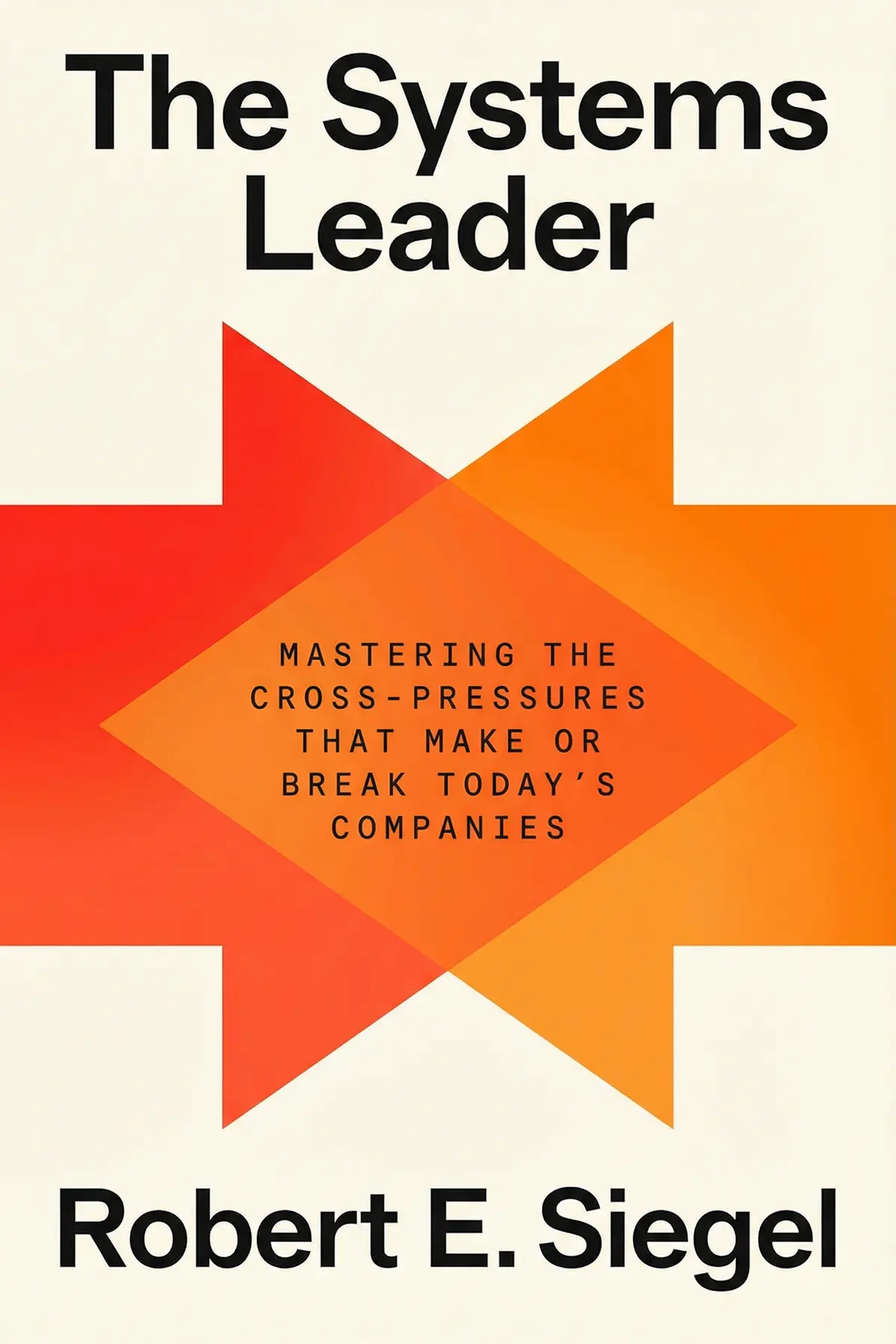
Table of Content
1. Introduction
1 min 00 sec
If your boss wants this quarter’s numbers, your team wants patience and your investors want bold moves, that tug of war is the normal shape of modern leadership. In The Systems Leader, Stanford lecturer and former chief executive Robert E. Siegel argues that these demands will keep pulling against each other, and that the leaders who last are the ones who stop trying to make the tension go away. He calls them Systems Leaders. They hold competing goals at once, results and innovation, toughness and care, and keep moving.
Siegel tracks five such cross-pressures through the stories of leaders at Boeing, Flex, Nike, Waste Management and others. Each one comes with a habit you can practice: a way to split your attention across time horizons, a map of who holds influence around you, a set of principles written down before the storm. The aim is judgment under pressure, built one decision at a time.
2. Spot the pressures that pull your job apart
2 min 00 sec
A famous carmaker with loyal customers and top engineers still faces a squeeze that past success cannot fix. The same squeeze reaches managers at every level, and the way some leaders react to it does lasting harm.
3. Hit this quarter's numbers without starving the future
1 min 59 sec
Splitting a company into operators and innovators sounds tidy, yet it often creates two hostile camps. A beer giant took a different route, and an aircraft maker shows what happens when the present wins every argument.
4. Demand results and still keep your people
1 min 45 sec
One chief executive faced automation that threatened many jobs and refused to treat the human cost as someone else’s problem. Her approach suggests the choice between demanding and decent may be a false one.
5. Draw a map of who really holds influence
1 min 46 sec
Assignments that did nothing for his team’s numbers turned out to make a young Intel employee more persuasive. A simple drawing explains why, and why it needs redrawing more often than most leaders think.
6. A global brand that fits every market
2 min 00 sec
Activists wanted Nike out of China, and the company had strong reasons to stay. Keeping one global identity while fitting each country is harder than it sounds, and a luxury group shows one way to do it.
7. Principles set early hold steady under pressure
1 min 59 sec
A chief executive declined a vaccine mandate and upset people at the top of his own company. Siegel sees his choice as a model, and the reason has more to do with timing than with courage.
8. Conclusion
1 min 09 sec
Siegel’s five pressures look different on the surface: a failing aircraft program, a retraining effort, a market in China, a vaccine policy. Underneath sits one discipline. The tension never resolves, so the leader’s real work is to keep both sides in view and keep deciding, again and again, as conditions change. Boeing shows the price of letting one side win. Flex, Brightline and Kering show what it looks like when a leader refuses to let either side go.
That makes leadership a practice, which is good news for anyone who feels stretched thin. Start where the pressure is sharpest. Split your time and budget deliberately between this quarter and the years ahead. Put the people plan beside every performance goal. Redraw your influence map whenever the ground moves. And write your principles down while things are calm, because the moment they are tested is the worst moment to invent them.
The leaders Siegel admires rarely make headlines. They keep their companies steady while the noise passes, and that is the kind of strength people remember.
About this book
What is this book about?
Leaders at every level feel pulled apart. Investors want this quarter's numbers, teams want empathy, customers want new products without worse service, and technology, politics and a fast media cycle keep adding pressure. Some leaders buckle under it, resorting to finger-pointing, publicity stunts or grandstanding that seriously harms their own reputations, their firms and the trust people place in them. Robert E. Siegel, a Stanford lecturer and former chief executive, describes a better response: the Systems Leader, who holds competing goals in balance instead of choosing one. He works through five cross-pressures: delivering results while building the future, combining toughness with care, looking inward and outward at once, acting globally while fitting local markets, and staying steady when values are tested. Each comes with real cases, from the Boeing 737 Max crashes and Revathi Advaithi's reskilling effort at Flex to John Donahoe's handling of China at Nike and Jim Fish's vaccine decision at Waste Management. Readers get practical habits they can start this week: thinking on several time horizons, drawing an influence map of the ecosystem around them, and setting their principles before a crisis arrives.
Book Information
Who it's for
Managers under quarterly pressure
Managers squeezed between quarterly targets and the long-term projects they know matter.
Top leaders facing dilemmas
Executives and founders facing hard calls on reskilling, global markets or public controversies.
First-time team leads
New team leads who want a steadier way to handle bosses, staff and customers who all want different things.
About the Author
Robert E. Siegel
Robert E. Siegel teaches management at the Stanford Graduate School of Business and has written more than 115 business cases there. Earlier he co-founded Weave Innovations and served as its chief executive, was an executive vice president at Pixim, led a division at GE Security and held management roles at Intel. He was lead researcher for Andy Grove's Only the Paranoid Survive. As an investor, he has been a general partner at XSeed Capital and a venture partner at Piva. He also wrote The Brains and Brawn Company.
Ratings & Reviews
Ratings at a glance
What people think
Listeners consider this volume a revitalizing and deeply researched handbook that delivers a functional blueprint for managing contemporary organizational intricacies. They value the book's emphasis on navigating contradictory stresses, such as the trade-off between quarterly achievements and long-range innovation or worldwide strategy versus local demands. Additionally, listeners emphasize the importance of the practical examples and specific instruments provided, with one listener identifying the "influence map" as a critical asset for analyzing commercial ecosystems. They also highlight the motivating concept of leading as a "statesman," though one listener explains that the text prioritizes leadership characteristics rather than technical systems for scaling.
Top reviews
Tak
The chapter on influence maps changed how I view my company's ecosystem. Robert Siegel provides a robust framework for navigating the messy interdependencies of modern business. I’ve been looking for a way to visualize how external shifts impact our internal strategy, and this tool is it. The writing is clear and the case studies feel current rather than like dusty anecdotes from the 1990s. Truly, it’s a refreshing take on what it means to lead when everything is connected. If you’re tired of the same old leadership tropes, this will give you something concrete to chew on for months.
Show moreThawee
Picked this up on a recommendation and I was pleasantly surprised by the depth of the research. Modern leaders are constantly pulled in five different directions, and Siegel doesn't pretend there's an easy way out of that chaos. Instead, he teaches you how to sit with that tension effectively. Whether it's global strategy versus local needs or short-term wins versus long-term innovation, the advice is practical and grounded. I found myself highlighting passages every few pages because the insights were just so quotable. It’s an easy read that doesn't sacrifice intellectual rigor for accessibility.
Show morePui
Wow, this was exactly the mental reset I needed after a rough quarter. The way Robert E. Siegel breaks down the opposing pressures of leadership—like driving innovation while staying grounded in purpose—is masterful. It’s not just about "working harder" but about being more self-aware and flexible. I loved the emphasis on maintaining composure in high-stakes environments. The book is incredibly well-researched, yet it never feels like a dry academic text. It’s an inspiring guide that I plan to revisit whenever I feel overwhelmed by organizational complexity and competing demands.
Show moreMilk
Finally got around to finishing this, and I’m already recommending it to my entire executive team. The Systems Leader addresses the specific paradoxes of the 2020s—how to stay bold but responsible, or internal-facing yet externally aware. Siegel’s take on Kissinger’s leadership style was a highlight for me, even though I don't usually read political history. It’s a rare book that manages to be both highly analytical and deeply human. The strategies for managing competing demands are game-changers for anyone trying to lead through significant organizational change without losing their focus.
Show moreElias
Imagine a leadership book that actually understands how complicated your job is. That’s what Siegel has delivered here. Instead of offering "five easy steps" to success, he provides a sophisticated lens for viewing your organization as a living, breathing ecosystem. I found the discussion on statesmanship particularly inspiring in an era of polarized corporate cultures. The book is packed with practical examples of how to balance conflicting priorities without losing your mind. It’s a must-read for anyone who wants to move beyond basic management into true systemic leadership. Highly recommended for any level of management.
Show moreJames
This book is a deep dive into the "statesman" aspect of leadership which I didn't realize I was missing. Siegel argues that modern executives need to move beyond just managing people and start managing entire systems of influence. To be fair, some of the political analogies felt a bit heavy-handed at times, but the core message remains incredibly relevant. I particularly enjoyed the sections on balancing empathy with authority. It’s a tough tightrope to walk, yet this guide makes the path much clearer. Definitely a solid addition to my management shelf that I'll keep for reference.
Show morePan
As someone who works for a multinational, the sections on balancing global strategy with local needs resonated deeply. We often get stuck in a "one size fits all" mindset, but Siegel illustrates why that's a recipe for disaster in a complex ecosystem. Truth is, the book is a bit dense in the middle, but the real-world case studies keep things moving. I appreciated the focus on being customer-obsessed while still keeping an eye on the broader business model. It’s a sophisticated look at the specific pressures we face every single day in the office.
Show moreNiramai
After hearing Siegel speak on a podcast, I had to grab a copy of his latest. It’s a worthwhile read for anyone navigating the "messy middle" of management. He hits on a lot of best practices, like focusing on impactful outcomes over busy work, but the influence map is the real standout. It helps you see the board, not just the pieces. My only minor gripe is that some chapters felt a bit repetitive. Still, the overall message about acting with both strength and heart is something every modern leader needs to hear right now.
Show moreSomrutai
Ever wonder why so many business books feel like they’re saying the same thing? The Systems Leader has some great moments, but I struggled with the title. Frankly, I was expecting a guide on building technical systems that scale, like software architecture or workflow automation. Instead, it’s a high-level look at leadership philosophy and "statesmanship." The framework is okay, but it occasionally leans into political commentary that felt distracting to me. It’s a decent read for high-level executives, but if you’re looking for a "how-to" on operational systems, this isn't the book you’re looking for.
Show moreHarper
Not what I expected and, gotta say, a bit of a letdown. While the summary makes it sound like a groundbreaking framework, I felt like most of this was common sense dressed up in fancy terminology. Do we really need a whole book to tell us that we need to balance the short-term and the long-term? Look, Siegel is clearly smart, but the "statesman" analogy just didn't land for me. It felt more like a series of political essays than a practical business guide. I was hoping for more actionable systems and fewer metaphors.
Show moreQuestions about this book
What is the main idea of The Systems Leader?
Robert E. Siegel argues that modern leaders face pressures that pull in opposite directions, such as hitting this quarter’s numbers while building for the future. Instead of picking a side, or cracking into blame and stunts, Systems Leaders hold competing goals in balance, learn constantly, build trust and keep making decisions under pressure. He illustrates five such tensions with leaders at Boeing, Flex, Intel, Nike, Kering and Waste Management.
What are the five cross-pressures in The Systems Leader?
Siegel names five: meeting short-term targets while investing in long-term innovation; acting with strength while showing empathy; managing what happens inside the company while watching outside shifts; fitting a global strategy to local needs; and pursuing bold goals while staying anchored in purpose and responsibility. In his view none of these tensions can be eliminated. Leaders can only learn to manage them well.
What is an influence map?
It is a drawing of the ecosystem around your business: customers, suppliers, partners, regulators and competitors. The map reveals which parties carry the most weight, the way influence flows and which relationships are shifting. Siegel recommends redrawing it often, because partners can become adversaries and small players can carry outsized weight, and using it to decide where to spend your time and where to build trust.
How can I apply The Systems Leader at work?
Siegel’s cases suggest a few habits. Think on more than one time horizon and stay close to budget and risk decisions. Treat retraining as an investment, as Flex did with tens of thousands of employees. Check regularly whether your time goes inside or outside the company, as Naomi Allen does at Brightline. And set your principles in advance, so a values crisis meets a framework instead of an improvised reaction.
Readers also enjoyed

A Bigger Prize: How We Can Do Better Than the Competition
Margaret Heffernan





A Year with Peter Drucker: 52 Weeks of Coaching for Leadership Effectiveness
Joseph A. Maciariello



Acting with Power: Why We Are More Powerful Than We Believe
Deborah Gruenfeld
AUDIO SUMMARY AVAILABLE
Listen to The Systems Leader in 15 minutes
Get the key ideas from The Systems Leader by Robert E. Siegel, plus 5,000+ more nonfiction titles.
- 5,000+ titles
- Listen as much as you want
- 7-day free trial
- Cancel anytime









