

A River in Darkness: One Man’s Escape from North Korea
Masaji Ishikawa
 English
 ไทย
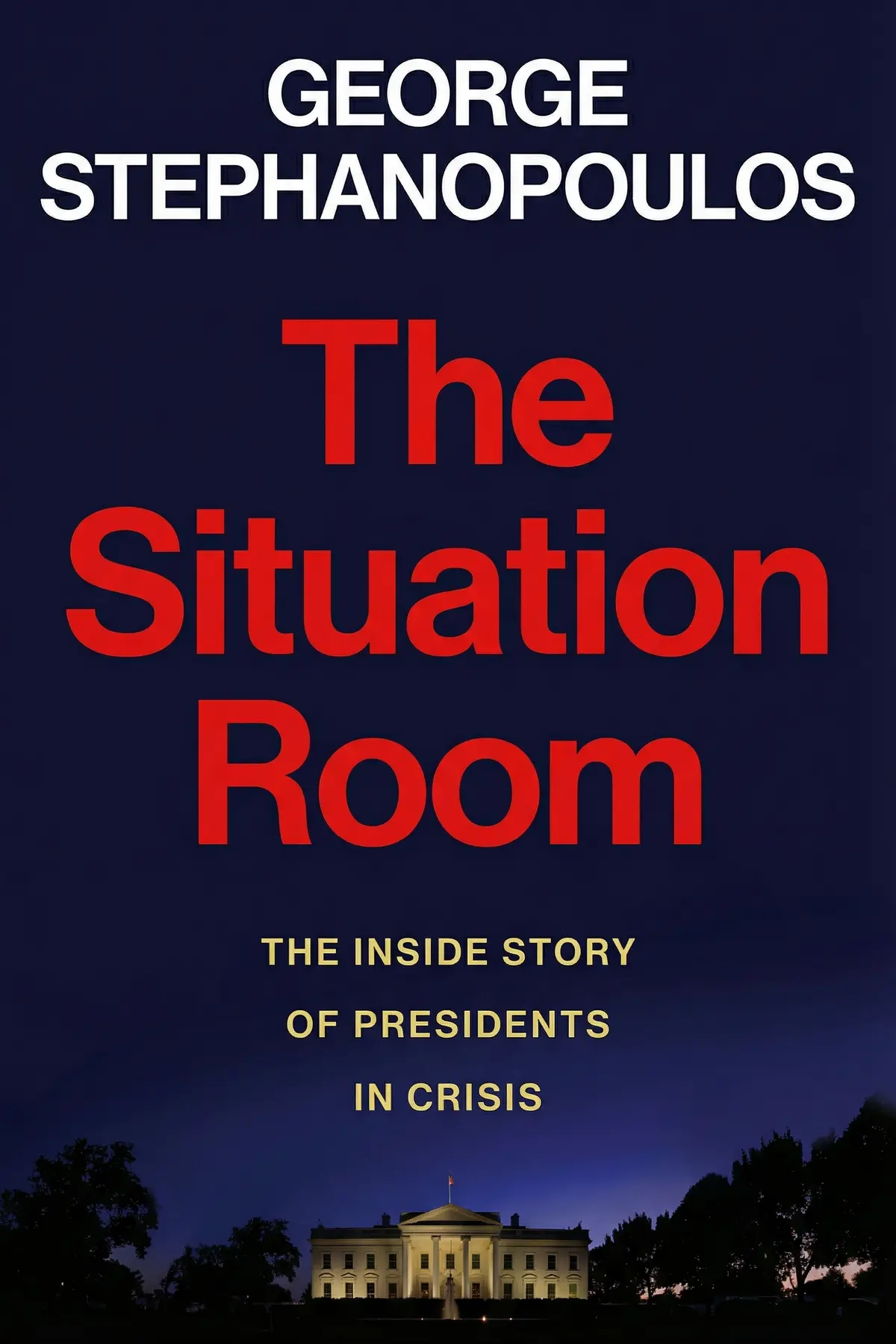
A look inside the White House crisis room, from its birth after the Bay of Pigs to the Trump years, showing how information, clear roles and trust shaped presidents' choices under pressure.
1 min 02 sec
Most of us picture a crisis as one brave person making a lonely call. In The Situation Room, George Stephanopoulos, a former Clinton White House adviser turned ABC anchor, shows something more useful: presidents under pressure succeed or fail by the information that reaches them and the people who carry it. The room itself was born from a failure. In April 1961, orders for the Bay of Pigs invasion moved over unclassified lines through a confused chain of command, and the operation collapsed.
Within two weeks, John F. Kennedy ordered a secure hub built under the White House. From that start, the book follows presidents through their hardest hours, and one argument holds them together: a crisis is handled only as well as the flow of information, the clarity of roles and the trust around the leader allow. Each episode carries a lesson about leading under strain that fits a boardroom or a small team as well as the White House.
2 min 02 sec
A failed invasion embarrassed a young president and exposed how badly orders were moving. His answer took less than two weeks and began in an unlikely corner of the White House basement.
2 min 04 sec
One president wanted every casualty figure and every returning plane reported, at any hour. That appetite helped him calm a war in the Middle East, and it also followed him into his sleepless nights.
2 min 14 sec
Minutes after a president was shot, his top aides gathered in one room with a tape running. What they argued about, and what they got wrong, still shows what confusion at the top looks like.
2 min 06 sec
On the morning of September 11, the staff were told to leave the building. Some refused. Their choice, and the broken phone lines they fought all day, reveal what really carries an organization through disaster.
2 min 11 sec
The most protected space in the White House was used for a firing, and the person fired was secretly taping it. That scene opens a wider story about what happens when the people inside stop trusting each other.
59 sec
The Situation Room began as a converted bowling alley, and its history suggests the hardware was never the hard part. What decided each crisis was the chain of people standing between the world and the president: whether they knew their roles, whether they stayed at their posts, and whether they trusted one another enough to share the truth. The book follows twelve presidents through that room, and its stories keep returning to that chain.
The lessons reach well beyond Washington. When something fails in your own work, fix the way facts reach the person deciding before you hunt for someone to blame, as Kennedy did in less than two weeks. Agree on who speaks and who decides before the emergency, so nobody has to announce that they are in control. And pay attention to the people who would stay in the room after being told to leave, because no new system replaces them.
Locks and encrypted lines can secure a room. What makes it work is the people inside believing one another.
When a crisis hits the White House, the president's choices depend on what reaches him, how fast and through whom. George Stephanopoulos tells the story of the room built to manage that flow: a basement complex that began life as a bowling alley and became the place where presidents faced wars, attacks and their own staff. The book follows presidents through the room in moments of extreme pressure. Kennedy ordered it after the Bay of Pigs exposed broken communications. Johnson haunted it through Vietnam and used it to reach Moscow during the Six-Day War. Reagan's aides argued there over who held power after he was shot. Its staff stayed at their posts on September 11, and in the Trump years it hosted a secretly recorded firing. Readers get a set of vivid inside stories and a clear lesson running through them: in any crisis, the system around the leader matters as much as the leader. Good information, settled roles and trust between people decide whether that system holds.
Readers of political history who want inside stories of presidents under pressure, from the Cold War to the Trump years.
Managers and team leads who handle emergencies and want to see how information flow and clear roles shape decisions.
Students of government and security curious how the White House actually runs a crisis.
George Stephanopoulos, born in 1961, came to prominence as communications director for Bill Clinton's 1992 presidential campaign. He then served as White House communications director and later as senior advisor for policy and strategy, leaving in December 1996. He went on to a career in journalism, co-anchoring Good Morning America with Robin Roberts and Michael Strahan and hosting ABC's Sunday program This Week. His earlier best seller, All Too Human, looks back on his years in the Clinton administration.
Listeners find this a captivating listen that offers profound perspective on past events, with expertly written and rapid chapters that are both high-stakes and chilling at times. The work showcases intriguing accounts of the various crises each president navigated, and listeners respect the author’s meticulous method of distinguishing truth from misinformation. They prize the rich historical detail, with one listener observing it brings the Presidency closer than most books.
Finally got around to finishing this, and it was a total page-turner. Stephanopoulos takes a room we see in movies and shows us the cramped, high-pressure reality of the basement. From the Cuban Missile Crisis to the hunt for bin Laden, the tension is palpable in every chapter. Frankly, I didn’t realize how much technology evolved from simple telegraphs to the state-of-the-art center it is now. It’s an easy-to-read history that makes you feel like a fly on the wall during the most terrifying moments in American history. Even if you aren't a history buff, the pace keeps you hooked.
Show moreThis book provides a fascinating peek behind the curtain of the White House. It starts with the disaster of the Bay of Pigs and tracks how the Sit Room became the essential tool for every president since Kennedy. I found the stories about the technological shifts particularly interesting, moving from a humble bowling alley to a high-tech hub. The author clearly did his homework, interviewing over a hundred people to get the facts right. Truth is, it’s rare to find a political book that feels this fast-paced and intense without being purely sensationalist. I'm definitely recommending this to my book club.
Show moreWow, what a ride. I expected a dry history lesson but instead got a series of intense, almost cinematic vignettes. The chapter on the failed "Desert One" rescue mission during the Carter administration was heartbreakingly detailed. It’s terrifying to think about how much rests on the communication flowing through that one basement room. Not gonna lie, I stayed up way too late reading the section on the Reagan assassination attempt. Stephanopoulos manages to blend deep research with a narrative style that keeps the reader constantly engaged. It’s a brilliant exploration of power and pressure.
Show morePicked this up after seeing it on a bestseller list, and the historical content is truly top-notch. It’s fascinating to see how a simple request from JFK evolved into the most important room in the world. The writing is clear and accessible, even when diving into the more complex aspects of national security and intelligence gathering. I particularly enjoyed the photographs included; they really helped ground the stories of these high-stakes meetings. Look, if you want to understand how the US handles a global catastrophe, this is probably the best resource available to the general public.
Show moreStephanopoulos really delivered a well-crafted and incredibly researched piece of non-fiction. It’s clear that his background as a reporter helped him gather a massive amount of intel from interviews with key players. The stories about the hunt for Osama bin Laden were especially gripping, offering details I hadn’t heard in previous accounts. Frankly, it’s impressive how he manages to cover twelve different presidencies without the book feeling bloated or repetitive. It’s a fast-paced journey through sixty years of American crises that left me feeling much more informed about how our government actually functions.
Show moreEver wonder what it’s actually like when the world is falling apart and the President needs to make a call? This book answers that with incredible detail. I appreciated how George focused on the non-political staff who keep the gears turning regardless of who is in the Oval Office. To be fair, some sections felt a bit dry and reporter-like, especially when discussing older administrations I wasn't as familiar with. However, the insights into the 9/11 response were absolutely riveting and worth the price of admission alone. It’s a solid look at the "nerve center" of the executive branch.
Show moreAs a political junkie, I found this deep dive into the Executive Branch’s communications hub to be essential reading. George brings a unique perspective given his own time in the White House, though he stays mostly in the role of a historian here. He highlights how different presidents—from Nixon to Obama—approached the same four walls with vastly different temperaments. One minor gripe is that the cast of characters can get a bit overwhelming at times with so many similar-sounding advisors. Still, the way it brings the presidency closer than most books is a real achievement for any reader.
Show moreThe chapter on the Iran hostage crisis alone makes this book a must-read for anyone interested in modern history. It really highlights the "sealed can" environment of the Sit Room and how high-pressure situations are the norm. I loved the "fly on the wall" feeling of the prose, though I’ll admit I had to switch from the audiobook to print to keep all the names straight. In my experience, the pictures in the physical copy add a lot of necessary context to the physical space of the room. It’s an enlightening and frequently scary look at the burdens of leadership.
Show moreI wanted to love this, but the author's personal leanings occasionally got in the way of the storytelling. The first 80% is a fantastic, balanced history of crisis management from Kennedy through the Bush years. But once we hit the modern era, the tone shifts dramatically from factual reporting to what feels like a personal grievance. I also think starting with January 6th was a missed opportunity compared to the unifying potential of a 9/11 focus. In my experience, the book is at its best when it explores the "behind the scenes" mechanics rather than the author’s own political opinions.
Show moreLook, the history here is interesting, but the author’s bias is just too loud to ignore. For a man who built a career as a journalist, the lack of balance in the final chapters is quite jarring. He gives effusive praise to figures like Bush while offering nothing but vitriol for others, which makes the whole work feel inconsistent. Personally, I was looking for a neutral historical account of the room itself, not a platform for political commentary. The sections on the Cold War were excellent, but the shift toward a personal journey at the end ruined the experience for me.
Show moreIt tells the story of the White House crisis center, from its creation under Kennedy after the Bay of Pigs to its use under recent presidents. Through episodes such as Johnson’s Vietnam nights, the hours after Reagan was shot, September 11 and the Trump years, it shows how the information and people around a president shape the decisions made in a crisis.
The Bay of Pigs invasion in April 1961 failed partly because decisions moved over unclassified lines through a confused chain of command. Days earlier, Air Force general Godfrey McHugh had passed Kennedy a study proposing a dedicated room for Cold War intelligence. On April 30, Kennedy ordered its construction, and within about a week Navy construction crews turned a bowling alley in the basement into a complex of four rooms.
National Security Adviser Richard Allen recorded the meeting, capturing confusion and overlapping arguments. Al Haig declared he was in control, though the Constitution said otherwise, and he pressed about securing the nuclear football. After reports of Soviet submarine activity, Caspar Weinberger raised the Strategic Air Command’s readiness level, which set off a clash with Haig. Vice President Bush’s arrival restored calm.
The episodes suggest repairing how information travels after a failure rather than only blaming people, settling who decides and who speaks before an emergency, and testing communication channels in advance. September 11 shows the value of staff who stay at their posts, while the Trump chapter shows that even the best-equipped system fails when trust between colleagues breaks down.
Masaji Ishikawa

William J. Bernstein

John Rawls

Ben Macintyre




James Shapiro

Miles Taylor
Ben Macintyre
AUDIO SUMMARY AVAILABLE
Get the key ideas from The Situation Room by George Stephanopoulos, plus 5,000+ more nonfiction titles.









