

14 min 20 sec
Available in: English
The Power of Going All-In: Secrets for Success in Business, Leadership, and Life
Shows managers how to lead through full commitment instead of control: a clear vision, goals broken into daily numbers, honest communication, calm handling of setbacks and deliberate work to raise the next generation of leaders.
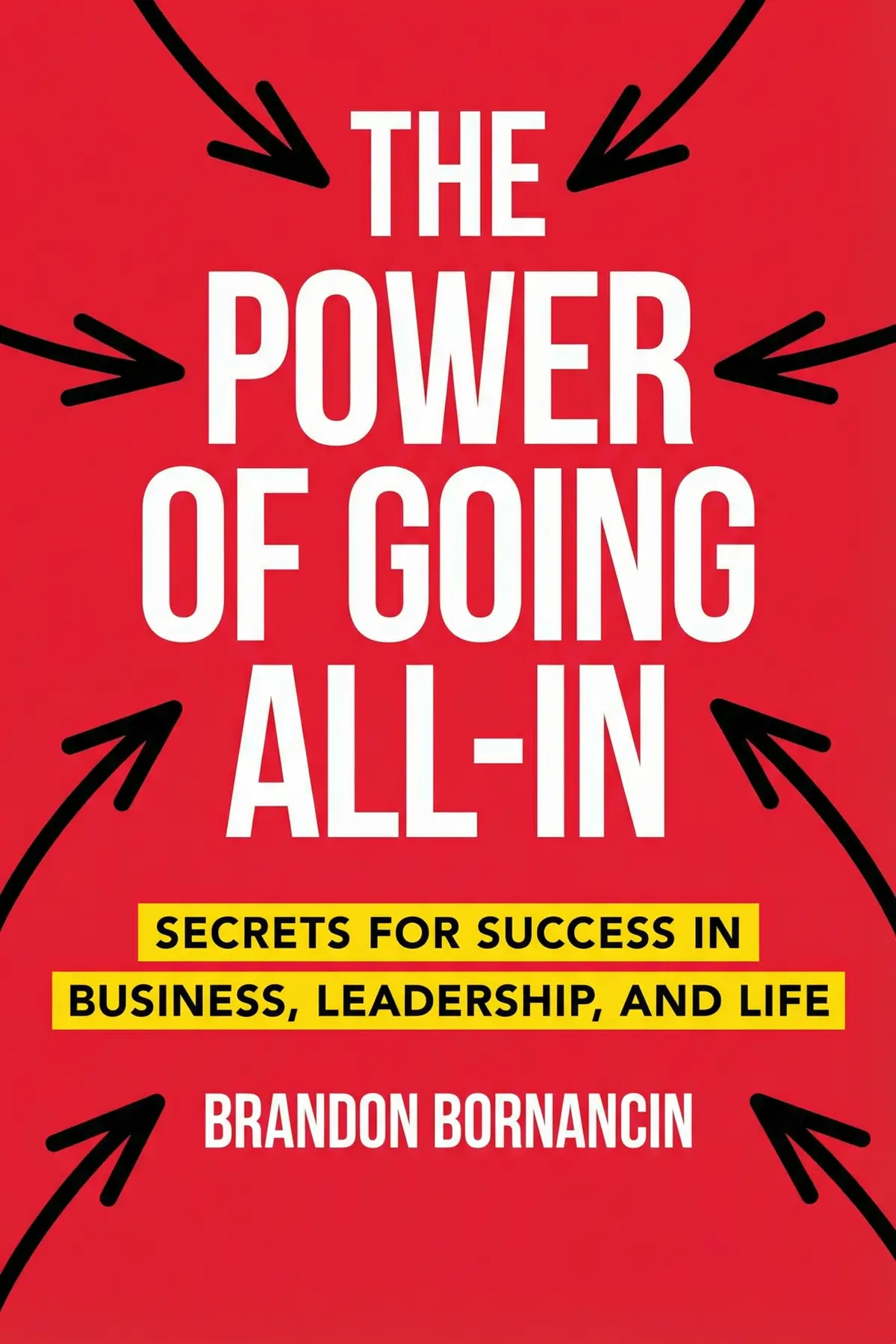
Table of Content
1. Introduction
1 min 05 sec
Many managers work hard and still lead teams that drift, guess at priorities and leave for somewhere better. In The Power of Going All-In, tech entrepreneur Brandon Bornancin, who founded a sales-leads company, argues that the fix is full commitment of a specific kind. His model is a leader who gives the team time, clarity and care every day instead of hovering over its work.
His first idea is a balance. Great leaders direct, which means setting goals and holding people to them. They support, which means making sure people have what they need. And they contribute, always asking what more they could do to help. Lean too hard on one side and the team tips over.
That balance opens the book’s larger claim. When a leader commits fully to vision, numbers, honest talk and people’s growth, ordinary effort becomes a team that performs and grows its own leaders. Along the way come a method for turning a yearly target into a daily figure, a firm rule for meetings and a phrase that reframes failure.
2. Balance pushing, backing and pouring into people
1 min 47 sec
Some managers only show up when a deadline slips, and others only when someone asks for help. Bornancin argues both are missing two-thirds of the job, and he offers a four-letter check to find the gap.
3. Give every project a vision and a scoreboard
1 min 39 sec
A team can agree on the mission and still build three different things. Bornancin’s fix fits on a single page, and he pairs it with one question about losses that most leaders never ask out loud.
4. Hire for the team you will need next
1 min 41 sec
Standard interview questions produce standard rehearsed answers. Bornancin suggests a different kind of question, a weekly outreach habit and a way to make one strong performer’s habits spread through the whole team.
5. Turn a yearly target into a daily number
1 min 53 sec
A million-dollar goal feels like fog until it shrinks to something a person can check before dinner. Bornancin also wants one week a month spent on a task most teams never schedule at all.
6. Earn trust with clear words and costly choices
1 min 44 sec
People rarely quit over one bad day. Bornancin points to a slower cause, and his remedy involves browser tabs, a three-letter rule and the willingness to pay a personal price for the team.
7. Treat every setback as the start of a comeback
1 min 40 sec
After a missed deadline, a leader’s first reaction sets the mood for weeks. Bornancin offers a one-word change to a familiar complaint, and a firm view about what a struggling team does not need to hear.
8. Grow people who can one day replace you
1 min 46 sec
A great individual performer often struggles once promoted, and a boss who never logs off can drain a team without saying a word. Bornancin explains what to do about both, and when to stop waiting for review season.
9. Conclusion
1 min 05 sec
Going all-in, as Bornancin describes it, sounds like a call for longer hours. It turns out to mean something closer to the opposite. The leader who grinds around the clock makes rest feel forbidden, and the one who hovers takes ownership away. His all-in leader commits instead to what a team cannot supply for itself: a clear vision, numbers that show progress, honest words, fair treatment after mistakes and a real stake in each person’s future.
The most useful starting points are small. Take your team’s biggest annual goal and split it into quarterly, monthly and daily figures that each person can check by evening. Block the first week of next month to clear out work that no longer matters, and keep meetings to 30 minutes. When something goes wrong, end the review on the comeback plan and leave the blame out of it.
Then look around for the person who already does excellent work without being asked. In Bornancin’s view, a leader’s job is to make that person the norm, and one day the next leader.
About this book
What is this book about?
Plenty of managers work long hours and still lead teams that guess at priorities, sit through long meetings and leave for better offers. Brandon Bornancin, a tech entrepreneur who founded a sales-leads company, argues that the missing piece is a particular kind of commitment. His all-in leader does not hover over the work. Instead, this leader sets bold goals, backs people fully and keeps investing in them every day. Bornancin turns that idea into a set of compact tools. A three-sided balance of directing, supporting and contributing is illustrated by four characteristics he calls AARI. Statements of work give each project a vision and an owner for every piece. AQMD goals break an annual target down into quarterly, monthly and daily figures. The CPT rule keeps communication clear, purposeful and trusted, and the SDB mindset helps teams recover from setbacks. Readers get practical habits they can start this month. These include clearing the work pipeline at the start of each month, capping meetings at 30 minutes and giving feedback in private. They also get a way to turn reliable performers into the managers who will one day replace them.
Book Information
Who it's for
New and middle managers
New and mid-level managers who work hard but whose teams still guess at priorities.
Founders and sales leaders
Founders and sales leaders who want simple tools for goals, meetings and hiring.
Preparing to lead
Ambitious professionals preparing for their first leadership role and wanting to grow their own successors.
About the Author
Brandon Bornancin
Brandon Bornancin is a tech entrepreneur and speaker who writes about business, leadership and the habits behind success. He founded a company that supplies sales leads to business professionals. His sales work for IBM and Google also brought in more than $100M in deals. He has written five best-selling books, including Whatever It Takes and The Power of Going All-In, and his books have sold more than 100,000 copies worldwide.
Ratings & Reviews
Ratings at a glance
What people think
Listeners describe this book as a first-rate guide full of effective techniques and plans that can be applied right away. They enjoy how simple it is to digest, with one listener specifically mentioning its super easy-to-read approach.
Top reviews
Vipawan
Bornancin has crafted a roadmap that cuts through the typical fluff found in leadership manuals. The AQMD framework for goal setting alone is worth the price of admission, especially if you're struggling to keep a sales team aligned. I found the emphasis on daily milestones incredibly practical for my current project. It’s rare to find a business book that feels this urgent and actionable. While some might find the "all-in" mentality a bit intense, it's exactly the kick in the pants most managers need to stop playing it safe. Truth is, we often settle for mediocrity because we're afraid of the commitment. This book removes that excuse. It’s concise, punchy, and actually gives you a system instead of just vague inspiration. Highly recommended for those ready to scale.
Show moreNang
After hearing so much about Bornancin’s success, I wanted to see if his philosophy translated to the page. It does. This book is a masterclass in focus. The "all-in" mindset isn't just about working hard; it's about the radical transparency required to keep a team moving in the same direction. I loved the section on removing irrelevant tasks from the pipeline. It’s so easy to get bogged down in busy work that doesn't move the needle, and this book gives you the permission to cut the fat. It’s an essential read for entrepreneurs who feel like they’re spinning their wheels. You’ll leave with a clear vision and a way to communicate that vision to your team. Absolutely worth the afternoon it takes to read.
Show moreUraiwan
Finally got around to finishing this, and I have to say the back half is significantly stronger than the start. Early on, the author seems a bit too focused on plugging his own company, which almost made me put it down. Stick with it, though. Once Bornancin moves into the CPT framework—Clarity, Purpose, and Trust—the book finds its heart. The transition from hard KPIs to the emotional intelligence required for succession planning was a pleasant surprise. My only real gripe is the repetitive nature of some of the "all-in" slogans. Still, the practical tips on clearing the work pipeline during the first week of the month are something I’ll be implementing immediately with my own staff. It's a quick read that actually offers tangible takeaways.
Show morePhu
Managing a remote team for five years has taught me that clarity is everything, and this book doubles down on that. The AARI framework—Available, Approachable, Responsive, and Invested—was a timely reminder of what my people actually need from me. Bornancin’s writing is incredibly direct, which I appreciate. He doesn't waste time with long-winded anecdotes that don't go anywhere. Instead, you get clear instructions on how to break down annual targets into daily objectives. It’s very much a sales-first mentality, which might not resonate with everyone, but for growth-focused organizations, it’s a goldmine. The book flows well, though the tone can feel a little too good to be true at certain points. It’s a solid resource for anyone looking to tighten up their performance management systems.
Show moreTuck
This book offers a refreshing mix of high-level vision and granular data-driven strategy. I’ve read countless books on leadership, but few emphasize the "contributory" pillar as effectively as this one. Being an all-in leader means you aren't just barking orders from the top; you're in the trenches with your team. The advice on nurturing the next generation of leaders through emotional intelligence was particularly insightful for my current role. My main criticism is that the author leans heavily on his own company as the primary case study, which gets a bit old after a while. But if you can look past the self-promotion, the strategies for building a culture of excellence are genuinely useful and easy to implement right away.
Show moreBella
Wow. I wasn't expecting to get so much out of a book that looks like a standard business "airport read." The chapter on creating a concise Statement of Work for every project is a game changer for project management. It brings a level of clarity that most teams are sorely lacking. I will say, the pace is breathless. It’s very much geared towards a high-octane business environment. If you work in a more slow-paced or creative industry, the intensity might feel a bit jarring. But for anyone in sales or tech leadership, the all-in philosophy provides a great framework for scaling quickly without losing sight of your core mission. It's an easy-to-read guide that delivers on its promises.
Show moreZanya
Not what I expected from a leader in the AI space. The book is filled with these little cheesy sayings that sound like they were generated by a prompt rather than real-world experience. I was hoping for deep, technical insights into scaling a tech company, but what I got was more of a leadership 101 refresher. Look, the advice on transparency and active listening is fundamental, but it isn't revolutionary. It’s the kind of book you could skim in an hour and feel like you’ve read the whole thing. The structure is digestible, which is a plus for busy people. However, the lack of storytelling makes the advice feel a bit dry and detached at times. It’s okay as a quick motivational boost, but don’t expect a deep dive into complex organizational psychology.
Show moreTom
In my experience, business books either give you too much theory or too much ego, and this one dances right on the line. The all-in concept is definitely a double-edged sword. On one hand, the tactical advice regarding AQMD goals is brilliant for accountability. On the other hand, the author's voice can be a bit pompous, especially when he suggests you should reread the book immediately. It's a quick, easy read, which I liked. However, it feels a bit light on the actual psychology of leadership. It’s great for a morning motivation boost—maybe read one short chapter a day—but it’s not going to become a definitive classic in the genre. It’s good, not great.
Show moreSomkid
Ever wonder if we’ve reached the limit of "grind culture" literature? This book feels like a relic of an era that ignores the reality of employee burnout. The "whatever-it-takes" approach sounds great in a boardroom, but in practice, it’s a recipe for high turnover and exhausted teams. I struggled with the idealistic capitalist tone that permeates every chapter. While the technical advice on Statement of Work (SOW) documents is actually quite solid, it’s buried under a mountain of hustle-culture rhetoric. To be fair, the section on the AARI framework has its merits, but I can’t get past the feeling that this is just another way to ask people to work more for less. It lacks the nuance required for modern, sustainable leadership in today's workforce.
Show moreNaomi
Picked this up for a leadership book club, and the general consensus was disappointment. The book feels more like a long-form marketing brochure for the author's business than a genuine attempt to contribute to the field of leadership. Many of the strategies mentioned are just standard industry practices rebranded with catchy acronyms. Frankly, the suggestion that leaders should be "always on hand" (the Available part of AARI) is a nightmare for boundaries. It ignores the importance of deep work and focus for the leaders themselves. While there are a few decent quotes to put on a wall, the lack of how-to depth for the more complex soft skills left me wanting much more. It’s a very surface-level take on a very complex topic.
Show moreQuestions about this book
What is the main idea of The Power of Going All-In?
Brandon Bornancin argues that great leadership comes from full commitment to the team, not from control. An all-in leader balances directing, supporting and contributing. This leader sets a clear vision for every project, breaks goals into daily numbers, communicates with clarity and trust, treats setbacks as lessons and deliberately grows future leaders. The result, in his view, is a high-performing team with a culture of excellence that carries on beyond any one manager.
What are AQMD goals in The Power of Going All-In?
AQMD stands for annual, quarterly, monthly and daily targets. You start with the yearly goal and break it into smaller, specific milestones. Bornancin’s example is an annual sales target of $1,000,000, which becomes $250,000 a quarter, $83,334 a month and $3,774 a day. A daily figure lets each person see quickly whether they are on track and makes performance reviews more objective.
What does the AARI framework mean for leaders?
AARI describes four behaviors of a strong leader. Available means being on hand to help, with no question too small. Approachable means showing eagerness to help with problems. Responsive means giving help or input whenever asked. Investment means putting time, energy and resources into the team’s capability every day. Together they put Bornancin’s balance of directing, supporting and contributing into practice.
How can I apply The Power of Going All-In as a manager?
Start with habits Bornancin describes. Break your team’s annual goal into daily figures. Spend the first week of each month clearing work that is no longer a priority, and keep meetings under 30 minutes. Give hard feedback privately with prepared points. After a mistake, encourage first, then move straight to a comeback plan. Promote people who consistently outperform without waiting for the annual review.
Readers also enjoyed



A Year with Peter Drucker: 52 Weeks of Coaching for Leadership Effectiveness
Joseph A. Maciariello



Acting with Power: Why We Are More Powerful Than We Believe
Deborah Gruenfeld

All In: How Great Leaders Build Unstoppable Teams
Mike Michalowicz


AUDIO SUMMARY AVAILABLE
Listen to The Power of Going All-In in 15 minutes
Get the key ideas from The Power of Going All-In by Brandon Bornancin, plus 5,000+ more nonfiction titles.
- 5,000+ titles
- Listen as much as you want
- 7-day free trial
- Cancel anytime









