

14 min 09 sec
Available in: English
The Mystery of the Exploding Teeth: And Other Curiosities from the History of Medicine
A guided tour of medicine's strangest historical cases, from bursting teeth to a scalp seared with a hot pan. It shows what doctors got wrong when tradition and anecdote stood in for evidence.
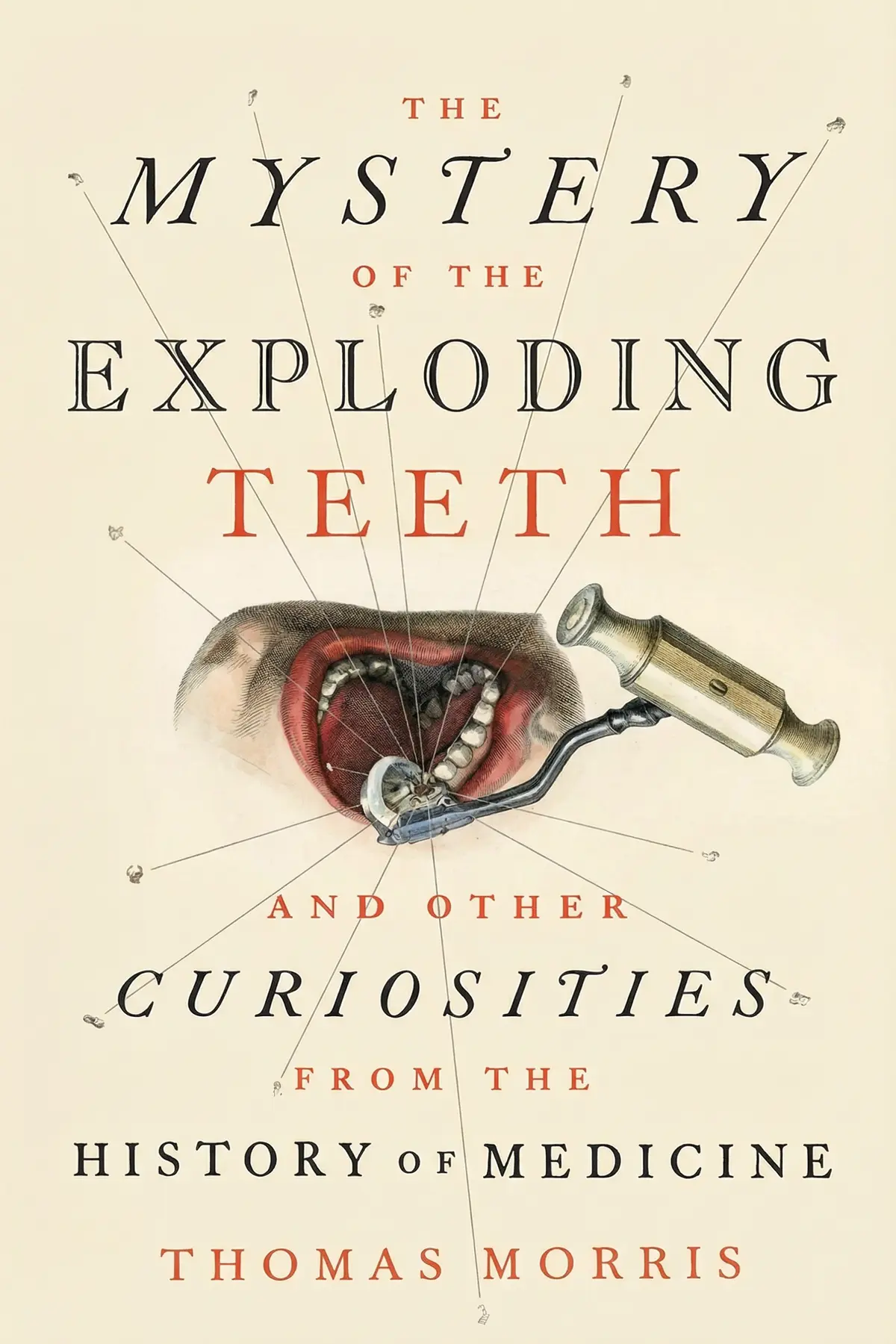
Table of Content
1. Introduction
1 min 10 sec
Most of us walk into a hospital expecting clean rooms, a correct diagnosis and a treatment that helps. For most of history, none of that was a safe bet. In 1893 the first international list of diseases named only 161 conditions, and a century later it held more than 12,000.
In The Mystery of the Exploding Teeth, medical historian Thomas Morris digs through old medical journals to show what practice looked like before that knowledge existed. His collection is funny, grim and often hard to believe. Underneath the oddities runs one argument. The doctors of the past were not fools, but without names for diseases, evidence for their cures, safe surgery or a filter for tall tales, they leaned on tradition and daring, and their patients paid the price.
Along the way come a dentist’s unsolved puzzle, a sailor who swallowed knives, an earl treated long after his death and a man who recovered from a dagger hammered into his skull. Together they sharpen your eye for the gap between a treatment that is proven and one that is merely familiar.
2. See why an unnamed illness defeats any doctor
2 min 04 sec
For four decades, a Pennsylvania dentist kept seeing a problem no one could explain. The loud end to his patients’ suffering still has no accepted explanation, and the reason shows how much medicine depends on simply naming things.
3. Discover the odd objects doctors pulled from patients
2 min 04 sec
A young apprentice endured six months of pain before a surgeon found the cause, and a sailor kept repeating a party trick for years. In both cases, an object ended up inside the body where it plainly did not belong.
4. Question any cure backed only by tradition
2 min 02 sec
When an English earl collapsed during a game of bowls, his doctor refused to give up. What followed is absurd, yet it exposes a habit of thinking that outlived the doctors who practiced it.
5. One failed operation that changed English surgery
1 min 48 sec
A poor laborer traveled from China to London hoping a famous surgeon could free him from a crippling condition. Hundreds of people came to watch, and what they saw made a whole profession rethink its ambitions.
6. A body far tougher than anyone expected
1 min 49 sec
A carriage shaft through the chest and a dagger hammered into the skull should both have been fatal. The men who survived them became curiosities, and their stories complicate what doctors thought they knew.
7. Test a great story before you believe it
1 min 54 sec
A Swedish woman said to have spent three days underwater, and a man presented at a royal court as 152 years old. Even one of the most respected physicians of his century was taken in.
8. Conclusion
1 min 18 sec
Morris’s cases are funny because they feel far away, and unsettling because they are closer than we might like. A fork hidden for six months, an earl blistered after death, 680 people watching a man bleed to death: each happened in the hands of doctors who were trying, with the tools and beliefs they had. What they lacked was a full map of disease, honest evidence about their treatments, safe surgery and a reliable filter for a good story. Medicine became the careful field we rely on today by slowly building each of those.
The habits that changed medicine still work in ordinary life. Tell your doctor the embarrassing detail, because it may be the one that solves the case. When a remedy, a diet or a company ritual is defended only by how long it has been around, ask for the evidence behind it. Before any dramatic intervention, weigh it against the risk of leaving the problem alone, the lesson English doctors drew from Hoo Loo’s death. And treat a single astonishing story, however respected the person telling it, as a reason to check before you believe it.
Some mysteries, like the exploding teeth, are still open. The rest were solved by people who learned to doubt.
About this book
What is this book about?
Most of us expect a hospital to be clean, a diagnosis to be correct and a treatment to help. For most of history, none of that was guaranteed. Medical historian Thomas Morris has searched old medical journals for the cases that show what practice looked like before modern knowledge existed, and he retells them with dark humor. The cases are bizarre: a Pennsylvania dentist whose patients' teeth seemed to explode, a sailor who swallowed 35 knives, an earl treated with snuff, sheep guts and a red-hot frying pan after he had already died, and a Chinese laborer whose death in front of 680 spectators helped end a reckless era of English surgery. There are survivors too, like Thomas Tipple, who lived 11 more years after a carriage shaft went through his chest, and there are frauds, like the man said to have reached 152. Underneath the oddities sits a serious point. Doctors without names for illnesses, proof for remedies or safe operations fell back on tradition, daring and good stories, and their patients paid for it. Readers come away grateful for modern care and better at telling a proven treatment from a merely familiar one.
Book Information
Who it's for
Curious about strange history
Curious readers who enjoy history told through strange, true and often darkly funny cases.
Patients and carers
Patients and caregivers who want to understand how recent safe, evidence-based medical care really is.
Professionals wanting cautionary tales
Professionals who want sharp examples of tradition and anecdote leading smart people astray.
About the Author
Thomas Morris
Thomas Morris is a medical historian and writer based in London. His first book, The Matter of the Heart, came out in 2017 and told the story of heart surgery. It won a Royal Society of Literature Jerwood Award. In The Mystery of the Exploding Teeth he turns from one specialty to the oddest corners of medical history as a whole.
Ratings & Reviews
Ratings at a glance

What people think
Listeners consider the book an enjoyable experience providing amusing observations on medical history. The anecdotes are compelling, and one listener remarks that the work functions like an incredible trauma log for primitive medicine. Listeners feel the content is quite funny, with one review calling out the comical ironies of human nature. The darker horror elements draw a variety of reactions from listeners.
Top reviews
Sing
Ever wonder how our ancestors managed to survive the very people who were supposed to heal them? This book is a hilarious and horrifying testament to human resilience and medical ignorance. Morris has curated a collection of anecdotes that range from the tragic Hoo Loo tumor case to the absurd story of the man whose mustache caught fire from a flammable burp. It is brilliantly research-heavy, yet maintains a light, tongue-in-cheek tone that keeps the gruesome details from becoming too overwhelming. I particularly enjoyed the sections on early 19th-century surgery, even if they were absolutely terrifying to imagine. Truth is, we often forget how recently medicine was just a series of educated guesses. This is a must-read for anyone who loves a bit of the macabre mixed with their history. I laughed, I winced, and I felt very grateful for my own GP.
Show moreMarasri
Wow, talk about a visceral reading experience! I was absolutely gripped by the stories of people enduring massive surgeries without a single drop of anesthesia. The courage (or desperation) of patients like Hoo Loo is truly moving. Morris balances the horror with a dry wit that I found quite refreshing, even if it gets a bit silly at times. The book highlights the sheer absurdity of human nature, from the objects we swallow to the bizarre remedies we’re willing to try. It's a quick read because of the short-chapter format, which makes it perfect for picking up and putting down. I’ve recommended it to several friends who have an interest in the "grosser" side of history. It’s an eye-opening look at the evolution of science. Absolutely brilliant.
Show moreMax
Finally got around to reading this curious little volume, and it was certainly a ride. It reads essentially like a trauma log from an era before germs were a known quantity, which makes for some truly harrowing imagery. The chapter on the man having his ribs removed while fully awake was enough to make my stomach flip, yet I couldn't stop turning the pages. Morris does a great job of digging up these obscure stories from 19th-century medical journals that you won't find in standard textbooks. While some of the humor is a bit juvenile, particularly when dealing with objects being inserted into places they shouldn't be, the historical context is invaluable. It’s a sobering reminder of how lucky we are to live in the age of modern anesthesia. Definitely worth a look if you have a strong stomach.
Show moreSarocha
This book is basically a highlight reel of every weird thing that can go wrong with the human body. It’s graphic, weird, and frequently disgusting. I found myself frequently reading passages aloud to anyone who would listen, especially the bit about the child vomiting slugs. While the book can feel a bit repetitive because it’s structured as a series of short clips, the variety of the cases keeps things moving at a brisk pace. Some might find the author’s commentary a bit snarky, but I thought it added a necessary layer of levity to what could have been a very grim subject. It's not a deep academic study, but it is a fantastic collection of curiosities. If you enjoy podcasts like Sawbones, you will find a lot to love here. Just don't read it while you're eating.
Show morePetch
Not what I expected, but I ended up enjoying the journey through these bizarre medical archives anyway. Morris uses primary texts from the 1700s and 1800s, which gives the book an authentic, dusty feel. The author does a solid job of translating the archaic medical jargon so a modern reader can actually understand what a "purgative" or "dropsy" entails. Some of the stories are clearly tall tales or exaggerations from the time, but the book does a good job of pointing that out. My only real complaint is that it stays rooted in the past; I would have loved to see some of these weird cases from the 20th century too. Still, it’s an entertaining bedside companion for anyone who likes "Ripley's Believe It Or Not" style facts. A solid four stars for the research alone.
Show moreNatnicha
After hearing about this on a podcast, I knew I had to see the original accounts for myself. It’s fascinating to see how many of these "miracles" and "horrors" were actually just frauds or misdiagnoses. Morris is a great guide through this world of medical guesswork, providing enough context to make the 18th-century logic seem almost reasonable. The book is filled with instances of things like blowing smoke up people's backsides, which sounds like a joke but was a legitimate treatment. Gotta say, it makes me feel a lot better about my own doctor’s occasional fumbling. The writing is snappy and the pacing is excellent. Some of the graphic descriptions are a bit much for the squeamish, so consider yourself warned. Overall, a very fun and informative read that highlights just how far we’ve come.
Show moreChanikarn
A fascinating, if occasionally repetitive, stroll through the darker alleys of medical history. The visuals this book creates are truly horrific and will likely stay with me for a long time. Whether it’s people swallowing false teeth or the strange accounts of "spontaneous combustion," the book is a testament to the weirdness of the human body. Personally, I found the author's humorous tone to be a nice counterpoint to the more gruesome details, though I can see why it might grate on some. The book really excels when it shows how doctors were often doing more harm than good with their various poisons and bloodletting. It’s a series of curiosities that serves as a great introduction to the field. I’ll never look at a dentist’s drill the same way again.
Show moreKasemsan
As a fan of medical history, I went into this with high expectations. The cases themselves are undeniably fascinating—who doesn't want to hear about someone swallowing two dozen knives and surviving? However, the book feels more like a compiled list of blog posts than a cohesive narrative. Thomas Morris tries very hard to be the "funny guy" of the archives, but the constant 'ahems' and cheeky asides began to wear on my patience after the first fifty pages. It’s definitely a fun dip into the darker side of human anatomy, yet I wish there was more depth to the analysis of why these things happened rather than just mocking the victims. It's a decent bedside read, but it doesn't quite reach the level of some of the better medical podcasts out there. It’s a bit of a mixed bag, frankly.
Show moreDek
Picked this up because the title caught my eye at the bookstore, and it’s definitely a conversation starter. The accounts of the exploding teeth were fascinating, but there were far fewer of them than the title suggested. Instead, the book is a massive collection of "snippets" from old medical journals. While the individual stories are interesting, reading them back-to-back feels a little like scrolling through a weird history Twitter feed. There isn’t much of a narrative thread to tie it all together, and I think a deeper dive into fewer cases would have been more effective. It's definitely entertaining, but it lacks the substance I was hoping for. To be fair, if you just want some weird facts to share at a party, this is perfect. I just wanted a bit more "meat" on the bones.
Show morePridi
The title promised me a deep dive into dental anomalies, but the reality was quite different. My main grievance is that there are only about two accounts of actual exploding teeth in the entire book. It felt like a bait-and-switch. Instead, we get page after page of Thomas Morris trying to be the wittiest man in the room, often failing miserably. His writing is cluttered with pointless interjections and "look at me" commentary that distracts from the actual historical records. To be fair, some of the stories are genuinely shocking, but the repetitive structure and the author's condescending tone ruined the experience for me. If you’re looking for a serious medical history, look elsewhere. This felt like "Horrible Histories" for adults, but without the charm or the educational rigor. I'd skip it.
Show moreQuestions about this book
What is The Mystery of the Exploding Teeth about?
Medical historian Thomas Morris collects bizarre cases from old medical journals to show what medicine was like before modern knowledge. There are dental patients whose teeth seemed to burst, a sailor who swallowed 35 knives, an earl given absurd treatments after his death and a surgery watched by 680 people. Together they show doctors working without names for many diseases, proof for their cures or safe operations.
Were the exploding teeth ever explained?
No. Dentist W. H. Atkinson reported several cases over 40 years, and an 1874 dental book described a woman nearly knocked over by her bursting tooth. The dentists’ own explanations relied on ideas later abandoned. Modern theories blame filling chemicals or electrical charge, but none is widely accepted. Patients may have exaggerated a cracking tooth, yet witnesses said they heard the bang too, so Morris leaves the mystery open.
What does the book say about bloodletting and old cures?
Morris explains that bleeding patients with leeches or an opened vein was standard until the late nineteenth century, though nothing but tradition suggested it worked. The case of Lord Anthony Grey shows the extremes: after the earl collapsed with no pulse, Dr. Charles Goodall tried bleeding, snuff, an emetic wine, a blistering lotion and a red-hot frying pan before admitting he was dead.
What lessons from the book can I apply today?
The cases suggest a few habits. Embarrassing problems still reach the doctor in the end, as with one apprentice who put up with six months of pain before seeking help. Ask what evidence supports any remedy defended only by tradition. Weigh a bold intervention against the risk of the problem itself, as English surgeons did after Hoo Loo died. And check vivid single stories, since even William Harvey believed a man was 152.
Who should read The Mystery of the Exploding Teeth?
It suits readers who like history through strange true stories, people interested in how medicine became safe and evidence-based, and anyone who enjoys dark humor. It is not a self-help book, but its cases about tradition, risk and tall tales offer useful lessons for judging claims at work and at home.
Readers also enjoyed
1491: New Revelations of the Americas Before Columbus
Charles C. Mann
Age of Anger: A History of the Present
Pankaj Mishra

A Life Decoded: My Genome: My Life
J. Craig Venter

1929: Inside the Greatest Crash in Wall Street History--and How It
Andrew Ross Sorkin
Agent Sonya: The Spy Next Door
Ben Macintyre

A Planet of Viruses
Carl Zimmer

A Biography of Loneliness: The History of an Emotion
Fay Bound Alberti
Alexander Hamilton
Ron Chernow

A Short History of Nearly Everything
Bill Bryson
AUDIO SUMMARY AVAILABLE
Listen to The Mystery of the Exploding Teeth in 15 minutes
Get the key ideas from The Mystery of the Exploding Teeth by Thomas Morris, plus 5,000+ more nonfiction titles.
- 5,000+ titles
- Listen as much as you want
- 7-day free trial
- Cancel anytime









