

14 min 37 sec
Available in: English
The Introverted Leader: Building on your Quiet Strength
Shows introverts how to succeed in a business culture that rewards the loud: protect their energy, turn careful speech and close listening into influence, and prepare for small talk, meetings and public speaking.
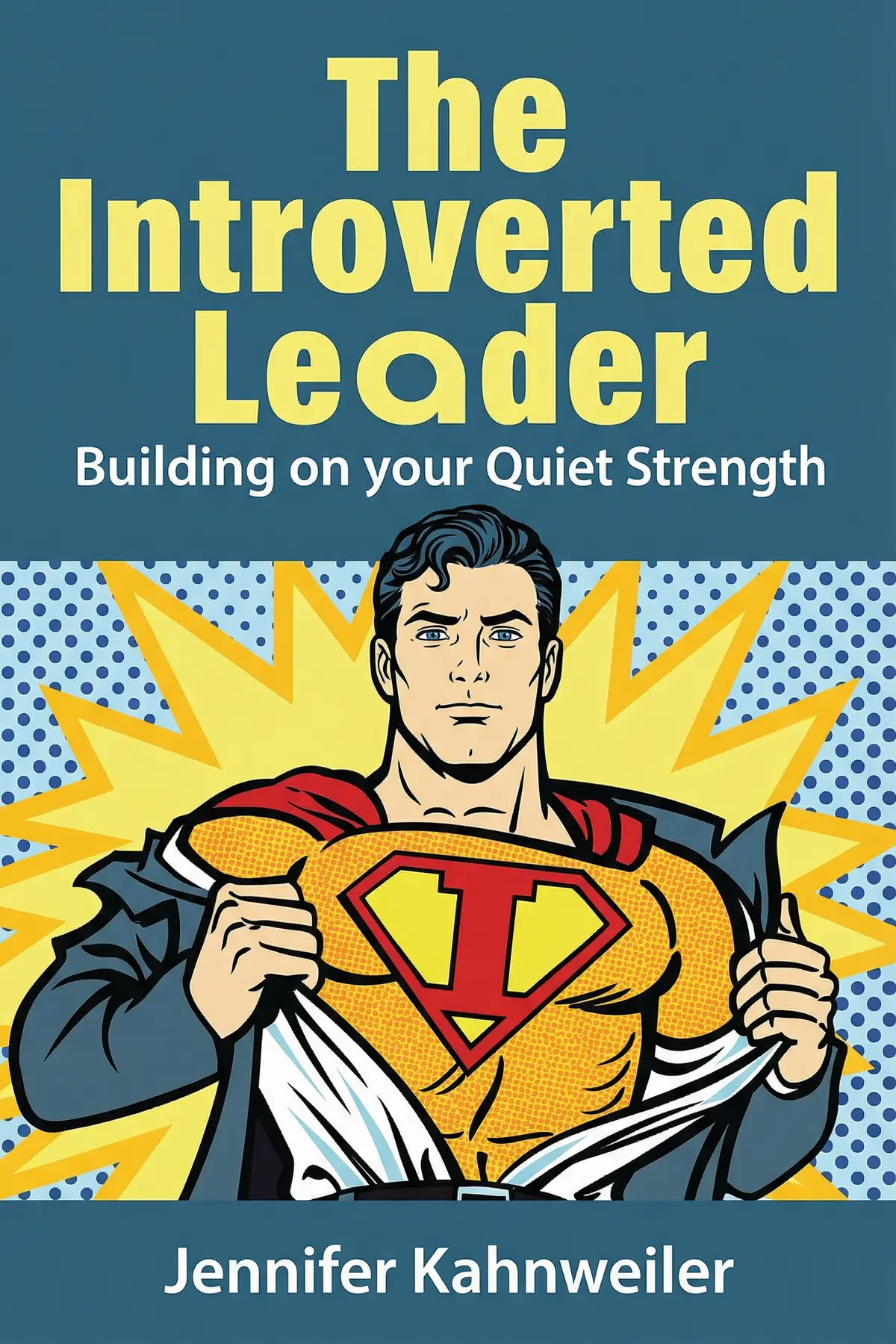
Table of Content
1. Introduction
1 min 01 sec
If you are the person who has the best idea in the meeting and leaves without saying it, Jennifer Kahnweiler has news: you are far from alone, and your quiet may be an advantage. In The Introverted Leader, Kahnweiler, a coach and former learning and development specialist, draws on interviews with more than 100 introverted professionals. Roughly half of people are introverts, she shows, and a large share of executives describe themselves that way.
Her argument is that business culture rewards the loud, so introverts get overlooked and misread, yet the same temperament brings strengths extroverts lack. The work is to protect your energy, use your edge in careful speech, listening and one-to-one connection, and prepare for the moments that feel unnatural.
Along the way: why a round of golf can cost a quiet executive a deal, what a four-year-old at the edge of a game shows about leading, and how small talk becomes a skill anyone can learn.
2. Half your colleagues recharge the way you do
1 min 41 sec
Loud rooms make it seem that extroverts run the world, and business culture seems to agree. One count of how people actually recharge, and one president’s reading habits, tell a very different story.
3. Keep your best ideas from dying in meetings
1 min 26 sec
Two people do equally strong work, and only one gets the promotion. The difference has nothing to do with talent, and the fix Kahnweiler suggests takes less than a minute.
4. Guard your alone time without missing the deals
1 min 31 sec
An executive skipped a round of golf to recharge and walked into a meeting where the outcome was already settled. Yet socializing more is no cure either, and Kahnweiler explains why.
5. Stop being mistaken for a slow thinker
1 min 34 sec
A thorough answer can earn a worse review than a fast, half-formed one. Deep sympathy can look like indifference. Kahnweiler traces both misjudgments to one habit introverts share.
6. Make every word count and earn trust
1 min 32 sec
The habit that gets introverts called slow also shields careers, gives their statements extra weight and opens doors to information others never hear. One confidential remark from a boss shows how.
7. Listen and watch your way to better leading
1 min 34 sec
A four-year-old who rarely joins in knows more about her playmates than any of them know about each other. Kahnweiler shows why that same habit helps a leader lift a struggling team.
8. Network one conversation at a time
1 min 35 sec
Collecting business cards at crowded receptions drains introverts and rarely plays to their talents. Kahnweiler describes two quieter routes to strong professional relationships, and a group of people the loud networkers usually miss.
9. Prepare and practice until small talk feels natural
1 min 38 sec
Some people are sure they were born without a gift for small talk. Kahnweiler disagrees, and she offers a painter’s trick for making uncomfortable leadership tasks feel ordinary over time.
10. Conclusion
1 min 05 sec
The Introverted Leader adds up to a fair trade. The business world was arranged with extroverts in mind, and introverts pay for that in crowded meetings, misread silences and decisions made on the golf course. Kahnweiler’s response is to learn where the system works against you and spend your effort there, while relying on the habits that already make you good at leading: weighing words, listening hard, watching closely and connecting one person at a time.
That points to a few things to try this week. Put your solitary time into your calendar as firmly as any meeting. Before your next meeting, think through the questions you expect and the one idea you will argue for, then say it out loud. The next time you see your boss, mention a recent result in a sentence or two. And at your next event, arrive with a couple of open questions ready.
Think back to Judy at the edge of the game of tag. While the others ran, she learned who giggled before getting caught and who worked together. A leader who sees that much, and has practiced saying it, has nothing to hide behind the quiet.
About this book
What is this book about?
Leadership can look like a job written for extroverts: persuade, direct, negotiate, work the room. Yet roughly half of people are introverts, and a large share of executives describe themselves that way. To find out how introverts succeed in workplaces that favor whoever talks first and loudest, Jennifer Kahnweiler spoke with over 100 introverted professionals. She is candid about the costs. Quiet people lose out in crowded meetings and get passed over for promotions. They miss deals made at informal gatherings, and colleagues misjudge them as slow or cold. Their need for solitude is real, and ignoring it leads to exhaustion. But Kahnweiler also shows what introverts bring: words chosen with care, a reputation for discretion, sharp observation and deep listening, plus a talent for building relationships one person at a time. Readers get a practical plan. Schedule alone time on purpose, keep the boss aware of your results, network through writing and one-on-one conversations, and use preparation and steady practice to make small talk and public speaking feel normal.
Book Information
Who it's for
Introverts feeling overlooked
Introverted professionals whose ideas get lost in loud meetings and who feel passed over for promotion.
First-time managers
New managers who need to speak in public and network without burning out.
Leaders of introverts
Team leads who want to stop misjudging the quiet people on their teams.
About the Author
Jennifer Kahnweiler
Jennifer B. Kahnweiler holds a doctorate from Florida State University focused on counseling and organizational development. She is a Certified Speaking Professional and a Board Certified Coach based in Atlanta, Georgia. Her interest in introverts grew from years in learning and development at General Electric, AT&T, NASA and the US Centers for Disease Control. She has given keynotes and seminars in Vietnam, Japan, the Netherlands and Germany, and her books, including Quiet Influence and The Genius of Opposites, have been translated into 18 languages.
Ratings & Reviews
Ratings at a glance
What people think
Listeners find the book to be a functional resource filled with actionable advice and methods, proving especially helpful for introverts in the professional world. Furthermore, they value the framework tailored for quiet leaders and how it helps them distinguish themselves. Additionally, the work is praised for being easy to digest, empathetic, and highly relatable.
Top reviews
Sin
Ever wonder how some quiet people just seem to command the room effortlessly? This book explains the 'how' behind that quiet power. Jennifer Kahnweiler has written a fantastic guide that doesn't ask you to change your personality, but rather to refine your approach. The 4 P's—Prepare, Presence, Push, Practice—are now ingrained in my daily routine. I used the 'Prepare' phase for a major presentation last week and felt ten times more confident than usual. The book is filled with relatable content and real-world strategies that actually work in a corporate environment. I especially appreciated the tips on setting boundaries to avoid 'people exhaustion.' It’s a must-read for any introvert who wants to maximize their contribution at work without feeling like a fraud. It honestly changed the way I view my own quiet nature. This is easily one of the most useful business books I've ever purchased.
Show moreNoppadol
In my experience, most leadership books ignore the quiet power of the observer, but this one leans right into it. The Introverted Leader is a game-changer for anyone who feels like they have to shout to be heard. Kahnweiler provides a clear, structured path to overcome invisibility in the workplace. I loved the SAR method for situation-based leadership; it’s a simple tool that makes a huge difference in how you’re perceived. The book is very easy to read and feels like having a supportive coach in your corner. It helped me realize that my ability to listen and process deeply is a competitive advantage, not a weakness. For the first time, I feel like I have a strategy to handle networking and high-pressure meetings without losing my mind. This book is a practical, loaded guide that every 'quiet' leader should have in their bag. Highly recommended!
Show moreTawee
Finally got around to reading this, and I have to say, the 4 P's framework actually works if you apply it. Being a leader doesn't mean you have to be the loudest person in the room, but you do have to be present. Kahnweiler breaks down how to achieve that 'presence' without burning out. I found the networking tips especially grounded in reality—things like volunteering for a specific role at an event to give yourself a 'job' to do. The book is loaded with real-life strategies that I could implement the very next day at the office. My favorite takeaway was the idea of 'pushing' yourself in small, manageable increments. While some of the advice is basic, the structured approach is exactly what I needed to stop overthinking social interactions. It’s a quick, empathetic read that genuinely wants to see introverts succeed. Definitely worth a look for quiet professionals.
Show moreAom
Picked this up during a career transition, and it delivered some much-needed encouragement. The author does a great job of identifying the four key challenges—stress, perception gaps, derailed careers, and invisibility—that many of us face. I’ve definitely felt 'invisible' in the past, and this book gave me the kick in the rear to change that. I really liked the focus on 'preparation' as a core strength of the introvert. It reminded me that my tendency to over-prepare is actually a leadership asset, not a crutch. The writing is accessible and the tone is mostly supportive, even if the author is an extrovert. I didn't find it patronizing; I found it realistic about the demands of the modern workplace. It’s a great guide for anyone who wants to stand out without losing their authentic self. I’ll be keeping this on my shelf for reference.
Show moreWissanu
This book is essentially a toolkit for navigating an extrovert-heavy office. Kahnweiler’s approach is systematic and provides a lot of 'how-to' advice that other leadership books gloss over. I particularly enjoyed the sections on how introverts can 'manage up' and help their extroverted bosses understand their working style. It’s not about changing who you are; it’s about adapting your skills to different situations. The SAR method for project leading was a highlight for me. My only gripe is that it can feel a bit like a collection of seminar slides at points. That said, the readability is high, and the advice is actionable. If you’re an introvert in a leadership role feeling drained by the constant 'people' aspect of the job, this will give you some solid coping mechanisms. It’s a practical, empathetic guide that hits the right notes for the working professional.
Show moreKwame
As someone who has struggled with being overlooked in meetings, I found some of the practical tips here quite useful. The chapter on the 'perception gap' was particularly eye-opening for me. It’s true that people often mistake my silence for a lack of ideas or engagement. Truth is, the book is a bit of a mixed bag. On one hand, the 4 P's framework offers a structured way to handle high-stakes situations like public speaking or networking. On the other hand, the author's extroverted perspective sometimes misses the mark on why we function the way we do. It’s a very 'corporate' book—lots of charts and bullet points. It’s helpful if you’re a recent graduate or new to management and need a basic toolkit. Just don't expect a profound exploration of the introverted psyche. It’s a functional guide for surviving the office, nothing more.
Show moreMatteo
Look, the reality of the business world is that visibility matters, and Kahnweiler provides a roadmap for that. I appreciated the specific tools like the SAR (Situation, Action, Result) method for giving feedback. It’s a very practical, easy-to-digest book that doesn't waste much time on theory. Personally, I found the section on 'declaring yourself' to be the most valuable part of the entire text. Telling colleagues that you aren't aloof, just processing, is a simple but powerful move. However, the book does feel a bit dated and repetitive at times. The author tends to lean on the same few examples to prove her points. It’s a solid 3-star read: good for a flight or a weekend, but you’ll probably forget half of it a month later. It serves its purpose as a basic leadership primer for those of us who prefer the sidelines.
Show moreRatree
To be fair, I went into this with high expectations given the subject matter. However, I was quickly disappointed by the surface-level advice. The book relies heavily on the '4 Ps'—Prepare, Presence, Push, Practice—which felt like common sense stretched out over two hundred pages. It reads more like a transcript of a corporate seminar than a deeply researched psychological study. Not gonna lie, I’m tired of being told that the only way to succeed is to 'push' myself into extroverted behaviors that drain my battery. The author’s husband being an introvert doesn’t give her the street cred she thinks it does. The examples of leaders, like the Campbell Soup CEO, were interesting but didn’t feel replicable for someone not already at the top. It’s a quick read, but that’s mostly because there isn't much substance to chew on. It lacks the nuance required for such a complex personality trait.
Show moreThanakorn
Frankly, I found this book to be a bit of a letdown because it focuses entirely on how introverts must adapt to an extroverted world. Where is the section on how extroverted leaders can learn to listen or slow down? Kahnweiler treats the extroverted corporate culture as an unchangeable law of nature. As an introvert, I don’t need to be told to 'get some business cards' or 'just say hi' on an airplane. It assumes we are all socially inept or 'invisible' by default, which is a tired stereotype that needs to die. While the SAR method for feedback was a decent takeaway, the rest of the book felt like a collection of anecdotes that didn't provide any real 'aha' moments. The writing style is breezy but lacks the analytical depth I was hoping for. It feels like it was written for extroverted managers who want to 'manage' their quiet employees rather than for the introverts themselves.
Show moreMia
Why is a self-proclaimed extrovert writing a manual for us? It feels incredibly patronizing to be told how to 'fix' my personality by someone who admits she only understands introverts because she married one. The author seems to confuse introversion with a clinical lack of social skills or pathological shyness, which is frankly offensive. Throughout the chapters, the tone remains condescending, treating our natural preference for reflection as a 'perception gap' that needs to be bridged by acting more like her. The anecdotes feel like generic name-dropping from her motivational speaking circuit rather than genuine, helpful insights. I found the '4 P's' process to be a repetitive, shallow framework that basically boils down to 'try harder to be loud.' If you are looking for a book that actually celebrates quiet strength, skip this and read Susan Cain instead. This was a total waste of time for any self-aware professional.
Show moreQuestions about this book
What is the main idea of The Introverted Leader?
Jennifer Kahnweiler argues that introverts are as common as extroverts, and that 40 percent of executives in one study call themselves introverts, yet business culture rewards the loud. Introverts get overlooked in meetings, misread as slow or cold, and drained by constant socializing. By protecting their alone time, using their strengths in careful speech and listening, and preparing for uncomfortable tasks, they can lead successfully.
What strengths do introverted leaders have?
Kahnweiler names several. Introverts think before speaking, which prevents costly slips and gives their statements extra weight. People trust them with confidential information because they are known to be discreet. They observe closely and listen with full attention, which helps a leader understand what motivates each team member and build rapport with customers and senior managers.
How can introverts network without exhausting themselves?
Kahnweiler suggests two routes that suit introverts better than crowded events full of small talk. Networking websites let them communicate in writing, where they can think through and revise every contribution. One-on-one conversations let them get to know a person in depth and adapt to that person’s style. In a pair, introverts also reach colleagues who stay silent in group meetings.
How can an introvert get better at small talk and public speaking?
Through preparation and practice, Kahnweiler says. Before events, prepare backup topics, a few entertaining stories and open-ended questions. Before meetings, anticipate likely questions so you can answer quickly. Regular practice makes unnatural tasks feel normal, like a right-handed person learning to paint with the left hand, and adds tools such as raising your voice or whispering for emphasis.
Who should read The Introverted Leader?
It suits introverted professionals who feel overlooked at work, especially those moving into leadership roles that require public speaking, networking and visible results. It also helps managers who lead quiet people, since Kahnweiler explains why careful thinkers are often wrongly judged as slow, cold or distant, and why a quiet colleague may simply be thinking before speaking.
Readers also enjoyed





A Year with Peter Drucker: 52 Weeks of Coaching for Leadership Effectiveness
Joseph A. Maciariello



60 Seconds & You’re Hired!
Robin Ryan

Acting with Power: Why We Are More Powerful Than We Believe
Deborah Gruenfeld

AUDIO SUMMARY AVAILABLE
Listen to The Introverted Leader in 15 minutes
Get the key ideas from The Introverted Leader by Jennifer Kahnweiler, plus 5,000+ more nonfiction titles.
- 5,000+ titles
- Listen as much as you want
- 7-day free trial
- Cancel anytime









