

13 min 54 sec
Available in: English
The Headache: The Most Confounding Affliction – And a Search for Relief
Explains why cluster headaches and migraine are serious nervous system disorders, how centuries of disbelief and bad theories held back treatment, and what patients and science are now doing to change it.
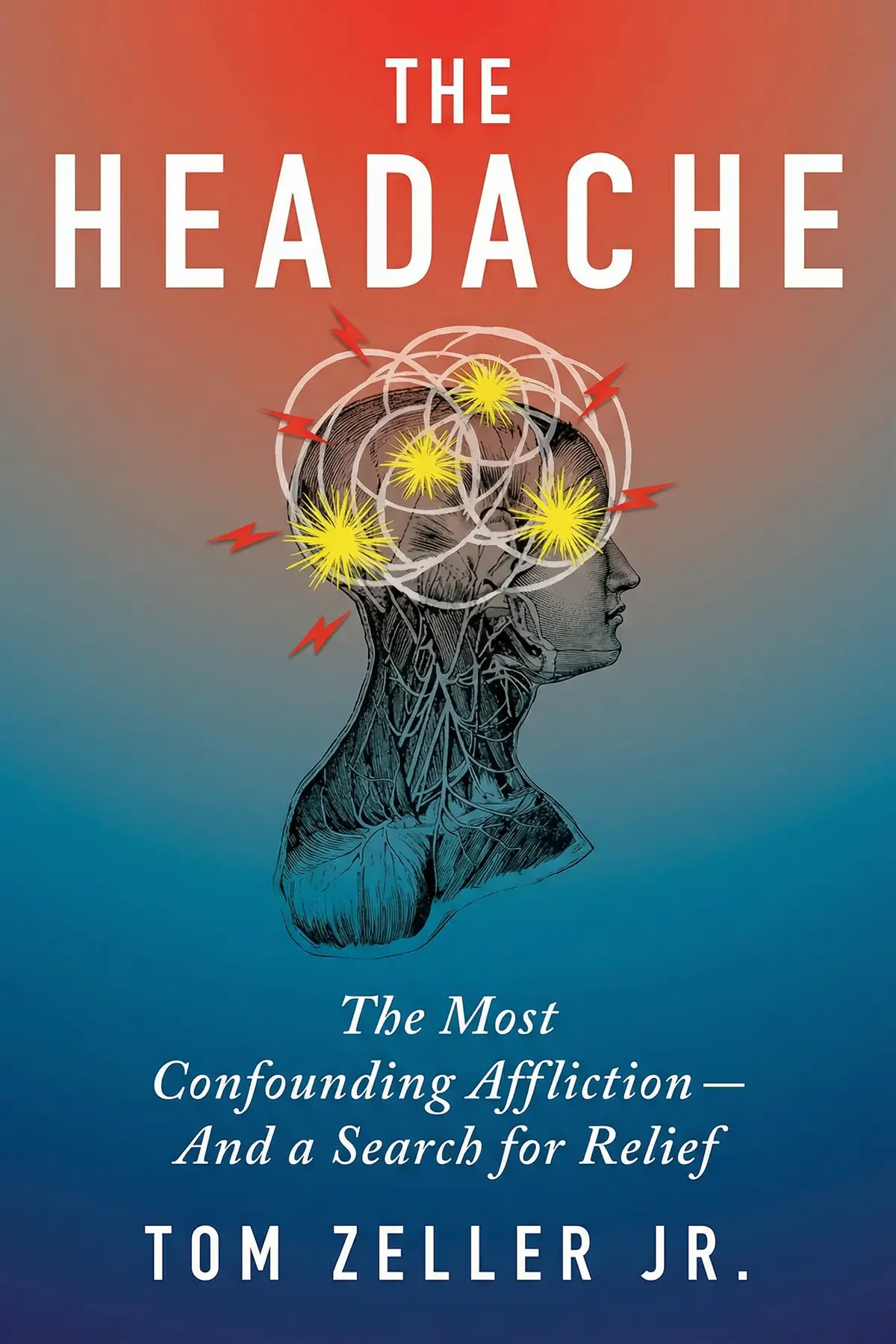
Table of Content
1. Introduction
1 min 02 sec
If you or someone close to you lives with severe headaches, you have probably heard the word just attached to them. In The Headache, journalist Tom Zeller Jr. shows why that word is the problem: cluster headaches, which some call “suicide headaches”, and migraine are serious disorders of the nervous system that medicine has misread for centuries. Zeller writes as a patient. He once rode an e-bike up a Montana mountain road on a large dose of psychedelic mushrooms, hoping the experiment might finally quiet his attacks, and the next one arrived the following day.
His throughline is uncomfortable. Headache disorders stay painful and poorly treated largely because the suffering is invisible, so patients go unbelieved, theories go unchallenged and research goes unfunded. Follow that thread and you will understand what these attacks actually are, why the old explanations failed, which treatments emerged and what still holds them back, along with ways to be taken seriously when your own pain does not show.
2. Tell a cluster attack apart from a bad headache
1 min 50 sec
The first time it struck, Zeller was sure something catastrophic was happening in his brain. Many sufferers look perfectly well and show normal scans, and that gap between what they feel and what anyone else can see only deepens their isolation.
3. Spot the old theories that still decide who gets believed
2 min 17 sec
Doctors have blamed head pain on everything from sin to a favorite pastry. One of the first women in medicine pointed somewhere better, and the argument her work started would steer treatment for generations.
4. Understand where today's migraine drugs came from
1 min 56 sec
A performer who felt better hanging upside down sent a researcher to the circus and reshaped migraine science for decades. The same researcher also left behind a portrait of patients that did lasting harm.
5. Find the doctor who listens, even before a cure
1 min 45 sec
Zeller kept returning to a physician who got his diagnosis wrong and later left medicine in disgrace. His reason says a lot about what headache patients go without, and where many have found help instead.
6. Pain that people can see finally gets attention
1 min 51 sec
A grieving family, a few welding tanks, a television crew and a group of laboratory cats all play a part here. Together they show what it takes to make an invisible illness impossible to ignore.
7. Follow the money to see why cures stall
1 min 54 sec
Congress has asked for more headache research, and the economic case looks enormous. Yet the funding barely moves, and the scientists who do the work often study separate pieces that never get put together.
8. Conclusion
1 min 19 sec
The Headache is, in the end, a book about belief. Zeller shows that pain which leaves no mark has been blamed on sin, meat pies and flawed personalities, judged by the wrong theory for decades and starved of research money because the field never looked important. Each failure fed the next. Yet the picture is shifting. Scientists are studying genetic patterns, building better models of the brain and testing drugs aimed at specific pain pathways. Devices that stimulate nerves from outside the body show modest results, and AI tools may soon help spot an attack early.
Zeller’s deepest lesson comes from patients. Living with these disorders often means losing trust, energy, opportunity or a sense of self, and many learn that other people may never fully understand. What they can do, and what you can do if this is your life or the life of someone you love, is refuse the word just. Describe attacks precisely, keep looking for a doctor who listens, and lean on the people who share the condition and know which specialists believe them.
A dose of mushrooms on a Montana road did not end Zeller’s pain. Being believed is where relief begins.
About this book
What is this book about?
For millions of people, a headache is not an occasional nuisance. It is a chronic, often disabling condition that is easy to dismiss because the pain leaves no visible mark and the word itself sounds so ordinary. Tom Zeller Jr. knows this from the inside: his own cluster headaches kept him for years with a doctor who misdiagnosed him but listened, and at one point sent him up a Montana mountain road on a dose of psychedelic mushrooms. Zeller blends his story with a reporter's investigation. He traces how medicine blamed sin, meat pies and personality for head pain, how a long fight between blood vessel and nerve theories shaped who got treated, and how drugs like sumatriptan finally brought relief to many. He also follows the cost of disbelief, from patients dismissed by neurologists to a young man who took his life after a last failed search for help, and the funding loop that keeps headache research near the bottom of the list. Readers come away with a clear picture of what these disorders are, why progress has been so slow, and where new research is heading.
Book Information
Who it's for
Migraine or cluster headaches
People with migraine or cluster headaches who are tired of being told it is just a headache.
Loved ones of patients
Partners, parents and friends who want to understand pain they cannot see.
Curious about medical bias
Readers curious about how medical bias and research funding shape which illnesses get treated.
About the Author
Tom Zeller Jr.
Tom Zeller Jr. is an American journalist who has covered technology, energy policy, climate and the environment as a reporter, editor and columnist at The New York Times, and also worked at The Huffington Post and National Geographic Magazine. He held a Knight Science Journalism Fellowship at MIT in 2013, co-founded the digital science magazine Undark with Deborah Blum and serves as its editor in chief. The Headache, his first book, draws on his own long struggle with headaches.
Ratings & Reviews
Ratings at a glance
What people think
Listeners commend the extensive research and outstanding observations regarding head pain conditions, particularly trends involving migraines and cluster headaches. The title earns praise for how readable it is, with one listener remarking that it's nearly a page turner, and listeners are impressed by the high quality of the prose.
Top reviews
Stella
Finally, a writer who captures the sheer desperation of chronic head pain without sounding clinical or detached. This book moves with the pace of a high-stakes thriller, which is an incredible feat given that it’s essentially a work of medical history and neurology. I was particularly fascinated by the breakdown of newer treatments like CGRP and the mystery behind why triptans work for some but not others. Zeller’s interviews with researchers and fellow sufferers provide a comprehensive view of the landscape that feels both professional and deeply personal. Truth is, I’ve read a lot of health books, and this is by far the most up-to-date and thoroughly researched volume on the market. It doesn’t just explain the science; it advocates for a world where headache disorders are taken seriously by the medical establishment. If you’ve ever felt like your pain was being dismissed, pick this up immediately.
Show moreRungtip
After hearing about this book on a podcast, I knew I had to get my hands on a copy. It’s almost a page-turner, which is rare for narrative nonfiction about neurology and chronic pain. Zeller manages to strike a delicate balance between his own harrowing experiences and the broader search for a cure. The way he describes the strobe-like auras and the crushing weight of a cluster attack really resonated with my own history of migraines. I particularly enjoyed the quotes from other sufferers at the start of each chapter; they added a human face to the data. Not gonna lie, some of the medical descriptions are dense, but Zeller’s journalistic background ensures the prose remains accessible to the average reader. This is likely the most thorough and up-to-date resource available right now. It’s an essential read for anyone who wants to understand the complex reality of living with a broken internal barometer.
Show moreNora
Picked this up on a whim and was blown away by the quality of the writing. Tom Zeller Jr. isn't just reporting on a topic; he’s documenting a war zone inside the human head. The book is meticulously researched and offers a deep dive into why headache disorders remain so poorly understood despite being so common. I found the sections on the NIH’s historic neglect of the field to be eye-opening and frankly infuriating. It’s a compelling mix of social commentary and medical investigation that kept me engaged from the first page. Even the more technical parts about CGRP and neurotransmitters were handled with a clarity that I appreciated. This book provides much-needed validation for millions of people who have been told their pain is just 'in their head.' It’s a brilliant, empathetic, and long-overdue look at a global health crisis that has been hidden in plain sight for far too long.
Show moreSavannah
Zeller brings a rare level of empathy to a subject often brushed off as a minor inconvenience by the general public. As a journalist who suffers from cluster headaches himself, he weaves his personal agony into a broader investigative piece that exposes how little we actually know about the brain. The writing is surprisingly poetic at times, especially when he describes the 'suicide headache' and the desperation that comes with invisible pain. I especially appreciated the deep dive into why these conditions are so underfunded, highlighting the systemic sexism that has historically marginalized migraine research. My only real complaint is that the chapters tend to wander aimlessly between memoir and hard science without a clear roadmap. Still, for any fellow 'migraineur,' this book offers a sense of validation that is hard to find in standard medical literature. It’s a dense but necessary read for those in the chronic pain community.
Show moreYuki
As someone who has lived with the 'migraineur' label for years, I found the historical context provided here to be absolutely fascinating. Tom Zeller Jr. does an excellent job of tracing our progress from ancient theories to the cutting-edge innovations of today. He doesn't shy away from the darker side of the history, including the systemic neglect of a condition often dismissed as 'women’s hysterics.' The chapter on the development of rizatriptan was a highlight for me, even if the science remains a bit of a 'black box' mystery. Look, the book isn't perfect; it definitely wanders off into philosophical tangents that don't always land. However, the sheer volume of research and the author's obvious passion for the subject make it a worthwhile addition to any health collection. It’s an empathetic, well-written exploration of a confounding affliction that deserves way more attention than it currently gets from the scientific community.
Show moreOksana
Ever wonder why we still don't truly understand what's happening inside our skulls during an attack? This book attempts to answer that while providing a vivid memoir of the author's own struggle with cluster headaches. The truth is, the medical community has failed headache sufferers for a long time, and Zeller isn't afraid to name names or call out the lack of funding. I loved the poetic musings on pain, but I have to agree with other reviewers that the organization is a bit of a nightmare. The chapters shift unexpectedly from dry scientific data to florid personal anecdotes, making for a somewhat jarring reading experience. However, the insights into the history of the 'migraineur' and the current state of pharmaceutical research are too good to miss. If you can overlook the repetitive nature of the middle sections, there is a wealth of knowledge here. It’s a solid four-star read for its thoroughness and heart.
Show moreRin
Is it a memoir or a medical textbook? The Headache tries to be both and ends up somewhere in the middle, providing great insights while suffering from a confusing lack of organization. I picked this up from the library hoping to understand my new diagnosis, and while I learned about the 'suicide headache' phenomenon, I found the cognitive load of the writing to be quite taxing. Zeller has a habit of introducing a fascinating experiment—like the one where he tries to artificially induce a headache—and then completely forgetting about it for hundreds of pages. The book is full of these loose threads that never quite tie together into a cohesive argument. That said, the interviews with other sufferers were incredibly moving and provided a sense of community. It’s a decent read if you have the patience to navigate the jumbled structure, but it definitely needed a stronger editor to trim the repetitive sections.
Show morePruet
Looking for answers about my own chronic migraines led me to this book, but the experience was more frustrating than enlightening. While Tom Zeller Jr. clearly understands the agony of cluster headaches, the book's structure is a total mess that makes it hard to absorb the actual information. I found myself reading the same points about NIH funding and the history of treatments over and over again in different chapters. It felt like the author didn't know how to organize his research, leading to a repetitive narrative that stalled just when it should have been getting interesting. To be fair, the section on histamine allergies was a brief highlight that gave me something new to consider for my own health journey. However, I ended up putting it down halfway through because the redundancy made it feel like a chore rather than a resource. It's a shame because the subject matter is so vital.
Show moreFilm
While I appreciate Zeller’s personal battle with cluster headaches, the cognitive load of this book was simply too high for someone currently dealing with brain fog. I was excited to see how far the science has come, but the information felt incredibly scattered throughout the chapters. The author constantly jumps between explaining lengthy research theories and immediately debunking them as false, which felt like a waste of my time. Why spend ten pages on a theory from the 1800s if it has no relevance to modern treatment? I also found the audiobook version to be quite repetitive, as if the same three points about funding and stigma were being looped. Personally, I didn't come away with many new insights, and the lack of a structured storyline made it a struggle to finish. It’s a noble effort, but the execution left me feeling like I was trapped in a jumble of words.
Show moreNoah
The subtitle promised a book about science, but the actual text delivered a long-winded polemic against the NIH and the medical community. Frankly, I was looking for objective data and recent breakthroughs, not a repetitive memoir about the author’s personal struggle with cluster headaches. The narrative is scattered and lacks the rigorous fact-checking I expected from a veteran science writer. He spends way too much time on historical theories—like how migraines were once linked to personality traits—only to debunk them a few pages later. This constant flipping back and forth made the central message impossible to follow and left me feeling more confused than when I started. There is very little actual science here, and what is present is buried under layers of florid prose and redundant anecdotes. If you want a medical resource, look elsewhere; this is more of a disorganized vent session than a scientific study.
Show moreQuestions about this book
What is The Headache by Tom Zeller Jr. about?
It blends Zeller’s own experience of cluster headaches with an investigation into headache disorders. He traces how medicine misread head pain for centuries, from humors and meat pies to a long fight between blood vessel and nerve theories, and how drugs like sumatriptan changed migraine care. His central argument is that the invisibility of this pain has led to patients being disbelieved and research being underfunded.
What are cluster headaches, according to the book?
Zeller describes the pain as sudden, one-sided, sharp and deep, and his own attacks, the first of them behind one eye, came without warning and vanished just as fast. They often strike at night and drive people to pace, rock or hit their heads against a wall. Ordinary painkillers do not help. Oxygen is one of the few reliable treatments, though many insurers still refuse to cover it.
Why is migraine research underfunded?
Critics quoted in the book describe a loop at America’s National Institutes of Health: grants follow proposals, and proposals follow past funding, so a field that was never a priority attracts few applicants and few awards. Headache research also suffers from low prestige. Drug companies such as Eli Lilly have helped, but their support follows patent cycles, and the science stays split into camps that rarely share findings.
How does gender bias affect headache patients?
Zeller argues that women are more likely to have their symptoms put down to stress or emotion. The researcher Harold Wolff described migraine sufferers, especially women, as controlling and emotionally repressed, a portrait that shaped stigma for generations. Kathy O’Shea, whose attacks began at 14, had a first neurologist who assumed her headaches were psychological and hinted that something was going on at home.
What can headache patients take from the book?
For Zeller, a doctor who listened mattered, and the book notes that many patients move between physicians for years before someone validates their pain. Online support groups help people share treatment tips and the names of trusted specialists. Zeller also notes that research into genetics, targeted drugs and nerve stimulation devices is under way, and that serious study of these conditions is growing.
Readers also enjoyed


A Life Decoded: My Genome: My Life
J. Craig Venter


A Planet of Viruses
Carl Zimmer

A Short History of Nearly Everything
Bill Bryson

A Thousand Brains: A New Theory of Intelligence
Jeff Hawkins



AUDIO SUMMARY AVAILABLE
Listen to The Headache in 15 minutes
Get the key ideas from The Headache by Tom Zeller Jr., plus 5,000+ more nonfiction titles.
- 5,000+ titles
- Listen as much as you want
- 7-day free trial
- Cancel anytime









