

13 min 07 sec
Available in: English
The Generous Leader: 7 Ways to Give of Yourself for Everyone's Gain
By Joe Davis
Shows managers how giving attention, good questions, specific thanks, honest feedback and a share of the spotlight makes teams more engaged and productive, through seven everyday practices any leader can start in the next meeting.
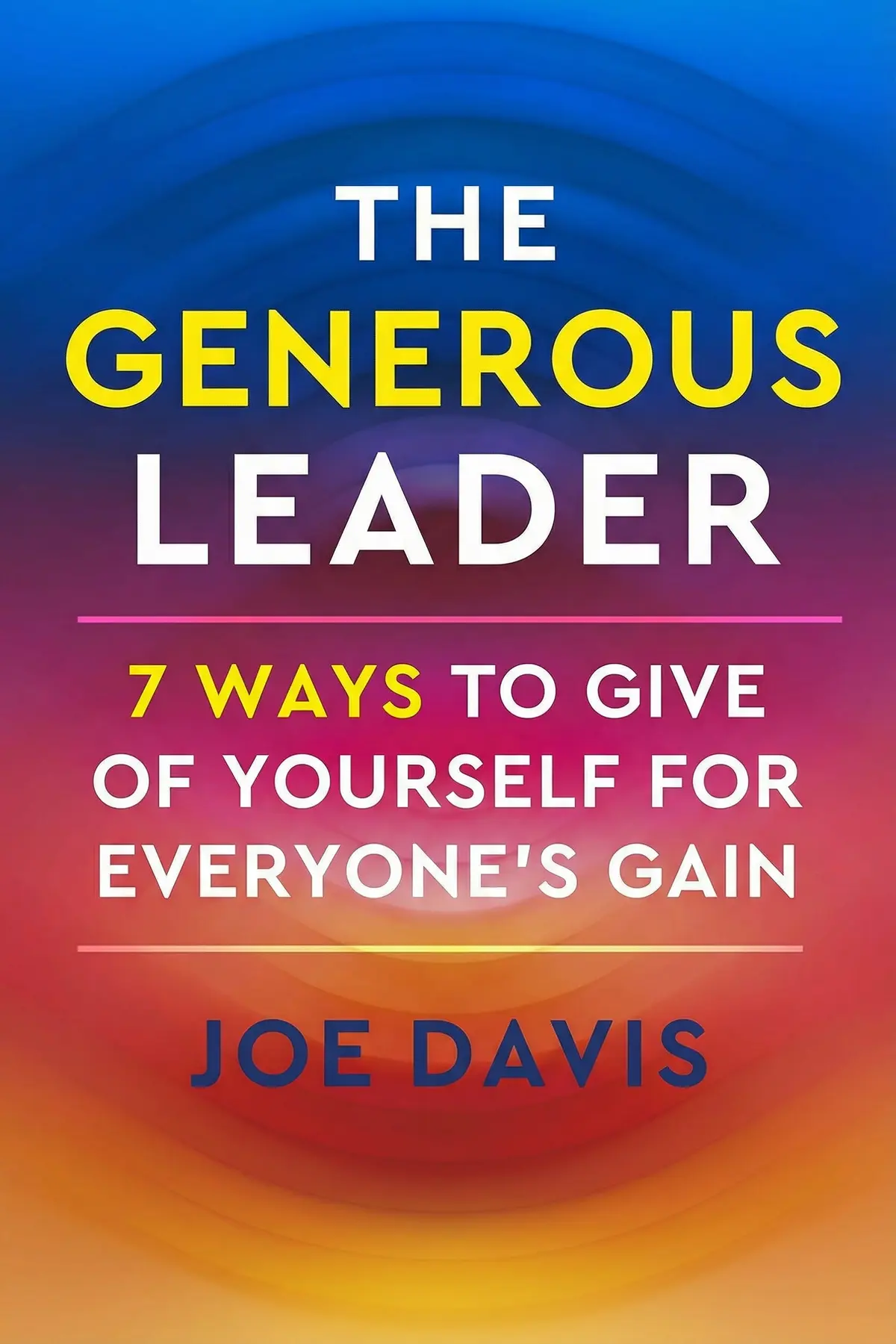
Table of Content
1. Introduction
56 sec
Most managers are promoted for what they deliver on their own, and then discover that their results now depend on other people. In The Generous Leader, Joe Davis, who rose from a sales job at Procter and Gamble to lead Boston Consulting Group in North America, argues that the leaders people follow are the ones who give the most of themselves. He means attention, respect and encouragement, given freely and often. Davis traces the idea back to an early performance review that named his greatest strength as connecting with people.
His throughline is simple: generosity with your time, your ear, your credit and even your own doubts is a working method that makes teams perform better. The book offers seven ways to practice it, from asking more questions to handing a colleague the spotlight. Each one comes with a look at how it works in practice, along with the reasons it pays off.
2. Coach with questions instead of commands
1 min 35 sec
A young consultant spends hours polishing slides for a CEO, and her mentor tells her to worry about something else entirely. A survey of tens of thousands of managers suggests the mentor had it right.
3. Reach your team as people when crisis hits
1 min 34 sec
When the offices empty and everyone works from home, the instinct is to send a formal update. Davis argues that the message people remember from those weeks is a very different kind of message.
4. Small thanks that raise output the next week
1 min 27 sec
A few words from a senior manager changed how hard a group of fundraisers worked, and the effect showed up within days. Why do such tiny acts slip away just when a team grows?
5. Give feedback people can actually build on
1 min 40 sec
Praise that sounds the same for everyone soon means nothing, and criticism that only lists flaws rarely changes anything. Davis describes a third way that asks more courage of the leader than either.
6. Admitting doubt can strengthen your connections
1 min 34 sec
Business tradition says a leader should look calm and certain at all times. Davis argues the mask has a hidden cost, and that dropping it changes what the whole team feels free to say.
7. Hear the frontline voices your meetings miss
1 min 42 sec
Safety results had stopped improving, and the obvious move was another plan from the top. One leader tried something else with 300 supervisors, and the most important decision was who stayed out of the room.
8. Spend your privilege to lift someone else
1 min 32 sec
In a strategy session, a senior partner picks up a task nobody senior ever wants. It looks like a small courtesy, yet it changes how everyone in the room sees one of his colleagues.
9. Conclusion
1 min 07 sec
The seven practices in The Generous Leader all spend the same thing: a leader’s attention. Questions before a speech, a note that fits someone’s real situation, thanks from a senior manager, honest doubt, a room without bosses, a partner holding the pen. Each one moves attention, voice or credit from the leader toward the team, and Davis’s case is that teams return it as effort, ideas and loyalty.
What makes the idea usable is how small most of the moves are. You can ask before you tell in your next meeting. You can thank one person this week for something specific, and keep the dates that matter to your people where you will see them. When a decision touches the frontline, you can bring those voices in first and step out while they talk.
None of this needs a bigger budget or a new title. Davis recalls an early review that named his key strength as connecting with people. His book suggests that strength is less a gift some leaders are born with than a habit any leader can practice, one conversation at a time.
About this book
What is this book about?
Many people are promoted for what they deliver on their own, then find that their results depend on others. Joe Davis, who rose from a sales job to lead Boston Consulting Group in North America, argues that the leaders people follow most willingly are the generous ones. He does not mean generous with money. He means generous with attention, respect and encouragement. Davis sets out seven ways to practice this: communicating personally, especially in a crisis; listening before speaking; making inclusion real; acting as an ally; giving recognition and useful feedback; making small gestures a habit; and being open about your own doubts. He supports them with cases such as Google's Project Oxygen, a study of university fundraisers who made more calls after a senior manager thanked them, and a leader who handed a stalled safety problem to 300 frontline supervisors. Readers get a clear picture of why these habits lift morale and performance, and small, concrete moves to start using them with their own teams.
Book Information
Who it's for
Newly promoted managers
New managers who were promoted for their own results and now need a team to deliver.
Team leads facing disengagement
Team leads whose people seem disengaged, quiet in meetings or stretched by remote work.
Leaders wanting everyday inclusion
Senior leaders who want inclusion and allyship to show up in daily behavior.
About the Author
Joe Davis
Joe Davis began his career as a sales rep at Procter and Gamble before joining Boston Consulting Group, where he worked in Boston, Melbourne, Washington DC, San Francisco and Miami. He co-founded the firm's Washington DC office, launched its North America Public Sector business and later led BCG North America, including through the COVID pandemic. He has chaired BCG's Center for Inclusion and Equity and helped found the steering committee of CEO Action for Diversity and Inclusion. He holds an MBA from Harvard Business School.
Ratings & Reviews
Ratings at a glance

What people think
Listeners consider this work a beneficial tool for improving leadership skills, with one listener describing it as a motivating handbook for emerging leaders. Furthermore, the material provides actionable tips and is highly accessible, as one listener points out its successful integration of practical instructions. Listeners also enjoy the story-driven format, with one citing the raw accounts from esteemed CEOs, and they prize the book's sincere tone and its utility in various professional settings.
Top reviews
Samira
As a first-time manager struggling to find my voice, this book felt like a personal mentorship session. Joe Davis manages to capture something elusive in corporate literature—the idea that being human is actually a competitive advantage. The way he weaves his personal journey with those of high-level CEOs makes the 7-part framework feel attainable rather than just another theoretical model. I particularly loved the focus on vulnerability; it's a word we hear a lot, but Davis actually shows you how to implement it without losing your authority. Truth is, I haven't felt this inspired by a business book in years. It’s not just about hitting KPIs; it’s about the legacy you leave through the people you support. My only minor gripe is that I wanted even more detail on the Metta meditation practice he mentions toward the end, as it was such a unique addition to a leadership guide.
Show moreCameron
Finally got around to finishing this one while traveling, and it actually changed how I approached my team meetings the following week. What sets this apart is how Davis strips away the ego. He isn't interested in looking like a perfect leader; he shares his mistakes and the lessons learned from them with a level of transparency that is rare in the business world. The chapter on generous communication was a standout for me. It’s about more than just talking; it’s about creating a space where people feel safe enough to be brilliant. I’ve read dozens of these books, and usually, they sit on the shelf gathering dust. This one is staying on my desk. If you want to build real followership and trust that leads to extraordinary results, you need to understand the heart-centered approach Davis describes so beautifully here.
Show moreSayan
What a breath of fresh air! I’ve been feeling burnt out by the constant grind of the tech world, and this book reminded me why I wanted to lead in the first place. Davis talks about leading with heart, integrity, and humility—traits that are often overlooked in the race for the next funding round. The mention of his daily Metta meditation practice at the end really resonated with me. It’s so rare to see a business leader talk about loving kindness as a tool for organizational success. The 7-part framework isn't just a list; it’s a philosophy. Reading about how small, intentional shifts in behavior can ripple outward to create massive cultural change was incredibly empowering. This is a must-read for anyone who wants to lead in a way that actually connects with people on a human level.
Show moreOn
The 7-part framework Joe Davis presents here is both refreshing and grounded in the harsh realities of executive life. While many leadership books stay in the clouds, this one dives into the grit of inclusive collaboration and sincere listening. I found the unfiltered stories from respected CEOs to be the highlight, providing a much-needed 'look behind the curtain' at how heavy-hitters handle failure and growth. To be fair, a couple of the middle chapters felt slightly repetitive, but the core message remained strong throughout. The emphasis on self-reflection serves as a vital reminder that we can’t lead others effectively until we understand our own internal drivers. It’s a solid, practical guide for anyone looking to shift from a command-and-control style to something more heart-centered and sustainable in today’s chaotic market.
Show moreSukit
Picked this up after a recommendation from a mentor, and I'm glad I did. The book serves as a timely call to action for anyone seeking to lead with authenticity. Davis has this way of writing that makes you feel like you're sitting in a cafe having a deep conversation about what really matters. The stories from CEOs are powerful because they aren't just success stories—they're stories of learning the hard way. I appreciate how the book addresses the need for loving kindness in a professional setting without it sounding too 'woo-woo' or impractical. One small critique: I wish there were more worksheets or specific exercises at the end of each chapter to help drill down the concepts. Regardless, the insights on inclusive collaboration and leading with passion are exactly what the corporate world needs right now.
Show moreSomchai
In a world where profit usually comes first, Joe Davis makes a compelling case for putting people back at the center of the equation. This book isn't just a manual; it’s a reflection on what it means to be a decent human being in a position of power. The writing is accessible and avoids unnecessary jargon, which I really appreciated. Each chapter delivers practical insights that are both accessible and meaningful, particularly the sections on generous listening. We all think we listen, but Davis shows us how much we actually miss when we’re just waiting for our turn to speak. The tone is encouraging throughout, making it a great gift for a new manager. It's a refreshing take that challenges the old-school 'tough boss' trope and replaces it with something much more effective: authentic connection.
Show moreKwame
Effective leadership starts from within, and Davis proves it through this collection of wisdom and real-world application. The book is remarkably easy to read, almost like a conversation, yet it carries a weight that stays with you. I found the stories from CEOs to be particularly compelling because they felt so honest and unfiltered. They weren't just bragging; they were sharing the moments that defined them. Personally, I found the chapter on sincere listening to be the most helpful, as it provided immediate tactics I could use with my own team. While some of the concepts felt a bit familiar, the way Davis packages them with such warmth and conviction makes them feel new again. It’s a solid 4-star read that I would recommend to any mid-career manager looking to refresh their approach.
Show moreWipawan
Is this the ultimate guide to leadership? Maybe for some, but I had mixed feelings. On one hand, the conversational style makes it an incredibly easy read, and Davis is clearly a guy who walks the talk. The anecdotes are engaging and he avoids the usual dry, academic tone found in most business books. On the other hand, I felt some of the advice was a bit too idealistic for fast-paced, high-pressure environments where 'generosity' might be mistaken for weakness by upper management. It's a lovely sentiment, and I do believe the world needs more empathy, but I would have liked more data-driven evidence to back up the emotional appeals. It's a worthwhile read for the storytelling alone, but you might need to take some of the softer strategies with a grain of salt depending on your industry.
Show moreLiam
Frankly, the storytelling in 'The Generous Leader' is top-notch and kept me turning the pages. Joe Davis has an undeniable spark and his passion for empathy shines through every paragraph. I enjoyed the anecdotes about his own leadership journey and the unfiltered glimpses into the lives of other successful executives. However, I found myself wanting more grit. The transition from being a 'generous' leader to handling difficult terminations or budget cuts wasn't explored as deeply as I would have liked. It’s easy to be generous when things are going well, but how do these principles hold up during a crisis? It’s a good book with a noble message, and certainly a breath of fresh air compared to typical business fare, but it feels like it’s missing a chapter on the harder, darker side of management.
Show morePrae
Not what I expected based on the glowing hype I've seen on social media lately. Look, Joe Davis seems like a wonderful human being and his stories are certainly heartfelt, but as a seasoned executive, I found the content a bit light on actionable strategy. Most of the '7 ways' felt like common sense—listen better, be kind, be honest. Do we really need a 200-page book to tell us that? The narrative storytelling is fine, but I was hoping for more rigorous frameworks that could be applied to scaling a global team. If you're a young leader just starting out, you might find this inspirational, but for those of us in the trenches of massive restructuring and complex operations, it felt a little too 'soft' to be truly transformative. It's an okay read, just not the revolution I was promised.
Show moreQuestions about this book
What is the main idea of The Generous Leader by Joe Davis?
Joe Davis argues that the most effective leaders are generous with themselves: their attention, respect, encouragement and openness. He sets out seven ways to practice this, including personal communication, generous listening, inclusion, allyship, recognition and feedback, small gestures and vulnerability. His claim is that teams led this way feel valued and heard, and that this lifts morale, engagement and performance across the organization.
What does generous listening mean in leadership?
Generous listening means setting your own assumptions aside and taking in other people’s views before you decide. Davis tells of a young consultant whose mentor urged her to focus on a CEO’s expectations and mood instead of her slides. He also cites Google’s Project Oxygen, which surveyed more than 80,000 managers and found that being a good coach, largely by asking questions, was the most effective leadership trait.
Do small gestures of thanks really change how people work?
Davis says they do and cites a study of university fundraisers. After a senior manager expressed gratitude for their work, the fundraisers made substantially more calls in the following week. He argues that greetings, thanks and remembering important moments in people’s lives raise morale and productivity, and that leaders should build these gestures into a routine so they survive a growing team and a busy calendar.
How can I apply The Generous Leader with my team this week?
Start small. In your next meeting, ask a couple of open questions before giving your view. Thank one person for something specific they did. Give feedback that builds on a strength. When a decision affects frontline staff, hear from them first, ideally without senior people in the room, as one leader did with 300 field supervisors working on safety.
Who should read The Generous Leader?
It suits new and experienced managers who want their teams to feel seen and to speak up, especially those leading through change or remote work. Leaders working on diversity and inclusion will find concrete examples of allyship, such as a senior partner taking the notes so a female colleague could lead. Anyone who finds praise, feedback or vulnerability awkward will also find practical starting points.
Readers also enjoyed




A Year with Peter Drucker: 52 Weeks of Coaching for Leadership Effectiveness
Joseph A. Maciariello





Acting with Power: Why We Are More Powerful Than We Believe
Deborah Gruenfeld
AUDIO SUMMARY AVAILABLE
Listen to The Generous Leader in 15 minutes
Get the key ideas from The Generous Leader by Joe Davis, plus 5,000+ more nonfiction titles.
- 5,000+ titles
- Listen as much as you want
- 7-day free trial
- Cancel anytime









