
14 min 09 sec
Available in: English
 ไทย
EnglishไทยThe Fifth Discipline: The Art & Practice of The Learning Organization
By Peter Senge
Shows why workplaces smother the urge to learn, and how five practiced disciplines, led by systems thinking, help people question assumptions, think together, share a purpose and fix problems at their roots.
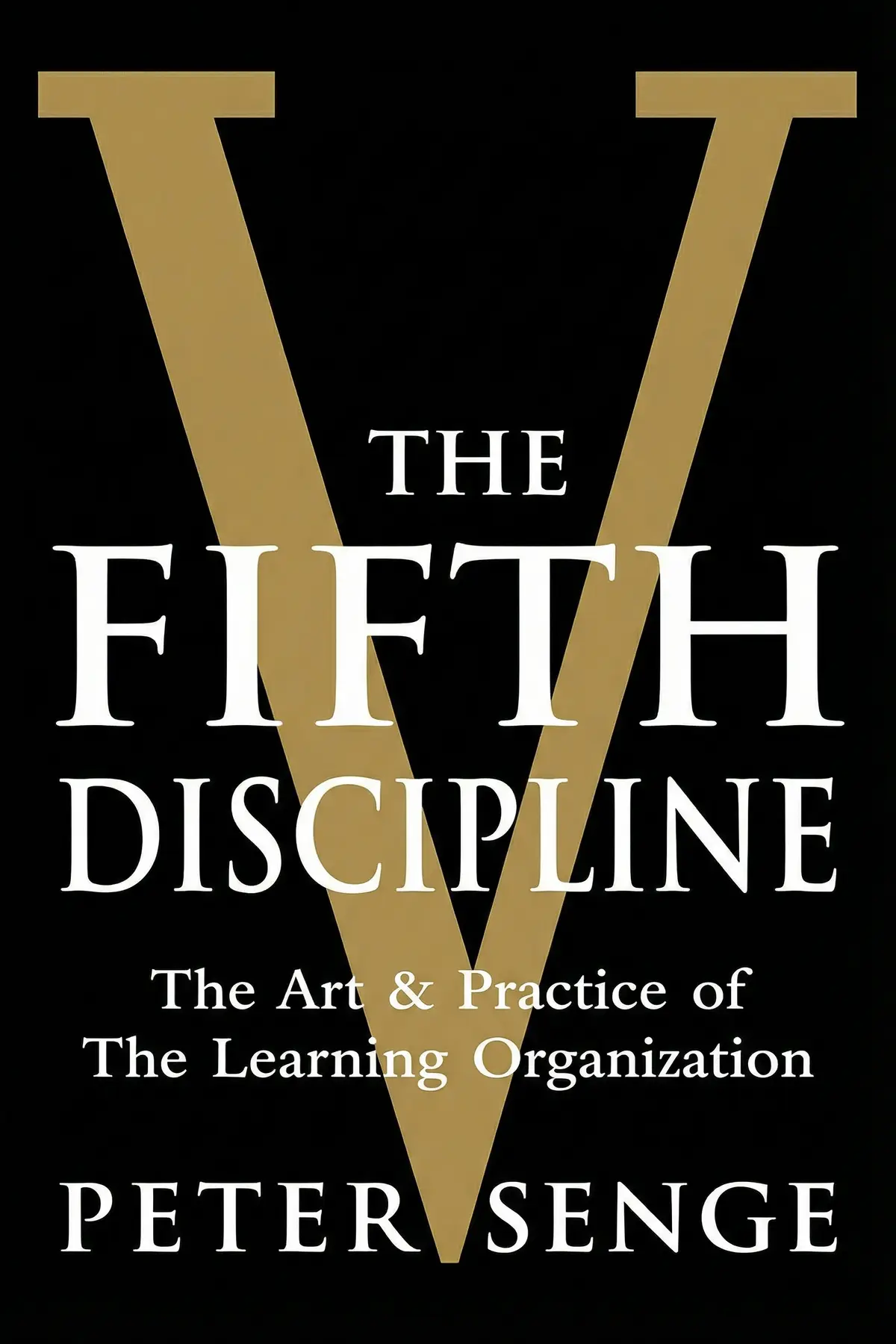
Table of Content
1. Introduction
1 min 02 sec
Most office workers struggle to name the last time their job made them truly curious, and Peter Senge argues the fault lies in how workplaces are built. In The Fifth Discipline, the MIT systems scientist explains how organizations smother the drive to learn that every toddler is born with, and how they can bring it back. His answer is five disciplines practiced every day: personal mastery, examining mental models, team learning, shared vision and, binding them together, systems thinking.
The whole case rests on one claim. A company learns when its people grow, question what they assume, think together, own a common purpose and see the whole system around them, and leaders exist to make room for all of that. Along the way come a drowning man in a river, Detroit’s carmakers, Shell’s planners and Kennedy’s moon promise, each turned into a practice you can try with your own team.
2. Spot the habits that kill learning at work
1 min 35 sec
Every adult still carries the restless curiosity of a toddler, yet a few ordinary features of office life wear it away. Some of them look harmless, even efficient, which is exactly why they last so long.
3. See the hidden currents behind recurring problems
1 min 52 sec
A man in an overturned boat fought the river with everything he had, and the fight is what killed him. Organizations make the same mistake when they push against forces they cannot see.
4. Find the beliefs your team never questions
1 min 42 sec
An emperor walked naked before his people and nobody said a word. Senge argues that companies do the same thing every day, and one oil company found a way to make its managers see what was in front of them.
5. Turn the gap to your goal into fuel
1 min 44 sec
Seeing clearly where you want to be usually makes your present situation look worse. Senge treats that discomfort as an engine, and a Japanese company that grew from a start-up shows what it can do at scale.
6. Stop talented teams from working against each other
1 min 46 sec
A room full of gifted people can work flat out and still get nowhere. A Harvard researcher named the reflex behind it, and once you know it, you will catch yourself doing it in meetings.
7. Build a vision people truly own
1 min 47 sec
Almost every company has a vision statement, and that may be part of the problem. A promise about the moon shows what happens when thousands of people adopt a goal as their own.
8. Lead as designer, teacher and steward
1 min 41 sec
Flattening the org chart does not make managers unnecessary. Senge redraws their job around three roles, and one of them explains why people dare to take risks at all.
9. Conclusion
1 min 00 sec
The man in the river did not need more strength. He needed to understand the current. Senge makes the same case about organizations. The frantic effort of firefighting, blaming and defending can exhaust people who would thrive if they saw the forces moving them and worked with them. The five disciplines are how a company learns to see: people who keep growing, beliefs held up to the light, teams that think together, a purpose everyone owns, and a view of the whole system that keeps the rest in place.
None of it is reserved for chief executives. The next time a problem comes back, follow its loop beyond your own desk before naming a culprit. When a colleague pushes back, listen long enough to understand before you defend yourself. And when you run a meeting, change the room so that people talk with each other rather than past each other.
The toddler who got up after every fall is still in the building. A learning organization is simply one that stops knocking her down.
About this book
What is this book about?
Most people spend the bulk of their waking hours at work, yet few can remember the last time their job made them curious. Peter Senge, a systems scientist at MIT, argues that the fault lies with how organizations are built. Narrow job descriptions, constant firefighting, a culture of blame and managers who have stopped growing all wear down the appetite for learning we are born with. His remedy is the learning organization, built on five disciplines that must become part of daily work. Personal mastery keeps people growing. Examining mental models brings hidden assumptions into view. Team learning replaces defensive habits with real dialogue. Shared vision gives people a purpose they own. Systems thinking, the fifth discipline, ties the others together by showing how causes loop back on themselves over time. Senge illustrates the ideas with a drowning man in a river, Detroit's carmakers, Shell's planners in the 1970s and Kennedy's promise of a moon landing. Readers get a way to see why problems keep returning, practical habits for better conversations and meetings, and a new picture of leadership built on three roles: designer, teacher and steward.
Book Information
Who it's for
Team leads and managers
Team leads and managers tired of firefighting the same problems every quarter.
Leaders wanting shared ownership
Founders and executives whose vision statement inspires nobody and who want people to own the goal.
HR and learning professionals
Trainers, HR and learning professionals trying to make curiosity and honest dialogue part of daily work.
About the Author
Peter Senge
Peter Senge, born in 1947, is an American systems scientist and a senior lecturer at MIT's Sloan School of Management, as well as co-faculty at the New England Complex Systems Institute. He founded the Society for Organizational Learning, a worldwide network of companies, researchers and consultants. The Fifth Discipline first appeared in 1990, was revised in 2006 and has sold over two million copies. Harvard Business Review ranked it among the key management books of the past 75 years. He also wrote The Necessary Revolution.
Ratings & Reviews
Ratings at a glance

What people think
Listeners find this work straightforward and skillfully crafted, offering deep perspectives on systems thinking and organizational growth. They value the reflective models for evaluating leadership and view it as a necessary tool for all leadership roles. It efficiently builds the foundations of systems logic and supports the creation of a collective vision, making it a solid investment.
Top reviews
Nang
As someone who has spent two decades in middle management, I found this to be of biblical importance for my career growth. Senge’s masterpiece on the "learning organization" is the gold standard for anyone trying to navigate complex corporate structures. The concept of the Fifth Discipline—systems thinking—acts as the glue that binds personal mastery and team learning into a coherent whole. While some critics complain about the length, I found the detailed case studies to be incredibly thought-provoking and helpful for self-examining my own leadership biases. It’s not just a business book; it’s a manual for seeing the world through a holistic lens. Frankly, if you aren't applying these principles, you're just reacting to symptoms instead of solving root causes.
Show morePloy
After hearing my mentor quote this book for years, I finally dove into the revised edition. This isn't just a book; it’s a complete mindset shift that forces you to look at the interconnectedness of every decision within a company. Senge explains how "learning disabilities" in organizations lead to stagnation, then provides a brilliant recipe for systems citizenship. The appendices alone are worth the price of admission for the snapshot of the U-process and the detailed list of system archetypes. While the prose can be thick, the thought-provoking nature of the framework kept me highlighting page after page. It’s an authentic look at what it takes to build a truly adaptive, resilient workplace in an increasingly complex world. Highly recommended for all leadership roles.
Show morePhimwan
I've been searching for a way to better articulate our team's internal friction, and this book hit the nail on the head. Systems thinking is the missing link in most leadership training, and Senge explains it with a depth that modern business books just can't match. The interplay between personal mastery and shared vision creates a synergy that can transform even the most stagnant corporate culture. Personally, you have to be in the right headspace to tackle the more academic passages, but the rewards are immense. I found the sections on "limits to growth" to be particularly relevant to our current economic climate. This is a well-written, essential guide for anyone who wants to lead with intention rather than just reacting to crises.
Show morePrasarn
Picked this up after my manager practically begged me to look into systems thinking, and I'm glad I did. Senge’s framework for organizational development is legitimately transformative, though I'll admit it’s a bit of a slog at times. The way he breaks down "personal mastery" and "mental models" helps you realize why teams get stuck in the same toxic patterns. It definitely feels like a textbook in some chapters, which might turn off casual readers looking for a quick business hack. However, if you stick with it, the insights into shared vision are well worth the effort. It’s a dense 400 pages that could have been 250, but the core message remains a must-have for any serious leader. In my experience, the effort pays off.
Show moreNoi
The Fifth Discipline remains a foundational text that every aspiring executive should keep on their nightstand. Senge brilliantly outlines how organizations can shift from mere compliance to a culture of genuine commitment and collective inquiry. I was especially struck by the section on team learning and how individual brilliance doesn't always translate to group intelligence. My only real gripe is that the 1990s examples feel a bit dated in our current hyper-digital, remote-work reality. Still, the fundamental laws of systems thinking are timeless and provide a clear roadmap for building a sustainable vision. It’s a heavy read, but the mental shift it triggers is absolutely worth the investment of your time. This book effectively lays the groundwork for a healthier workplace.
Show moreCarlos
Finally got around to reading this "bible" of management after seeing it referenced in so many other business books. It’s easy to see why Senge is held in such high regard; his ability to weave together personal growth and organizational strategy is top-notch. The five disciplines offer a robust framework for self-examining leadership habits that often go unchecked in high-pressure environments. I particularly enjoyed the focus on "mental models" and how they dictate our collective behavior without us even realizing it. Gotta say, the book is definitely longer than it needs to be, and some sections feel like they’re trying too hard to be profound. Regardless, the practical value of systems thinking makes it a mandatory read for anyone serious about change.
Show moreRafael
Honestly, I expected a dry textbook but found a deeply human approach to how we work together. Senge manages to make complex systemic theories feel accessible, even if he does take the long way around to get to his main points. The focus on "team learning" and "supportive group inquiry" provides a much-needed alternative to the typical top-down management structures. I did feel that some of the extra stories could have been trimmed to make the book more punchy and direct. However, the insights into creating a culture of commitment rather than just compliance are incredibly powerful for modern managers. It’s a worthwhile investment that builds a strong foundation for any long-term organizational strategy. Just take it slow.
Show moreMatteo
Ever wonder why corporate change initiatives fail so spectacularly most of the time? This book provides the answers, but you have to dig through quite a bit of fluff to find them. Senge is clearly passionate, yet his writing style often leans into a monotone, academic lecture that killed my reading flow. I appreciated the deep dive into system archetypes and the "beer game" example, but the later chapters felt overly evangelical and philosophical for my taste. Truth is, while the five disciplines are essential for any learning organization, this classic is showing its age. It’s an important foundation, but I think modern readers might find the same information summarized more effectively in other sources. A bit bloated but occasionally brilliant.
Show moreAhmed
The chapter on system archetypes was a revelation, even if the rest of the book felt like a marathon. Look, the core ideas here are brilliant—identifying the patterns that control events is a skill every leader needs. But Senge seems to think more words equals more wisdom, leading to a text that feels unnecessarily dense and academic. I struggled with the monotone delivery, which felt more like a lecture than a conversation about organizational growth. I appreciate how he validates diverse management styles, yet the "evangelizing" tone in the final sections became a bit much to handle. It’s a decent resource for systems thinkers, but prepare yourself for a lot of slogging through repetitive passages. Not gonna lie, I skipped the last fifty pages.
Show moreHom
This was a total slog that felt like it was written for a graduate seminar rather than actual practitioners. I really wanted to like this because the "systems thinking" buzzword is everywhere, but Senge’s delivery is incredibly dry and bloated. He takes a hundred pages to explain concepts that could be handled in twenty, often mucking them up with his own philosophical takes rather than letting the experts speak. To be fair, the discussion on mental models is valuable, but the quasi-philosophical fluff makes it hard to stay engaged. I found myself checking the page count every ten minutes, wondering when he’d finally get to the point. It’s a classic, sure, but it’s a classic that desperately needs a ruthless editor to cut the repetitive filler.
Show moreQuestions about this book
What is the main idea of The Fifth Discipline?
Peter Senge argues that workplaces often crush the natural human drive to learn through narrow roles, constant firefighting and blame. A company can become a learning organization by practicing five disciplines every day: personal mastery, examining mental models, team learning, shared vision and systems thinking. The fifth, systems thinking, matters most because it shows how parts of an organization affect each other over time and ties the other four together.
What is systems thinking according to Peter Senge?
Systems thinking means looking at a problem as part of a whole. Senge contrasts straight-line thinking, where one thing causes the next, with feedback loops, where causes and effects circle back and feed each other. It asks you to watch how events unfold over time, notice repeating patterns and see that short-term and long-term effects, or local and wider effects, can differ sharply.
What are mental models in The Fifth Discipline?
Mental models are the filters of judgment, assumption and experience through which each person sees the world. Senge uses the emperor’s new clothes to show how they can blind whole groups. Detroit’s carmakers failed to adapt to Japanese competition, while Shell trained its managers in the 1970s to examine their beliefs and prepared for an upheaval in the oil industry.
How can a leader apply The Fifth Discipline?
Senge asks leaders to act as designers, teachers and stewards. Designers create spaces for learning, such as new meeting formats or feedback channels. Teachers inspire by showing curiosity, experimenting and admitting mistakes. Stewards protect the company’s ideals and people’s well-being so change feels safe. A simple first step is rearranging a meeting like a cafe, with small tables and one-on-one conversations that feed back to the group.
Who should read The Fifth Discipline?
It suits managers and team leads stuck in firefighting mode, founders who want a vision people genuinely share, and anyone responsible for training or culture. It also helps individual professionals who want to understand why problems keep returning at work and how better conversations, through dialogue and deep listening, can help a team think together.
Readers also enjoyed




A Year with Peter Drucker: 52 Weeks of Coaching for Leadership Effectiveness
Joseph A. Maciariello



Acting with Power: Why We Are More Powerful Than We Believe
Deborah Gruenfeld

All In: How Great Leaders Build Unstoppable Teams
Mike Michalowicz


AUDIO SUMMARY AVAILABLE
Listen to The Fifth Discipline in 15 minutes
Get the key ideas from The Fifth Discipline by Peter Senge, plus 5,000+ more nonfiction titles.
- 5,000+ titles
- Listen as much as you want
- 7-day free trial
- Cancel anytime









