

A Life Decoded: My Genome: My Life
J. Craig Venter
 English
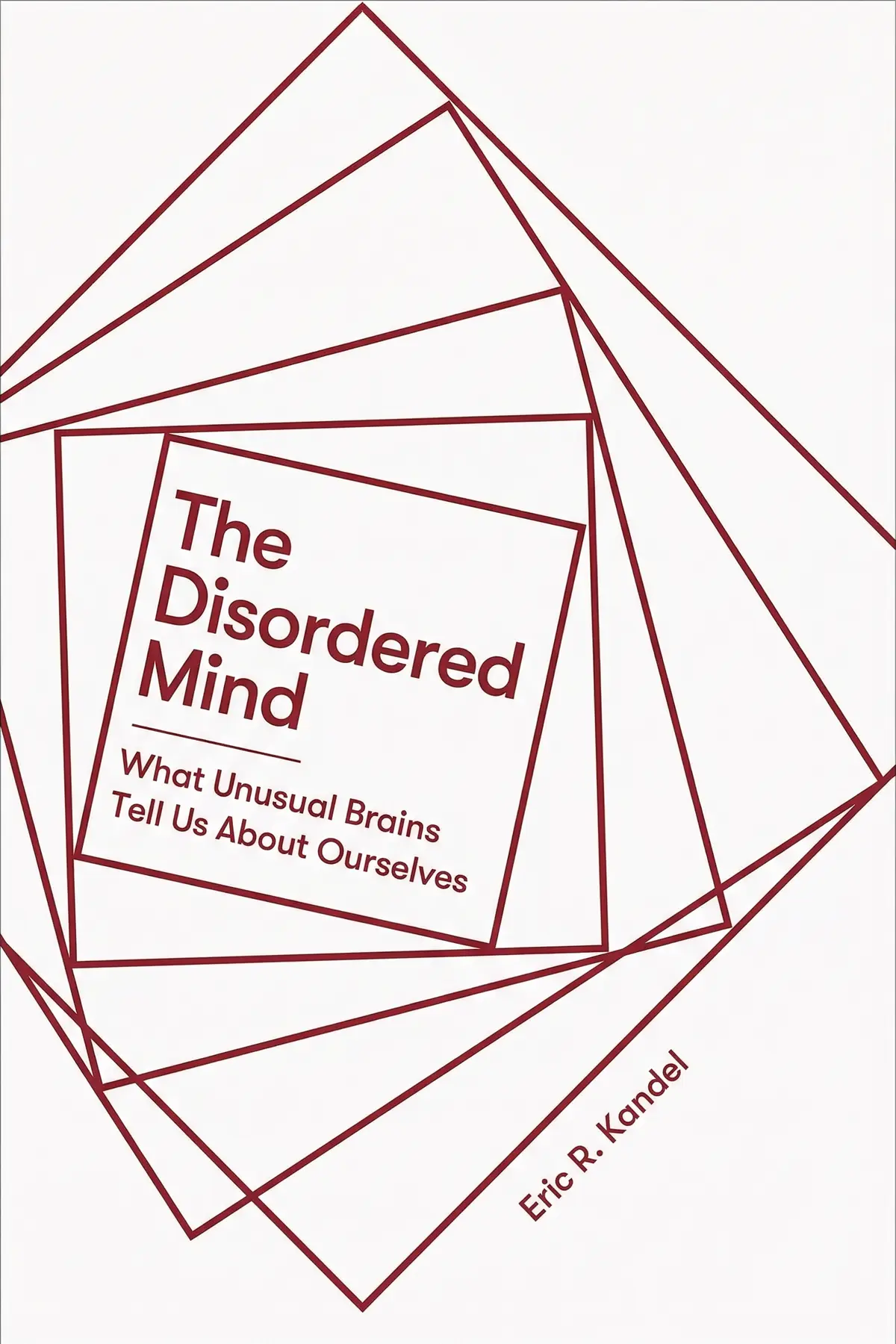
Shows what autism, depression, schizophrenia, dementia, Parkinson's and addiction reveal about how ordinary brains remember, feel, connect and decide. It also shows why mental illness is best understood as biology, not as weakness.
1 min 04 sec
If mental illness feels like a closed world only specialists understand, Eric Kandel offers a way in: watch what happens when one part of the brain fails, and you learn what that part does for everyone. In The Disordered Mind, the Nobel-winning neuroscientist argues that depression, autism, schizophrenia and dementia are often ordinary experiences pushed to extremes, each exposing a piece of healthy machinery. A man who could no longer form new memories showed that the brain keeps two kinds of memory in different places. A patch of midbrain that lost its dark pigment explained the tremor of Parkinson’s disease.
Kandel’s throughline is easy to state: every thought, mood and habit rests on physical biology, so the way a brain breaks shows how a mind works. Follow his cases and you will understand why fears outlast their causes, why relapse says little about character, and how much of your life runs below awareness.
1 min 59 sec
Sadness, odd urges and forgetfulness are part of every life. At some point they tip into illness, and that tipping point turns out to be one of the best tools science has for studying everyone else.
1 min 45 sec
A man who lost the ability to form new memories still got better at drawing, without remembering a single practice session. His surgery split memory in two, and the split explains what dementia takes first.
1 min 49 sec
Most of us guess what others are thinking all day long without trying. Brain scans of autistic children show how much hidden equipment that everyday guessing needs, and what the world looks like without it.
1 min 53 sec
A mouse that hears a tone before a shock soon dreads the tone alone. That simple experiment helps explain why anxiety and depression can outlast every good reason to feel better.
2 min 08 sec
One illness fills the mind with voices and suspicion. Another slowly freezes the body. They look unrelated, yet a single brain chemical connects them, and so does an old link between madness and art.
1 min 44 sec
Telling someone with an addiction to simply stop assumes their brain is unchanged. A banana, a dose of cocaine and a chance meeting on the street show why that assumption fails, sometimes for life.
1 min 46 sec
An image flashed for a split second sets your visual brain alight, then fades without you ever seeing it. Experiments like this are starting to show where awareness begins, and how little of life reaches it.
1 min 08 sec
Kandel’s cases add up to a new way of seeing suffering, and of seeing yourself. A man without a hippocampus, a child who watches a walker the way one would watch a clock, a midbrain gone pale: each opens a window onto machinery every person depends on. Most disorders, he concludes, grow from a mix of genes and environment. Some, like autism and schizophrenia, alter the brain’s structure, while others, like depression and Parkinson’s, begin with its chemical messengers.
That view travels well beyond the clinic. A friend’s depression or relapse becomes a physical condition that deserves patience. A learned fear can be expected to need more than reasoning. And the brain can be cared for through the body. Kandel points to osteocalcin, a hormone released by bone that prompts the brain to make neurotransmitters that support memory. Scientists suspect falling bone density in old age may play a part in memory loss, and since exercise builds bone, regular workouts may help keep the mind sharp.
A broken brain, read carefully, turns out to be the best teacher the healthy one has.
Mental illness can seem like a closed world, separate from everyday life and understood only by specialists. Nobel-winning neuroscientist Eric R. Kandel argues the opposite. Mental disorders are often everyday experiences pushed to extremes, and every one of them is also a disorder of the brain. Because a change in the brain shows up directly in thought, feeling and behavior, each illness works as a window into the healthy mind. Kandel moves through the major conditions one by one, from a surgical patient who could no longer form new memories to children for whom a walking person looks like a moving clock. He explains why learned fears are so stubborn, how one chemical, dopamine, sits behind both schizophrenia and Parkinson's disease, and why addiction is now treated as a chronic illness. He ends with consciousness itself and the large role of unconscious processes. Readers get a clear, connected picture of how the brain works, a more patient way to understand people living with mental illness, and a practical reason to keep exercising as they age.
Curious professionals who want a clear, connected picture of how the brain produces memory, emotion and awareness.
People supporting a relative or friend through depression, dementia, addiction or Parkinson's who want to understand what is happening.
Students weighing psychology, psychiatry or neuroscience who want the big picture first.
Eric R. Kandel, born in Vienna in 1929, trained as a medical doctor specializing in psychiatry and became a professor of biochemistry and biophysics at Columbia University's College of Physicians and Surgeons. He shared the 2000 Nobel Prize in Physiology or Medicine for work on how neurons store memory. He founded Columbia's Center for Neurobiology and Behavior in 1975 and was a senior investigator at the Howard Hughes Medical Institute from 1984 to 2022. His memoir, In Search of Memory, won the 2006 Los Angeles Times Book Prize for Science and Technology.
Listeners find this book deeply educational regarding how the brain operates and the ways neurological conditions offer a window into the human experience. The prose is accessible, supported by lucid diagrams and formatting, and one listener mentions that it reads like a mystery novel. They value the author's perspective, with one characterizing them as a gifted writer. The text examines various psychiatric conditions, such as schizophrenia.
Finally got around to reading Kandel's latest, and it's a masterpiece of scientific communication. For a Nobel laureate, he has a surprising gift for stripping away the dense jargon to reveal the core mechanics of how our brains actually function. The way he frames brain disorders as a window into the 'normal' mind makes the whole thing read like a high-stakes detective novel. I was particularly gripped by the sections on schizophrenia and how the breakdown of neural circuits leads to a fragmented sense of self. The diagrams are crisp, clean, and actually help explain the text rather than just cluttering the pages. While some might find it a bit structured like a textbook, I appreciated the clarity and the logical flow from one condition to the next. It’s a compelling argument for viewing mental health through a purely biological lens.
Show moreThis book is an absolute must-read for anyone who has ever felt the sting of stigma surrounding mental illness. Kandel does an incredible job explaining that conditions like depression, PTSD, and addiction aren't failures of character but rather measurable disruptions in brain chemistry. Not gonna lie, I was worried it would be too dry, but the writing is actually quite engaging and fast-paced. He tackles the 'hard problem' of consciousness with humility, admitting where science still falls short while celebrating how far we've come. The illustrations of neurons and synaptic pruning are helpful visual aids that clarify the more technical paragraphs. It's rare to find a book that feels both academically rigorous and deeply compassionate toward its subjects. I walked away with a much deeper empathy for the 'disordered' among us.
Show moreWow. I haven’t felt this enlightened by a science book in a long time. Kandel writes with the authority of a Nobel prize winner but the clarity of a veteran teacher. He takes daunting subjects like schizophrenia and breaks them down into understandable components of neural signaling and genetic predisposition. It’s fascinating to see how the 'glitches' in the brain can actually reveal the blueprints for how we perceive the world. The book itself is quite a brick—very heavy for its size—but the text inside is nimble and light. I especially enjoyed the discussion on how brain disorders can sometimes influence or even enhance creativity. It feels like a comprehensive tour of the most important organ in the human body. Highly recommended for curious minds.
Show morePicked this up on a whim and ended up finishing it in two days because it genuinely reads like a mystery novel. How does the brain create a unified sense of self? Why do certain circuits fail? Kandel leads you through the history of psychiatry with an ease that is truly impressive. He covers everything from the early days of Freud to the latest in medical imaging technology. The way he describes the neuron as a fundamental signaling unit is both simple and profound. It changed the way I think about my own brain and the people around me who struggle with these disorders. While it’s quite technical in spots, the clear headings and summaries keep you from getting lost. It’s an essential addition to any science lover’s library.
Show moreEver wonder why we are the way we are? Kandel’s exploration of the disordered mind suggests that our very identity is a product of precisely wired neural circuits. I found the chapter on autism and the social brain to be incredibly eye-opening, providing a bridge between complex genetics and everyday behavior. The prose is remarkably accessible, though it occasionally slips into a repetitive rhythm that slows down the momentum. I liked that he included personal accounts from patients to humanize the data, preventing the book from feeling like a cold laboratory report. The truth is, the integration of neurology and psychiatry is the future of medicine, and this book lays out that case convincingly. It’s a solid read for anyone interested in the biological roots of the human experience.
Show moreAs someone who works in a related field, I appreciated how Kandel synthesized decades of research into such a digestible format. He manages to explain the transition from 19th-century 'moral' views of madness to our current understanding of brain circuitry without being condescending. The chapters on addiction were particularly strong, even if I disagreed with some of the normative claims he made about willpower. Look, it’s not a perfect book—some sections on protein folding and Alzheimer’s are a bit of a slog—but the overall impact is significant. It’s a very clear-eyed look at how the brain builds our reality. The diagrams are excellent, and the layout makes it easy to jump around to specific topics of interest. A very strong introduction to a complex field of study.
Show moreThe chapter on the biology of gender identity was worth the price of the book alone. Kandel takes these hot-button topics and applies a cool, scientific lens that is incredibly refreshing in today’s polarized environment. Personally, I found the book a little heavy on the anatomy at times, but the way he links those physical structures to our sense of self is brilliant. He shows how things like memory and emotion are the glue that holds our consciousness together. I did feel that it was a bit repetitive toward the end, and the 'mystery' of consciousness felt like a bit of a cop-out after such detailed explanations of other phenomena. Still, it’s a high-quality production with clear headings that make it very readable for the layperson. It’s informative, professional, and mostly accessible.
Show moreTruth is, I found it a bit more academic than I originally anticipated. I was hoping for more patient histories and personal anecdotes to bring the science to life, but those moments were slightly sparse. It feels very much like a high-end textbook, complete with diagrams that, while incredibly clear, add to the clinical atmosphere of the whole project. He does a great job explaining the 'how' of brain disorders, though I occasionally struggled with the transition from diseased states to healthy ones. It’s a very informative read if you want the hard facts about neurochemistry, but it requires a bit of focus to get through the denser chapters. Definitely a great resource for students or serious science buffs, even if it lacks the poetic soul of Oliver Sacks' writing.
Show moreTo be fair, I expected something a bit more narrative-driven along the lines of Oliver Sacks. Kandel is undoubtedly a brilliant scientist, but this book often feels caught between a technical manual and a pop-science overview. My main issue is that it doesn't quite fulfill the promise of telling us what these disorders reveal about the 'normal' brain beyond just the absence of disease. There’s a lot of focus on animal models and clinical binaries that might rub some readers the wrong way, especially regarding ethics. If you already have a background in neuroscience, you likely won’t find many groundbreaking revelations here. However, for a total newcomer, the clear formatting and the heavy-duty construction of the book itself make it a decent reference guide. It’s informative, just not particularly moving.
Show moreNot what I expected given the high praise from other sources. While the physical quality of the book is impressive—it’s a sturdy, heavy volume—the content itself felt quite dated and lacked a modern ethical framework. There's a heavy reliance on animal testing data that feels a bit excessive for a book aimed at the general public in this day and age. I also felt that the author skipped over the complexities of consciousness, basically dismissing it as a mystery rather than engaging with current theories. For a book that claims to bridge the gap between mind and brain, it remains stubbornly focused on the mechanical and the binary of 'sick' vs 'well.' If you’re looking for the warmth and storytelling of a neurologist like Oliver Sacks, you will be disappointed.
Show moreKandel argues that every mental disorder is also a disorder of the brain, and that studying how brains malfunction reveals how healthy ones work. He looks at autism and the social brain, depression and the emotional system, schizophrenia and Parkinson’s through dopamine, dementia and memory, addiction and reward, and finally consciousness. Many disorders, he says, are ordinary experiences pushed to extremes.
After surgeons removed parts of Henry Molaison’s brain, including the hippocampus, to stop his epilepsy, he could no longer form new memories of events or people. Yet he still improved at motor tasks like drawing without remembering practicing. His case showed the brain has two systems: explicit memory for events, which depends on the hippocampus, and implicit memory for learned skills.
Addiction changes the brain’s dopamine reward system. Drugs like cocaine produce far larger dopamine effects than ordinary pleasures, and the brain links the drug to the places, people and music around it. As far as scientists know, these associations are permanent, so meeting an old companion can trigger compulsive seeking. That is why relapse rates are high and addiction is treated as a long-term illness.
Both involve the neurotransmitter dopamine, in opposite directions. Schizophrenia appears to involve an excess of dopamine, along with too much pruning of brain connections in adolescence linked to a gene called C4. Parkinson’s involves a shortage: misfolded proteins kill dopamine-producing neurons in the substantia nigra, causing tremor and a loss of speed and range of movement.
Kandel’s closing advice is to exercise. Bones release a hormone called osteocalcin that encourages the brain to make neurotransmitters supporting memory, and scientists think age-related memory loss may be tied to falling bone density. Since exercise strengthens bone, staying active may help keep the mind sharp. The book also encourages treating mental illness as a physical condition deserving patience.
J. Craig Venter

Richard Wiseman
Carl Zimmer


Bill Bryson


Jeff Hawkins



Steven C. Hayes
AUDIO SUMMARY AVAILABLE
Get the key ideas from The Disordered Mind by Eric R. Kandel, plus 5,000+ more nonfiction titles.









