

15 min 17 sec
Available in: English
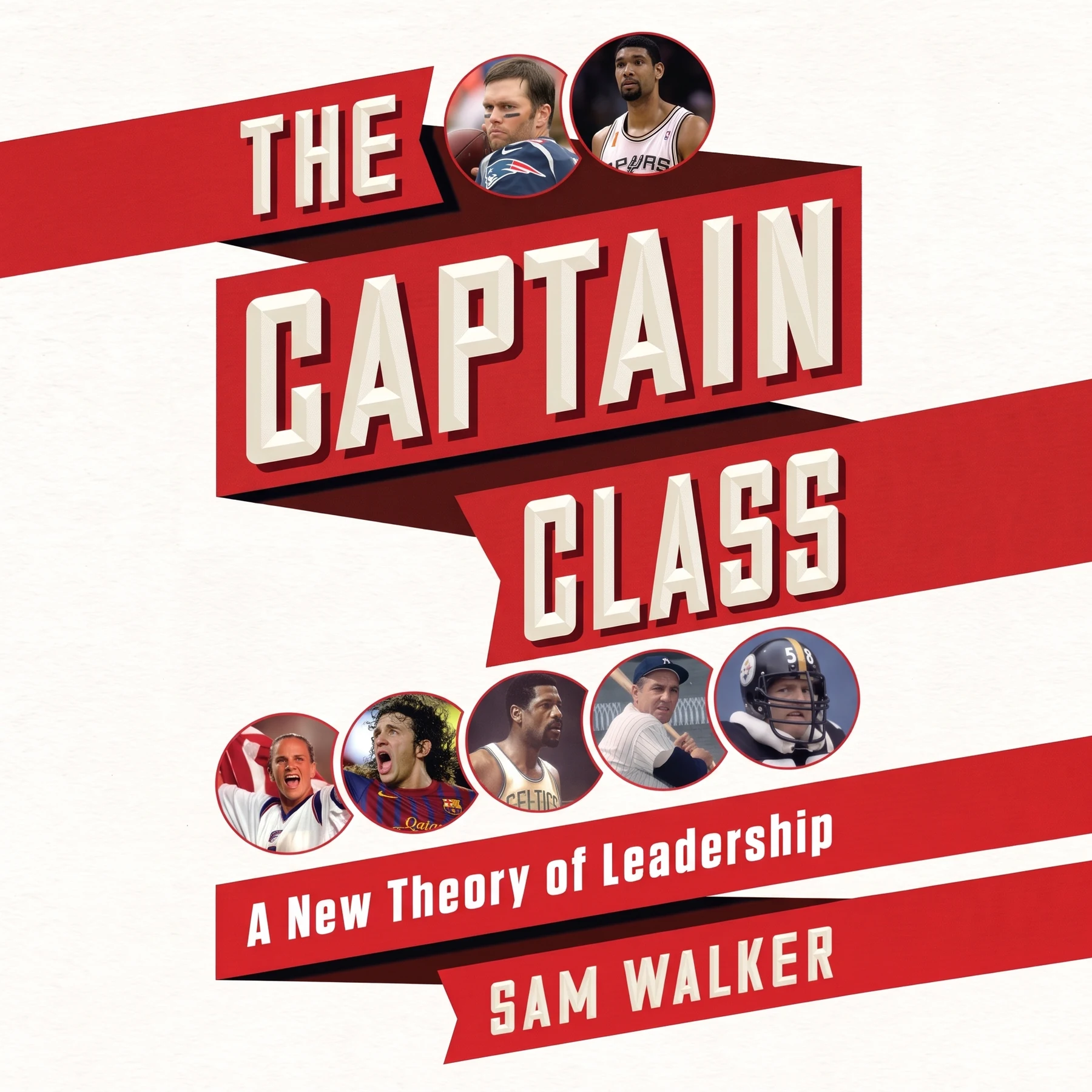
The Captain Class: A New Theory of Leadership
By Sam Walker
Sam Walker studies the greatest dynasties in sports history and finds that each was led by an unglamorous, selfless captain. He shows how anyone can lead the same way, with or without a title.

Table of Content
1. Introduction
1 min 01 sec
If you lead a team, the instinct is to chase the most gifted people and the best coach. Sam Walker’s study of the greatest dynasties in sports history points somewhere else: the teams that kept winning all had the same unusual kind of captain. In The Captain Class, the former Wall Street Journal sports editor and leadership columnist shows that these captains were rarely the stars. Many were average players, shy of reporters and missing a skill or two their coaches could name. Yet their teams won again and again, and faltered when they left.
Walker’s case is that lasting team success rests on a selfless captain who does the unglamorous work, sets the pace with visible effort, talks to teammates one at a time and spreads the right emotion through the group. From the Boston Celtics to New Zealand’s All Blacks, his stories show what that person does differently, and how anyone, with or without a title, can start leading that way at work this week.
2. Spot the leader who isn't the star
1 min 42 sec
One basketball club won almost every title for thirteen years, then fell apart the moment a single player retired. He was not the kind of hero fans picture, and that is exactly what makes him worth studying.
3. Stacking stars and money rarely wins titles
1 min 37 sec
In offices and labs, filling a team with top performers seems to pay off. On the pitch, one club that went all out to sign the world’s top talent tried it and learned something every manager hiring big names should hear.
4. Pair a strong coach with the right captain
1 min 43 sec
A celebrated coach brought fresh methods and a fine philosophy to his club, yet that philosophy only showed on the field once the right captain arrived. What changed was one appointment on the field, not in the office.
5. Beat team slacking by setting the hardest pace
1 min 39 sec
Put people in a group and something strange happens to their effort, as experiments with ropes and shouting have shown. A Barcelona captain’s broken cheekbone points to the cure.
6. Choose winning over looking like a role model
1 min 35 sec
Fans adored one polite, steady captain who won very little, and booed another for a move no role model would make. Walker asks which of the two a team actually needs.
7. Lead from the back by making others shine
1 min 33 sec
The captain of France’s 1990s side said the job was less about his own play than about helping others. His star teammate might have disagreed, for reasons that reveal where real influence on a team often sits.
8. Swap the big speech for quick private words
1 min 43 sec
Movies say leaders win with stirring locker-room speeches. Real captains mostly avoid them, and a lab that recorded workers all day long found what natural leaders do with their voices instead.
9. Sync your team by sharing the right emotions
1 min 35 sec
A cold stare across a basketball court and a war dance that unsettles rugby opponents seem like theater. Walker links both to brain cells that make emotions jump from one person to another.
10. Conclusion
1 min 09 sec
The Captain Class turns the usual picture of leadership upside down. The person who carries a dynasty is rarely the star, the costliest signing or the famous coach. It is the player Walker sees as indispensable: Coventry passing when he could have shot, Puyol giving up a cheekbone, McCaw taking the boos, Deschamps holding Zidane’s face at halftime. In Walker’s view, the great winning streaks came from a smart coach paired with a captain willing to look bad and get hurt for the team.
That role is open to almost anyone, with or without a title. Resist the pull toward the spotlight and judge yourself by how well the people around you perform. Work hardest where others can see it, so that full effort becomes the team’s normal. When someone is struggling, skip the speech and have the short, direct conversation, face to face. And walk in carrying the feeling you want the group to share, because it will spread whether you plan it or not.
Teams remember their stars. They keep winning because of the person who makes everyone else better.
About this book
What is this book about?
Most people assume great teams are built from great talent: the best players, the biggest budget, the most famous coach. Sam Walker looked at the teams that dominated their sports for years and found that none of those explained the winning streaks. What the dynasties shared was a certain kind of captain. These captains were seldom the most gifted athletes. Many avoided the press, lacked skills their coaches could name, and spent their games doing defensive, tiring work. Walker follows them from the Boston Celtics and the Collingwood Magpies to FC Barcelona, France's 1998 World Cup side and New Zealand's All Blacks. He shows how they beat the human habit of slacking in groups, why some broke the rules and took the boos, and how they talked to teammates one at a time instead of giving speeches. Readers get a new picture of leadership that does not depend on charisma or a title. Walker's captains turn a coach's values into daily behavior, make the stars around them better and pass their own determination to the group. Anyone who leads people, or wants to, can use that model at work.
Book Information
Who it's for
Wanting results without speeches
Team leads and managers who want their people to perform without relying on big speeches.
Hoping to be indispensable
Professionals without a title who want to become the person a team depends on.
Wondering why talent underperforms
Coaches, founders and sports fans curious why the most talented teams so often fall short.
About the Author
Sam Walker
Sam Walker spent twenty years at The Wall Street Journal, where his roles included chief sports columnist, global sports editor and leadership columnist, and he founded the paper's daily sports coverage. He now advises professional, Olympic and college sports teams, elite military units and businesses of many kinds on leadership and team building, and works as a columnist and keynote speaker. He is also the author of Fantasyland.
Ratings & Reviews
Ratings at a glance
What people think
Listeners find that this work offers superb perspectives on team dynamics and leadership, featuring fascinating anecdotes and well-researched analysis. This title is both engaging and accessible, with one listener specifically noting its extensive use of scientific methodology. They value the sports-focused material, as one review highlights its great comparison of major global team sports.
Top reviews
Pranee
This book completely shifted my perspective on what makes a team actually win. Walker moves away from the flashy superstars and focuses on the 'water carriers'—the gritty, selfless captains who do the dirty work behind the scenes. It's a refreshing take that challenges the typical charismatic leader trope we see in every Hollywood movie. The research into these 16 global dynasties is thorough, even if some of the teams like the All Blacks or the Soviet hockey squad were new to me. I appreciated how he linked psychological studies to actual field play, making the 'Captain Class' feel like a tangible thing rather than just a vague vibe. Even if you aren't a massive sports nerd, the leadership takeaways are huge for anyone trying to build a high-performing culture.
Show moreRatree
Wow, what an absolute powerhouse of a book. It’s rare to find a sports narrative that actually offers a new way of looking at the world, but this one does it through the lens of character. Walker’s profile of the 'Captain Class' isn't about the people on the posters; it's about the people who hold the team together when things get ugly. The breakdown of how these leaders regulate their emotions and push their teammates during practice was incredibly insightful. It made me look at my own work habits and how I interact with my peers. If you want to understand the engine under the hood of greatness, this is the book you need to pick up immediately.
Show moreMats
The chapter on Michael Jordan and the 90s Bulls was worth the price of admission alone. Walker’s critique of Jordan as a flawed leader who needed a 'secondary' leader like Bill Cartwright to succeed was a bold and fascinating take. It’s these kinds of contrarian viewpoints that make this book stand out in a crowded market. Personally, I loved the emphasis on how these captains are often the ones willing to bend the rules or get their hands dirty to secure a win. It paints a much more realistic picture of competitive sports than the polished versions we usually get from PR departments. This is a must-read for any coach or athlete looking to understand the real mechanics of a winning culture.
Show moreDao
After hearing about this on a podcast, I decided to dive in, and it didn't disappoint. The book is an fascinating look at how a specific personality type can catalyze a group of talented individuals into a legendary dynasty. Walker’s style is easy to digest, with short, punchy chapters that focus on different traits like emotional regulation and grit. I was surprised by how much I enjoyed the sections on sports I don't even follow, like women's volleyball and field hockey. It shows that excellence follows a pattern, regardless of the game being played. It’s a great reminder that the most important work often happens when the cameras aren't even watching.
Show moreRungtip
Finally got around to reading this after seeing it on several 'best of' lists for leadership. It's essentially a sports book that doubles as a masterclass in management without being a dry, bulleted textbook. The way Walker dissects communication—especially the non-verbal cues and practical talk—really hit home for me. It’s not about the big speeches; it’s about the person who isn’t afraid to carry the equipment or challenge the status quo for the group's benefit. I did find some of the chapters a bit repetitive, and he occasionally glosses over the role of elite coaching or raw talent. Still, the comparison of global sports like handball and rugby alongside the NBA makes for a truly fascinating read.
Show morePrasarn
As someone who works in management, I found the breakdown of the seven traits incredibly useful for real-world application. Most leadership books tell you to be the loudest voice in the room, but Walker argues for the 'quiet' leader who leads from the back. The idea of the 'water carrier'—borrowed from French football—is such a powerful metaphor for servant leadership. My only gripe is that the book can get a bit bogged down in the methodology of how he chose the teams in the first place. I would have preferred more time on the captains themselves and less time defending why certain teams were 'Tier Two.' Regardless, it's a solid 4-star read for anyone interested in group dynamics.
Show moreWoramet
Ever wonder why certain dynasties just seem to have an edge that defies logic? Walker attempts to answer this by looking at the glue that holds these teams together: the captain. This isn't your standard biography of sports stars; it's a deep dive into the psychology of winning. I particularly enjoyed the global perspective, as the book moves seamlessly from the New York Yankees to the Soviet Red Machine. The writing is concise and avoids the usual fluff found in the business section of the bookstore. While I think he overstates the importance of the captain compared to the coach, the arguments are well-researched enough to give you pause. It definitely changed how I watch games now.
Show moreGun
While the narrative is undeniably engaging, I couldn't shake the feeling that Walker was working backward from a conclusion. He presents his findings with a scientific air, but the selection criteria for these 'Tier One' teams feels highly subjective at times. Why include the Spurs but exclude the 90s Bulls or the Tom Brady Patriots? It feels like he cherry-picked the dynasties that fit his specific seven-trait framework while ignoring outliers that didn't play by his rules. That said, the stories about Bill Russell and Yogi Berra are fantastic and well-told. To be fair, even if the data analysis is a bit shaky, the core message about serving the team before oneself is a lesson worth learning.
Show moreGung
The stories themselves are top-tier, especially the bit about Buck Shelford, but the central thesis felt a little forced. I appreciate the effort to bring a scientific methodology to sports history, but correlation doesn't always mean causation. Just because these 16 teams had a specific type of captain doesn't prove that the captain was the primary driver of their success over four years. There are too many variables like coaching and sheer luck to boil it down to one person's personality. Truth is, I enjoyed the book more as a collection of sports essays than as a definitive guide to leadership. It’s a fun read for a plane ride, but don’t expect it to provide a foolproof formula for your next business venture.
Show moreDiego
Not what I expected based on the hype. The central concept of the book—that one specific type of captain is the secret sauce for every great dynasty—just feels too simplistic for the complex world of professional sports. I’m skeptical of any theory that claims to have found the 'one thing' that guarantees success while dismissing luck, finances, and superstar talent. Specifically, the way he handles the Brazil 1958-70 soccer teams by ignoring their multiple captains felt like a huge hole in his logic. The writing is punchy and the anecdotes are fun for a Saturday afternoon, but as a serious piece of analysis, it didn't hold up for me. I wanted to love this, but I left feeling like it was more storytelling than actual science.
Show moreQuestions about this book
What is the main idea of The Captain Class?
Sam Walker argues that the greatest dynasties in sports history were not built on superstar talent, big budgets or famous coaches. What they shared was a particular kind of captain: often an average, quiet player who worked hardest, did unglamorous defensive jobs, risked being unpopular to win, spoke to teammates one-on-one and spread determination through the group. Teams like the Boston Celtics rose with such a captain and declined without one.
Does a team captain need to be the most talented player?
No. Walker found that the captains of history’s best teams were rarely the most gifted athletes, and their coaches could usually name skills they lacked. Didier Deschamps of France saw his job as getting the ball to Zinedine Zidane, and Carla Overbeck of the US national soccer team scored hardly any goals but kept setting up her teammates. Their value came from making others better.
What does The Captain Class say about social loafing?
Walker cites Maximilien Ringelmann’s 1913 finding that people pull less hard in tug-of-war when on a team. A 1979 Ohio State study saw the same drop in shouting until participants were told their partner was an excellent shouter. Proper motivation removed the gap. Captains supply it through visible effort, as Carles Puyol did when he broke his cheekbone blocking a shot.
How can I apply The Captain Class at work?
Measure yourself by how well your colleagues perform, not by your own spotlight. Set the pace with effort others can see. Replace some group speeches with brief, focused one-on-one talks, the pattern MIT’s Human Dynamics Laboratory found in natural leaders. And watch the mood you bring into the room, since Walker argues emotions spread from leader to team.
Who should read The Captain Class?
It suits managers and team leads who want a model of leadership that does not depend on charisma, people without a formal title who want to become indispensable to their team, and anyone hiring who is tempted to buy success with star names. Sports fans will also enjoy its stories of the Celtics, Barcelona, France’s 1998 side and the All Blacks.
Readers also enjoyed



A Year with Peter Drucker: 52 Weeks of Coaching for Leadership Effectiveness
Joseph A. Maciariello


Ali: A Life
Jonathan Eig


Acting with Power: Why We Are More Powerful Than We Believe
Deborah Gruenfeld

All In: How Great Leaders Build Unstoppable Teams
Mike Michalowicz

AUDIO SUMMARY AVAILABLE
Listen to The Captain Class in 15 minutes
Get the key ideas from The Captain Class by Sam Walker, plus 5,000+ more nonfiction titles.
- 5,000+ titles
- Listen as much as you want
- 7-day free trial
- Cancel anytime









