

15 min 21 sec
Available in: English
The Beautiful Cure: The Revolution in Immunology and What it Means for Your Health
Shows how the immune system decides what to attack, how hard and when to stop. It covers the discoveries behind new treatments for arthritis and cancer, and how stress, time of day, age and diet change your defenses.
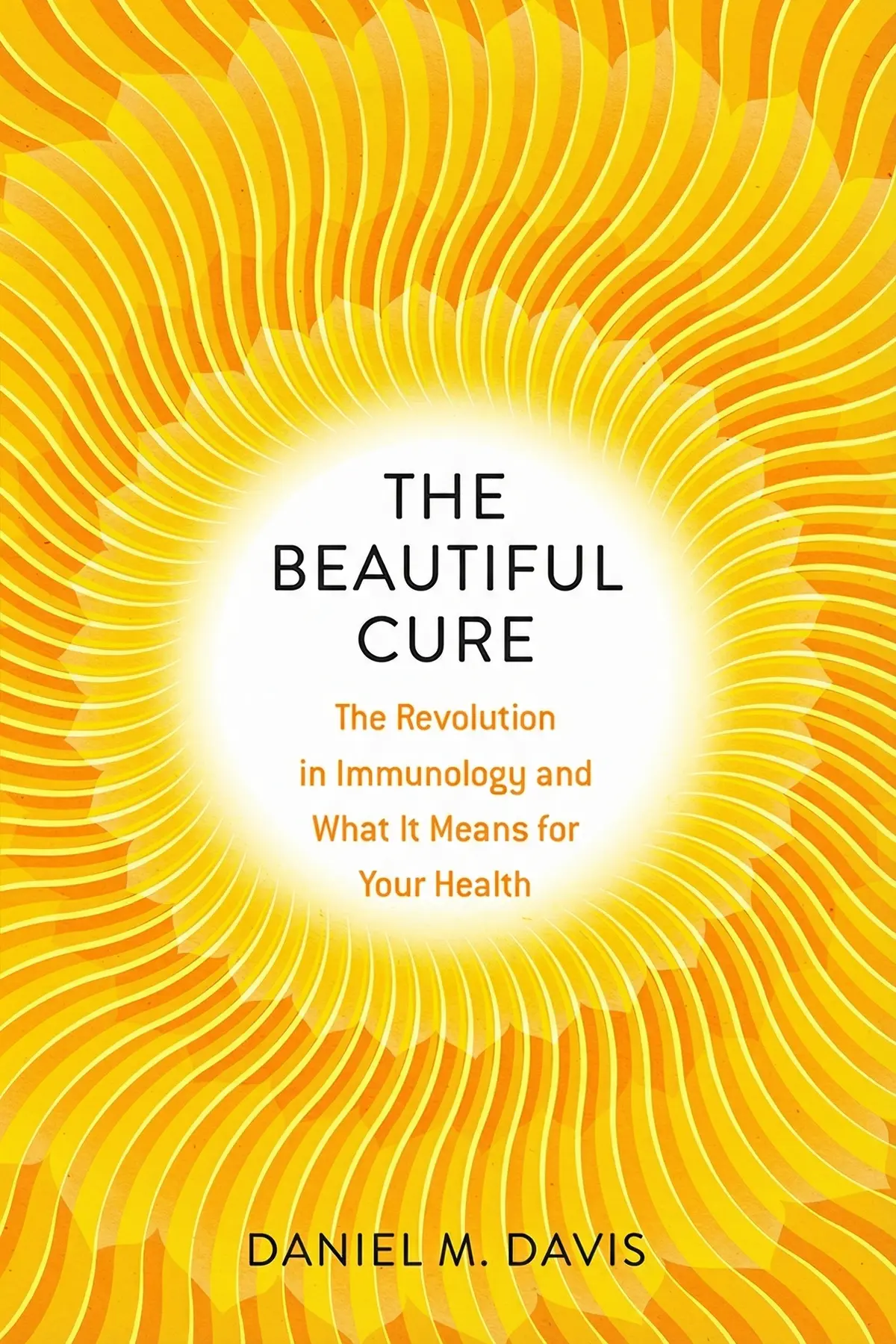
Table of Content
1. Introduction
1 min 04 sec
Most of us think about the immune system only when it fails, as a vague force that either beats a cold or doesn’t. In The Beautiful Cure, immunologist Daniel M. Davis starts with something smaller: the body’s response to an ordinary cut is the most studied topic in human biology. Behind the redness and the scab, cells, proteins and hormones coordinate in ways that science has only recently understood.
Davis’s case is that immunity runs on switches. Sensors decide whether something is dangerous, alarm cells and chemical messengers shape the response, and brakes decide when it stops. Finding those switches has already produced treatments for arthritis and a new way to fight cancer. It also explains why chronic stress, the hour of the day, age and diet change how well you are protected. Once you know where the switches are, a vaccine, a swollen joint or an asthma inhaler becomes something you can understand and partly steer.
2. See what a vaccine actually teaches your body
1 min 31 sec
Three centuries ago, a nervous royal family had smallpox material tested on prisoners before risking their own children. The experiment worked, but it left a puzzle about what the body learns and why it doesn’t attack everything new.
3. Learn how your body ignores most harmless strangers
1 min 47 sec
You eat unfamiliar foods without falling sick, yet a parasite triggers a full defense. A fruit fly with an inactive gene and the scientist who studied it helped explain how the body tells harmless newcomers from real danger.
4. Meet the sentinel cells that sound the alarm
1 min 43 sec
For years scientists knew immune reactions needed something from the spleen, but not what. The answer was stuck to the glass of a lab dish, and it decides whether your defenses fight or stand down.
5. Silencing one immune messenger can end crippling pain
2 min 24 sec
A puzzle about why people rarely catch two colds at once led to a new class of molecules. Decades later, blocking just one of them let millions of arthritis patients live without wheelchairs, and one was even able to play golf again.
6. See how long stress leaves you easier to infect
1 min 51 sec
A compound that had an arthritis patient walking again within two days also points to why long stretches of stress can make viral infections harder to fight. The evidence on whether mindfulness eases stress and helps the immune system is still mixed.
7. Time your medicine to your immune clock
1 min 48 sec
The same infection hits harder or softer depending on the hour it arrives. That rhythm makes one asthma treatment work several times better at a certain time, and age reshapes the clock again.
8. Strengthen the brakes, or release them to fight cancer
2 min 02 sec
Some immune cells exist only to stop the body attacking itself, and what you eat may feed them. Releasing a different brake helped a 22-year-old with advanced melanoma, given even odds of surviving six months, go into remission.
9. Conclusion
1 min 11 sec
What Davis offers in the end is a new picture of being well. Health is a balance struck many times a day by sensors, alarm cells, messengers and brakes. Several of the book’s breakthroughs began as plain curiosity about how one of those switches worked. Sick fruit flies led to human receptors. A puzzle about two colds led to a hepatitis treatment. A question about how immune responses end gave Sharon Belvin her remission.
The same picture reaches into ordinary choices. Long stretches of stress have a cost your defenses pay, so the support around you is worth protecting. Fiber from fruit, vegetables and grains feeds the regulatory cells that keep your gut from turning on itself. When you or someone you care for relies on a regular medicine or a vaccine, the hour it is taken and the age of the body receiving it can change how well it works, as the afternoon asthma inhaler shows.
The redness around a scratch on your hand comes from the same system that, given the right push, cleared a tumor from a young woman’s lung.
About this book
What is this book about?
Most people only think about their immune system when it fails. Yet even the redness around a small cut involves cells, proteins and hormones working together, and science only recently learned how they coordinate. Immunologist Daniel M. Davis tells the story of how researchers worked that out, one puzzle at a time. His angle is that immunity runs on switches. Receptors recognize the patterns of germs. Dendritic cells sound the alarm and decide whether the rest of the system responds. Cytokines carry messages between cells, and regulatory T cells and other off signals keep the response from going too far. Davis follows the scientists behind each discovery, from a smallpox test on prisoners in 1721 to Jim Allison's cancer treatment that releases the immune system's own brakes. Readers get a clear map of how their defenses work and why drugs that block a single messenger changed life for millions of arthritis patients. They also learn what the evidence says about chronic stress, the body clock, aging and a high-fiber diet, and how each one changes the way the immune system behaves.
Book Information
Who it's for
Newcomers to immunology
People who want to understand how their own immune system works, without a medical degree.
Carers and patients
Patients and carers dealing with arthritis, autoimmune disease or cancer who want to understand their treatments.
Health-curious professionals
Busy professionals curious how stress, timing, age and diet affect their health.
About the Author
Daniel M. Davis
Daniel M. Davis is a professor of immunology and head of life sciences at Imperial College London, and was previously a professor of immunology at the University of Manchester. His research uses microscopy to study how immune cells behave and interact, and he co-discovered the immunological synapse and membrane nanotubes. He has published more than 150 academic papers and is a fellow of the Academy of Medical Sciences. The Beautiful Cure was shortlisted for the 2018 Royal Society Science Book Prize, and in 2025 he received an MBE for services to science communication.
Ratings & Reviews
Ratings at a glance
What people think
Listeners find the book highly educational and skillfully composed, with one listener noting how it enables people to grasp its mechanisms. Furthermore, the work serves as a foundational text on immunology; one listener highlights its practical applications in modern medicines and therapies. Listeners also describe the content as immensely engaging and praise the superb storytelling, with one listener specifically mentioning the historical narrative.
Top reviews
Sienna
This book manages to turn molecular biology into a gripping historical drama. Daniel Davis doesn't just explain how our bodies work; he tells the story of the scientists who fought, collaborated, and occasionally sued each other to uncover these secrets. I was particularly fascinated by the section on dendritic cells in Chapter Two. The way Davis compares their behavior to the scouting and communication of honeybees made the complex biology feel intuitive and alive. It is a brilliant blend of hard science and human storytelling that left me with a profound respect for our internal defenses. The narrative about the Nobel Prize disputes adds a layer of reality that most science books ignore. You truly feel the weight of every discovery mentioned.
Show moreDivya
Ever wonder why a fever actually helps you heal or why some vaccines work better in the morning? This book answers those questions with such clarity and awe that it’s hard to put down. I am a self-proclaimed 'awe junkie,' and the description of the artful dance between B and T cells gave me exactly the fix I needed. Davis has a gift for making the invisible world inside us feel as vast and epic as outer space. To be fair, some of the descriptions of protein interactions are complex, but the effort to understand them is well worth it. It’s easily one of the best popular science books I've read in years. It changes how you think about your own health and resilience.
Show moreAom
The Beautiful Cure is a masterclass in how to write popular science without dumbing it down for the audience. Davis highlights the incredible complexity of our biology, showing that the immune system is essentially an internal ecosystem. I loved learning about the history of the smallpox vaccine and how we knew it worked long before we understood the mechanism behind it. The prose is elegant and the storytelling is brilliant, especially when he discusses the future of medicine. This isn't a 'how-to' manual, but it gives you something better: an understanding of the fundamental principles of life. If you want to know how modern therapies are actually developed, read this book. It is a fascinating journey from the 1700s to today.
Show moreWeera
Davis approaches immunology with the precision of a physicist, which makes sense given his academic background in that field. Personally, I found his exploration of the 'immunological synapse' to be the highlight of the book. He successfully deconstructs the misconception that the immune system is a single, simple entity. Instead, he reveals a labyrinthine network of cells that must constantly distinguish between 'self' and 'non-self' to keep us alive. The book serves as an excellent primer for anyone interested in the future of cancer therapies and immunotherapy. My only minor complaint is that the writing can be a bit repetitive when describing the isolation of different molecules. However, the quality of the research is undeniable and highly impressive.
Show moreDylan
Finally got around to reading this during the pandemic, and it’s a total eye-opener regarding how our natural defenses function. Gotta say, the section about the thymus gland and why children often fare better against new viruses was particularly relevant. It explains that our immune memory is built through living, rather than just genetics, which is a powerful concept. I liked the 'live dirty' argument—how over-sanitizing our lives might actually be making us more prone to allergies. The book is well-written and avoids the fluff found in most health books. It’s a bit dry in the middle sections, but the practical takeaways regarding circadian rhythms make it a valuable resource for anyone.
Show moreDarius
As someone who usually avoids medical books because they're too dry, I found this surprisingly readable and engaging. The Beautiful Cure explains the breakthrough work of scientists like Charles Janeway and his discovery of how the body detects germs. Davis avoids the trap of using patient anecdotes as cheap emotional hooks, which I deeply appreciated. Instead, he focuses on the detective work involved in mapping the human immune system. The explanation of how our bodies can accidentally attack themselves in autoimmune diseases like diabetes was eye-opening. It provides a much-needed scientific perspective in an age full of detox myths and pseudoscience. It’s a solid, informative read that demands your full attention.
Show moreNaomi
Picked this up to understand the buzz around immunotherapy, and it delivered on almost every front. Not gonna lie, I had to Google a few terms along the way, but the overall narrative is easy to follow. The author does a great job explaining how stress triggers cortisol, which then acts as a brake on our immune system. It makes the connection between mind and body feel grounded in hard data rather than wishful thinking. The detail about how vaccines might be more effective when administered in the morning was a standout fact for me. It’s a great primer on immunology that bridges the gap between a textbook and a thriller. Highly recommended for the curious mind.
Show moreAisha
Wow, I had no idea the immune system was this competitive and chaotic behind the scenes. Davis reveals the human side of science, including the ego and the legal battles that often accompany major breakthroughs. The book feels authentic because it doesn't try to simplify the messy reality of biological research. I found the sections on the 24-hour cycle of immune cells to be particularly practical for my own daily routine. While it gets a bit heavy on the nomenclature in the later chapters, the author’s enthusiasm for the subject is infectious. It’s a wildly interesting look at the 'beautiful cure' we all carry within us. A very rewarding read overall.
Show moreKaen
Not what I expected given the subtitle, which almost suggests a lifestyle guide or some kind of New Age wellness manual. Truth is, this is a very dense scientific text that requires a lot of focus to get through. While Davis is an approachable writer, he frequently dives into a massive soup of technical terms that can feel overwhelming for a casual reader. The first 100 pages are more about the history of medicine and scientific bickering than practical health advice. I did appreciate the insights into how stress and sleep impact our immunity, but those nuggets are buried under layers of molecular theory. It’s informative, but definitely be prepared for a slog if you don't have a biology background.
Show moreMax
Frankly, the middle section drags a bit with the endless cataloging of molecules and proteins. I picked this up hoping for more 'harnessing' and less 'history of every scientist who ever looked at a microscope.' While the anecdotes about Nobel Prize rivalries are interesting at first, they eventually start to feel like filler. Look, the science is clearly rigorous and the author is obviously an expert in his field. However, as a layperson, I found myself skimming through the heavy molecular biology just to find the parts about how sleep affects my health. It’s a good book for students or science buffs, but it might be too technical for someone just looking for a general health overview.
Show moreQuestions about this book
What is The Beautiful Cure by Daniel M. Davis about?
It tells how scientists figured out the immune system’s main parts and switches. Davis covers the adaptive response that vaccines train, the innate receptors that recognize germs, the dendritic cells that raise the alarm, the cytokines that carry messages, and the regulatory cells and off signals that act as brakes. He shows how these discoveries led to treatments for rheumatoid arthritis and cancer, and how stress, time of day and age affect the system.
How does stress affect the immune system according to The Beautiful Cure?
Stress raises cortisol, a hormone that prepares the body for danger and also suppresses immunity. Davis cites evidence that people under long-term stress fight viruses less well, heal more slowly and respond worse to vaccines. In one study, men with HIV who had more stress or less social support were two to three times as likely to develop AIDS. Mindfulness may help, but trial results are mixed.
Does the time of day matter for the immune system?
Yes. Davis explains that human immune systems are strongest at night, during natural rest, partly because cortisol stays low then. That can worsen nighttime gout symptoms, but it can also be used deliberately. For asthma, inhaled steroids worked four times better when taken once daily between 3 and 5:30 in the afternoon. Age matters as well, and some flu vaccines work better for older people when they include flagellin.
What is immune checkpoint therapy in The Beautiful Cure?
It is the cancer treatment that grew out of Jim Allison’s research. He reasoned that in cancer the immune response shuts off too early. By blocking a T cell receptor called CTLA-4 with an antibody, he kept immune cells fighting. Sharon Belvin, diagnosed with stage IV melanoma at 22, saw her lung tumor shrink by 60 percent and then disappear. The approach is now a mainstream cancer treatment.
What can I do day to day based on The Beautiful Cure?
The book supports a few habits. Treat chronic stress as a physical cost to your defenses, and value social support. Eat plenty of fiber from fruit, vegetables and cereal grains, which Davis says boosts the regulatory T cells that help prevent autoimmune reactions. And ask your doctor whether the timing of regular medicines, or vaccines designed for older bodies, could make them work better.
Readers also enjoyed


A Life Decoded: My Genome: My Life
J. Craig Venter


A Planet of Viruses
Carl Zimmer

A Short History of Nearly Everything
Bill Bryson

A Thousand Brains: A New Theory of Intelligence
Jeff Hawkins



AUDIO SUMMARY AVAILABLE
Listen to The Beautiful Cure in 15 minutes
Get the key ideas from The Beautiful Cure by Daniel M. Davis, plus 5,000+ more nonfiction titles.
- 5,000+ titles
- Listen as much as you want
- 7-day free trial
- Cancel anytime









