

14 min 48 sec
Available in: English
The Alchemy of Us: How Humans and Matter Transformed One Another
Ainissa Ramirez shows how materials such as quartz clocks, steel rails, color film and hard disks changed the way humans sleep, write, shop, see each other and remember. She also shows how to notice technology changing you now.
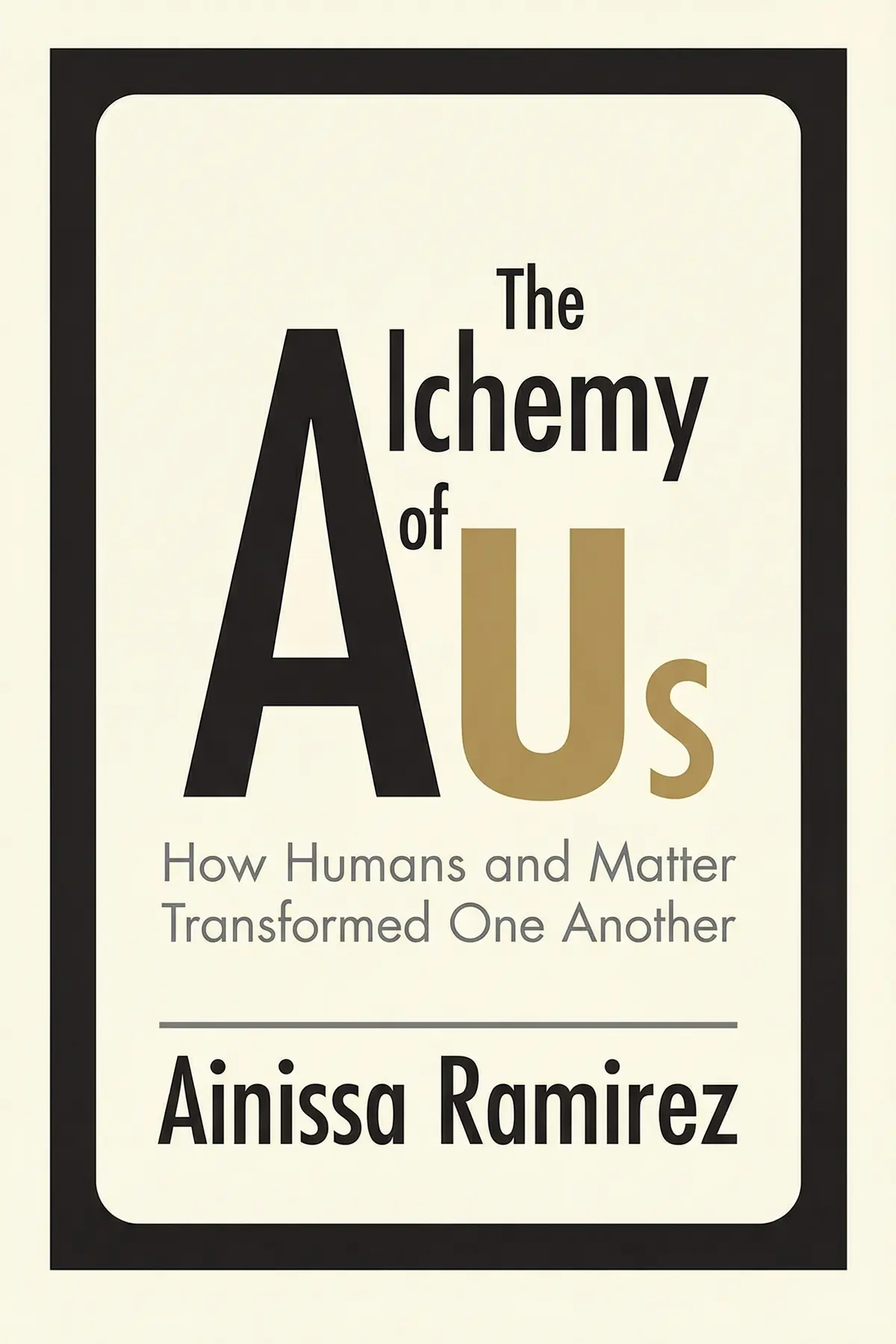
Table of Content
1. Introduction
59 sec
Most of us treat technology as something we simply use, a tool that waits until we pick it up. In The Alchemy of Us, materials scientist Ainissa Ramirez argues that the influence runs both ways: a vibrating ring of quartz, a steel rail or a strip of color film can change how people sleep, shop, write and see one another. She follows a series of materials out of the lab and into daily life.
Her throughline is easy to state and hard to forget. We shape our materials, and they shape us back, in our bodies, our language, our prejudices and our minds. The stories run from a London woman who sold the time for nearly fifty years to two Polaroid workers who took on apartheid. Afterward, the clock on the wall, the bulb by the bed and the phone in your pocket each start to look like a choice you can still make.
2. Trace your sleep troubles back to the factory clock
1 min 44 sec
A London woman made a living for almost fifty years by selling something nobody can hold. Her trade, and the quartz clock that later beat her watch for accuracy, open a story about why modern schedules may be at odds with the body.
3. Guard your nights from the wrong kind of light
1 min 28 sec
Edison’s bulb solved a glare problem and created a slower one that scientists now link to hormones and disease. The fix it points to costs nothing and can start tonight.
4. Steel rails shrank distance and built our shopping culture
1 min 39 sec
A roof fire in an English workshop led, decades later, to a new American way of celebrating a holiday. The path runs through a metal that manages to be hard and soft at once.
5. Write lean, the way the telegraph taught America
1 min 53 sec
A husband who learned of his wife’s death days too late built a machine to speed up news. It also changed how a famous novelist, and then a whole nation, put sentences together.
6. Spot the human bias built into neutral tools
2 min 10 sec
Cameras record whatever stands in front of them, so they should treat every face alike. Two stories, one about film chemistry and one about apartheid identity cards, show where that assumption breaks down.
7. Know what your music stream learns about you
1 min 54 sec
A tin-foil recording of a nursery rhyme began a chain of inventions that ends inside your streaming app. Somewhere along that chain, listening turned into being listened to.
8. Protect deep thinking from the internet's constant pull
1 min 52 sec
Fire grew our ancestors’ brains, and radio sharpened our ears. The internet is changing us too, and scholars disagree sharply about whether it is making us smarter or shallower.
9. Conclusion
1 min 09 sec
The alchemists of old hoped to turn lead into gold. Ramirez describes an alchemy that works in both directions at once: every time people refine a material, the material refines them. Factory clocks set the tempo of daily life, steel rails helped turn Christmas into a shopping season, a pencil scratching Vs helped a nation write short, and a film formula decided whose face looked right. None of these changes was announced. They arrived as conveniences and stayed as habits.
That turns the book into a lesson in attention as much as a history of inventions. You can start with the light around you, keeping evenings dim and mornings bright so the body gets its hours of repair. You can treat any tool that fails certain people as a record of whose needs came first, the way Kodak’s film did until chocolate makers spoke up. And you can guard some time each day for reading in a straight line, so that remembering where facts live does not replace thinking about them.
The materials will keep changing us. What remains open is whether we notice in time to change them back.
About this book
What is this book about?
We usually think of technology as something we control: a clock, a light bulb or a phone that waits until we use it. Materials scientist Ainissa Ramirez argues that the influence also runs the other way. Each time people refine a material, that material changes the people who use it, often in ways no inventor intended. Ramirez builds her case from a series of stories. A London woman sold the time from a pocket watch for nearly fifty years, while factory clocks set the rhythm of daily life and quartz crystals later made timekeeping more precise still. Steel rails shrank a continent and turned Christmas into a shopping season. The telegraph trimmed American prose down to the lean style Hemingway learned as a reporter. Color film was tuned for white skin. Edison's bulb gave us bright nights that scientists now link to disease, and magnetic disks led to streaming services that collect data on what we listen to. Readers come out with a way of looking at ordinary objects as records of human choices and biases. The book also offers practical cues, such as keeping evenings dim, mornings bright and nighttime wake-ups dark, for living with the tools that are reshaping us now.
Book Information
Who it's for
Professionals curious about tech
Curious professionals who use technology all day and want to see how it shapes their sleep, writing and memory.
Curious about everyday objects
Readers interested in the hidden history of everyday objects such as clocks, rails, cameras and hard disks.
Product builders and managers
Product builders and managers who want to spot bias in the defaults of the tools they make or buy.
About the Author
Ainissa Ramirez
Ainissa Ramirez is a materials scientist who studied at Brown and Stanford universities, did research at Bell Labs and taught as a professor at Yale. She has written for Time, Scientific American and Forbes, explained science on PBS, CBS, CNN and NPR, and given a TED talk on why STEM education matters. She hosts the short podcast Science Underground. The Alchemy of Us, published by MIT Press in 2021, has won an award.
Ratings & Reviews
Ratings at a glance

What people think
Listeners find this work captivating and skillfully composed, providing an extensive level of research that fuses scientific concepts with historical contexts. Furthermore, the narrative style receives high marks; one listener likens the experience to unfolding a mystery book, and another observes how it draws people directly into the settings. The book also showcases fascinating accounts regarding significant breakthroughs and their creators, while one listener emphasizes how the text inspires the audience to pose insightful questions.
Top reviews
Eye
Ever wonder how a simple piece of glass changed the course of human history? Ramirez does a masterful job of weaving together the cold, hard facts of materials science with the warmth of human experience. I was particularly moved by the section on the Voyager’s Golden Record and how a diverse team ensured the sounds of our planet were represented authentically. The prose flows beautifully, making complex topics feel accessible to anyone, regardless of their scientific background. Truth is, I haven't been this captivated by a nonfiction book in a long time. It encourages you to ask thoughtful questions about the objects we take for granted every single day. While some say it’s a bit US-centric, the focus on underrepresented voices more than makes up for it.
Show moreNit
Ramirez has a gift for turning materials science—a topic that usually sounds like drying paint—into a gripping narrative. She moves beyond the usual "Great Men" of history to show how a diverse group of people shaped our world through eight key inventions. The way she connects the chemistry of photographic film to racial bias was a sobering and necessary lesson in how technology is never truly neutral. I found the section on magnetic data storage and silicon chips surprisingly poetic. Every chapter feels like a deep dive into a different world, full of obsessive personalities and accidental discoveries. The research is clearly extensive, and her passion for the subject shines through on every page. This is exactly the kind of science writing we need more of.
Show moreJeeranan
Finally got around to reading this, and it feels more like digging into a mystery novel than a textbook. Ramirez has an incredible knack for research, uncovering details about the Polaroid boycott and the Voyager mission that I’d never heard elsewhere. The book does a fantastic job of melding science and history into a seamless, engaging narrative that kept me turning pages late into the night. It’s a very human look at the inventors who shaped our lives, depicting them with all their faults and obsessions intact. Some of the conclusions about modern technology felt a bit subjective, but they definitely encouraged me to ask more thoughtful questions about the gadgets I use daily. This is an essential read for anyone who wants to see the world through a different lens.
Show moreSamroeng
As someone who rarely sees people of color highlighted in STEM history, I found this incredibly refreshing. Ramirez highlights how the things we build end up building us, specifically focusing on how bias is baked into our inventions. The chapter on the Polaroid Revolutionary Workers Movement was a standout, detailing a piece of anti-apartheid history I had never heard before. The writing is engaging, and the way she connects materials like steel and silicon to societal shifts is brilliant. I did notice some repetitive sentences, and the narrator for the audiobook was a bit too robotic for my taste. Despite those minor gripes, the research feels incredibly thorough. This book is a vital contribution to the history of science that deserves a spot on your shelf.
Show moreYulia
Picked this up on a whim and was immediately transported into the lives of these forgotten inventors. It reads less like a dry textbook and more like a mystery novel where the clues are made of steel and glass. The storytelling is top-notch, especially when she describes the high-stakes world of early telegraph cables and the sheer perseverance of the people involved. I loved learning that Pyrex was inspired by a simple cake baked by a researcher's wife! It makes the world of science feel so much more human and less like something hidden away in a sterile lab. My only complaint is that some chapters end on a bit of a negative note about modern life. Still, it’s a fascinating journey through the materials that define our existence.
Show moreEmma
Frankly, I never thought I’d be so interested in the origins of my kitchenware. This book takes everyday objects and reveals the incredible human drama behind their creation, from the battle over film patents to the development of laboratory glass. The prose is quite lyrical, which makes for a quick and engaging read, although some of the metaphors are definitely a bit over the top. I particularly enjoyed the section on how the telegraph changed the way we use language, even if the connection to American vs. British English seemed a bit thin. It’s a well-written exploration of how we interact with the physical world. The author successfully makes the case that every invention is a reflection of the society that birthed it. A great pick for history buffs.
Show moreBun
The premise of this book is absolutely stellar, but the execution felt a bit uneven in places. I loved the story of Ruth Belville, the "Time Lady" who sold Greenwich time, because it grounded the concept of clocks in a vivid, human way. However, the author relies on some really strange similes—comparing Edison’s phonograph to chocolate and peanut butter felt distracting and unnecessary. There are also some scientific claims regarding light and health that felt poorly researched and borderline alarmist. To be fair, the exploration of racial bias in Kodak film was eye-opening and deeply important. I just wish the editing had been tighter to smooth out the flowery language and occasional inaccuracies. It’s an interesting read, though perhaps better for a younger or more casual audience.
Show moreGun
The chapter on Ruth Belville selling time was easily the highlight for me. It’s these small, quirky human stories that make the book worth reading, even when the broader scientific conclusions feel a bit shaky. I appreciated the inclusivity, particularly the stories about women and people of color who are usually left out of the history books. However, I found the author’s opinions on texting and social media to be a bit "get off my lawn" in tone. She makes some bold claims about technology’s impact on our brains without providing the same level of evidence used for the historical sections. Gotta say, the section on the Voyager record was beautiful, even if it omitted some of the more technical details. It’s a bit of a mixed bag, but mostly enjoyable.
Show moreDylan
Not what I expected from a book published by an academic press. While I appreciate the attempt to highlight diverse figures, the historical inaccuracies regarding Edison and the lightbulb were frustratingly persistent. It feels like the author cherry-picked stories to fit a specific narrative rather than providing a balanced history of materials science. The tone also shifts toward a strange technophobia in the later chapters, making sweeping claims about how the internet makes us less smart. Personally, I found the constant "like a" similes to be grating after the first fifty pages. There are some gems here, like the history of Pyrex and the Sunday school teacher who worked on film, but they get lost in the noise. It’s a very simplified, US-centric view of global innovation.
Show moreAmy
Look, the stories are interesting, but the author’s bias against modern technology is hard to ignore. She starts with fascinating historical anecdotes but often ends the chapters with unscientific rants about how electric lights cause cancer or how the internet is ruining our intellect. It felt like she was using the history of materials as a soapbox for her own personal grievances with the 21st century. The audio version was also quite difficult to get through due to the monotone narration. While I liked learning about Hannibal Goodwin and the early days of celluloid, I couldn't shake the feeling that I was getting a very lopsided version of history. It’s a shame because the focus on diversity is genuinely excellent. It just needed more objective analysis.
Show moreQuestions about this book
What is The Alchemy of Us by Ainissa Ramirez about?
It argues that humans and materials change each other. Ramirez follows a series of inventions, including quartz clocks, steel rails, the telegraph, photographic film, the light bulb, sound recording, scientific glass and the computer. She shows how each one reshaped daily life: our sleep, our holidays, our writing style, our standards of beauty, our privacy and even how our brains handle memory and attention.
How did the telegraph change the English language?
Telegraph offices sent one message at a time and limited each reporter’s time on the line, so news stories had to be short. Ernest Hemingway learned this lean style as a reporter at the Kansas City Star, whose rules told writers to use short sentences, and it went on to shape his fiction. Ramirez argues the telegraph helped American English become more concise and friendly than the more ornate British style.
What does the book say about light and sleep?
Ramirez reports that, according to scientists, electric light disrupts the body’s switch between growth mode by day and repair mode at night. Thomas Wehr links this to much higher growth hormone levels, which he says causes cancer, and blind women have considerably lower breast cancer rates. Cancer epidemiologist Richard Stevens advises dim evenings and bright mornings, and staying in the dark or using a candle if you wake at night.
How did bias show up in photography?
Kodak tuned its color film chemistry for white skin, so darker skin looked sickly or like ink blots in photos. Complaints from mothers of African American schoolchildren were dismissed, and Kodak changed its film only after chocolate and furniture makers complained. In the 1970s, Polaroid employees Caroline Hunter and Ken Williams protested for seven years against the company’s role in apartheid passbooks until Polaroid left South Africa.
How can I apply the ideas in The Alchemy of Us?
Notice which parts of your day follow a clock rather than your body, and keep evenings dim. When a tool works badly for some people, ask whose needs shaped its defaults. Check what your streaming and other apps collect about you. And protect time for reading in a straight line and unhurried thought, since Ramirez shows the internet crowds working memory and feeds distraction.
Readers also enjoyed


A Life Decoded: My Genome: My Life
J. Craig Venter

21 Lessons for the 21st Century
Yuval Noah Harari

A Planet of Viruses
Carl Zimmer


A Short History of Nearly Everything
Bill Bryson


A Thousand Brains: A New Theory of Intelligence
Jeff Hawkins

AI 2041: Ten Visions for Our Future
Kai-Fu Lee
AUDIO SUMMARY AVAILABLE
Listen to The Alchemy of Us in 15 minutes
Get the key ideas from The Alchemy of Us by Ainissa Ramirez, plus 5,000+ more nonfiction titles.
- 5,000+ titles
- Listen as much as you want
- 7-day free trial
- Cancel anytime









