

14 min 49 sec
Available in: English
The Aesthetic Brain: How We Evolved to Desire Beauty and Enjoy Art
Neurologist Anjan Chatterjee explains why the brain judges faces, places and art the way it does. He traces our taste for beauty to old survival signals and shows how art grew from abilities that safety set free.
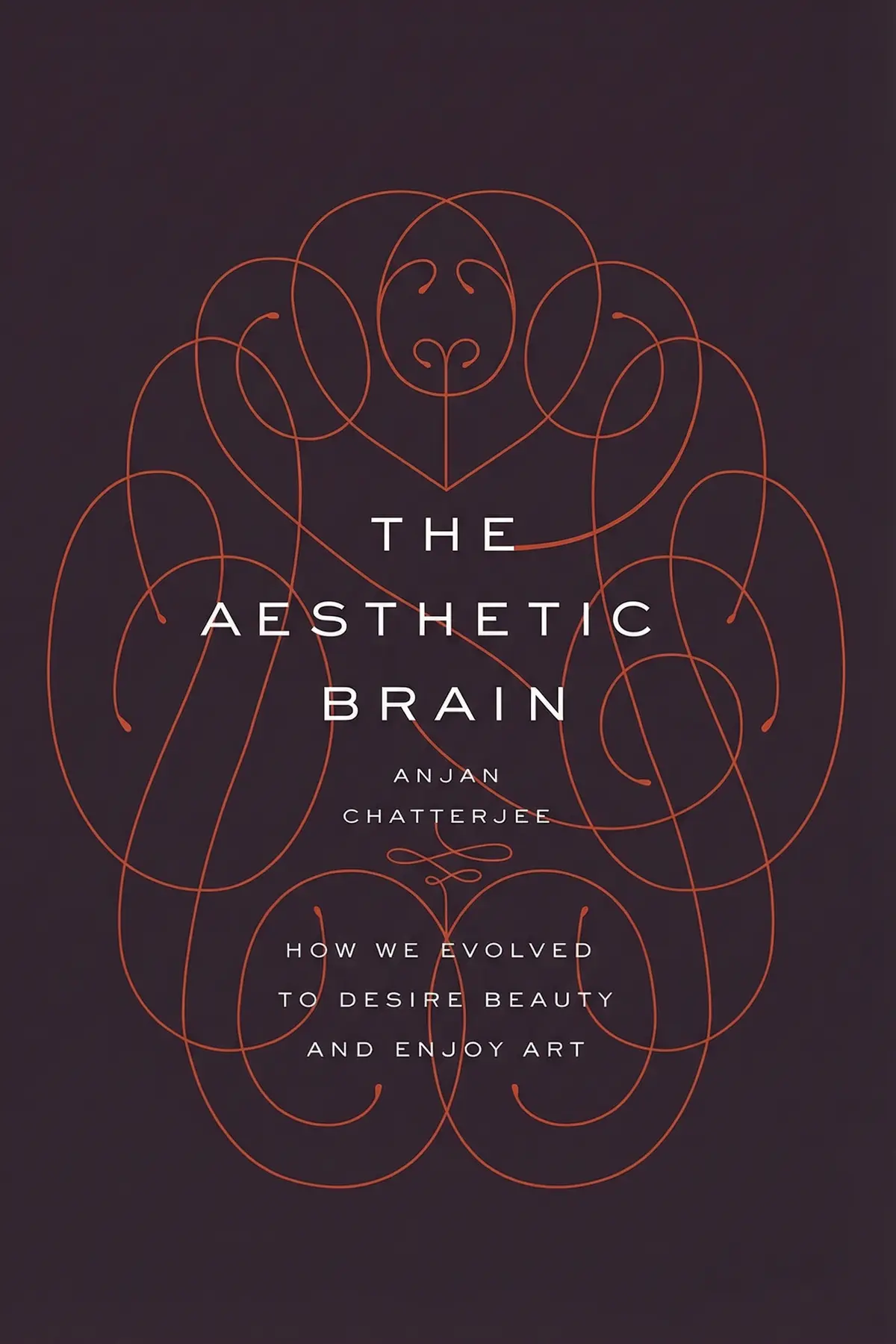
Table of Content
1. Introduction
1 min 01 sec
Most of us treat our taste in faces, views and paintings as personal, even random. In The Aesthetic Brain, neurologist Anjan Chatterjee argues that much of it was set long ago by evolution, and that the brain judges how attractive a face is almost before we know we are looking. Even people asked only to compare two faces showed extra activity in the visual cortex when one of them was good-looking.
Chatterjee’s case is that we find things beautiful because they once signaled health, safety or food. Art, in his account, grew from mental tools built for survival and set free once life became secure. Faces, savanna scenery, comic book heroes, a canned artwork sold at auction and a Japanese songbird all serve that argument. Follow it and the pull of a striking face, a wide view or a painting you would never want to buy starts to make sense. So does the difference between enjoying something and needing it.
2. Spot the three signals behind an attractive face
1 min 38 sec
Before you have said a word to a stranger, part of your brain has already scored their looks, and that score follows them into classrooms and job offers. What exactly is it measuring?
3. Learn why healthy faces and open plains feel beautiful
1 min 47 sec
People who have never left their home country still prefer one kind of scenery over every other. The reason connects that preference to how we judge faces, and it reaches back a very long way.
4. Read the beauty ideals your culture inflates
1 min 44 sec
The ideal body in centuries-old paintings looks nothing like the one on today’s magazine covers. That change has a surprisingly practical cause, and it hints at something odd about cartoons and supermodels too.
5. Art that frightens or shocks still counts as art
1 min 57 sec
Humans have made art for an astonishingly long time, yet nobody has managed to say exactly what it is. A porcelain urinal and a can sold at auction show why the question keeps escaping.
6. Your senses, feelings and reasoning all meet in art
1 min 47 sec
Language and logic each have a home in the brain, but art has no address of its own. Where it lives instead explains why one song can cheer you and sink your friend.
7. Enjoy beauty without needing to own it
1 min 47 sec
A glossy underwear ad and a Renaissance masterpiece are both built to please the eye. Your brain still files them in different places, and the split says a lot about how desire works.
8. A songbird reveals where art came from
2 min 01 sec
Neither of the two classic explanations for human art holds up well. A small bird kept in Japan for centuries offers a third answer, and it changed its song in a way nobody expected.
9. Conclusion
1 min 07 sec
Chatterjee’s account joins two things that seem far apart: the instant verdict a stranger’s face triggers and the slow pleasure of a painting nobody would think to buy. Both come from the same brain. Its sense of beauty is tuned to old signals of health, safety and food, from a symmetrical face to a flat plain dotted with trees. Its art comes from tools built for survival, which found a new use once survival stopped taking all their energy.
That view changes how ordinary moments look. A face that wins you over before a word is spoken deserves a second, slower judgment, especially when you are deciding someone’s grade, job or pay. An image that dazzles may be a natural signal stretched by culture, the way comics inflate jaws and manga inflates eyes. And when something beautiful stops you, notice whether you want it or only like it, because the second kind of pleasure is the one art exists to give.
The Bengalese finch did not learn to improvise by trying harder. It learned once it was safe enough to play.
About this book
What is this book about?
We tend to treat our taste in faces, views and paintings as personal, even random. Anjan Chatterjee, a neurologist, argues that much of it was shaped by evolution. The brain rates a face's attractiveness automatically. It favors features that once signaled health, and it feels drawn to the kind of open country where early humans could spot danger and find food. Culture then bends and exaggerates those instincts, from the curves of baroque paintings to the oversized eyes of manga characters. Art goes further still. It can frighten, shock and break every rule, and it draws on the brain's senses, emotions and reasoning at once. Chatterjee shows that enjoying art splits two reward systems that normally work together, liking and wanting. He then offers his own answer to an old question: why do humans make art at all? Readers get a clear, science-based account of why some faces and places pull at us. They also learn how culture inflates those signals and what a domesticated Japanese songbird reveals about the birth of creativity.
Book Information
Who it's for
Professionals curious about beauty
Curious professionals who wonder why certain faces, views and artworks grab them so strongly.
Managers, teachers and recruiters
Managers, teachers and recruiters who want to catch looks-based bias in their own judgments.
Art fans and creatives
Art lovers and creative people who want a science-based account of where art comes from.
About the Author
Anjan Chatterjee
Anjan Chatterjee is a professor of neurology at the University of Pennsylvania and a former Chief of Neurology at Pennsylvania Hospital, a non-profit hospital affiliated with the university. His research covers spatial cognition and language, aesthetics and ethics. He has served as president of the International Association of Empirical Aesthetics and of a society for behavioral and cognitive neurology. In 2002 he received the Norman Geschwind Prize in Behavioral and Cognitive Neurology.
Ratings & Reviews
Ratings at a glance

What people think
Listeners find this work provides excellent perspectives, with one review highlighting how it offers a thorough examination of primary theories. Furthermore, the writing clarifies intricate ideas for non-specialists, and one listener characterizes the book as a brilliant introduction to neuroaesthetics. They also value its entertainment factor, with one mentioning that it is a fascinating read for anyone.
Top reviews
Sook
Ever wonder why we are so biologically wired to find certain landscapes or faces 'beautiful'? Chatterjee delivers a fascinating look at beauty through an evolutionary lens that is both compelling and easy to digest. I loved how he treats art not just as a random cultural byproduct, but as something deeply intertwined with our survival instincts. The way he explains how our ancestors' need to spot predators shaped our modern appreciation for open vistas is just brilliant. It is rare to find a book that manages to be this intellectual without becoming a dry textbook. From the Golden Ratio to the way we perceive 'thicc' bodies as signs of health, every chapter had something that made me stop and think. This is an essential read for anyone interested in the intersection of biology, psychology, and the gallery wall.
Show moreNattapong
Wow, what a brilliant introduction to a field I knew almost nothing about! Chatterjee takes the daunting task of explaining the human brain and makes it feel like an entertaining conversation at a dinner party. He covers everything from ancient art practices to modern neurological imaging without ever losing the reader. Personally, I was most moved by the idea that art is a serendipitous mixture of time, place, and personality. It’s not just about neurons; it’s about how those neurons interact with our culture. This book managed to ground my appreciation for art in biology without stripping away the magic of the experience. It is a short, sweet, and incredibly insightful read. If you’ve ever looked at a painting and felt a rush of joy, this book will tell you why your brain is doing exactly what it was designed to do.
Show moreBae
Finally got around to finishing this, and I’m struck by how Chatterjee bridges the gap between cold neurology and the subjective experience of art. The book acts as a brilliant introduction to neuroaesthetics, making complex brain functions accessible to anyone without a PhD. I particularly enjoyed the breakdown of how our visual system processes symmetry and the Golden Ratio. However, I did feel the author played it a bit safe. While he cites a voluminous array of academic work, he often stops just short of making the kind of bold, philosophical claims I was craving. It’s a solid, informative read that grounds the 'sublime' in something tangible like the ventromedial prefrontal cortex, even if it leaves some of the deeper 'why' questions for future researchers to solve. Definitely worth it for the interdisciplinary perspective.
Show moreOksana
The chapter on the ventromedial prefrontal cortex brought back memories of memorizing lateral brain sections in college, and it was a thrill to see that anatomy applied to something as ethereal as art. Chatterjee is a professor of neurology, and it shows in his precise, careful mapping of the aesthetic brain. He does a commendable job explaining how our brains evolved to desire beauty, though I wish he had explored individual differences more. Why does one person find abstract expressionism moving while another sees it as nonsense? He touches on the knowledge we bring to the table, but a deeper dive into the 'harmony vs. dissonance' play would have been icing on the cake. Still, the prose is fluid and the logic is sound. It’s a very exciting time for this nascent field, and this book is a perfect guide.
Show moreDing
As someone who toggles between the arts and sciences, I found this book to be a perfect example of great interdisciplinary insight. Chatterjee explores how our appreciation for art may have germinated as an instinct but matured serendipitously through culture and personality. It’s a fascinating read that doesn't just stick to the 'how' of neurons firing, but also looks at the 'why' of our evolutionary history. I found the discussion of Machiavellian evolutionary reasons for attraction particularly intriguing. The book is short, sweet, and compelling. While it doesn't provide the ultimate answers—we are nowhere near that yet—it structures our current knowledge in a beautifully fluid way. It makes you realize that art isn't just a luxury. It is a fundamental part of what makes us human. High-quality stuff for any curious mind.
Show moreJai
Picked this up because I’ve always been curious about why certain visual stimuli trigger such a strong pleasure response. Chatterjee’s explanation of the 'art instinct' versus 'art as a byproduct' is perhaps the most lucid summary I’ve encountered. He uses the Bengal Finch song as a metaphor for how art can develop once basic survival needs like food and safety are met. This 'third way' of interpreting art as a product of leisure and lack of selection pressure is a game changer for the field. The writing is accessible and avoids overly dense 'slang,' which I appreciated. My only real complaint is that I wanted him to go even deeper into the connection between perception and theories of mind. Regardless, it’s a fascinating look at the hardware behind our most human software: the need to create and admire.
Show moreYok
While I appreciate the effort to map the biological roots of beauty, I found myself skimming through quite a bit of repeat information. If you’ve read Kandel or Ramachandran, some of these sections on evolutionary fitness and facial symmetry will feel like retreading old ground. The section at the end comparing our 'art instinct' to the song variations of the Japanese finch was a genuine highlight, though. It offered a fresh look at how low-selection pressure environments can lead to aesthetic complexity. Truth is, the book often feels like it’s writing for a less-familiar audience, which is great for beginners but a bit frustrating if you want a deep dive. I also worry that some of the cited studies might not hold up well against the current replication crisis in psychology. It’s a decent primer, but it lacks the grit of a more rigorous scientific text.
Show moreBook
Gotta say, some of the studies cited here feel a bit shaky in light of the ongoing replication crisis in psychology, and I wish the author had addressed those critiques more directly. The book starts strong with an exploration of beauty as a fitness indicator, but then it meanders a bit when it gets into symbolic beauty. Is a painting truly just a 'pump-and-dump' reliability signal for the hindbrain? Chatterjee tries to bridge the gap between instinct and social construct, which is a valiant effort, but the results are somewhat predictable. I also would have liked more comparisons between human beauty instincts and those of other animals to really nail the evolutionary 'why.' It’s a solid analysis overall, but it feels like a collection of interesting highlights rather than a grand, unified theory of neuroaesthetics. A good, but not great, overview.
Show moreGin
Look, this is a decent primer if you’re new to the subject, but it didn't quite hit the mark for me. It felt like it was barely a three-star read until I hit page 100, where the discussion on how beauty and pleasure are neurologically intertwined finally started to pick up steam. The early chapters on symmetry and the Golden Ratio felt a bit like a high school biology refresher. Also, the author’s focus on 'modern' artwork felt a bit lopsided given the thousands of years of aesthetic history he could have pulled from. To be fair, he makes it clear he isn’t making claims beyond his research scope, but I still found myself wanting more grit. It’s an easy read and definitely informative, but don’t expect it to completely rewrite your understanding of art history or neuroscience.
Show moreThanakorn
I was hoping for a deep dive into the sublime, but instead, I felt the book stayed on the surface and focused far too much on modern art. For a work titled 'The Aesthetic Brain,' I was pitch-kettled that pieces which seem to lack objective beauty were given so much pride of place. Frankly, it felt like the author was trying to justify his own personal tastes through neurology rather than exploring the universal standards of beauty that have existed for millennia. The writing is accessible, sure, but it often lacks the philosophical weight required for such a massive topic. He skips over the thorny questions regarding the depth of pleasure we feel when looking at a sunset or a classical sculpture. If you want a rigorous look at aesthetics, you might find this a bit too arbitrary and light for your liking.
Show moreQuestions about this book
What is the main idea of The Aesthetic Brain?
Anjan Chatterjee argues that we find certain things beautiful because they once helped our ancestors survive. Symmetrical faces signaled health, and the African savanna offered open views, trees to climb and plenty of food. Art, in his account, grew from abilities evolution built for survival, such as imagination, emotion, abstract thinking and play, which humans became free to use creatively once their environment was secure.
What makes a face attractive according to The Aesthetic Brain?
Chatterjee describes three qualities scientists have identified. Averageness means features close to the statistical middle, like a medium-sized nose. Symmetry signals good health and a strong immune system. Sexual dimorphism means features that look typically male or female, such as a strong chin on a man. The brain assesses these automatically, which helps explain why attractive people tend to receive better grades, jobs and pay.
Why do people prefer pictures of the African savanna?
Studies Chatterjee cites found that people of all ages and ethnic backgrounds, on average, liked images of the savanna more than any other place, even if they had never been there. He links this to survival. Flat, open ground made predators easy to see from a distance, scattered trees offered escape, and peaceful grazing animals provided food.
What does liking without wanting mean in aesthetics?
The brain has two reward systems: one for liking, driven by opioids and cannabinoids, and one for wanting, driven by dopamine. They usually work together, but art separates them. People enjoy Botticelli’s Birth of Venus without wishing to buy it. Chatterjee connects this to Immanuel Kant’s 1790 idea of disinterested interest: we enjoy a work while wanting nothing from it.
How can I apply the ideas in The Aesthetic Brain?
The book suggests a few habits of attention. When judging people, notice whether a face has already tilted your opinion before the evidence arrives. When an image seems unusually striking, ask which natural signal it exaggerates. When you engage with art, give it time through your senses, emotions and thinking. The finch story also suggests that people create more freely when they feel safe.
Readers also enjoyed


A Life Decoded: My Genome: My Life
J. Craig Venter

59 Seconds: Change Your Life in Under a Minute
Richard Wiseman

A Planet of Viruses
Carl Zimmer


A Short History of Nearly Everything
Bill Bryson


A Thousand Brains: A New Theory of Intelligence
Jeff Hawkins

AUDIO SUMMARY AVAILABLE
Listen to The Aesthetic Brain in 15 minutes
Get the key ideas from The Aesthetic Brain by Anjan Chatterjee, plus 5,000+ more nonfiction titles.
- 5,000+ titles
- Listen as much as you want
- 7-day free trial
- Cancel anytime









