
13 min 29 sec
Available in: English
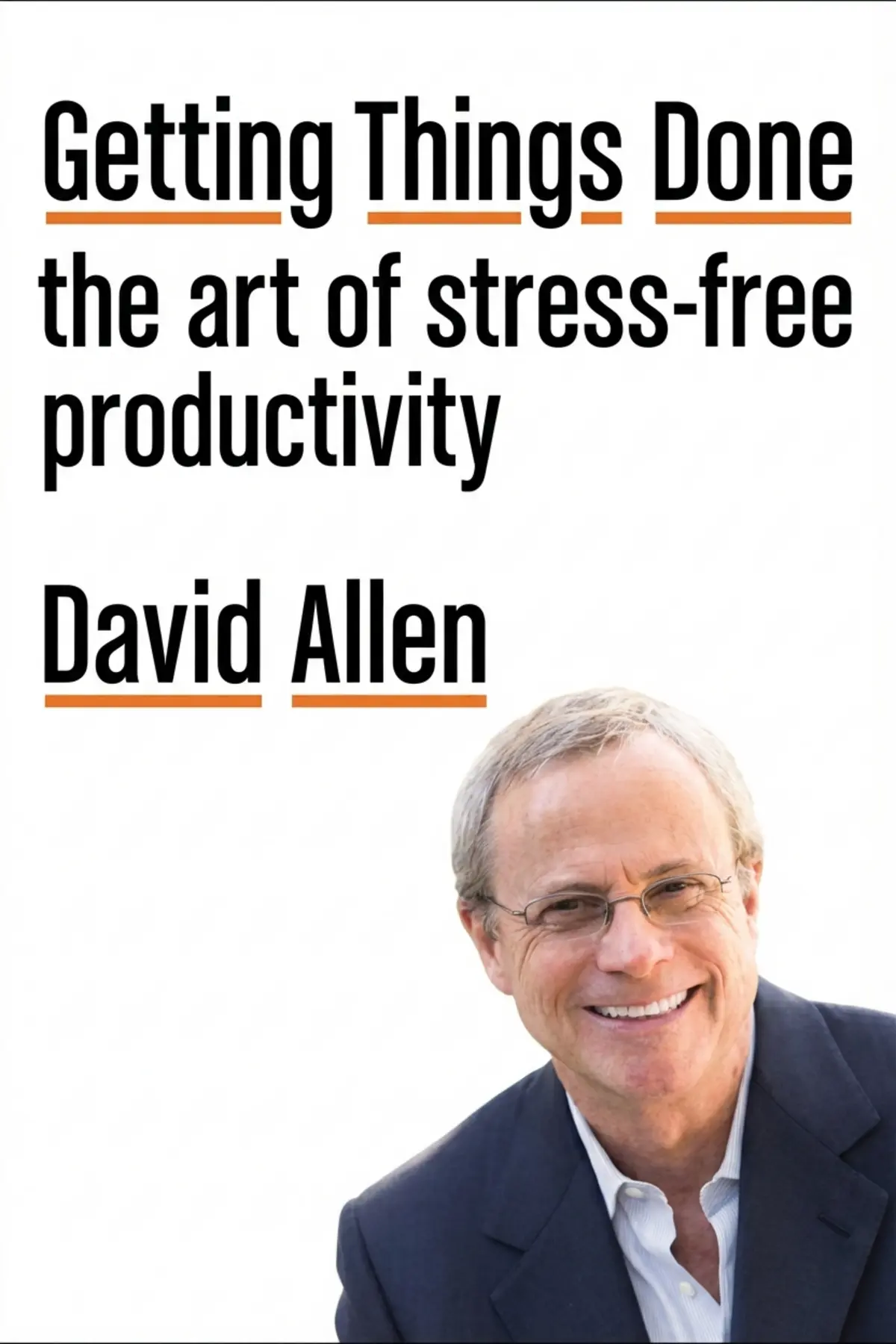
Team: Getting Things Done with Others
Shows how overloaded teams can trade constant firefighting for steady progress, using clear roles, simple communication agreements, a purpose people believe in, stepping-stone goals and delegation that starts with a conversation.
Table of Content
1. Introduction
1 min 04 sec
If your team spends its days answering pings and rescuing late tasks, the problem is probably not effort. In Team, productivity consultant David Allen, creator of the Getting Things Done method, and executive coach Edward Lamont argue that overwhelmed teams need structure, because longer hours only feed the chaos. When one group of senior managers simply added a timekeeper, a facilitator and a way to decide, their results improved sharply with the same people and the same skills.
That is the book’s case in miniature. Clear roles, simple agreements about how people communicate, a purpose worth working for and goals small enough to reach turn a reactive team into one that makes steady progress, and they protect its people while doing it. The stories range from a medieval cathedral site to a sales force trusted with three wildcards a year and a wall map ten feet high. Each one ends in something a team lead can try on Monday morning.
2. Working longer hours slows a busy team down
1 min 48 sec
Germany alone loses billions to burnout each year, and the typical response inside teams makes the cycle worse. A single flagged email shows how good intentions turn into someone else’s ruined weekend.
3. Give every meeting a timekeeper and a decision rule
1 min 52 sec
A room of senior managers stumbled over a simple problem, then fixed it without new skills or extra effort. What changed was small enough to copy in your very next meeting.
4. Simple working agreements that end inbox chaos
1 min 43 sec
One team raised employee satisfaction by 30 points compared with similar teams. Its rules were almost boringly simple, and they target the guessing that wears people down every working day.
5. Turn a shared purpose into daily ownership
2 min 00 sec
Three stonemasons do the same job with very different spirit. A major financial institution that stopped sending deals up six levels of approval shows what happens when purpose comes with real authority to decide.
6. A big vision your team can reach in steps
1 min 52 sec
A unit worth 80 million dollars set its sights on a billion, and one casual remark in New York showed the goal had taken hold. Getting there took more than ambition.
7. Clear space so your team can deliver
2 min 01 sec
A team buried in projects finished its top priority a month early after making a single bold choice. A forgotten presentation request shows the other half of a leader’s job.
8. Conclusion
1 min 09 sec
Allen and Lamont’s message comes close to a relief. The overloaded team does not need heroes or extra weekends; it needs fewer things left unclear. Each story in the book makes the same move: the senior managers who gained a timekeeper, the salespeople handed their own wildcards, Nick’s team standing in front of a map marked with 100 prospects. In every case, clarity about who does what, how people talk, why the work matters and what comes next gave people the freedom to perform, and gave them their evenings back too.
That makes the starting point modest. Agree with your team how quickly each channel gets a reply and what truly counts as urgent. Give the next meeting a timekeeper and a facilitator, and end it with named actions and owners. Before you hand anyone a task, talk through what success looks like and when you will check in. And when the list of projects grows too long, cut it, the way one team dropped four fifths of its commitments and still finished early.
The third stonemason did the same work as the other two. He simply knew what he was building.
About this book
What is this book about?
Many teams spend their days answering notifications, sitting in back-to-back meetings and rescuing tasks that slipped. The usual response is to work longer, which deepens the problem and pushes people toward burnout. David Allen, creator of the Getting Things Done method, and executive coach Edward Lamont argue that what struggling teams lack is structure. Their book builds that structure layer by layer. It starts with defined roles, such as a timekeeper and a facilitator in every meeting, and with simple agreements about how fast each channel gets a reply. It moves on to a purpose people care about, standards that let them own decisions, and a vision broken into goals small enough to reach. Finally it turns to the leader's job: cutting commitments, clearing clutter and delegating through conversation. The stories include a financial institution that gave salespeople three wildcards a year, a unit that grew from 80 million dollars past a billion with the help of a giant wall map, and a team that dropped 80 percent of its projects and finished its top priority a month early. Readers get practices a team can adopt the same week.
Book Information
Who it's for
Swamped team leads
Team leads whose weeks disappear into flagged emails, crowded meetings and last-minute handoffs.
Managers of distributed teams
Managers of remote, hybrid or global teams who want shared rules for how people communicate.
Founders and executives
Founders and executives trying to get decisions made closer to the work.
About the Author
David Allen
David Allen is an American author and productivity consultant who developed the Getting Things Done methodology and wrote the books Getting Things Done and Making It All Work. He founded the David Allen Company, which offers seminars, coaching and educational materials, including training executives in his method. Edward Lamont is an author, keynote speaker, executive coach and consultant, and a co-founder and Senior Partner of Next Action Associates, which works in the UK and Ireland. For more than 25 years he has coached executives and advised on leadership, productivity and motivation.
Ratings & Reviews
Ratings at a glance

What people think
Listeners find the book exceptionally functional, with one review highlighting the insights shared by veteran consultants and another noting its emphasis on broad principles rather than stories. They value how the work broadens teamwork concepts, and one listener specifically mentions its inclusion of remote collaboration.
Top reviews
Pacharapol
Finally got around to reading Allen’s latest, and it feels like the natural evolution for anyone who has lived by the GTD methodology for years. While the original was about clearing your own head, this version tackles the messy reality of trying to stay productive when your calendar is at the mercy of twenty other people. The authors don't just rely on fluffy anecdotes; they focus on universal principles that apply whether you are in a skyscraper or a home office. Personally, I appreciated how they addressed the friction of remote collaboration without making it the entire personality of the book. It’s a grounded, tactical guide for turning a group of reactive individuals into a cohesive unit that actually understands its shared purpose. Some might find the horizons concept repetitive if they've studied Allen's previous work, but seeing it applied to group dynamics gave me several aha moments.
Show morePridi
Remote collaboration is the new frontier, and Allen and Lamont actually provide a roadmap that works for the modern age. I’ve read a lot of management books lately, and most of them feel like they were written in 1995, but Team understands the nuances of the digital workspace. They break down the five steps of a team through these inter-related horizons—purpose, vision, goals, areas of focus, and projects. It’s a systematic approach that forces you to define what done looks like for a group, which is much harder than doing it for yourself. Gotta say, the emphasis on building trust through making and keeping promises was a highlight for me. It’s a simple concept, but seeing it laid out as both an input and an output of a healthy team was eye-opening. This is essential reading for anyone managing a distributed power structure.
Show moreKwame
David Allen has successfully translated his durable individual system into a framework for collective action that feels both timeless and timely. As someone who has obsessed over personal efficiency for years, I was skeptical about how GTD would scale, but Lamont and Allen make a persuasive case. They highlight how the constant demand for reactivity in the modern workplace has crippled our ability to do strategic work. The book is filled with consultant-level wisdom that focuses on building trust and clarity rather than just providing a checklist of tasks. It's a must-read if you have more than one person in your business and you want to stop being the bottleneck. While it might feel repetitive to those who have read every management book on the market, the synthesis of these ideas into the GTD framework is uniquely valuable and supremely practical.
Show moreMint
As a consultant who has lived in the trenches of corporate dysfunction, I found this remarkably grounded and packed with wisdom. The truth is, most teams fail not because they lack talent, but because they lack a shared system for processing work. Allen and Lamont do a great job of explaining how a boss’s unwillingness to delegate can become the primary bottleneck for an entire organization. They dive into the founder’s card phenomenon, which I’ve seen kill morale in countless startups. The book is supremely practical, moving past simple productivity hacks to look at the structural culture that either unleashes or stifles motivation. It’s not a quick fix, and it requires a level of honesty from leadership that many might find uncomfortable. If you are tired of tactical fires and want to do the strategic work of building a healthy environment, this is your field guide.
Show moreChamlong
The chapter on distributed power and the founder's card alone is worth the price of admission for any frustrated middle manager. It is tempting to blame a bad culture on one bad person at the top, but the authors argue it’s usually just a reaction to extreme pressure and a lack of structure. I found the distinction between average, good, and best teams to be incredibly helpful for auditing my own department’s progress. An average team does the high-level thinking but fails at implementation, while the best teams link every day-to-day decision to their ultimate vision. While the book can be a bit wordy in places, the practical tips for creating controlled explosions of diversity and challenge are gold. It’s about creating a culture where people can speak freely without fear, which is easier said than done. I’ll be keeping this on my desk as a reference.
Show morePichaya
Ever wonder why your team meetings feel like a constant battle against interrupt-itis where nothing actually gets decided? This book tackles that head-on by applying the durable principles of Getting Things Done to the collective group dynamic. I’ve been a GTD practitioner for a decade, and I was worried this would just be a rehash of the old stuff, but it’s a necessary expansion. It’s less about your personal filing system and more about how you negotiate the we space. The focus on open communication as the ability to speak freely without fear of punishment is something every leader needs to hear. Not gonna lie, some parts feel a bit like common knowledge, but as the authors say, common knowledge is rarely common practice. It’s a solid field guide for those starting the journey of improving their team’s overall output and sanity.
Show moreMind
This book isn't going to revolutionize your life overnight, but it offers a systematic approach that most managers desperately need to stay afloat. I particularly liked the focus on how interrupt-itis has reduced our collective ability to discern what is actually important versus what is just loud. The authors provide a very clear hierarchy of horizons, from purpose down to projects, that helps align a team’s daily actions with their long-term vision. It’s very practical and avoids the overly emotional fluff found in many leadership books today. I did find the sections on collaboration tools a bit brief, but the universal principles they lay out should outlast any specific software trend. If you’ve ever felt like your team is just a collection of individuals spinning their wheels, this book will help you build the structure needed to move forward together.
Show moreBank
Is it just me, or does this feel like a word salad of every toxic company observation ever written? I walked into this with high hopes because the original GTD changed my life back in the mid-2000s, but this felt surprisingly thin. If you’ve spent any time in a corporate environment, you already know about the interrupt-itis and the lack of strategic thinking at the top. To be fair, Section 3 has some decent advice, but getting there felt like a chore through chapters of common sense rebranded as new insights. It offers a couple of thoughtful bits of advice regarding team clarity, yet it lacks the groundbreaking impact of Allen's earlier work. If you're brand new to the workforce, you might find this revolutionary. For the rest of us, it’s mostly a reminder of things we’re already struggling with without providing a truly fresh solution.
Show moreKom
To be fair, there are some kernels of helpful information here, but it lacks the nuance and depth I expected from David Allen. The book provides a decent framework for thinking about how to enable a team to meet its goals, but it often feels like it's skimming the surface of much larger issues. For instance, the discussion on psychological safety and Lean principles felt a bit like a greatest hits compilation of things you can find in any basic management blog. I would have appreciated much more evidence or case studies to back up their claims. It’s a helpful resource if you need a quick overview of how to organize work with others, but it's somewhat shallow compared to the deep-dive nature of the original GTD. It serves its purpose as a broad overview, but don't expect it to solve complex organizational psychology issues.
Show moreAudrey
Look, I love the original GTD for my personal life, but this attempt to scale it up feels fundamentally flawed at its core. The authors use an analogy comparing the obesity epidemic to workplace productivity, suggesting that system change is required rather than just individual willpower. This is a great point! However, they immediately pivot back to telling individuals they need to discipline themselves better to make better choices all day long. It feels like they are missing their own point about how passive prevention and systemic shifts are what actually move the needle for groups. Frankly, GTD is a great coping mechanism for a person, but it isn’t a magic wand that can fix a truly horrible or toxic work environment. I gave up halfway through because the logic felt circular and disconnected from the reality of how large systems actually change.
Show moreQuestions about this book
What is Team by David Allen and Edward Lamont about?
The book argues that overloaded teams cannot escape constant firefighting by working longer. They need structure: defined roles, simple agreements on how people communicate, a purpose worth working for, clear standards for decisions, and a vision broken into reachable goals. Leaders then create space by cutting commitments and delegating with care. The authors illustrate this with cases such as a financial institution that let salespeople approve their own deals.
How do you set communication standards for a team?
The authors describe a culture development team that agreed emails would get a reply within a day, urgent issues would go by phone and anything faster would go by text, plus rules for naming threads and choosing channels. Its satisfaction scores rose 30 points above similar teams. Another team acknowledged every email within 48 hours, started meetings on time and ended discussions with clear actions and owners.
What is co-designed delegation?
It is delegation in which the leader and the team member agree together on expectations, timelines and resources before the work changes hands. One executive in the book refused to hand over any task without that conversation, and each handoff came with success criteria, available resources and agreed checkpoints. The authors contrast it with flagging a request, forgetting it and passing it on at the last minute.
Who should read Team?
It suits team leads and managers whose days are swallowed by email, meetings and urgent handoffs, and executives who want decisions made closer to the work. Because it focuses on shared standards for communication, it also helps teams that work remotely, in hybrid setups or across countries. Anyone who has lost a weekend to a task that sat in someone else’s inbox will recognize the problem it addresses.
Readers also enjoyed

A Bigger Prize: How We Can Do Better Than the Competition
Margaret Heffernan





A Year with Peter Drucker: 52 Weeks of Coaching for Leadership Effectiveness
Joseph A. Maciariello


AUDIO SUMMARY AVAILABLE
Listen to Team in 15 minutes
Get the key ideas from Team by David Allen, plus 5,000+ more nonfiction titles.
- 5,000+ titles
- Listen as much as you want
- 7-day free trial
- Cancel anytime









