

A Bigger Prize: How We Can Do Better Than the Competition
Margaret Heffernan
 English
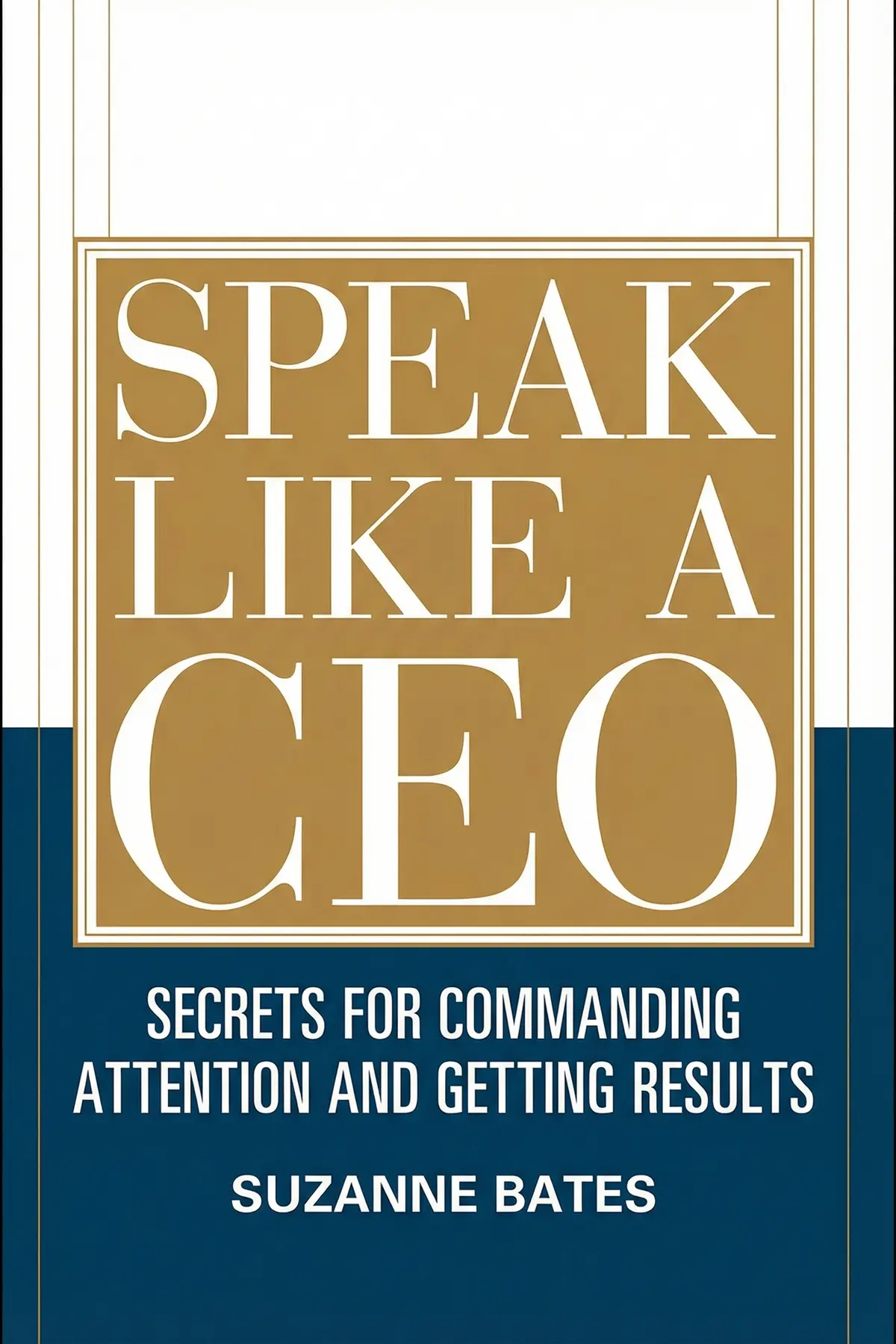
Shows how to communicate like a top leader in your own voice, building speeches, presentations, meetings and press interviews around one clear idea and around what your audience actually needs to hear.
1 min 04 sec
If your ideas are good but people drift off when you present them, the gap may lie less in what you know than in how you say it. In Speak Like a CEO, former television anchor and executive coach Suzanne Bates argues that communication is the largest part of a top leader’s work, and that nobody is born good at it. Her firm ran a study showing that people judge a leader to be authentic and strong when they sense five qualities: integrity, vision, emotional intelligence, clarity, and the habit of following through.
The argument running through the book is simple. Anyone can learn to talk like a leader by staying true to their own voice and building every message around one clear idea and what the audience needs. Bates applies that rule to everyday talk, speeches, presentations, meetings and interviews with the press. Each setting comes with tools to try at your next meeting, from a sentence that brings a silent colleague into the discussion to a phrase that steers a hostile question back to your point.
1 min 50 sec
Communication fills almost every hour of a top executive’s day, yet many of them once dreaded it. A UPS chief’s schedule and a study of how leaders are perceived reveal what audiences are really judging.
1 min 46 sec
One of history’s most famous speeches lasted about three minutes. The habits behind it, and behind the leaders people choose to follow, are simpler than most speakers expect, and harder to fake.
1 min 52 sec
A statistic about millions of parcels means little until something happens to it. Bates shows what turns a set of remarks into a speech people remember, including a joke Abraham Lincoln told at his own expense.
1 min 48 sec
A carmaker changed nothing about its product except a few words and saw sales more than double. That case, and one ruthless step in preparation, change how you should build any presentation.
1 min 43 sec
The loudest people in a meeting are rarely the only ones with something to say. Bates offers simple lines that change who speaks, and a surprising view of disagreement that most managers try hard to avoid.
1 min 39 sec
Two words that many executives reach for under pressure make them sound guilty even when they have nothing to hide. Bates explains what to say instead, and how to steer an interview back on course.
1 min 06 sec
Bates’s book adds up to a single discipline that travels from a three-minute speech to a tense press conference. Decide the one thing you want people to keep, say it in your own voice, and shape it around the people listening. The Gettysburg Address, the renamed Mercedes cars and the silent colleague drawn into a meeting all point the same way: people give their attention to a message that is clear and made for them.
That makes leadership communication something you can practice this week. Before your next talk or presentation, name the one idea you want repeated and check your plan against what the audience actually needs, even if that means throwing out your agenda. Put a story or a person next to every number. In your next meeting, bring in someone who has stayed silent. And when a question pulls you somewhere uncomfortable, answer it briefly and bridge back to your point, instead of retreating into no comment.
Nobody starts as a natural, Bates reminds her readers. Every time you speak is a rehearsal, and the audition has already begun.
Many professionals know their work well but lose people when they speak about it. Suzanne Bates, a former television anchor who now coaches executives, argues that communication is the largest part of a leader's job, and a skill anyone can build. Her starting point is authenticity. The leaders people trust speak in their own voice and show something of themselves. From there, Bates sets out eight habits of strong communicators, from centering every talk on one big idea to being honest, hopeful and focused on the future. She then applies them to the settings where leaders are judged most: speeches that open with a story and bring facts to life, presentations designed around the audience's concerns, meetings where quieter people are drawn in and conflict is put to use, and press interviews steered with flags and bridges. Her examples range from Lincoln's three-minute Gettysburg Address to a Mercedes-Benz renaming that lifted sales past a million. Readers get practical lines and checks to use in their next meeting, talk or interview.
Managers and new team leads who present, run meetings and want people to act on what they say.
Professionals stepping into senior roles who dread speeches or interviews with the press.
Specialists whose expertise gets lost in long slides and technical detail.
Suzanne Bates was a television reporter and anchor for roughly 20 years, at stations in Boston, Philadelphia and Tampa-St. Petersburg, interviewing thousands of politicians, business figures and celebrities. Her honors include an AP News Award, and she was part of a team that won a Columbia DuPont award. In 2000 she started Bates Communications, a coaching firm near Boston that helps executives improve their communication and presence. Speak Like a CEO, her first book, appeared in 2005 and grew into a leadership program, the Speak Like a CEO Boot Camp.
Listeners find the guide accessible and value the actionable tips provided for common sense presentation skills. They also appreciate the communication insights, as one listener mentions how the text aids in learning to write and speak with clarity. Nevertheless, feedback regarding the pacing is varied among listeners.
Suzanne Bates hits the nail on the head regarding what makes a leader worth following. It isn’t about being the smartest person in the room; it’s about how you articulate a vision and build trust through vulnerability. I loved the emphasis on "big ideas"—the notion that every speech should center on one clear, sticky concept. Truth is, we often overcomplicate things, but Bates reminds us that simplicity is where the power lies. The advice on using personal stories without becoming the hero of your own narrative was particularly insightful. If you want to move from just talking to actually communicating, this is a must-read for any aspiring executive.
Show moreWow, this actually changed how I prep for presentations. I used to rely so heavily on my script, but Bates’ advice to "speak in the moment" has made my delivery feel much more authentic. People actually seem more engaged when I allow for those off-the-cuff, timely remarks that reflect the room's energy. I also appreciated the tip about avoiding the "no comment" trap in media situations—it’s all about steering the conversation back to your core mission. It’s a fast read, packed with wisdom from someone who has clearly seen it all in the world of professional speaking. Definitely worth keeping on the shelf for reference.
Show moreEver wonder why certain leaders just command the room without saying much? This book breaks down that "executive presence" into actionable steps, focusing heavily on authenticity and clarity. I found the section on "flagging" key points to be incredibly useful for my weekly team syncs. It’s all about helping your audience know exactly what to take away. While some of it feels like common sense, seeing it laid out systematically makes a huge difference in how I prep now. The pacing slows down a bit toward the middle, but the nuggets of wisdom from her reporting days kept me engaged throughout.
Show moreAs someone who spends half their life in meetings, this was a breath of fresh air for my communication style. I never realized how much my language was alienating my team until I read about using inclusive words like "ours" and "us." Bates makes a compelling case for transparency, even when you’re delivering bad news. The 98 percent solution and the emphasis on follow-through really hit home for me. It’s a practical toolkit for anyone trying to bridge the gap between being a "boss" and being a leader. Frankly, I think every leadership team should go through these exercises together to align their messaging.
Show moreFinally got around to reading this classic, and I’m glad I did. The biggest takeaway for me wasn't a specific tip, but the reminder that communication requires intentionality and a lot of practice. I started recording my own speeches as she suggested, and the self-evaluation was eye-opening (and a little painful!). Bates handles the balance between authority and vulnerability perfectly, showing that a leader's strength often comes from their willingness to be real. My only complaint is that some of the case studies feel a little dated now, but the underlying principles are timeless. Great for building trust and credibility with your stakeholders.
Show moreThe chapter on media interactions alone is worth the price of admission. Suzanne Bates uses her years of experience as a reporter to give you the "inside scoop" on how to handle tough questions without losing your cool. I loved the idea that a CEO should be the embodiment of the company mission in every single interaction. It’s not just about what you say on stage; it’s about how you carry yourself in the hallways and in small meetings. While it does feel a bit like a sales pitch for her firm at times, the practical advice on maintaining clarity and vision is undeniably strong.
Show moreThe core advice here is rock solid, but the book feels a bit padded with self-promotion. Look, Suzanne Bates clearly knows her stuff, and her background as a reporter shines through in the tactical media advice. However, the constant mentions of her coaching services started to grate on me after the third chapter. If you can look past the "sales pitch" vibe, the actual frameworks—like the six steps of self-assessment—are genuinely helpful. It’s a decent guide for basic executive communication tricks, even if it’s not reinventing the wheel. I’d recommend it to new managers who need a confidence boost in their public speaking.
Show morePicked this up on a recommendation, and while it's good, it didn't quite blow me away. The book emphasizes that communication is an asset you have to refine through constant feedback and practice, which is a message I can get behind. However, the "westernized" training style made some of the advice feel a bit too polished for my specific workplace culture. To be fair, her points on balancing realism with optimism are essential for any CEO trying to navigate a crisis. It’s a solid 3-star read that offers some nice "nuggets" of information without being a total game-changer for seasoned speakers.
Show moreTo be fair, the "secrets" shared in these pages aren't exactly secret anymore. We all know that telling a story is better than reading a list of facts, but Bates does a great job of explaining how to do it effectively. The "bridge" technique for media is probably the most valuable thing I learned here. That said, the pacing of the book is a bit uneven; some chapters fly by while others feel like a slog through corporate jargon. Personally, I would have liked more focus on the "big ideas" and less on the technicalities of public speaking, but it's a useful resource nonetheless.
Show moreMaybe my expectations were too high given the title. Not gonna lie, I found most of this to be recycled presentation advice that you could find in any blog post for free. The focus on "standing for something" and "being relatable" is nice, but it lacks the depth I was hoping for in a leadership manual. The writing style is easy to follow, which I appreciate, but it often felt like it was dragging out simple concepts just to fill pages. It’s not a bad book, just very basic and a little too repetitive for my taste. If you've read a lot of business books, you've seen this all before.
Show moreSuzanne Bates argues that communication is the biggest part of a leader’s job and that anyone can learn it. Strong leaders speak in their own authentic voice, share something of themselves and build every message around one clear idea and what the audience needs. She applies this to everyday talk, speeches, presentations, meetings and press interviews, with practical lines and checks for each.
Bates lists eight habits: talk about one big idea, speak in the moment, keep it simple, be a straight shooter who tells the truth, stay optimistic, focus on the future, be real and relatable, and stand for something. Her example of the first is Lincoln’s Gettysburg Address, which defended liberty in about three minutes and remains one of history’s most famous speeches.
A flag is a phrase that signals an important point is coming, such as saying the most valuable lesson here is the following, so the reporter and audience pay attention. A bridge brings the talk back to your message: you answer an awkward question briefly, then move to your talking points with a line like what matters to remember is. Bates also advises never saying no comment.
Start by asking whether the meeting is needed, and invite only people with a stake. Use an agenda with time limits for each item. During the meeting, draw quieter people in by name, for example asking a colleague who shakes her head whether she disagrees. Treat conflict as useful, summarize as you go, and make the final decision yourself if the group cannot agree.
It suits managers, team leads and professionals moving into senior roles who need people to listen and act when they speak. Anyone who dreads presentations, struggles to keep meetings on track or worries about talking to journalists will find concrete tools, from opening speeches with a story to renaming ideas so they stick, as Mercedes-Benz did with its certified pre-owned cars.
Margaret Heffernan





Joseph A. Maciariello




AUDIO SUMMARY AVAILABLE
Get the key ideas from Speak Like a CEO by Suzanne Bates, plus 5,000+ more nonfiction titles.









