A Promised Land
Barack Obama
1 min 00 sec
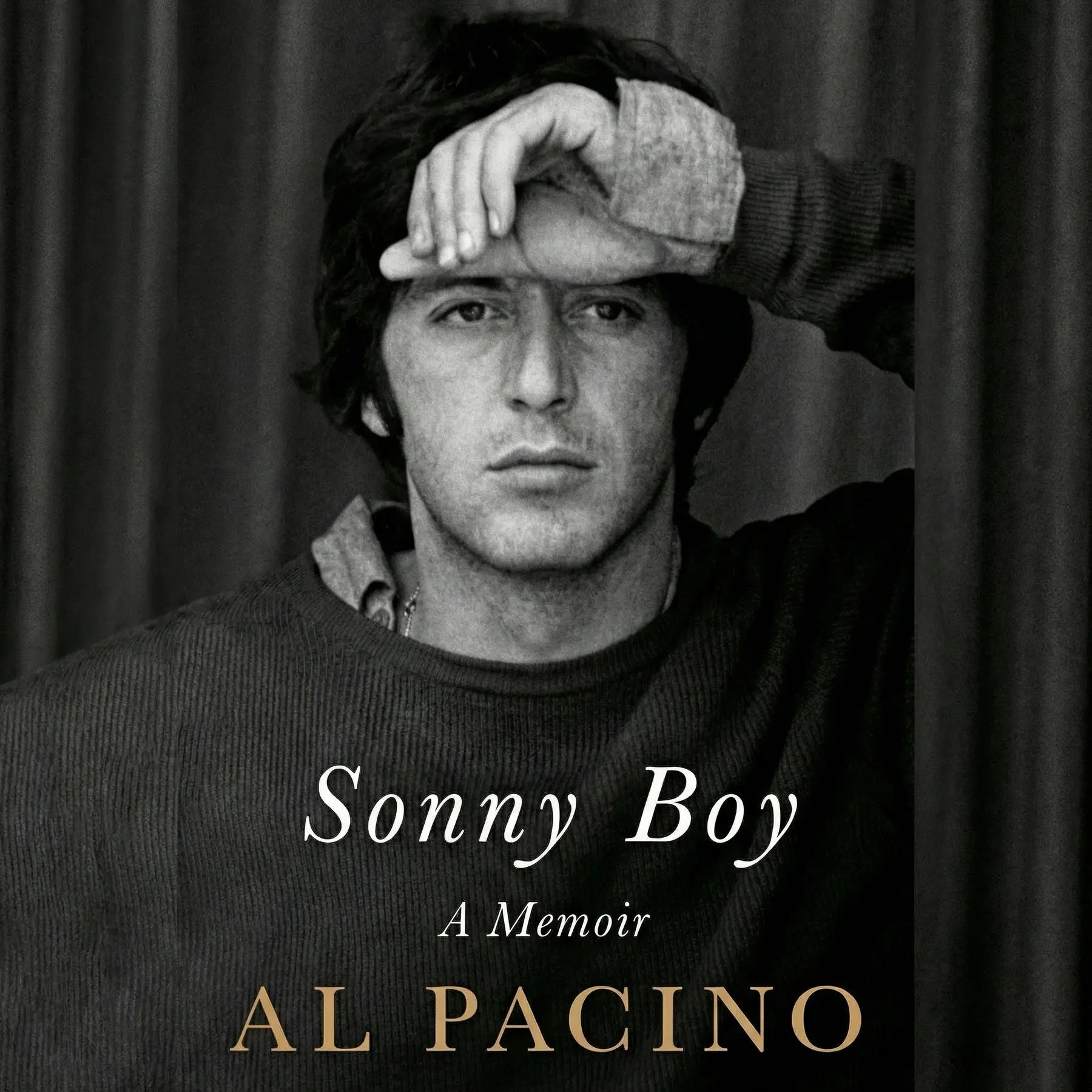
Most people protect themselves at work: they play it safe, avoid looking foolish and wait for permission. Al Pacino’s memoir Sonny Boy tells how he did the opposite, starting as a boy in the South Bronx who acted out entire films alone in his family’s apartment after his mother took him to the movies. That private habit of total commitment grew into a career of more than five decades.
Its guiding image came from his mentor Charlie Laughton, who told him about a family of high-wire walkers who climbed back up after a fall killed several of them, because, as their father said, “life’s on the wire.” From Michael Corleone to a near-ruinous exile from Hollywood, Pacino’s story makes one case: the real work happens when you risk yourself, and guarding that willingness against fear, fame and money takes a lifetime. What follows is that risk, scene by scene, and what it cost him.
1 min 49 sec
A boy with no television and few friends spent his afternoons replaying movies to an empty room. Behind that habit sat a frightened household, and a single night at a small theater that settled his future.
1 min 34 sec
With no money for acting school, an eighteen-year-old found a way in that most people would never consider. The man he met there handed him a story about falling that he would live by for decades.
1 min 32 sec
A security guard nearly sent him back down the stairs of a powerful manager’s office. What got him past that moment had nothing to do with looking the part, and everything to do with where he came from.
1 min 57 sec
The studio wanted Nicholson, Redford or Beatty, and the crew would not look him in the eye. Then a fifteen-hour night under an elevated train ended with him lying in a gutter, hoping to be replaced.
1 min 43 sec
One question about bribes and Beethoven gave him a whole character. A word whispered on set gave him another. Between them sits a way of working that mixes hard preparation with a readiness to be surprised.
1 min 49 sec
A muddy farm in England offered the one thing fame had taken from him. Staying away felt like integrity, until a close friend saw his savings shrinking and called his lawyer.
1 min 45 sec
A canceled magazine cover opened the richest stretch of his career. A blindfolded lesson with a pistol gave him his most famous line, and a crowded Oscar night finally ended a long losing streak.
1 min 08 sec
Sonny Boy reads like the record of one bet, placed again and again. A boy plays every part in a film nobody else will see. A young man mops hallways to get near a teacher. An unknown keeps going while the crew avoids his eyes, then shouts a word he never planned in front of a crowd. Each time Pacino exposed himself, the work came alive. Each time he hid, whether from an Oscar ceremony or from Hollywood itself, his life narrowed until a friend and a stranger had to call him back.
His story suggests a few ways to act on that. Look for a mentor who sees what you are before you can prove it, and pay for access however you can. When a piece of work feels dead, keep digging, the way he paced all night before finding Sonny, and stay alert for the whisper that changes everything. And watch for the moment when protecting your integrity has become a way of avoiding the work.
The Wallendas climbed back onto the wire after the fall. So, every time, did Pacino.
Al Pacino grew up poor in the South Bronx, raised by a struggling single mother, acting out whole films alone in a crowded apartment. In Sonny Boy he tells how that boy became Michael Corleone, Frank Serpico and Sonny Wortzik, and how close he came to losing it all. The thread running through the memoir is a story his mentor Charlie Laughton told him about a family of high-wire walkers who went back up after a deadly fall. Pacino took it as his rule: real performance means risking yourself. He follows that rule through a Tony-winning Broadway debut, a Godfather shoot where he expected to be fired every day, improvised lightning on Dog Day Afternoon, and a retreat from Hollywood that left him with his last ninety thousand dollars. Readers get the behind-the-scenes stories of famous films alongside an honest portrait of anxiety, mentorship and money trouble. They also get a clear picture of what creative courage looks like day to day, and why guarding it can sometimes turn into hiding.
Film and theater lovers who want the stories behind The Godfather, Serpico and Dog Day Afternoon.
Creative workers who struggle with nerves, perfectionism or the urge to hide from their own work.
Young people starting with no money or connections who want to see how one actor found his way in.
Al Pacino, born Alfredo James Pacino in 1940, began in theater and built a stage and film career lasting more than five decades. He trained at HB Studio and the Actors Studio, played Michael Corleone in The Godfather and its two sequels, and starred in Serpico, Dog Day Afternoon and Scarface. He won the Academy Award for Best Actor for Scent of a Woman, along with Tony and Emmy Awards. He directed the documentary Looking for Richard and has been co-president of the Actors Studio since 1995.
Listeners find this memoir to be a sincere and amusing narrative of Al Pacino's life, chronicling his trajectory across the history of cinema. The work is eloquently expressed and clear, with one listener observing that it feels as though a relative had written it. Listeners value the author’s modesty and his deep-seated passion for acting, while also describing the book as both witty and perceptive.
Finally got around to Al’s memoir, and man, it’s like sitting in a dimly lit bar with the legend himself. He doesn’t spend much time trying to convince you he’s a genius; instead, he dives deep into his absolute obsession with the craft, especially his roots in the theater. To be fair, I didn’t realize how much Shakespeare influenced him until reading this. It’s funny, humble, and surprisingly articulate for a guy who claims he isn’t a writer. The way he describes his early struggles and those "lucky breaks" makes you realize how thin the line is between a superstar and a nobody. I loved how he stayed a gentleman throughout, never trashing his old costars or looking for cheap headlines. It feels like a story told by a favorite uncle who just happened to be Michael Corleone.
Show moreWow. There is something profoundly moving about an 84-year-old icon looking back at his life with such clarity and zero ego. Pacino doesn't try to hide his mistakes; he lays them out like cards on a table, from his bouts with the bottle to his absolute disasters in financial management. Not gonna lie, I was surprised by how funny it was, especially when he talks about being "charmed" by his own luck. The way he speaks about his childhood friends—most of whom are gone now—brought a tear to my eye toward the end. It isn’t a standard Hollywood tell-all full of gossip. It’s a poetic, slightly eccentric meditation on what it means to be an artist. This is easily one of the most authentic celebrity memoirs I’ve ever picked up.
Show moreAfter hearing Pacino talk about this on a podcast, I knew I had to grab it. I was charmed beyond belief by how self-deprecating he is about his career. He doesn't take himself seriously at all, even though he takes the work very seriously. The sections about his mother and her mental health were heartbreaking and added a layer of depth I wasn't expecting. Look, he’s an actor, not a writer, and the book reflects that—it’s conversational, a bit loopy, and totally sincere. It feels like a long, beautiful conversation that makes you want to go back and rewatch his entire filmography. Even the parts about his recent fatherhood are handled with a kind of "why not?" spirit that is uniquely Pacino. A total treat for fans.
Show moreListen to the audiobook if you can, because hearing Al Pacino narrate his own life is a transformative experience. His voice is gravelly and full of that classic intensity, making every story about his mother or his early days in the Bronx feel incredibly immediate. Look, the writing is a bit wandering, and he admits he’s not a literary pro, but the honesty makes up for the lack of polish. He’s incredibly self-deprecating about his "overacting" years and his legendary money troubles—turns out Jack & Jill was strictly a financial move! It’s rare to see a star of this magnitude be so open about his failures and his alcoholism without sounding like he's looking for pity. It’s just a raw, funny, and deeply human account of a life lived at full volume.
Show moreAs someone who grew up on 'The Godfather' and 'Scarface,' I expected a lot of tough-guy posturing, but what I got was "Grandpa Al" sharing stories from the porch. The truth is, Pacino is a total theater nerd at heart. He spends so much time discussing the mechanics of acting and his love for the stage that the movies almost feel like a side hustle. To be fair, the book does ramble a bit, and the transitions between decades are non-existent. But his humility is palpable on every page. He views his career as a series of fortunate accidents and hard work rather than divine right. Even when he’s name-dropping legends like Brando, he does it with the awe of a fan. It’s a warm, insightful journey through history.
Show moreNot what I expected from a legend, but exactly what I needed. Pacino is shockingly open about how many times he was flat broke, even after becoming a household name. It’s a very humanizing look at the "movie star" lifestyle that we rarely get to see. I gotta say, his reflections on aging and the health issues that come with being an octogenarian were handled with such grace and humor. While the prose is definitely meandering and lacks a traditional "arc," the sheer personality of the man shines through. You can tell he truly loves the craft of acting, and that passion is infectious. It’s not a perfect book, and it’s certainly a bit of a ramble, but it’s an honest account from a man who has nothing left to prove.
Show morePicked this up on a whim and was surprised by how much of it focuses on the struggle before the fame. Pacino really paints a picture of the 1950s and the grit required to make it in the arts back then. He’s very honest about his alcohol use and how it clouded parts of his peak years. Personally, I found his obsession with Shakespeare a bit much at times, but you can’t deny the guy’s passion. The book reads like a stream-of-consciousness letter to his younger self, full of advice he learned the hard way. It’s a bit repetitive in spots and the name-dropping gets a little old, but the overall vibe is so genuine that you forgive the structural flaws. Definitely a worthy addition to any film lover’s bookshelf.
Show moreEver wonder what goes on in the mind of Michael Corleone? According to this, it’s mostly Shakespeare and worrying about rent. The book is a bit of a mixed bag, honestly. I loved the chapters on his upbringing and the mental health struggles of his mother, which felt very grounded and moving. However, the middle section drags as he meanders through various plays and films without much of a "big picture" perspective. Personally, I found the lack of detail regarding his family life a bit frustrating, as he treats his children like an afterthought until the final pages. He's a charming narrator, but the "Sonny Boy" we meet here is more interested in the abstract magic of acting than the concrete details of his own history. It's a decent read for die-hards.
Show moreThe chapter on his early life in the Bronx is easily the highlight of this entire memoir. Seeing the world through the eyes of a young "Sonny Boy" gives so much context to the intensity we see on screen. However, once he hits the heights of fame, the narrative starts to fray. It becomes a bit of a "hop" from one project to the next without much deep reflection on why certain choices were made. To be fair, he’s a gentleman and avoids the "tell-all" cliches, but I wanted more than just trite anecdotes about old movie sets. He’s a weirdo—and I mean that lovingly—but his neurotypical-defying thought process makes for a very jumpy reading experience. It’s an okay book that could have been a great one with a stronger editor.
Show moreThis book is a mess, and it breaks my heart to say that because I worship the ground Pacino walks on. Frankly, it feels like a 350-page unedited transcription of a guy rambling into a voice recorder while pacing his living room. He jumps from one anecdote to the next with zero connective tissue, leaving the reader confused and wanting more depth. We get name-drops of famous actors we already know he worked with, but very little insight into his personal life or his children until the very end. The childhood stories are okay, but the rest is a stream-of-consciousness blur that lacks any real narrative structure. It’s self-indulgent in the way only an octogenarian star can be. If you want a polished biography, look elsewhere.
Show moreSonny Boy is Al Pacino’s memoir of growing up poor in the South Bronx with a struggling single mother and becoming one of the great actors of his time. It covers his mentor Charlie Laughton, his Tony-winning Broadway debut, the near-firing on The Godfather, Serpico, Dog Day Afternoon, a retreat from Hollywood in the 1980s and his late comeback with an Oscar for Scent of a Woman.
The phrase comes from a story Charlie Laughton told Pacino about the Flying Wallendas, a high-wire family who returned to perform after a fall killed several members. Their father explained that life happens on the wire and everything else is waiting. Pacino adopted it as his creed: the moments of real risk are where performance, and life, become true.
According to Pacino, yes. Paramount wanted a bigger star such as Jack Nicholson, Robert Redford or Warren Beatty, crew members avoided his eyes and firing rumors circulated daily. After twisting his ankle jumping onto a moving car, he even felt relieved, hoping it would let the studio recast. The studio decided to keep him after the scene in the restaurant in which Michael kills Sollozzo and McCluskey.
The book shows that Pacino’s best work came from taking risks: improvising the Attica moment in Dog Day Afternoon, pacing all night to find a character, or cleaning hallways to pay for classes. It also warns that retreat can go too far, as when Diane Keaton stepped in once he was down to his last ninety thousand dollars.
Barack Obama


Masaji Ishikawa

Ben Macintyre

Virginia Woolf



James Shapiro

AUDIO SUMMARY AVAILABLE
Get the key ideas from Sonny Boy by Al Pacino, plus 5,000+ more nonfiction titles.