

14 min 06 sec
Available in: English
Sharing Space: An Astronaut's Guide to Mission, Wonder, and Making Change
By Cady Coleman
A former NASA astronaut shows how trust is built in crews nobody chose, how to keep a full life inside a demanding career, and how to change systems that were designed for someone else.
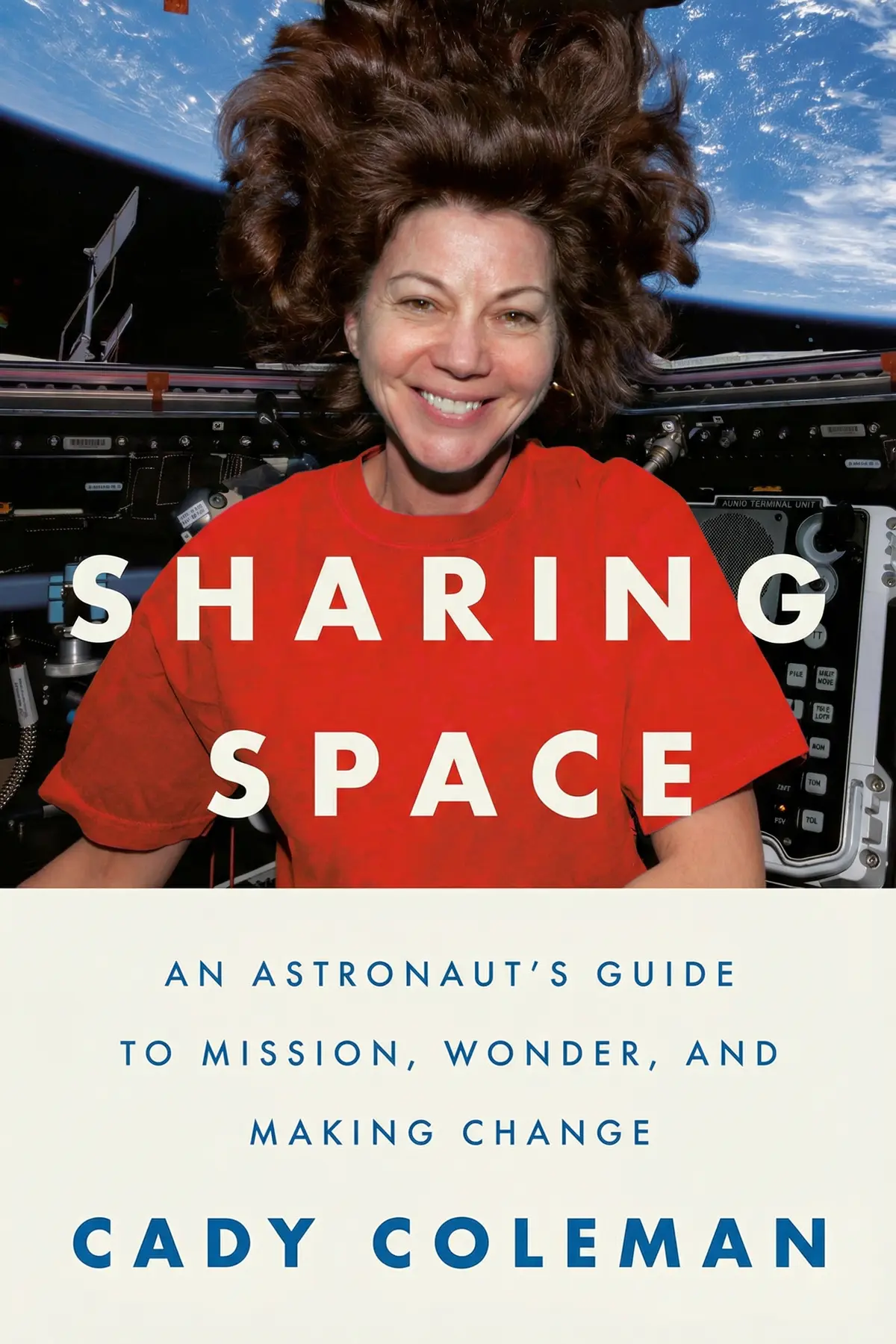
Table of Content
1. Introduction
1 min 05 sec
If you have ever felt you did not fit the mold of your field, or had to lead people who barely knew each other, Cady Coleman’s career offers a working answer. In Sharing Space, the retired Air Force colonel and former NASA astronaut argues that the people who fly to space are ordinary people who got there through hard work, and that what kept her crews safe was trust they built on purpose.
She spent six months on the International Space Station, waking each day in a cabin about the size of a bathroom stall, swallowing her toothpaste and drinking coffee she admits was weak. From that small room she draws a larger claim: missions succeed when every person is prepared, trusted and allowed to be fully themselves, and they let people down when the system was built for only one kind of body or background.
Along the way are lessons on choosing role models, waiting out delays, earning a skeptical colleague’s respect and changing rules from the inside.
2. Find a role model who stretches your ambition
1 min 43 sec
A young chemist had let traditional notions limit her ambitions until Sally Ride showed her that space was within reach. A single lecture on a university campus changed her sense of who was allowed to fly, and it started with seeing one person.
3. Stay ready when the launch keeps slipping
1 min 42 sec
Few things wear a team down like a date that keeps moving. One shuttle crew faced a moment when holding back looked like hesitation, and the choice to pause is the part worth copying.
4. Build trust with crewmates you didn't choose
1 min 47 sec
One crewmate brushed aside her numbers during a training run, and the simulated spacecraft went down. What happened afterward shows how respect gets built between people who never picked each other.
5. Change the rules that were never built for you
1 min 45 sec
The spacesuits she trained in were designed decades earlier for a different kind of body. Her response went beyond making do, and it offers a model for anyone stuck with tools that assume someone else.
6. Keep a demanding career and a full life
1 min 36 sec
She was balancing motherhood with her career, keeping a relationship alive between Houston and Massachusetts and then grieving the Columbia crew she had trained with. Her way through all three began with a skill she used every day at Mission Control.
7. Pair opposite strengths into better decisions
1 min 34 sec
A flute, a stuffed tiger and a duet with Jethro Tull’s Ian Anderson on the ground all found a place in orbit. They point to a lesson about teams that Coleman first learned in a rowing boat.
8. Make sure everyone watching sees themselves
1 min 43 sec
A television network planned a show about life in orbit, and the crew on screen looked the same. Coleman saw who would be watching, and that changed what the audience got to see.
9. Conclusion
1 min 11 sec
Coleman’s story adds up to a correction of the astronaut myth. The people who flew with her were ordinary: a chemist who once watched Sally Ride speak, a quick-moving partner who joked through reentry, a skeptical crewmate who changed his mind after a simulated crash. What carried them was trust earned through shared practice, room for each person’s whole life and a willingness to fix systems that fit only some of them.
The habits she models are within reach. Find someone who already walked the path you want, and let their example widen what you think is allowed. On your team, build trust through realistic rehearsal and a little honesty about yourself, and treat a colleague’s opposite style as cover for your blind spots. When a tool, a rule or a picture leaves people out, adapt it for now, then argue to change it for whoever comes next.
From the Cupola, Coleman watched continents and oceans roll past and felt tied to everyone below. Her best crews worked the same way, as people sharing one small space, each one needed.
About this book
What is this book about?
Astronauts look like a special breed, but Cady Coleman insists they are ordinary people who reached space through hard work. She spent six months aboard the International Space Station and flew two shuttle missions, and she uses that career to show what actually holds a high-stakes team together. Her answer is trust earned on purpose. NASA chooses crews for skill rather than personal chemistry, so Coleman had to win over crewmates from different backgrounds, including one who dismissed her correct calculations until a simulated crash proved her right. She also had to work inside spacesuits built for larger bodies, balance motherhood with her career in a mostly male workplace, grieve the loss of the Columbia crew and keep a long-distance relationship strong. Readers get a vivid picture of daily life in orbit, from swallowed toothpaste to a flute duet with Earth, along with practical lessons on finding role models, waiting out delays, pairing opposite strengths and pushing for more inclusive teams, gear and media.
Book Information
Who it's for
Managing teams they inherited
Team leads who manage people they did not hire and need them to trust each other.
Feeling outside the mold
Professionals who feel they do not fit their field's mold and want to change it from inside.
Balancing career and family
Parents and partners balancing a demanding career with family, or anyone curious about daily life in orbit.
About the Author
Cady Coleman
Cady Coleman is a former NASA astronaut and a retired colonel of the United States Air Force, as well as a scientist, pilot and musician. She flew on two space shuttle missions and lived aboard the International Space Station for six months. She speaks widely on leadership and team building, advocates for inclusion in STEM and STEAM fields, comments on space news as a media adviser and is a research affiliate at the MIT Media Lab.
Ratings & Reviews
Ratings at a glance
What people think
Listeners find the writing to be inspirational, with one person mentioning how it captures the awe of our place in the universe. Moreover, the excellence of the information earns positive reviews; one listener specifically notes how it serves as a roadmap for personal development. The book is also seen as a charming experience, and listeners value its attention to resilience.
Top reviews
Manop
Cady Coleman is officially my new hero. Reading this felt less like a dry NASA history and more like a heart-to-heart with a mentor who just happens to have lived on the ISS. I was particularly struck by her focus on resilience; she doesn't just talk about the glory of space, but the grit needed to get there as a woman in a field built for men. Her stories about the oversized spacesuits and the 'boy apology' concept were eye-opening and deeply relatable, even for someone who stays firmly on the ground. The book acts as a roadmap for personal growth, teaching us how to navigate environments where we don't naturally fit. Frankly, it’s the most authentic astronaut memoir I’ve picked up in years. She’s funny, she’s scattered in the best way, and her passion for discovery is contagious.
Show morePichaya
As a woman working in tech, I felt every single word of this memoir. Coleman captures that specific, exhausting reality of having to overperform just to be seen as equal, especially when the literal equipment—the medium spacesuits—isn't made for your body. I loved how she framed her time on the ISS not just as a scientific achievement but as a deeply human experiment in collaboration. The writing style is breezy and accessible, making complex orbital mechanics feel like common sense. Truly, the book is a testament to how one can be vulnerable and 'easy to work with' without losing their edge. It’s wholesome, empowering, and just plain fun to read. I found myself grinning at her stories of free-floating in a sleeping bag. She proves that representation isn't just a buzzword; it changes the entire menu of options for the next generation.
Show moreSun
Finally got around to reading this and I'm honestly blown away by Cady's energy. She has this whirlwind force personality that jumps off the page and makes you want to go out and tackle your own impossible goals. Her anecdotes about the 'boy apology' were hilarious and so spot-on for anyone who has ever navigated a male-dominated workspace. While she highlights the prejudice and physical hurdles she faced, the tone remains relentlessly positive. It’s a refreshing change from more clinical memoirs. Looking at the cover, you can see that genuine grin, and after reading her story, you know exactly where it comes from. This is a manual for anyone trying to bridge the gap between where they are and where they want to be. It’s about more than just space; it’s about making the world adapt to you.
Show morePornpimon
Look, if you need a dose of pure inspiration, buy this book right now. Coleman is the coolest lady ever. She takes the daunting reality of being one of the few women in a room full of men and turns it into a masterclass in resilience and grace. I loved the technical bits, but I loved her 'boy apology' story even more. It’s rare to find a memoir that is this wholesome and yet so raw about the challenges of being disadvantaged in a STEM field. Her work ethic is simply remarkable. She makes the International Space Station feel like a neighborhood where everyone has to learn how to play nice. Accessible, engaging, and genuinely fun—this is exactly what a modern memoir should be. Highly recommended for any young girl dreaming of the stars.
Show moreEllie
After hearing Cady on a podcast, I knew I had to read her full story. Sharing Space is more than just a list of achievements; it’s an intimate look at the sacrifices and joys of a life dedicated to discovery. Coleman is incredibly likable, and her honesty about her own flaws and the times she 'irritated' her more rigid colleagues makes her so relatable. The imagery of the ISS—the sensory experience of free-floating and the view of the Earth—was written with such poetic clarity. She truly captures the awe of our place in the universe while providing a practical roadmap for anyone facing prejudice in their own career. Not gonna lie, I teared up a bit reading about her navigating parenthood while literally being off-planet. It is a masterpiece of resilience and passion.
Show moreChamnong
Ever wonder what it actually feels like to drift through the International Space Station? Coleman describes the sensory details of space life with such charisma that you can almost feel the weightlessness yourself. This isn't just about the 'what' of her career, but the 'how'—how to build trust, how to lead with empathy, and how to persist when the odds are stacked against you. To be fair, some of the middle chapters felt a bit repetitive in their focus on NASA bureaucracy, but her sheer enthusiasm keeps the momentum going. I was particularly moved by her struggle to balance a long-distance marriage and motherhood with the demands of being an astronaut. It’s a grounded look at a career that is anything but. Not many books manage to capture the awe of the universe while keeping the human element front and center.
Show moreYam
Wow, what a beautiful perspective on our place in the cosmos. Coleman doesn't just share her flight data; she shares her soul. Her reflections on how we 'show up' in the world, whether we’re in orbit or in a grocery store, really hit home for me. I’ve read my fair share of astronaut biographies, and this one stands out for its vulnerability regarding the toll a high-pressure career takes on a family. The way she describes floating in her sleeping bag without tethering it to the wall made me feel a strange sense of peace. My only minor gripe is that I wished there was more detail on the specific experiments she conducted on the ISS. Still, the focus on community and collaboration makes this a standout. It’s a roadmap for staying human in a high-tech environment.
Show moreMint
This book provides a fascinating look at the 'perception management' required to succeed at NASA. Coleman’s strategy of over-preparing to compensate for an oversized spacesuit was both impressive and a bit heartbreaking. It highlights the invisible labor that marginalized groups often have to perform. Personally, I found the chapters on her training to be the most compelling part of the narrative. Her writing is accessible, though the transition between her MIT days and her time in Houston felt a little rushed. Still, the lessons on building trust and vulnerability are universal. She’s not just an astronaut; she’s a storyteller who understands the importance of representation. It’s a solid 4-star read that offers a unique perspective on the human experience from 250 miles up.
Show moreRoydao
Picked this up on a whim and was charmed by Cady's voice immediately. She seems like the kind of person you could talk to for hours over coffee. The way she frames her experiences in space as a lesson in inclusion is brilliant. I particularly liked the anecdotes about her Canadian colleague Chris Hadfield and the sense of international camaraderie. The book captures the awe of the universe without being overly pretentious. To be fair, I felt like the 'life lessons' could have been integrated a bit more naturally, as they sometimes felt like they were tacked onto the end of chapters. However, her stories about the struggles of wearing PPE designed for men are so important. It’s a delightful, easy-to-read memoir that leaves you feeling like you can take on the world.
Show moreSayan
The truth is, I wanted to love this more than I actually did. Don't get me wrong, Cady Coleman is a pioneer and her life story is objectively incredible, but the narrative felt a bit scattered for my taste. One minute we're discussing orbital maneuvers and the next we're diving into personal family dynamics without much of a transition. I appreciated the insight into the struggles of female astronauts, specifically the issues with ill-fitting gear, which were genuinely infuriating to read about. However, the 'life lessons' framing felt a bit forced in certain sections, like it was trying too hard to be a self-help book. It’s still a solid read for space enthusiasts, but the pacing was a bit uneven for me. I’d recommend it if you’re looking for a casual memoir, but maybe look elsewhere if you want a tight, technical breakdown of missions.
Show moreQuestions about this book
What is Sharing Space by Cady Coleman about?
It is a memoir of Coleman’s NASA career, including six months on the International Space Station, told as a set of lessons. She argues that astronauts are ordinary people who reach space through hard work, and that missions depend on trust built through shared training and openness. She also covers balancing family with a demanding job and her push to make spacesuits, training and media more inclusive.
How did Cady Coleman build trust with her crewmates?
NASA picks crews for skill rather than friendship, so trust had to be earned. Coleman relied on realistic training that revealed each person’s strengths and weaknesses, and on sharing personal stories. With Dmitri Kondratyev, who first dismissed her input, the turning point came when he rejected her correct calculations during a simulation and the simulated spacecraft crashed. After that he began to recognize her competence.
What does Sharing Space say about diversity in teams?
Coleman sees diverse perspectives as one of a team’s most valuable assets. Her work with Paolo Nespoli paired his speed at starting tasks with her habit of weighing consequences. Rowing and music taught her that differences strengthen the whole. Beyond her crews, she pushed for spacesuits that fit more body types, women and people of color in a televised show, and disability inclusion through AstroAccess.
How can I apply the lessons from Sharing Space at work?
Look for a role model who has already done what you want, as Sally Ride was for Coleman. Use delays to rehearse and recheck. Build trust through low-stakes practice and some openness about yourself. When equipment or rules do not fit you, adapt them, ask for specific feedback, and then argue for a change that helps the next person.
Who should read Sharing Space?
It suits team leads and managers who need people from different backgrounds to rely on each other, professionals who feel like outsiders in their field, and working parents balancing a career with family. Readers curious about space get vivid details too, from swallowed toothpaste and weak coffee to a fiery Soyuz landing and a flute duet played between orbit and Earth.
Readers also enjoyed


A Bigger Prize: How We Can Do Better Than the Competition
Margaret Heffernan

A River in Darkness: One Man’s Escape from North Korea
Masaji Ishikawa


A Spy Among Friends: Philby and the Great Betrayal
Ben Macintyre




A Year in the Life of William Shakespeare: 1599
James Shapiro
AUDIO SUMMARY AVAILABLE
Listen to Sharing Space in 15 minutes
Get the key ideas from Sharing Space by Cady Coleman, plus 5,000+ more nonfiction titles.
- 5,000+ titles
- Listen as much as you want
- 7-day free trial
- Cancel anytime









