

13 min 25 sec
Available in: English
See You on the Internet: Building Your Small Business with Digital Marketing
By Avery Swartz
A practical guide for small business owners who want an online presence that brings in customers, from owning a domain and building an accessible website to search, social media, email, ads and the numbers that matter.
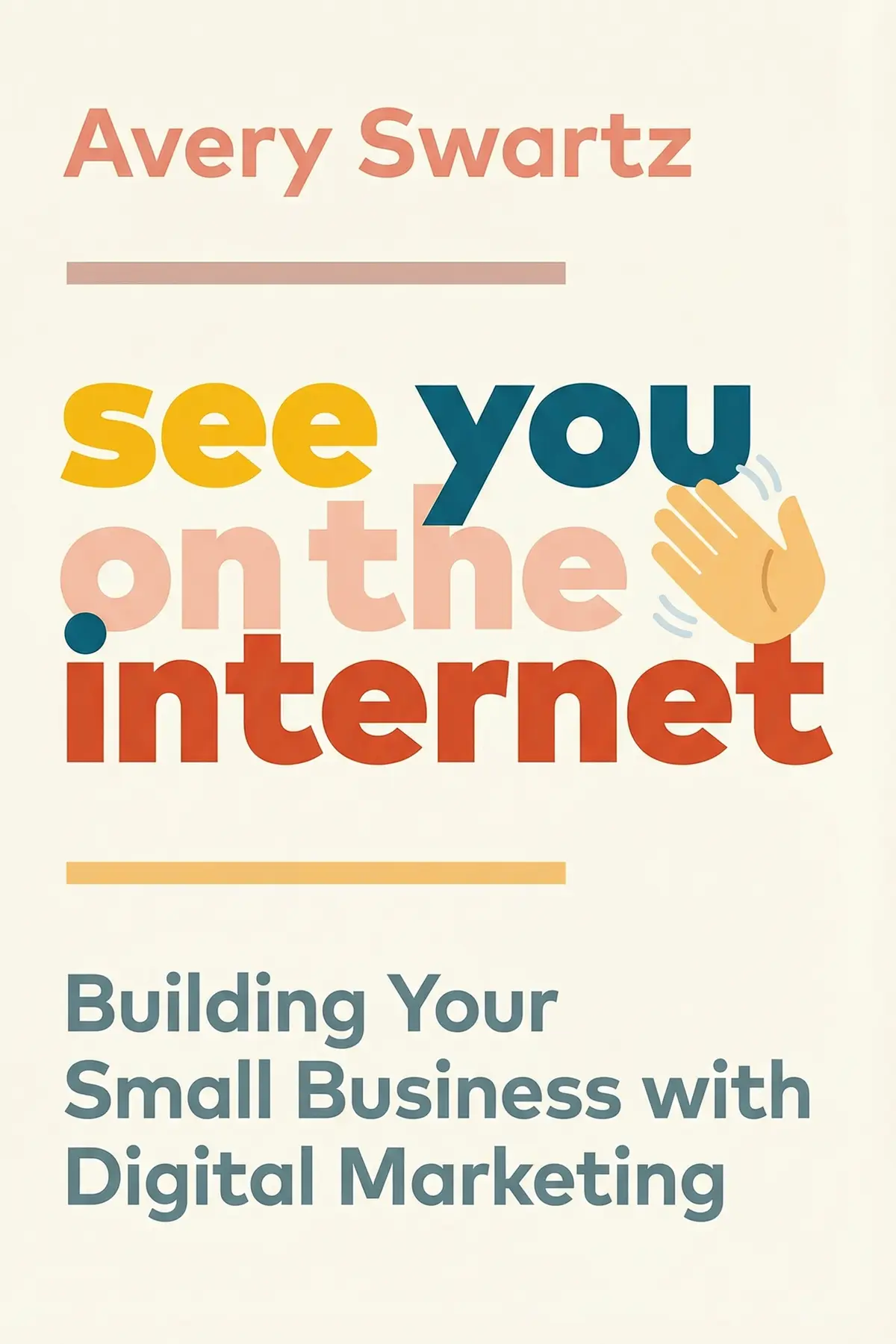
Table of Content
1. Introduction
54 sec
Plenty of small business owners have a website and a Facebook page and still cannot say whether either one brings in customers. In See You on the Internet, Avery Swartz, founder and CEO of the training company Camp Tech, starts somewhere unglamorous: a domain name you legally own, because everything else you build online rests on it. From there she covers the whole small business toolkit, from websites and search rankings to social media, email, ads and the numbers that show what is working.
Her throughline is that every channel should serve a clear business goal, and every piece of content should give your audience something worth acting on. Along the way she explains why social networks behave like school cliques and what buying ads shares with a night at the casino. What you get is a plan you can start this month and a way to tell which parts of it are paying off.
2. Claim a web address that is truly yours
1 min 34 sec
A children’s author learned the hard way that owning a web address takes more care than picking your own name. The very first step online hides a trap that is easy to miss and awkward to fix later.
3. A website any visitor can use and trust
1 min 44 sec
A beautiful site can still turn customers away, on the wrong screen or for the wrong visitor. Swartz names the standard every business site should meet, and the writing habit a family lawyer would be wise to drop.
4. Climb Google's results without paying for ads
1 min 39 sec
Google decides who gets found, and it judges websites a little the way people judge each other at a party. Two kinds of signals push a small business up the list, and one easy step costs nothing at all.
5. Join only the platforms your customers use
1 min 51 sec
Social networks sort their users the way a schoolyard sorts its students. Picking the wrong group wastes months of effort, and even the right one stops working when every post sounds like a sales pitch.
6. Send emails your customers are glad to open
1 min 36 sec
Almost every business now invites you onto its mailing list. The emails people actually open share a decision their senders made before collecting the first address, along with a habit of testing small details.
7. Spend small on ads before you spend big
1 min 31 sec
City dwellers pass thousands of ads every day, and online advertising can drain a small budget fast. Swartz borrows a lesson from the casino floor to show how a business finds the platform that pays.
8. Focus on the few numbers that matter
1 min 26 sec
Every dashboard offers dozens of figures, and following all of them can hide whether the business is really growing. Some of the most telling results of online marketing never show up on a screen at all.
9. Conclusion
1 min 10 sec
What Swartz offers in the end is permission to do less. A small business does not need every platform, every ad format or every metric. It needs a goal, a short list of channels that serve it, content that gives people something before asking for anything, and a weekly look at the figures that show whether it works. The children’s author who missed the .com and the lawyer imagined hiding behind jargon point to the same slip from different ends: building first and thinking later about who would arrive and what they needed.
Some of the cheapest growth the book describes comes from other people. Look for business owners and bloggers whose audiences resemble yours but who do not compete with you. Introduce yourself, offer to write for their site or appear in their video or podcast in exchange for a link, then open your own channels to them. It is the same move that lifted Camp Tech in search results, and it costs time rather than money.
Start by writing down the one result you want from being online this year. Every account, post and ad after that either moves you toward it or can go.
About this book
What is this book about?
Small business owners can now reach a large audience online for little or no money. Yet many set up a website or a social account and stop there, unsure what any of it achieves. Avery Swartz, who trains small businesses in digital marketing, argues that the tools only pay off when each one serves a clear business goal. She works through the full set in a practical order. A business first claims a domain name it legally owns and arranges hosting for its site and email. It builds a website that works on phones and for people with disabilities, written in a human voice. It earns a higher Google ranking through keywords, links from other sites and a free Google My Business profile. It chooses one or two social platforms whose audience matches its customers, sends emails with a clear purpose, and tests ads with small budgets before committing. Readers finish with plain explanations of terms that often confuse beginners, steps they can take straight away, and a habit of checking the few numbers that show what is actually working.
Book Information
Who it's for
Small business owners online
Small business owners who have a website or social account but cannot tell whether it brings in customers.
Freelancers and founders
Founders and freelancers setting up their first domain, site and mailing list.
Non-profit staff running marketing
Non-profit staff asked to run digital marketing on a very small budget.
About the Author
Avery Swartz
Avery Swartz is the founder and CEO of Camp Tech, a company that teaches digital marketing to small businesses, non-profits and anyone curious about technology, with training that reaches organizations across Canada. Search Engine Journal placed her fifth on its list of the Top 50 Women in Marketing. She is the tech expert on CTV Your Morning, has written about technology for The Globe and Mail, Chatelaine and Today's Parent, and has taught as a professor at Ryerson University and Humber College.
Ratings & Reviews
Ratings at a glance
What people think
Listeners find this book to be a straightforward and functional guide for small business owners seeking to establish a professional digital marketing plan. Additionally, they value the plain language and organized method used to explain key subjects like SEO, social media, and web security. They also point out the author's skill in simplifying intricate ideas, with one listener observing the advice is "evergreen" and remains relevant as a company scales. While some listeners feel the material is better suited for conventional business structures than creative industries, most agree it provides a reliable basis for mastering the current digital world.
Top reviews
Sven
Finally got around to finishing this guide, and it is easily one of the most pragmatic marketing books on my shelf. Swartz writes with the clarity of a seasoned tech host, stripping away all the jargon that usually makes my head spin. Frankly, the advice here is evergreen; whether you are building your first site or trying to scale an existing brand, the framework provided is incredibly robust. I particularly loved the tóm tắt sections at the end of each chapter because they allow for quick reviews when you're in a rush. If you want to grow without breaking the bank, start here. This is exactly what the modern online landscape requires for success.
Show moreAurora
Wow. Avery Swartz has somehow managed to organize the 'lost library' of digital marketing into a single, cohesive handbook that anyone can understand. I’ve heard so many people talk about marketing like it’s some ancient mystery, but this book proves that with a solid plan, anyone can navigate the Internet successfully. Not gonna lie, I expected another fluffy business book, but this is packed with actual substance. The focus on evergreen strategies ensures that the advice won't be obsolete by next year. It’s like having a professional consultant in your pocket. Truly a generous resource for the modern entrepreneur.
Show moreWan
Ever wonder why some businesses just seem to 'get' the internet while the rest of us are left guessing? This book explains exactly why, offering a framework that demystifies every corner of the digital world from email lists to advertising. After hearing Swartz speak on a tech segment, I knew her approach would be no-nonsense, and she delivered exactly that. Every business needs this kind of clarity. It isn't just about being seen; it’s about being seen by the right people at the right time. This is a five-star resource for anyone serious about building a professional online presence that actually converts. Swartz’s ability to explain the 'why' behind the 'how' is what sets this apart from all the other marketing garbage available online today. It’s practical, deep, and surprisingly easy to follow for such a broad topic.
Show moreTawee
As a small business owner who feels constantly drowned by the ever-changing digital landscape, this book was a literal breath of fresh air. Avery Swartz manages to take complex topics like SEO and website security and break them down into a manageable, professional roadmap. In my experience, I was terrified of starting my email list, but the step-by-step instructions made it feel achievable. Some of the technical sections regarding back-end security felt a bit dry, yet the overall structure kept me moving forward. I finally understand how to align my digital goals with my actual business needs. It’s a solid foundational resource that I’ll be keeping on my desk for a long time. Definitely worth the read if you're feeling lost in the tech woods.
Show moreAiden
Truth is, finding a marketing book that doesn't feel like a sales pitch for a specific software platform is surprisingly difficult. Swartz avoids that trap by focusing on foundational principles that help you choose the right metrics for your specific business goals. Most owners jump straight into social media without a plan, but this book forces you to step back and build a website-centric strategy first. The language is accessible, and the tone is encouraging without being overly sugary. I wish there was a bit more on the TikTok era, but the core advice on engagement and community is timeless and scales well as a company grows.
Show moreSirinat
Picked this up on a library whim and ended up buying a permanent copy for my office because the advice is just that practical. Swartz has a gift for explaining things in a way that feels like a conversation over coffee rather than a lecture from a tech giant. Look, you don't need a massive budget to make an impact; you just need a better strategy. The chapters are broken down into bite-sized pieces with excellent summaries that make the content easy to digest. I did notice some minor editing quirks in the layout, but the value of the information far outweighs any minor presentation issues. Highly recommended for the digital-curious.
Show moreSamira
After hearing so many horror stories about small businesses getting scammed by 'marketing gurus,' it’s refreshing to find a guide that is this honest and grounded. The book walks you through the entire expedition of digital marketing, from making a goal to measuring the final data. I particularly appreciated the sections on website security, a topic most marketing books completely ignore but is vital for survival. It’s a very pragmatic, all-encompassing guide. While some of the social media advice feels like it’s catching up to the current trends, the fundamental strategy remains rock-solid for anyone starting from scratch.
Show moreNum
Look, if you are a small business owner who is overwhelmed by options, this book solves that problem perfectly by providing a clear, step-by-step framework that prioritizes business needs over flashy trends. Gotta say, the way Swartz explains SEO makes it feel much less like a dark art and more like a standard business process. The advice scales well as you grow, making it a great long-term reference. It’s a bit dry in the middle sections, but the practical value is undeniable. If you are ready to get professional about your online presence and stop throwing money at random ads, grab this book and follow the plan.
Show moreAmelia
The chapter on SEO was quite enlightening, but I found myself struggling to stay awake during the more technical bits about web architecture. To be fair, the book is incredibly well-organized and provides a very clear digital marketing plan for newcomers. However, the formatting in the physical copy I received felt a bit off in terms of spacing, which made it harder to read than it should have been. It covers everything from social media to analytics in a way that feels 'official' and structured. It's a good introductory text, but it didn't quite have that 'hook' to keep me glued to the pages from start to finish. Useful, but a bit of a slog in parts.
Show moreLayla
Not what I expected for my specific needs as an independent artist working in a very niche creative field. Personally, the advice felt heavily geared toward 'official' traditional businesses with bigger teams or standard service models. While the technical explanations are clear, I didn't find the examples particularly relevant to the way the art market operates today. It’s a very professional roadmap, sure, but it lacks the nuance required for creative freelancers who don't fit the corporate mold. If you’re a standard small biz owner, you’ll love it, but for us creative types, it feels a little bit distant and impersonal.
Show moreQuestions about this book
What is See You on the Internet by Avery Swartz about?
It is a practical guide to digital marketing for small businesses. Swartz walks through owning a domain name, building a website that works on phones and for people with disabilities, improving Google rankings, choosing social platforms, running email campaigns, testing online ads and tracking results. Her central argument is that every channel should serve a clear business goal and give the audience something of value.
How can a small business improve its Google ranking, according to Swartz?
Swartz splits SEO into two parts. On-page work means placing the keywords customers search for in page text, titles and image descriptions, found with a tool like the Google Ads Keyword Planner. Off-page work means earning links from other sites, ideally popular ones, as she did for Camp Tech through guest blog posts and relationships with bloggers and organizations. A free Google My Business profile helps local customers find you.
What does See You on the Internet recommend for social media?
Swartz compares social platforms to school cliques and advises joining only the one or two your customers use, deleting accounts that do not serve your goals. She suggests that about 80 percent of posts be social, such as staff features, live video chats or content from followers, with the rest promoting the business. Written guidelines, a content calendar and scheduling tools like Hootsuite keep posting consistent.
How should a small business start with online advertising?
Swartz advises treating ads like a careful casino visit: put small amounts on several platforms, such as Google Ads, Facebook ads or a banner on another website, then move more money to whichever works. Each ad needs to serve a goal of the business, give the audience a thing they find worthwhile, and prompt them to take action. Costs rise with audience size and clicks, so testing before scaling protects the budget.
Who should read See You on the Internet?
It suits small business owners, freelancers and non-profit staff who are new to digital marketing or who have a website and social accounts without knowing whether they work. Swartz explains confusing terms in plain language and gives concrete steps, from registering related domain names to running A/B tests in Mailchimp and checking Google Analytics once a week.
Readers also enjoyed



7 Powers: The Foundations of Business Strategy
Hamilton Helmer





Alibaba: The House That Jack Ma Built
Duncan Clark

AUDIO SUMMARY AVAILABLE
Listen to See You on the Internet in 15 minutes
Get the key ideas from See You on the Internet by Avery Swartz, plus 5,000+ more nonfiction titles.
- 5,000+ titles
- Listen as much as you want
- 7-day free trial
- Cancel anytime









