

12 min 14 sec
Available in: English
Reset: Powerful Habits to Own Your Thoughts, Understand Your Feelings, and Change Your Life
By Debra Fileta
Explains why resolutions fade when you only target behavior. Using counseling psychology and scripture, it shows how tracing actions back to the feelings and thoughts behind them makes lasting change possible.
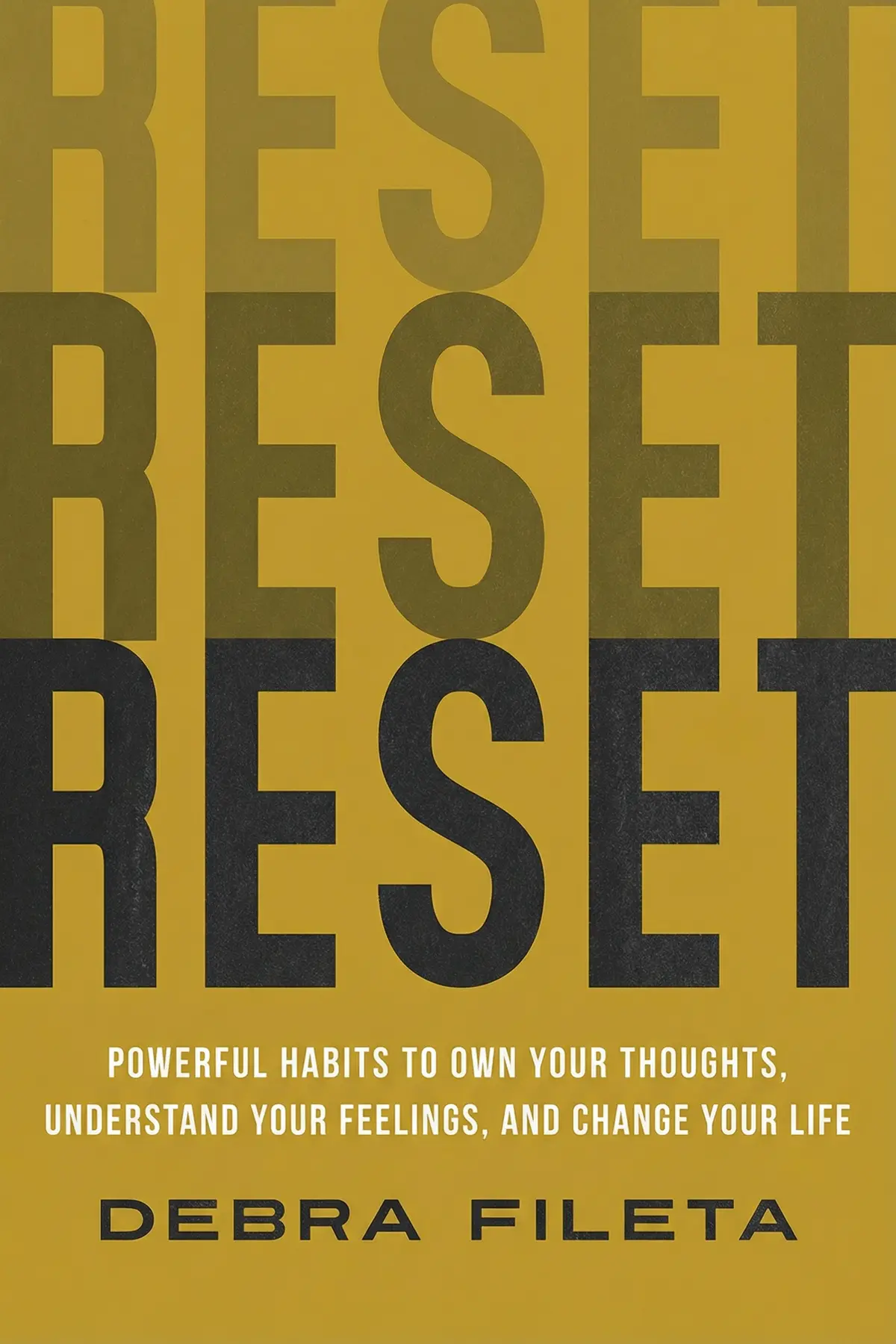
Table of Content
1. Introduction
1 min 02 sec
If you keep making the same resolutions and keep landing back where you started, Debra Fileta thinks you may be working on the wrong end of the problem. In Reset, the licensed counselor argues that behavior is only an outcome: it is pulled along by feelings, and feelings are pulled along by thoughts. Change the thinking, and the habit that kept beating you becomes far easier to shift.
Fileta builds her case from two sources she treats as allies, counseling psychology and Christian scripture. Her throughline is simple. Lasting change starts on the inside, with an honest look at yourself, followed by a clear view of the thoughts and hidden beliefs that drive what you do.
Along the way she offers small daily exercises, none longer than ten minutes, and a working vocabulary for the distorted thoughts most people never notice. The next time you snap at someone or reach for the snacks, you will have a way to trace that moment back to the thought that started it.
2. See yourself the way others see you
1 min 44 sec
Ask a room full of people how they compare with their peers, and the math stops working. The flaw it reveals sits behind most failed attempts to change, and it is hard to spot from where you stand.
3. Ten minutes a day to name what must change
1 min 50 sec
Admitting weakness sounds like the opposite of gaining strength. Recovery groups and an ancient letter both suggest otherwise, and a short daily exercise built like a film screening puts the idea to work.
4. Check your thoughts and willpower finally works
2 min 13 sec
A boss asks a harmless question about a project, and an hour later you are certain you will be fired. Therapists use a three-letter model to explain what happened in between, and where to step in.
5. Catch the childhood scripts running on autopilot
2 min 12 sec
Nobody chooses to shout at the people they love, yet it keeps happening. The reason lies in paths laid down long ago, and a plain notebook is enough to start bringing them into view.
6. Spot the lies your lenses tell you
1 min 58 sec
After a while, you stop noticing the smudges on a dirty pair of glasses. Fileta argues most of us look at our lives through exactly that kind of lens, and she names the most common cracks.
7. Conclusion
1 min 15 sec
Reset reverses the usual order of self-improvement. Most plans start with the behavior and try to force it into line. Fileta starts at the other end of the chain: the way you see yourself, the thoughts an ordinary moment sets off and the childhood rules that keep those thoughts running. Behavior is the last link, which is why pushing on it alone so rarely lasts. In her account, psychology and faith point the same way, toward honest confession, captured thoughts and lenses wiped clean.
The method asks for very little time. Spend ten minutes watching your day as a film and name one thing the main character should change. Keep a page titled default thinking and fill it as negative thoughts appear. When a reaction feels too big for the moment that caused it, trace it back through the feeling and the belief to the event, then call the distortion by its name.
None of this asks for more willpower. It asks for noticing. The cracks in the glasses were always there, and the work is remembering to look at them, until the world on the other side starts to look like what it is.
About this book
What is this book about?
Most people know what they want to change: argue less, eat better, stop wasting time. The trouble is that the effort fades and the old habits return. Licensed counselor Debra Fileta argues that the problem is where we aim. We work on behavior, which is only the final link in a chain that starts with how we think. Fileta draws on counseling psychology and Christian scripture, which she treats as allies. She begins with the blind spot that makes people rate themselves above average, then turns to confession, the practice twelve-step groups and the Bible share. From there she explains the ABC model therapists use to connect events, beliefs and consequences. She traces automatic negative thinking back to unconscious rules learned in childhood and names the most common cognitive distortions. Each idea comes with a short daily exercise: watching your day as a film, keeping a page of default thoughts and naming distortions as they appear. Readers get a clear way to find the thought behind the reaction they keep regretting.
Book Information
Who it's for
Resolutions keep fading
People whose resolutions keep fading and who suspect something deeper is driving their habits.
Curious what drives reactions
Anyone caught in anxious spirals, emotional eating or snapping at loved ones who wants to find the thought behind it.
Christians open to psychology
Christians who want counseling psychology and scripture brought together in practical daily exercises.
About the Author
Debra Fileta
Debra Fileta is a licensed counselor who works on marriage and relationship struggles as well as mental and emotional wellbeing. She has written five books, among them Reset and the bestselling Are You Really OK? She created the relationship advice blog TrueLoveDates.com, has written more than 500 articles on love, marriage, dating and sex, hosts a podcast on love and relationships and speaks at national events. Her approach brings psychology and faith together.
Ratings & Reviews
Ratings at a glance
What people think
Listeners find this work life-changing, offering actionable guidance that simplifies complicated ideas for better understanding and implementation. The prose is lovely, and the brief chapters ensure an accessible experience. They value the biblical focus, as one listener points out how it combines CBT with scripture, while another emphasizes how it incorporates both psychological and spiritual perspectives.
Top reviews
Ern
This book is exactly what I needed to bridge the gap between my faith and my mental health. Fileta manages to weave together scriptural truths with cognitive behavioral therapy in a way that feels natural rather than forced or clinical. For anyone struggling with negative thought patterns, the 31-day structure provides a clear roadmap that doesn't feel overwhelming. Truth is, the bite-sized chapters made it possible to stay consistent even on my busiest mornings. I've read other books on habits, but this one focuses on the "why" behind our behaviors from a biblical perspective. It’s transformative and deeply practical for the modern believer.
Show moreFon
Finally got around to reading Reset, and it’s a breath of fresh air for the Christian community. The author doesn't just give you "pray more" as an answer; she dives into the actual psychology of how our brains function. Each chapter is short and ends with practical exercises that force you to actually apply the concepts. Some of the homework was uncomfortable, but growth usually is. In my experience, most devotionals lack this kind of psychological depth. It’s definitely a resource I’ll keep on my shelf to revisit whenever I feel like I'm sliding back into old, toxic rhythms. Highly recommend for a mental health tune-up.
Show moreJun
Ever wonder why you keep falling into the same emotional traps despite your best intentions? Reset tackles this head-on by combining proven Christian counseling strategies with actionable daily steps. I loved the emphasis on how our thoughts, feelings, and behaviors are all interconnected. Frankly, the exercises were the best part because they moved the book from a passive read to an active healing process. The chapters are quite short, which is perfect if you have a short attention span like me. This isn't just a book you read; it's a program you participate in for your own well-being and spiritual growth.
Show moreTanyaporn
Wow. I didn’t realize how much I was struggling with unhealthy thinking patterns until I started the daily exercises in this book. Debra writes with such clarity and beauty that even the complex psychological bits are easy to digest. It feels like a structured journey toward healing rather than just another self-help book. I’ve already recommended it to three friends who are going through difficult seasons. Not gonna lie, some of the prompts required a level of honesty with myself that was painful. But that’s where the "reset" actually happens. God uses tools like this to open our eyes to his path for us.
Show moreRose
After hearing about Debra Fileta's work on her podcast, I had high expectations for Reset. It did not disappoint. The way she blends psychological studies with biblical truth is masterful and much-needed in the church today. It’s a great book on Christian ideals that doesn't ignore the reality of human struggle. I appreciated the specific tips on breaking habits and the focus on mental health as a spiritual discipline. Gotta say, it’s one of the few books that actually provides a "proven" framework rather than just vague advice. Truly a transformative tool for anyone ready for a change. It's 31 days well spent.
Show moreEthan
As someone who has spent years in and out of therapy, I found this to be an excellent supplemental resource. Debra Fileta has a unique voice that respects both the medical community and the Word of God. The book is heavily focused on the importance of professional counseling, which I personally appreciate, though it might feel a bit repetitive if you're already seeing someone. The integration of "homework" helps bridge the gap between reading and doing. While it covers some familiar territory, the way she structures the journey over a month makes it manageable for a "reset" phase. It is a solid 4-star read for anyone wanting to align their brain with their beliefs.
Show moreMeen
The chapter on mindfulness alone was worth the price of the book for me. Most Christian authors shy away from that terminology, but Fileta reclaims it by grounding it in Scripture. To be fair, if you are looking for a deep theological treatise, this isn't it. It is a practical, easy-to-grasp manual for daily living. The tone is encouraging and empathetic, almost like sitting down for coffee with a wise mentor. I found the connection between CBT and biblical principles to be the highlight of the entire experience. It's a great starting point for anyone feeling stuck in unhelpful ruts.
Show moreNatchaya
Look, this book is great for building a foundation, but you have to actually do the work. The author is very clear that books aren't a substitute for one-on-one therapy, and I respect her for that honesty. The layout is fantastic—31 mini-chapters that don't take more than ten minutes to read. The writing style is beautiful and flows well, making it a very quick read if you don't stop for the homework. But the real value is in the reflection. It’s a very practical walk-through of how God expects us to care for our minds and souls in tandem. A great tool for those looking to find their footing again.
Show moreAroon
Picked this up during a particularly dry spiritual season and found it to be exactly the "reset" I was looking for. The author uses a solid approach to creating change by focusing on the heart and the mind simultaneously. While I lean more toward purely Bible-based counseling, I found her integration of research-backed methods to be helpful rather than distracting. The chapters are bite-sized, which kept me from feeling overwhelmed by the depth of the topics. It’s a basic, helpful guide that I think every Christian should have in their library for those seasons when life feels out of sync. Definitely worth the purchase if you need a fresh start.
Show moreJib
Not what I expected given all the hype, though I can see why people like it. For a seasoned reader in the mental health space, a lot of these concepts—like basic mindfulness or identifying triggers—might feel a bit elementary. It serves as a good "simple summation" of popular psychological ideas, but I was hoping for something a bit more advanced. Also, the push for her specific counseling network felt a little too much like marketing at times. However, if you’re new to the intersection of faith and psychology, this is a solid, safe place to start your journey. It's average, but helpful for beginners.
Show moreQuestions about this book
What is the main idea of Reset by Debra Fileta?
Fileta argues that most attempts to change fail because they target behavior, which is only an outcome. Thoughts shape feelings, and feelings shape actions. To change what you do, you first need an honest view of yourself, then you need to recognize the automatic thoughts, childhood rules and cognitive distortions behind your reactions. She draws on both counseling psychology and Christian scripture to make the case.
What are the ABCs of therapy described in Reset?
A is an activating event, usually neutral, such as a boss asking about a project. B is the belief, a cluster of negative thoughts the event triggers, like assuming you are about to be fired. C is the consequence: feelings such as anger or embarrassment, which then lead to behaviors like shutting down, shouting or overeating. Changing behavior means working on the B.
Which cognitive distortions does Reset cover?
Fileta describes six: black-and-white thinking, overgeneralization, catastrophizing, discounting the positive, mind reading and emotional reasoning. She compares them to cracked, foggy glasses that we stop noticing over time. Her exercise is to pick the ones you relate to most, write down real examples, separate the small truth in each from the larger lie and name them as they appear during the day.
How can I apply the exercises in Reset?
Start with ten minutes a day: about eight spent watching an ordinary day of your life as a film and asking what the main character should change, then two spent writing down one change and saying it aloud. Keep a page titled default thinking for recording negative thoughts. Then learn the common distortions and name them whenever they show up.
Is Reset a Christian book or a psychology book?
It is both. Fileta is a licensed counselor who brings psychology and faith together. She pairs concepts like the better-than-average effect, the ABC model and cognitive distortions with passages from the Gospels, James and Second Corinthians, and she presents confession as a bridge between scripture and therapy, pointing to twelve-step groups such as Alcoholics Anonymous and Celebrate Recovery.
Readers also enjoyed

Alcoholics Anonymous
Alcoholics Anonymous World Services




A Guide to the Good Life: The Ancient Art of Stoic Joy
William B. Irvine


A High-Performing Mind: Strengthen Your Mind and Live Your Best Life
Andrew D. Thompson


Abundance: The Inner Path to Wealth
Deepak Chopra
AUDIO SUMMARY AVAILABLE
Listen to Reset in 15 minutes
Get the key ideas from Reset by Debra Fileta, plus 5,000+ more nonfiction titles.
- 5,000+ titles
- Listen as much as you want
- 7-day free trial
- Cancel anytime









