

16 min 05 sec
Available in: English
 ไทย
EnglishไทยRemember: The Science of Memory and the Art of Forgetting
By Lisa Genova
Neuroscientist Lisa Genova explains how memories form, why they drift and fade, and how attention, vivid images, outside reminders and a brain-healthy life help you keep what matters and stop fearing everyday lapses.
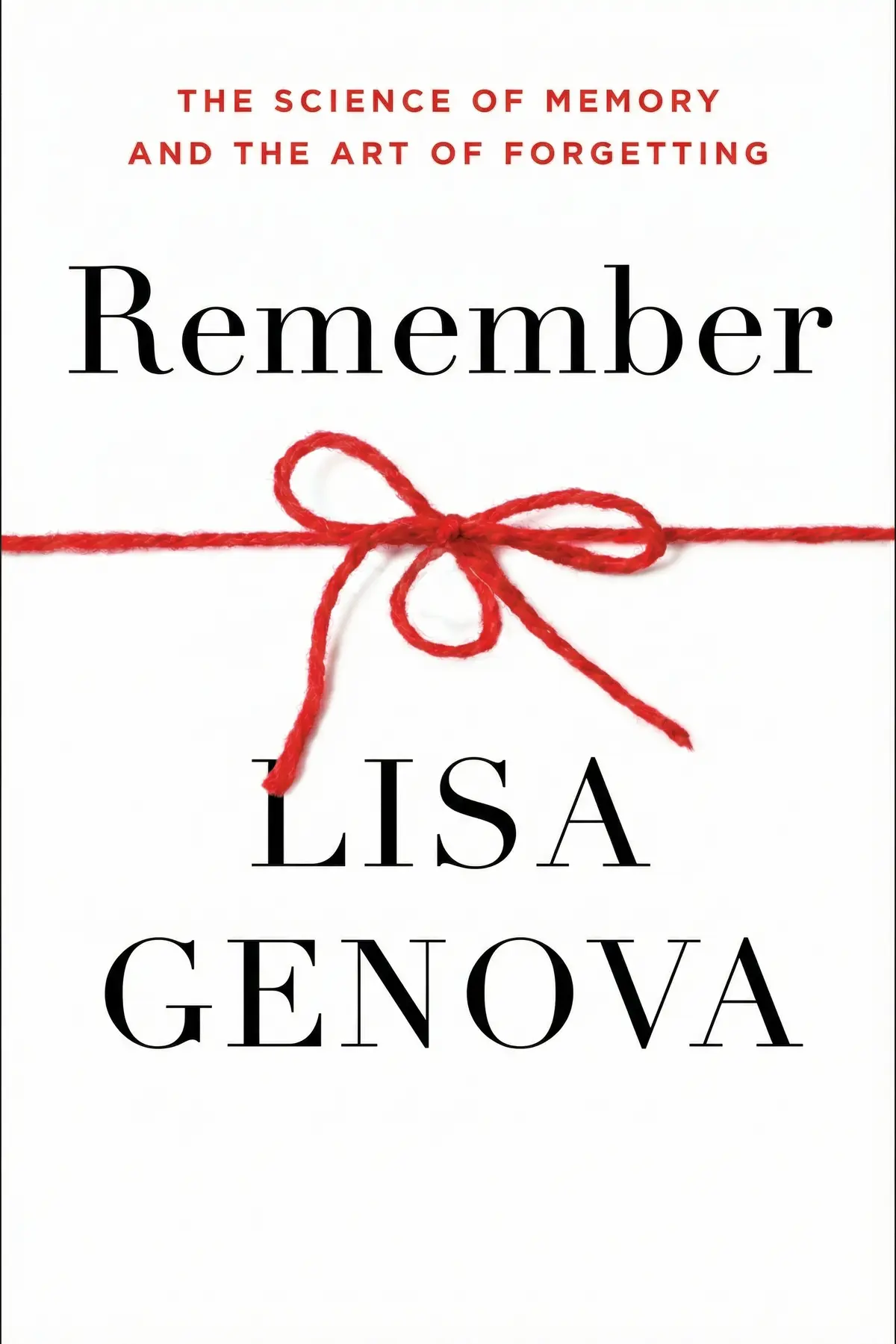
Table of Content
1. Introduction
1 min 08 sec
If a forgotten name or a missing set of keys gives you a small chill of fear, Lisa Genova has reassuring news: most forgetting is your brain doing its job. In Remember, the Harvard-trained neuroscientist and author of Still Alice explains that anything you notice fades within roughly 15 to 30 seconds unless it reaches the hippocampus, a structure deep in the brain that turns passing activity into lasting memory.
Genova’s case is that memory is a physical system with predictable strengths and predictable gaps. Attention, meaning and repetition decide what stays. Forgetting is normal and often useful. And once you see how the machinery works, you can stop fearing its lapses and start designing around them. Along the way come a man who could not forget, a cellist who lost a $2.5 million instrument in a taxi, and 678 nuns whose brains held a surprise. The reward is a calmer view of your own lapses and a few habits that make the right things stick.
2. Pay attention first, or nothing gets stored
1 min 49 sec
You have handled a certain small object thousands of times, yet you probably could not describe it. That gap explains why so many memory complaints begin somewhere other than memory itself.
3. Hold your most vivid memories more loosely
1 min 51 sec
Students wrote down where they were on a famous, terrible day, then told the story again years later. When shown their first account, some refused to believe it. Which version was right?
4. Repeat a movement until your body remembers
1 min 48 sec
After surgery, one man could no longer form new memories of people or events. Yet a strange drawing task revealed he was still learning, and the reason points to a separate system in your brain.
5. Let forgetting clear room for what matters
2 min 04 sec
For more than thirty years, one man remembered every list he was ever given. He came to see it as a curse, and the trick he finally used to forget offers a lesson for anyone haunted by the past.
6. Put tomorrow's tasks outside your head
1 min 42 sec
One of the world’s great memorizers of music once lost a priceless instrument in a few careless seconds. His slip exposes a kind of memory so weak that professionals with lives at stake refuse to rely on it.
7. Turn dull names and numbers into stories
2 min 10 sec
A retired engineer recited more than a hundred thousand digits from memory, yet forgot his wife’s birthday. The same quirk of the brain explains both, and a memory champion shows how to use it.
8. Protect your memory as the years pass
2 min 20 sec
Many brains examined after death showed clear signs of Alzheimer’s, yet their owners had shown none while alive. What these women did with their lives offers hope for anyone worried about decline.
9. Conclusion
1 min 13 sec
Remember changes how you relate to your own mind. The memory Genova describes is astonishing, able to hold 100,000 words or 111,700 digits, and also careless, rewriting the Challenger morning and leaving a cello in a taxi. Both sides come from one design. A brain that kept everything would feel like Shereshevsky’s crowded attic, while a brain that edits and lets go stays usable.
So the misplaced keys are rarely a warning. More often they mean you were thinking of something else when you put them down. The useful response is to stop asking your head to do jobs it was never built for. Give real attention to what matters and return to it. Turn names and numbers into pictures with a story attached. Let the list, the alarm and the bottle by the door take charge of the future. And keep feeding your brain new challenges, the way those nuns did through education, social lives, meaningful work and hobbies, while also getting enough sleep and easing chronic stress.
Your memory will keep failing you in small ways. Knowing why lets you stop being afraid of it.
About this book
What is this book about?
A forgotten name or a lost set of keys can bring a flash of fear, especially past middle age. Is this the start of decline? In Remember, neuroscientist and novelist Lisa Genova argues that most of these lapses are simply the brain working as it was built to work. Genova walks through how a memory is physically made, from attention and encoding to storage in the hippocampus. She shows why vivid memories get rewritten each time we recall them and why muscle memory follows its own separate path. She also explains why forgetting protects us, using the case of a man who could not forget anything. She looks at why intentions for later slip so easily, why names are harder to keep than jobs, and how normal aging differs from Alzheimer's disease. The book then turns practical. Readers get the memory champions' habit of turning numbers into pictures, the surgeon's checklist, the wine bottle placed by the door, and lifestyle evidence from a long study of 678 nuns. They finish with a calmer view of their own forgetting and clear ways to remember better and guard the brain over time.
Book Information
Who it's for
Memory worries after 40
Adults over 40 who feel a jolt of worry each time a name or a set of keys goes missing.
Wanting facts to stick
Students and professionals who want facts, names and tasks to stick without straining.
Caring for aging parents
Anyone caring for an aging parent who wants to tell normal forgetting from Alzheimer's.
About the Author
Lisa Genova
Lisa Genova holds a Ph.D. in neuroscience from Harvard University and a degree in biopsychology from Bates College. She self-published her first novel, Still Alice, in 2007, and its 2014 film version won Julianne Moore the Academy Award for Best Actress. Her novels, including Left Neglected and Love Anthony, have reached the New York Times bestseller list. Remember, her first nonfiction book, became an instant bestseller in 2021, and her TED talk on preventing Alzheimer's has more than eight million views.
Ratings & Reviews
Ratings at a glance

What people think
Listeners find this work beneficial for its accessible details regarding memory and brain activity, making complicated topics easy to grasp. Furthermore, the prose is charming and lively, and listeners value the thorough scientific evidence and research included. The material is also simple to digest and listeners find the learning experience captivating, with one listener mentioning how well it clarifies the gap between everyday memory lapses and Alzheimer's.
Top reviews
Sakura
This book is a breath of fresh air for anyone who has ever panicked after forgetting a name or where they parked their car. Lisa Genova manages to bridge the gap between hard neuroscience and relatable storytelling perfectly, making complex brain functions feel understandable. I’ve always enjoyed her fiction, but her ability to explain the hippocampus and memory consolidation in a non-fiction format is just as impressive. The distinction she makes between normal forgetting and the red flags of Alzheimer’s provided me with so much relief. It’s fascinating to learn that our brains aren’t actually video cameras. Instead, we are constantly editing our own histories every time we tell a story. This is a must-read for anyone who wants to understand how to protect their brain health without the dry, clinical tone of a textbook.
Show moreSven
As someone who has watched a family member struggle with dementia, I went into this book with a heavy heart and a lot of anxiety. Lisa Genova handles the subject with incredible compassion and expertise, explaining the science of Alzheimer’s in a way that feels hopeful rather than terrifying. She reminds us that while we might lose our data, we don't necessarily lose our ability to feel love and connection. The chapters on the importance of sleep and learning new things as a way to build cognitive reserve were particularly motivating. Sentence for sentence, it's one of the most engaging science books I've ever read. It’s not just about what we lose; it’s about how we can optimize what we have. I’ve already started implementing her suggestions for better sleep hygiene, and I’m recommending this to everyone I know.
Show moreGung
Wow. I didn't think a book about brain science could be this entertaining. Lisa Genova uses humor and personal anecdotes—like the jellyfish incident—to illustrate how our brains prioritize emotional or high-stakes information over the mundane. It’s a brilliant look at the mechanics of why some things stick and others don’t. I loved the section on "muscle memory" and how it differs from the type of memory used for facts and dates. The writing is incredibly clear, and she has a way of making you feel like a genius for understanding complex biological processes. It’s an empowering read that makes you want to take better care of your brain. Plus, her advice on how to actually study and retain information is something every student should read. Truly an excellent piece of non-fiction.
Show moreMo
After finishing this, I immediately felt a weight lift off my shoulders. As a lifelong fan of Genova's work, I knew she could write with empathy, but I was surprised by how effectively she teaches. She manages to make topics like synaptic plasticity and amyloid plaques feel as engaging as a thriller novel. The way she structures the book into three logical parts—how we remember, why we forget, and how to improve—makes the information very easy to digest and refer back to later. Her compassion for the human experience shines through every page, especially when she talks about her grandmother. It’s a beautiful blend of science and soul. If you’ve ever worried about your brain, just read this. You’ll feel better, and you’ll definitely learn something new.
Show morePat
Ever wonder why you can recite every lyric to a 90s pop song but can’t remember why you walked into the kitchen three seconds ago? Genova breaks down exactly why this happens, emphasizing that attention is the key ingredient we often skip. To be fair, the science is very accessible, and I appreciated the practical tips on how sleep and stress impact our ability to retain information. My only real gripe was the occasional name-dropping of her famous friends, which felt a bit unnecessary for a science book. However, the explanation of the "penny test" and why we forget mundane details was eye-opening. It turns out my brain isn't broken; I'm just not paying enough attention to where I put my keys. I finished this feeling much more empowered and significantly less worried about my own occasional lapses.
Show moreDavid
Picked this up because I’ve loved Lisa Genova’s novels for years, and I was curious to see how she handled a straight-up science book. The prose is conversational and light, which makes the neurological concepts go down easy. I particularly enjoyed the section on episodic memory and how our "re-collecting" of events is often a flawed reconstruction rather than a perfect playback. It’s a relatively short read, but it’s packed with insights about how sleep clears out the metabolic waste that can lead to dementia. Frankly, some of the advice felt a little like common sense, but having the scientific backing to explain why we should stop multitasking was helpful. It's a solid 4-star read that offers a lot of comfort to those of us entering our middle-age years.
Show moreGioia
The chapter on the role of attention changed my perspective on my own "absent-mindedness" almost overnight. Look, I’ve spent years thinking I had a terrible memory, but Genova explains that you can’t remember what you never actually perceived in the first place. If you don't pay attention, the memory never moves from your sensory input to your hippocampus. Simple, right? Yet, it’s a total game-changer for how I go about my day. I also liked the bit about how Google isn't actually making us stupid; it's just a different way of storing information. The book is very encouraging and takes the stigma out of the "tip-of-the-tongue" moments we all experience. It’s a quick read with a lot of heart, and Genova’s voice is as warm and inviting as it is in her fiction.
Show moreCooper
Finally got around to reading this after hearing Lisa Genova on a podcast, and I’m glad I did. The truth is, I’ve been terrified that my frequent "senior moments" were the start of something more serious. This book explains that forgetting where you parked is normal, but forgetting what a car is for is a different story. That distinction alone was worth the price of the book. I found the science of how we edit our memories through the act of retrieval to be the most fascinating part. Every time we pull a memory out, we change it based on our current feelings. It’s a wild thought! I’m giving it four stars instead of five because some of the self-help sections felt a bit generic, but the core science is absolutely top-notch.
Show moreGoy
Not what I expected in terms of depth, though it certainly has its moments of brilliance. Personally, I felt it oversimplified certain conditions like ADHD, grouping almost everything that isn't Alzheimer's into the category of "normal forgetting." While I understand she’s writing for a general audience, I wanted a bit more meat on the bones regarding other types of memory impairment. The writing is very much in the style of a TED talk—engaging and punchy, but sometimes a bit repetitive. That being said, her explanation of how we create "prospective memories" for future tasks was quite interesting. It’s a good introductory book for someone who knows nothing about how the brain works. If you’re looking for a deep academic dive, you might find this a little too light, but for a casual reader, it serves its purpose well enough.
Show moreRoongsak
To be fair, I think my expectations were just too high because I loved Still Alice so much. This felt less like a book and more like a collection of blog posts or a transcript of a lecture series. I found the tone to be a bit condescending at times, as if the author assumed the reader couldn't handle any real complexity without a silly joke to break it up. Also, the constant references to her own life and celebrity encounters started to grate on me after a while. I wanted more case studies and hard data and less about her personal opinions on movies like A Star is Born. It’s an okay primer if you want the very basics, but it didn't offer the deep insight into the human condition I was hoping for.
Show moreQuestions about this book
What is the main idea of Remember by Lisa Genova?
Genova argues that memory is a physical process with built-in limits. Information sticks when attention, meaning or repetition carries it to the hippocampus, and even then it gets edited every time we recall it. Most forgetting is normal and often useful. Once you understand how memory works, you can stop fearing everyday lapses, design around its weak spots and take steps to protect your brain as you age.
How can I tell normal forgetfulness from Alzheimer's?
In Genova’s account, normal aging slows the brain and weakens attention, so names get stuck and you misplace your keys more often. Alzheimer’s comes from amyloid plaques that begin in the hippocampus and spread to areas for orientation and problem solving. Its lapses are of a different kind: rather than losing the keys, a person may hold them and not know what they are for.
What memory techniques does Remember recommend?
Genova suggests clearing distractions and paying full attention, then making information visual and personal. Picture a man named Baker covered in flour on a pile of pastries, or code numbers as images, as Joshua Foer did when 105799 became Einstein kicking a bagel. Quiz yourself at intervals, repeat physical skills until they become automatic, and use lists, alerts and objects by the door for future tasks.
Does Remember say you can lower your risk of Alzheimer's?
Genova points to a study of 678 nuns, many of whom had Alzheimer’s-type changes in the brain but no symptoms in life, likely thanks to education, social ties, meaningful work and stimulating hobbies. She recommends learning demanding new skills, sleeping seven to nine hours, reducing chronic stress through meditation and similar practices, and following the MIND diet, which several studies link to halving the risk.
Does using Google or a phone calendar weaken your memory?
Not according to the book. Genova reports there is no evidence that looking up an elusive name or relying on outside aids makes the mind weaker. She actively recommends using search engines, calendar alerts, written lists and physical cues, comparing them to the checklists surgeons and commercial pilots depend on, because the brain’s memory for future intentions is especially unreliable.
Readers also enjoyed


A Life Decoded: My Genome: My Life
J. Craig Venter

59 Seconds: Change Your Life in Under a Minute
Richard Wiseman

A Planet of Viruses
Carl Zimmer


A Short History of Nearly Everything
Bill Bryson


A Thousand Brains: A New Theory of Intelligence
Jeff Hawkins

AUDIO SUMMARY AVAILABLE
Listen to Remember in 15 minutes
Get the key ideas from Remember by Lisa Genova, plus 5,000+ more nonfiction titles.
- 5,000+ titles
- Listen as much as you want
- 7-day free trial
- Cancel anytime









