
14 min 20 sec
Available in: English
Real Artists Don’t Starve: Timeless Strategies for Thriving in the New Creative Age
By Jeff Goins
Shows how creative people can make a living from their work by dropping the starving artist myth, learning from masters, finding collaborators and an audience, and refusing to work for free or sell their rights.
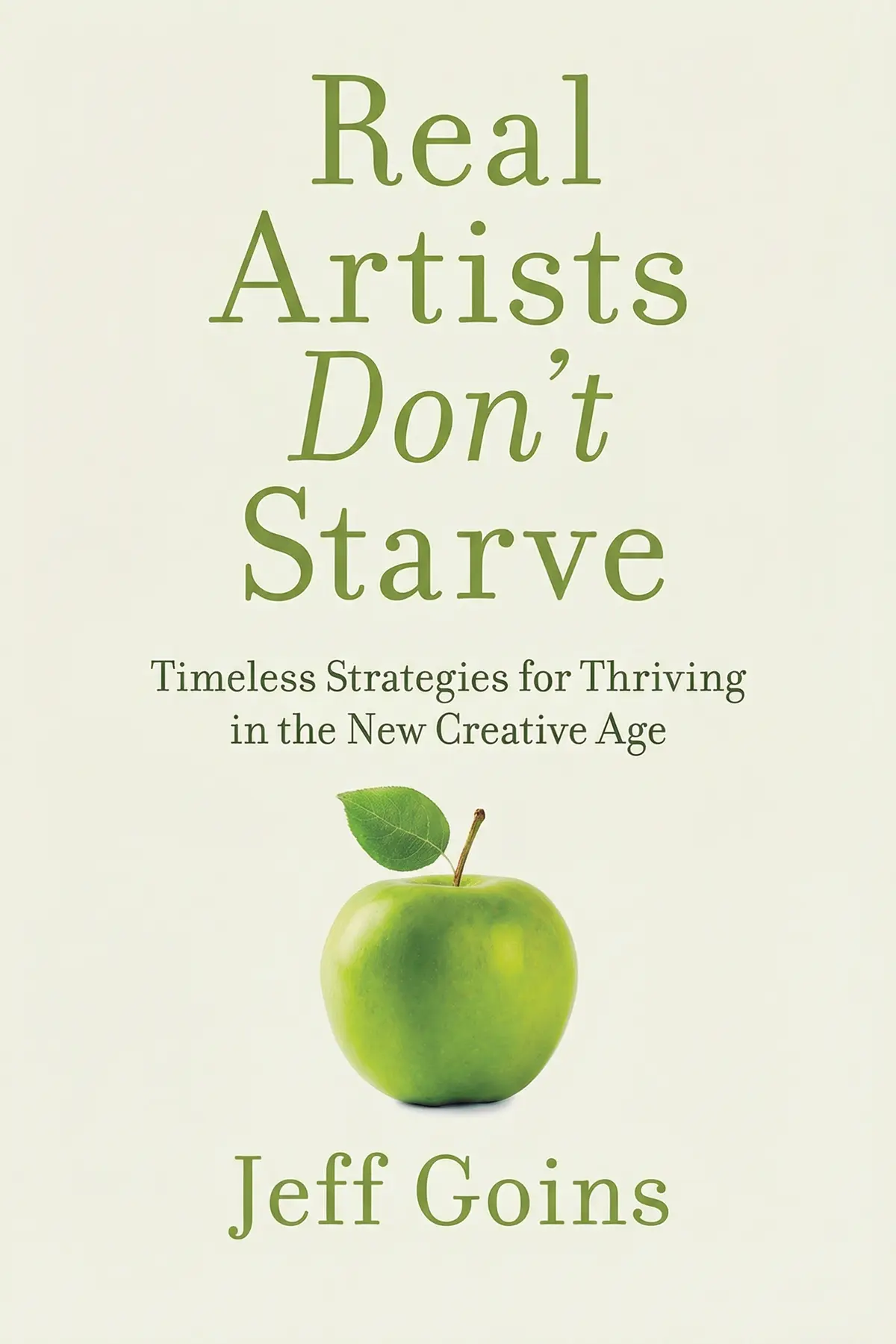
Table of Content
1. Introduction
53 sec
If you make things on the side and assume a creative life means scraping by, Jeff Goins thinks that assumption is the real obstacle. In Real Artists Don’t Starve, the former musician who built a business from his writing argues that the starving artist is a myth, and that artists who do well follow habits anyone can learn. One of them is surprisingly modest: John Grisham wrote his first novel one page a day, in under an hour, while still working as a lawyer.
Thriving, the book argues, is a matter of strategy. Artists who earn a living put in steady work, borrow openly from those before them, study under masters, gather collaborators and patrons, share unfinished work, and insist on being paid and keeping their rights. Together these habits treat your creative work as a career you can build, starting with the hours you already have.
2. Build a creative career thirty minutes a day
1 min 25 sec
A busy lawyer with no special reputation for talent became one of the best-selling novelists around. His method fit inside a lunch break, and it survived forty rejections from publishers who saw nothing in his first book.
3. Borrow from the best and add your own
1 min 26 sec
Waiting for a completely new idea can keep you from starting anything at all. The creator of one of television’s most loved shows built it from other people’s work, and artists have an unwritten code for doing exactly that.
4. Stay stubborn through a stack of rejections
1 min 29 sec
One of the most celebrated American novelists kept a pile of more than a hundred rejection letters at home and still broke through. What happened to him later shows the other side of the same trait.
5. Learn from a master by staying teachable
1 min 28 sec
Even the artist many people picture as the ultimate natural genius began as someone’s student. There is a specific way to approach a master you admire, and it starts long before you ever say hello.
6. Find your scene, your team and a patron
1 min 48 sec
A nervous nineteen-year-old sang one song for a studio owner, and within two years every teenager in the country knew his name. Behind most breakthroughs stand other people, and Goins shows where to find them.
7. Practice in public to grow an audience
1 min 42 sec
A financial consultant buried in student debt started a money blog and slipped some cartoons into it. What followed shows a way of being noticed that never requires the pushy self-promotion most artists hate.
8. Charge for your work and keep the rights
1 min 41 sec
A dog food company once offered a young puppeteer ten thousand dollars for one of his characters, and his agent loved the deal. His answer decided the future of a famous television show.
9. Turn several crafts into one thriving career
1 min 22 sec
An engineer who started a small zine went on to edit a famous magazine, write about magic tricks and exhibit his art. His secret to never starving was a different way of thinking about money.
10. Conclusion
1 min 06 sec
The starving artist, in Goins’s account, turns out to be a set of bad habits dressed up as romance: waiting for talent, guarding originality, working alone, hiding work until it is perfect, giving it away for exposure, and selling the rights for quick cash. Each has a working replacement, and none requires genius. Grisham needed a page a day. Halligan needed a blog and the nerve to add her cartoons. Henson needed the courage to refuse $10,000.
Begin small and specific. Choose a daily unit of work you can finish in under an hour, and keep it going through the rejections that will come. Pick one artist you admire, study them until you can make something in their spirit, and only then ask to learn from them. Share a piece in progress with people who might care. And when someone offers exposure in place of payment, or a lump sum for your rights, think of Rowlf the Dog.
Real artists, Goins insists, build their lives around their work instead of suffering for it, one page, one collaborator and one fair price at a time.
About this book
What is this book about?
Plenty of people who paint, write or make music assume a creative life means struggling for money, or that they lack the inborn talent to try. Jeff Goins argues that both beliefs are myths, and that they do real damage. The romantic image of the poor, solitary, wholly original genius scares people away from creative work and keeps the ones who try it broke. Goins replaces each part of the myth with a habit that thriving artists actually follow. He draws on stories from John Grisham writing one page a day as a lawyer, F. Scott Fitzgerald collecting 122 rejection letters, Michelangelo training under a master, Elvis Presley meeting the right patron and Jim Henson turning down $10,000 for a puppet he would later need. Readers get a practical picture of a creative career: steady daily work, borrowing openly from those you admire, a humble apprenticeship, a scene of collaborators, an audience built by sharing work in progress, and the confidence to charge for your art and keep ownership of it.
Book Information
Who it's for
Artists with day jobs
Writers, painters and musicians with day jobs who assume creative work can never pay.
Unsure they're talented enough
People who hold back because they think they lack natural talent or a truly original idea.
Freelancers offered only exposure
Freelancers who keep getting asked to work for exposure and want to charge with confidence.
About the Author
Jeff Goins
Jeff Goins started out as a musician, moved into writing, and turned that writing into a business. He founded Tribe Writers, an online community for writers, and is a best-selling author whose books include The Art of Work and Real Artists Don't Starve. His work has been covered by outlets such as the Washington Post, Forbes and Time. He also gives keynote talks and shares his teaching through goinswriter.com.
Ratings & Reviews
Ratings at a glance
What people think
Listeners consider this work an essential read for creators, noting its remarkable research and deep, reflective material. The book examines methods for thriving in artistic fields and destroys the starving artist cliché, all while offering concrete, practical guidance for the creative community. These listeners value the narrative style, which features numerous stimulating accounts of well-known figures, and describe the experience as both motivating and uplifting.
Top reviews
Kamol
This book completely shifted my perspective on what it means to be a professional creative in the modern world. Goins does a stellar job of dismantling the tired "starving artist" trope that has kept so many of us in a state of perpetual financial anxiety. I was particularly blown away by the historical research regarding Michelangelo's actual net worth, which apparently rivaled some of today's tech moguls. It makes you realize that being a "real artist" isn't about suffering for your craft in a cold attic; it's about being a savvy business person who values their own output. While some of the advice feels a bit broad, the mindset shift alone is worth the cover price. It’s an empowering read for anyone who is tired of feeling like they have to choose between their passion and a paycheck.
Show moreKung
Finally got around to reading this and I must say it’s a refreshing take on the creative economy. Goins argues that we are entering a New Renaissance where the barriers to entry are lower than ever before. I loved the section on finding your own "patron" or even becoming your own patron by maintaining a day job while you build your brand. It takes the pressure off the art to provide immediately, which actually allows for more creative freedom in the long run. Truth is, we’ve been fed a lie that commercial success somehow cheapens the work. This book annihilates that myth with precision and grace. It’s a must-read for anyone who wants to stop apologizing for wanting to make a living from their talents.
Show moreRin
I feel like I finally have permission to be successful. Jeff Goins has written a manifesto for the modern creative that is both inspiring and deeply practical. I’ve always felt guilty about charging for my work, like I was "selling out" or something equally ridiculous. This book helped me realize that charging for my art is actually a form of respect for the craft itself. The storytelling is top-notch, and I found myself highlighting almost every other page. It’s not just about the money; it’s about the freedom that comes with being a professional. If you are a creative who is tired of the "starving" narrative, you need this on your shelf immediately. It's empowering, well-written, and exactly what I needed to hear this year.
Show moreJoseph
Not what I expected from a business book, but it’s exactly what I needed. Goins manages to bridge the gap between touchy-feely self-help and hard-nosed business strategy better than most. I particularly appreciated the section on maintaining legal control of your work to ensure creative control. That’s a lesson many artists learn the hard way, so seeing it emphasized here was great. The writing style is chatty and accessible, making even the denser financial concepts easy to digest. Gotta say, the way he weaves together the lives of historical figures with modern-day success stories makes for a very compelling narrative. It’s the kind of book you’ll want to re-read every time you start a new project. Truly a fantastic resource for any serious artist.
Show moreBua
As someone who has spent years struggling to balance a legal career with my passion for acting, the story of the lawyer-turned-actress resonated deeply. I did notice the weird confusion regarding the actress's name—Tia Link versus Tia Ling—which made me question the editing a bit. Despite that minor hiccup, the core message of this book is incredibly solid and empowering. Goins emphasizes that you don't need anyone's permission to create, and that mindset change is vital for success. I appreciated the advice on diversifying skills; you can't just be a painter anymore, you have to be a marketer too. Some chapters felt a bit repetitive, and the Michelangelo case study was stretched a little thin across the entire book. Still, it’s a very thought-provoking read that encouraged me to take my side hustle much more seriously.
Show moreSomkid
The chapter on "Stealing from your Influences" was easily the highlight of the entire book for me. Hearing how Hunter S. Thompson literally typed out pages of classic literature just to feel the rhythm of great writing was fascinating. Goins does a great job of showing that even the "greats" didn't emerge fully formed from a vacuum. This book is a warm bath of positivity that helps you realize your work has intrinsic value. Personally, I think the section on money management is the most useful part for younger creatives. We aren't taught how to handle the business side in art school, so having it framed as a noble pursuit is helpful. It’s a quick read, but one that stays with you long after you close the cover. Not every strategy will work for every medium, but the general philosophy is sound.
Show moreChanon
Picked this up during a creative slump and it definitely provided the spark I was looking for. The idea that Michelangelo was actually one of the richest men of his time blew my mind. It totally reframes the history of art as we know it. I’ll admit, I don’t quite buy the "New Renaissance" argument as a universal truth because the current economy is pretty brutal. However, Goins provides enough solid actionable advice to make you feel like you have a fighting chance. The "practice in public" concept has already changed how I use social media for my portfolio. It’s no longer about waiting to be discovered, but about building a scene. A few parts felt like fluff, but the overall message is too important to ignore.
Show moreBun
After hearing so much hype about this title, I expected a roadmap, but what I got was more of a pep talk. To be fair, Goins is a gifted storyteller and his anecdotes about artists like Hunter S. Thompson are genuinely engaging. However, I struggled to find the "solid actionable advice" that the back cover promised to deliver. Much of the content felt like it was treading the same ground as Austin Kleon’s older books. The idea of "practicing in public" is great, but how does that translate for a novelist who needs to protect their intellectual property? I found the business sections a bit thin on the actual mechanics of taxes and contracts. It’s a decent motivational tool if you’re feeling stuck, but don’t expect a masterclass in art business management.
Show moreAkira
Ever wonder why we romanticize the image of the destitute poet? Goins attempts to answer that by deconstructing the "Bohemian" myth, though I think he oversimplifies the solution. While he correctly identifies that artists need to be business-minded, his examples are often quite extreme. Not everyone can transition from a major league baseball career into professional writing. The "day job" advice is practical, but it lacks the nuance needed for people working minimum wage jobs. Frankly, it feels like it was written for a specific class of professionals looking for a second act. It’s well-researched and the prose is snappy, but it feels a bit like self-help lite at times. I’d recommend it as a starting point, but you'll need other resources for the actual mechanics of a career.
Show moreLucia
Look, I really wanted to love this, but it felt like a collection of Wikipedia summaries wrapped in capitalist buzzwords. The author uses Jeff Bezos as an example of a "real artist," which feels like a massive stretch that undermines the entire premise. Most of the case studies are about wealthy white men who already had significant safety nets or careers in finance. As a freelance illustrator from a working-class background, I found the advice to "just charge more" to be incredibly out of touch with reality. He brushes over the concept of natural talent and systemic barriers as if they don't exist at all. There are a few nuggets of wisdom about not working in secret, but you have to dig through a lot of fluff. If you want actual substance, I would suggest sticking to books like "Grit" or "Drive."
Show moreQuestions about this book
What is the main idea of Real Artists Don't Starve?
Jeff Goins argues that the starving artist is a myth. Creative people do not need inborn talent, total originality or a life of isolation and poverty. They thrive by working steadily, borrowing from and studying under masters, joining a community of collaborators, finding patrons and an audience, and insisting on being paid and keeping ownership of their work. He illustrates each habit with stories from Grisham, Fitzgerald, Michelangelo, Elvis and Jim Henson.
Does Jeff Goins say you need natural talent to be an artist?
No. Goins says hard work, persistence and determination matter more than inborn gifts. His main example is John Grisham, who wrote one page a day in 30 to 60 minutes while working as a lawyer. After three years he finished A Time to Kill, which 40 publishers rejected. He wrote The Firm anyway, both books became bestsellers, and he left law to write full time.
How do you find a mentor according to Real Artists Don't Starve?
Goins recommends doing your homework first. Study the artist you admire and learn everything you can from their work before you introduce yourself. Then create something influenced by them that shows your admiration and eagerness to learn. Approach them humbly and say you want to learn whatever they are able and willing to teach. He stresses that no mentor wants a student who thinks there is nothing left to learn.
Why does Goins say artists should never work for free?
Goins sees offers of good exposure as a common way to exploit artists, much like many unpaid internships. Charging for your work shows that you value it and the profession, a cause Michelangelo championed. He also warns against selling ownership for a lump sum, citing Jim Henson, who refused $10,000 from Purina for Rowlf the Dog and later used the character on The Muppets.
Featured in
Readers also enjoyed







AUDIO SUMMARY AVAILABLE
Listen to Real Artists Don’t Starve in 15 minutes
Get the key ideas from Real Artists Don’t Starve by Jeff Goins, plus 5,000+ more nonfiction titles.
- 5,000+ titles
- Listen as much as you want
- 7-day free trial
- Cancel anytime









