

14 min 27 sec
Available in: English
Raise Your Game: High-Performance Secrets from the Best of the Best
Shows how top athletes, coaches and executives turn ordinary fundamentals, careful preparation and service to others into lasting high performance, and how to use the same habits at work and in leading a team.
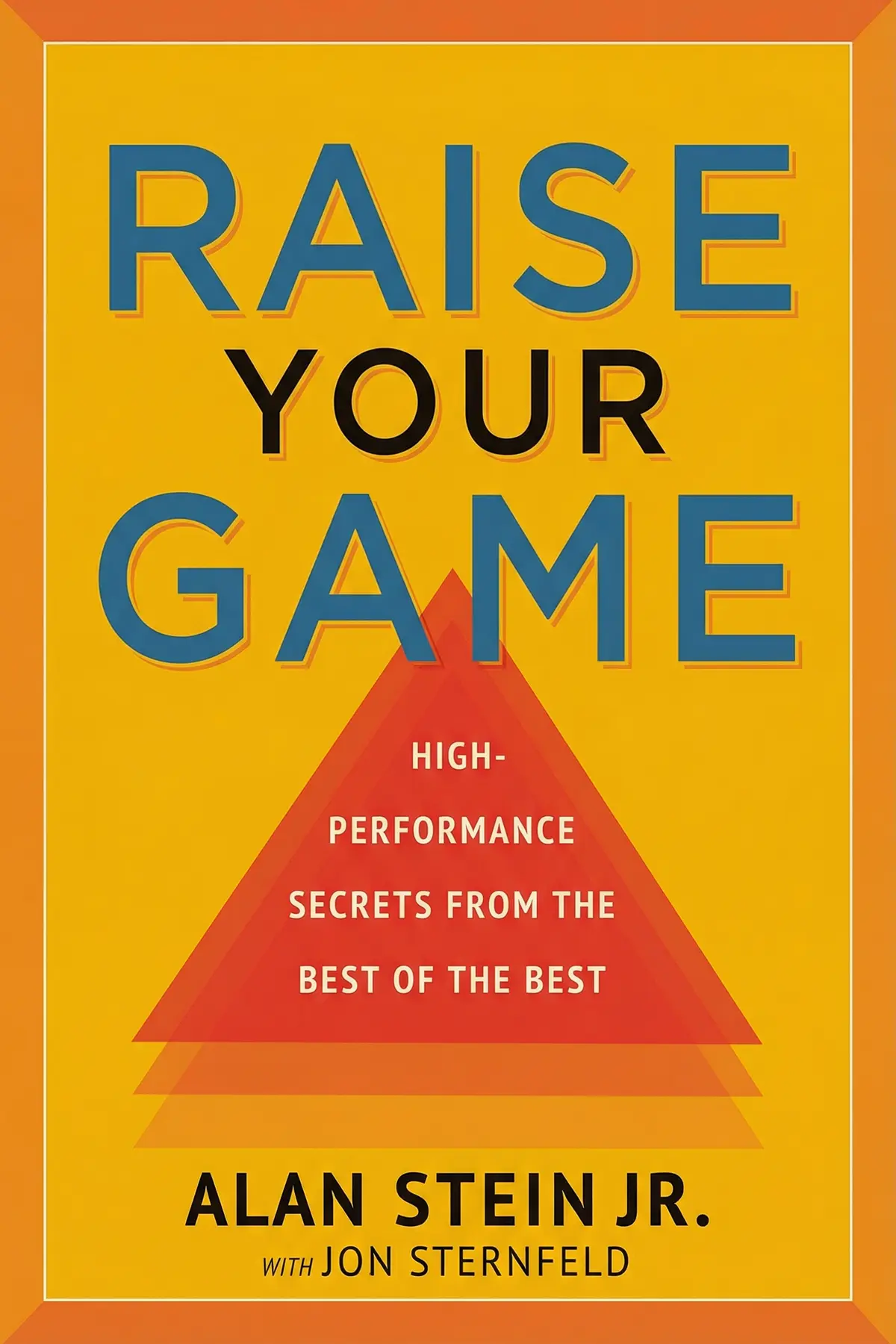
Table of Content
1. Introduction
1 min 03 sec
Most people try to raise their performance by chasing big breakthroughs. The best performers in sport and business get there by mastering ordinary things with unusual focus. Kobe Bryant, already among the best players alive, once spent 45 minutes of a 4:00 a.m. workout on nothing but footwork.
In Raise Your Game, longtime basketball performance coach Alan Stein Jr., writing with Jon Sternfeld, gathers stories like that from athletes, coaches and executives. Their argument is that elite performance is something people build. It starts with knowing yourself and practicing the basics with discipline. It grows into confidence through preparation. It peaks when you turn outward to lead with a clear vision, serve the people around you and build a team that trusts itself.
Along the way you meet Mark Cuban reading software manuals at night, Steph Curry’s demanding warm-up rule and Gregg Popovich taking the blame in a crisis. Each one comes with a habit you can try at your own desk this week.
2. Get better by never tiring of the basics
1 min 48 sec
One of the greatest basketball players alive spent a predawn workout on the simplest drill in the sport. His reason explains why talented people stall and why the best keep improving long after they seem to have arrived.
3. Build an edge by out-learning your rivals
1 min 57 sec
Long before he was a billionaire, a young businessman spent his evenings on something nobody else wanted to do. The success it brought looked sudden from outside, but it had been piling up for years.
4. Turn preparation into confidence that holds under pressure
2 min 16 sec
In a brutal hill challenge designed to imitate climbing Everest, the people who made it to the end were not the fittest. What they had in common is something anyone can practice before their next big moment.
5. Make others see the future you see
2 min 11 sec
In 1994 a single statistic convinced one man that retail was about to change forever. Spotting it was the easy part. Getting skeptical investors to believe it called for a very different skill.
6. Lead by serving, and people will follow
2 min 00 sec
When his star player asked to leave, a famous coach had every reason to defend his authority. He did something almost no one expected, and it shows where real influence comes from.
7. Teams beat their most talented players alone
2 min 04 sec
Kindergarteners kept beating business students at a simple building task. The reason they won also explains why some teams full of brilliant people fail, and why one coach answered a painful defeat with dinner.
8. Conclusion
1 min 08 sec
What Stein and Sternfeld describe is a ladder, and every rung on it is ordinary. Bryant’s footwork, Cuban’s manuals and Curry’s five straight swishes look small up close. Yet they are where a champion’s confidence actually comes from.
The same logic holds once other people depend on you. Bezos holding to a direction, Popovich taking the blame and the Spurs sharing dinner after a defeat are ordinary acts too, repeated until people trust them. High performance, in this telling, is a standard you set and then keep, alone first and later with others.
So choose the one fundamental your work rests on and give it protected time this week, judging yourself by whether you showed up for it. Before your next high-pressure moment, practice under conditions a little harder than the real thing. And if people rely on you, watch for the next chance to take responsibility when something goes wrong, the way Popovich did when he could have pointed elsewhere.
Bryant had every reason to skip the footwork drill. He did it anyway, at four in the morning, and that scene holds the whole book.
About this book
What is this book about?
Plenty of people want to perform at a higher level but treat excellence as a gift: you have the talent or you don't. Alan Stein Jr., who spent years as a performance coach for elite basketball players, argues that it is mostly built, one ordinary habit at a time. Writing with Jon Sternfeld, Stein follows high performance from the inside out. It starts with self-awareness and the discipline to keep practicing the basics, as Kobe Bryant did in his 4:00 a.m. workouts and Mark Cuban did reading software manuals at night. Preparation then turns into confidence, which helps you keep performing even when doubt shows up. From there the book turns outward. It covers leaders who make others see their vision, coaches and executives who earn loyalty by serving, and teams like the Spurs and the Warriors whose trust lets them play above their combined talent. Readers get a clear ladder from personal mastery to leadership. Each step comes with something to try: protected time for fundamentals, practice that is harder than the real event, and ways to take responsibility and hold a team together after a loss.
Book Information
Who it's for
Workers feeling stuck
Professionals who feel their progress has stalled and want habits that rebuild focus and confidence.
Managers rethinking authority
New and experienced managers who want to lead through vision and service instead of authority.
Sports followers
Sports fans curious how Bryant, Curry and Popovich's methods carry over to the office.
About the Author
Alan Stein Jr.
Alan Stein Jr. spent more than 15 years as a performance coach for top basketball players, among them Kevin Durant, Stephen Curry and Kobe Bryant. He now speaks to audiences about bringing elite athletes' methods into business. BookAuthority has listed Raise Your Game among the best mindset, productivity and success books ever written. His co-author, Jon Sternfeld, is a writer and former editor with sixteen books to his name. These include the New York Times bestseller Scenes From My Life, written with Michael K. Williams.
Ratings & Reviews
Ratings at a glance

What people think
Listeners find this book highly accessible and full of practical tips, making it an essential guide for athletes, coaches, and business leaders. The content provides useful takeaways through effective examples and engaging stories, with one listener mentioning how the narratives offer a foundation for improving as a teammate and leader. Listeners appreciate that the book's lessons apply to both sports and professional team environments, with one review noting how teams can learn to function with internal harmony.
Top reviews
Vipawan
Finally sat down with this after a colleague recommended it for our sales team. Stein hits on a truth many of us ignore: excellence isn't about flashy moves but mastering the ordinary basics with extraordinary discipline. I loved the anecdote about Kobe Bryant’s 4 AM workouts; it proves that the greats don't get bored with the fundamentals. The writing is snappy and the "control the controllables" mantra is something I’m now printing for my desk. Some might find the sports talk heavy, but the leadership parallels are undeniable. If you want to refine your daily habits and move from "I can't" to "I can't yet," this is a goldmine of actionable advice.
Show moreGung
Alan Stein Jr. understands that high performance is a choice we make every single day. I was moved by the section on turning "This is impossible" into "This is impossible until I figure it out," which is a small linguistic shift with massive psychological implications. The book is packed with these little nuggets that challenge your self-awareness and force you to look at your weaknesses. The stories about Mark Cuban reading software manuals all night remind us that there are no shortcuts to being the best. This isn't just a book for basketball junkies; it’s a manual for anyone who wants to stop being mediocre and raise their game.
Show moreThawee
Wow, this was exactly the kick in the pants I needed to restart my morning routine. Stein captures that "mamba mentality" perfectly without it feeling like a hollow slogan. He focuses on the "unseen hours" and the discipline required to master the mundane. I’ve read a lot of these books, and while the "servant leader" stuff is common, the way it’s framed here through the lens of elite basketball makes it stick. The writing is direct and energetic, making it easy to consume a few chapters and immediately feel ready to tackle the day. Highly recommended for coaches and business leaders alike who need to reset.
Show moreHunter
The chapter on vision acting as a telescope really clicked for me because it explains why leaders need to see far while helping others see the same path. Stein does a great job of showing how vision isn't just a vague dream but a series of tangible steps. I’ve started implementing the "don't get bored with the basics" philosophy in my own creative practice, and the results are already showing in my focus. It's about that extraordinary focus on the ordinary. If you’re looking for a book that combines inspiration with a practical roadmap for improvement, this is it. It makes even a sad sack feel like he can right the ship.
Show moreYaowares
After hearing Stein speak on a podcast, I had high expectations for this book, and it did not disappoint. The way he breaks down the habits of the world's best athletes into actionable steps for everyday people is masterclass-level writing. I especially loved the focus on intentionality—not just working hard, but working with a specific purpose in mind. The "servant leadership" examples with Gregg Popovich taking responsibility for team failures were particularly touching and applicable to any corporate setting. It’s a centering read that reminds you that you are in control of your effort and your attitude. How you do anything is truly how you do everything.
Show morePacharapol
As a manager who cares about team culture, I found the bridge between the court and the boardroom to be quite sturdy. Stein and Sternfeld focus heavily on servant leadership, using figures like Coach K to illustrate how putting others first creates collective harmony. I particularly enjoyed the concept of the "teammate audit" involving index cards; it’s a tactile, practical way to foster appreciation within a group. Truth is, the book doesn't reinvent the wheel, but it presents it in a very polished, motivating package. It’s a quick read that encourages you to take full ownership of your attitude and effort every single day.
Show moreDuangjai
Ever wonder why the greatest stay great? This book argues it's because they never graduate from the basics. I liked the focus on how confidence is a result of preparation rather than some innate trait you're born with. The stories about Steph Curry's pre-game rituals were fascinating and offer a clear blueprint for anyone looking to perform under pressure. My only real gripe is that it can feel a bit repetitive if you’ve already read a lot of performance literature from people like Tony Robbins. However, for a young athlete or a new leader, the lessons on discipline and working with intention are absolutely vital.
Show moreBee
Frankly, it's a bit basketball-heavy, but the core principles of discipline and self-awareness apply to any field. I enjoyed the sections on how the Golden State Warriors prioritize trust and communication over individual ego. It’s a great reminder that even at the highest levels, teamwork is about serving the person next to you. The advice isn't necessarily "secrets" as the title suggests—most of us know we should work harder—but the framing and the anecdotes are excellent. To be fair, if you hate sports, you will hate this book. But if you can look past the metaphors, there’s a lot of genuine wisdom here.
Show moreAnthony
Look, I appreciate the hustle, but this felt like another addition to the pile of toxic male productivity literature. It’s almost aggressively sports-centric, and I kept waiting for a single mention of a female leader or athlete who wasn't just a footnote. The advice is largely recycled from the likes of Gary Vaynerchuk—stuff we’ve heard for decades about "grinding" and outworking everyone. While the framing of self-awareness is okay, the overall tone feels outdated in a world where we value mental health and balance. If you aren't a die-hard basketball fan, you'll likely find the metaphors tiresome and the lack of diversity in the examples frustrating.
Show morePrapaiwan
Not gonna lie, the 'bro-science' vibe here is strong and it started to grate on me by the third chapter. It’s a lot of "work harder," and "be like Kobe," which feels a bit tone-deaf to the burnout everyone is facing. Most of the anecdotes focus on a very narrow sliver of high-performers, which makes the advice feel less universal than it claims to be. It is well-written, and I think it'll probably hype one up as they are reading it, but I didn't find the content to be particularly revolutionary or new. If you’ve read any other productivity book in the last ten years, you can probably skip this.
Show moreQuestions about this book
What is the main idea of Raise Your Game by Alan Stein Jr.?
Stein argues that elite performance is built through habits, not handed out as talent. It starts with self-awareness and the discipline to keep practicing fundamentals, as Kobe Bryant did with footwork at 4:00 a.m. Preparation then turns into confidence. At the highest level, performance means leading others: sharing a clear vision, serving your people and building a team whose trust lets it outperform its individual talent.
How does Raise Your Game say you can build confidence?
Stein treats confidence as a skill that comes from preparation. Mark Cuban’s apparent ease in negotiations rests on outworking and out-studying everyone else. Top performers still feel doubt, but they reframe it, turning I can’t into I can’t yet. They also pressure proof their skills, the way Steph Curry insists on swishing five free throws in a row, by practicing under conditions harder than the real event.
What does Raise Your Game teach about leadership?
The book says real influence comes from service. Gregg Popovich took full blame when his star player asked for a trade. Coach K answered letters from unknown high school coaches, and Howard Schultz personally phoned customers during a recall. Stein suggests asking what you can do for your team: stay available, remove obstacles, and accept responsibility if things go wrong, all while holding a vivid, stable vision of your destination.
Who should read Raise Your Game?
It suits professionals who want to perform more consistently, and managers who want to lead through example and service. Readers who like learning from sport will find stories about Kobe Bryant, Steph Curry, Gregg Popovich and the Golden State Warriors, set next to business leaders like Mark Cuban, Jeff Bezos and Reed Hastings. The ideas are aimed at everyday work, not only at athletes.
How can I apply Raise Your Game at work?
Identify the one basic skill your best work depends on and schedule protected time to practice it, judging yourself by consistency, not quick results. Rehearse important moments under harder conditions than the real thing. In team debates, use disagree and commit so objections get heard and the group still moves forward. After a setback, bring the team together instead of letting everyone retreat, as Popovich did after the 2013 Finals.
Readers also enjoyed



A Guide to the Good Life: The Ancient Art of Stoic Joy
William B. Irvine




A High-Performing Mind: Strengthen Your Mind and Live Your Best Life
Andrew D. Thompson

A Year with Peter Drucker: 52 Weeks of Coaching for Leadership Effectiveness
Joseph A. Maciariello

AUDIO SUMMARY AVAILABLE
Listen to Raise Your Game in 15 minutes
Get the key ideas from Raise Your Game by Alan Stein Jr., plus 5,000+ more nonfiction titles.
- 5,000+ titles
- Listen as much as you want
- 7-day free trial
- Cancel anytime









