

14 min 35 sec
Available in: English
 ไทย
EnglishไทยPersonal History: A Memoir
Katharine Graham's account of growing from a people-pleasing daughter into the publisher who backed the Watergate reporting. It shows how she learned to claim authority, choose the right people and weigh advice in a sexist era.
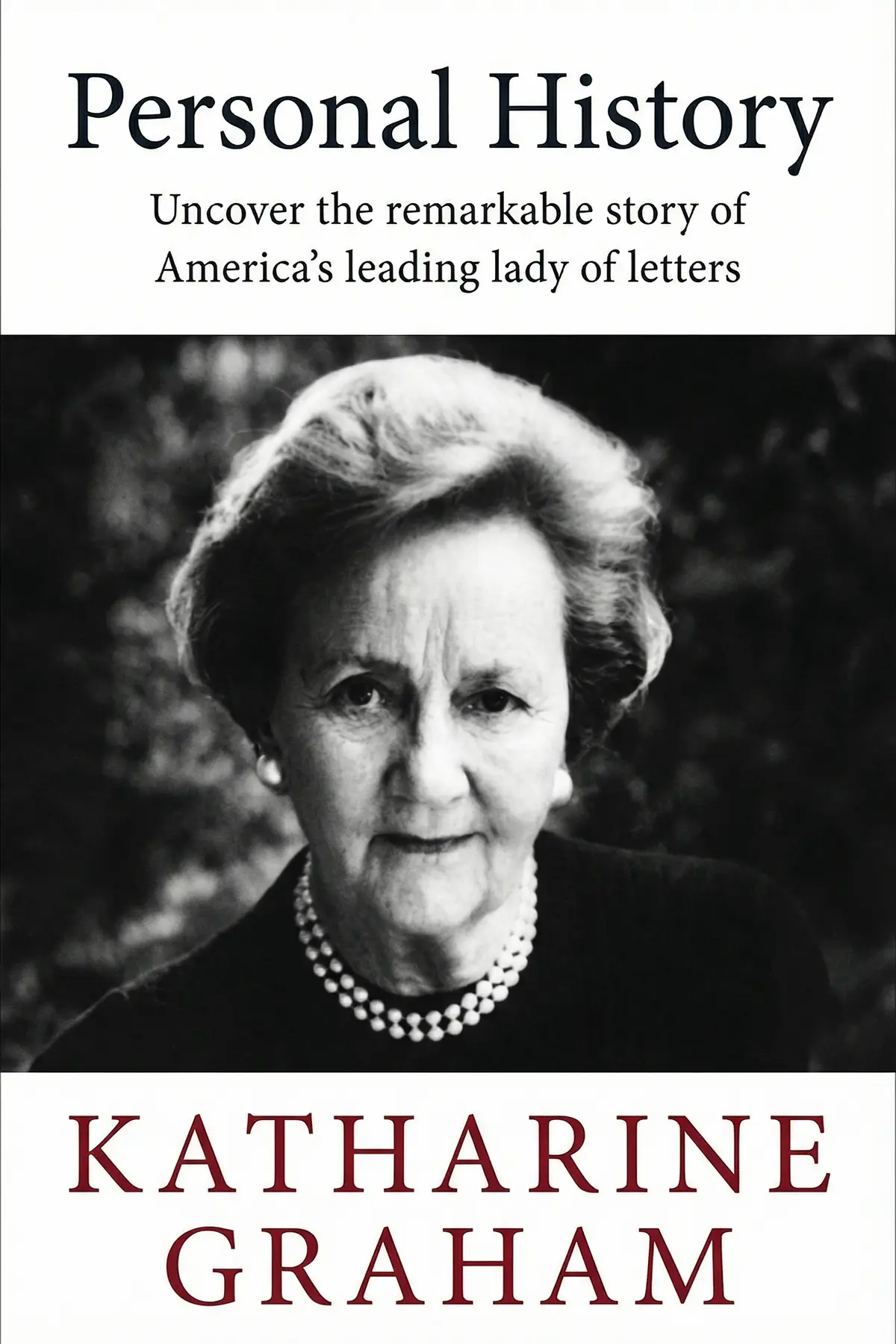
Table of Content
1. Introduction
59 sec
Plenty of capable people spend years deferring to louder voices, sure they have not earned their place. Katharine Graham was one of them, and she still led the Washington Post through the Watergate scandal that ended Richard Nixon’s presidency. In Personal History, her Pulitzer Prize-winning memoir, Graham tells how a girl raised to please a demanding mother became one of the most successful newspaper publishers in the United States.
Her story turns on a surprising point. The self-doubt that made her lean on other people’s opinions also made her an unusually good listener, and that habit later shaped some of her best decisions. Her authority did not come with her title in 1963. She built it, in a deeply sexist era, through hard calls, good hires and one painful look at her own words. Follow her decades at the paper and you learn how to grow into a role you never expected, set the terms of your partnerships and take advice without surrendering your judgment.
2. See what constant pleasing costs a capable person
1 min 31 sec
A wealthy, gifted girl filled every hour with sports, music and study, and still felt she had to invent friends. The pressure behind that small lie would follow her into the most powerful job of her life.
3. Stay through the week you want to quit
1 min 26 sec
Two days into her first newspaper job, alone in a strange city, Graham called her father in tears. What happened next turned a near failure into the start of a career.
4. Earn respect when connections opened the door
1 min 45 sec
Both Graham and her husband joined a newspaper owned by her family, and both feared colleagues would assume they had not earned it. They answered that suspicion in very different ways.
5. Claim equal footing from your first day
1 min 41 sec
Thrust into the top job by a family tragedy, Graham first pictured herself as a helper to the senior men. One early conversation with her board chairman changed how the whole arrangement would work.
6. Learn to spot doubt that sounds like your own voice
1 min 34 sec
Years into the top job, Graham could still be shaken by a simple question about circulation numbers. Rereading one magazine interview showed her where that fear was really coming from.
7. Hire the people who will change the place
1 min 29 sec
The Post was being called old-fashioned, and its long-serving managing editor made the new publisher look like a beginner. Replacing him reshaped the paper and her own position inside it.
8. Hold your ground when you stand alone
1 min 36 sec
A small burglary story put one newspaper against a popular president, with no other outlet willing to follow. Months passed before anyone backed the paper up, and the cost of waiting was high.
9. Turn your habit of listening into an advantage
1 min 30 sec
An investor urged Graham to spend company money in a way almost no business did at the time, and she feared it would starve growth. How she handled that advice shaped the next twenty years.
10. Conclusion
1 min 04 sec
Watergate is the episode most people know, yet the larger story in Graham’s memoir is how a woman raised to please became someone who decides. Her doubt never vanished on schedule. Years into the top job, a question about circulation could still rattle her. What changed was what she did with it. She set equal terms with Beebe, let go of an editor who would not adapt, hired one who respected her, stood by two reporters while the government attacked her paper, and weighed Buffett’s advice on its merits.
Her life suggests a few habits to borrow. When a role arrives suddenly, say early and clearly that you expect to work as an equal. Now and then, reread your own words the way she reread that 1969 interview, and notice which beliefs about yourself you never chose. And when advice frightens you, ask for its reasoning before deciding.
The girl who laughed at every joke to be liked ended her career by handing a thriving newspaper to her son, on terms she set herself.
About this book
What is this book about?
Katharine Graham grew up wealthy, pushed hard by a brilliant and demanding mother, and eager above all to fit in. She nearly quit her first newspaper job within days. She then spent years behind the scenes while her husband ran the family paper, and took charge of the Washington Post only after his suicide in 1963. Personal History is her own account of growing into that role in a deeply sexist era. Graham describes insisting on equal partnership with her board chairman and replacing a managing editor stuck in old ways with Ben Bradlee. She also describes confronting the sexist ideas she had absorbed herself, and standing behind Bob Woodward and Carl Bernstein while the government attacked her paper over Watergate. Readers get a candid portrait of self-doubt at the top of a powerful institution. They also see how one leader turned her habit of leaning on others into a talent for listening, from her first light editorials to Warren Buffett's advice on buying back the company's own shares.
Book Information
Who it's for
Suddenly promoted managers
New managers who were promoted suddenly and still feel they have not earned the title.
Women in male-dominated workplaces
Women in male-dominated workplaces who catch themselves deferring to louder colleagues.
Curious about Watergate reporting
Readers curious how the Washington Post stood behind the Watergate reporting under heavy government pressure.
About the Author
Katharine Graham
Katharine Graham lived from 1917 to 2001. In 1963 she took charge of her family's newspaper, The Washington Post. Under her leadership the paper covered Watergate, the scandal that forced Richard Nixon from the presidency. She was one of the early women in the 20th century to run a large American daily as publisher, and she was the first woman elected to the board of the Associated Press. Personal History, her memoir, won the 1998 Pulitzer Prize.
Ratings & Reviews
Ratings at a glance
What people think
Listeners find this autobiography both accessible and captivating, with one person noting how enjoyable it is to encounter the influential figures throughout the narrative. The work sheds light on a vital chapter of American history while delivering intriguing insights into Katharine Graham’s private world. Listeners admire the excellent craftsmanship of the writing, with one person specifically praising Graham’s sophisticated storytelling and the moving transition from hardship to ultimate victory. She is celebrated as a sharp and impactful American leader, and one listener highlights the remarkable sense of self-reflection she maintains along her journey.
Top reviews
Saovapa
After hearing so much about the legendary Katharine Graham, I was surprised by how relatable her insecurities felt on the page. This is a staggering achievement that balances the intimate details of a crumbling marriage with the public drama of Watergate. Graham’s voice is remarkably self-aware, and she dissects her own failings with as much precision as she does the political scandals of the Nixon era. The tragedy of Phil Graham’s mental disintegration is handled with such grace and painful honesty that it stays with you long after you finish the chapter. To be fair, the book is quite long, but the quality of the writing justifies the length. It’s rare to find a memoir from someone of such immense wealth and power that feels this vulnerable. She really captures the struggle of finding one’s voice in a male-dominated world. This is easily one of the best biographies I have ever read.
Show moreDing
This book is a phenomenal testament to a woman who found her voice under the most crushing circumstances imaginable. Most people know the highlights of the Watergate era, but seeing it unfold through Graham’s eyes adds a layer of tension that the history books lack. Her transition from a sheltered socialite to a powerful CEO is a masterclass in resilience and quiet determination. I was particularly moved by the sections regarding her husband’s struggle with mental illness; it was a heartbreaking look at a topic that was often kept in the shadows during that time. The writing is incredibly polished and sophisticated, yet it maintains an engaging quality that keeps you invested in her personal growth. It is more than just a media history; it’s a story of survival and the courage required to stand up for the truth. Highly recommend for anyone who loves stories of tragedy turning into triumph.
Show moreTar
Frankly, I was unprepared for how much this memoir would resonate with my own professional life as a woman. Even though Graham operated on a global stage, her descriptions of being ignored or patronized by men in business meetings felt incredibly contemporary. The scene where she decides to publish the Pentagon Papers while several men are shouting conflicting advice in her ear is one of the most empowering things I’ve read. She writes with a level of eloquence that is rare in modern memoirs, making even the technical aspects of the publishing industry feel like a grand adventure. The way she navigates the transition from her husband’s shadow into her own light is nothing short of heroic. It’s a massive book, but it never felt like a chore to read because her voice is so steady and reliable. This is an absolute masterpiece of the genre that deserves every bit of its Pulitzer Prize.
Show morePracha
Finally got around to this Pulitzer winner and it’s easy to see why it earned such high accolades from critics. Graham manages to be both humble and authoritative, a combination that makes her extremely likable as a narrator. She doesn't present herself as a born leader; instead, she shows us the messy, terrifying process of becoming one through trial and error. The honesty regarding her husband Phil’s affair and subsequent mental collapse was particularly striking and brave. Look, it’s a long journey, but the payoff is a deep understanding of how the American press evolved into the powerhouse it is today. Her self-awareness is the book’s greatest strength, as she frequently pauses to reflect on how her upbringing and wealth shaped her worldview. This isn't just a book about a newspaper; it's a book about the evolution of a human being. I couldn't put it down.
Show moreOm
Ever wonder what it felt like to be the only woman in the room during the Pentagon Papers crisis? This memoir provides a front-row seat to the most high-stakes moments in American journalism. Graham’s account of taking over the Post after her husband’s tragic death is both harrowing and inspiring. She doesn't shy away from her own early insecurities or her lack of training in the business world, which makes her eventual success feel earned rather than inevitable. The pacing slows down significantly during the chapters on the pressmen's strike, which were a bit of a slog to get through. Still, the insight into her relationships with figures like JFK, LBJ, and Warren Buffett is unparalleled. It is a long read, but the historical weight of the content keeps the pages turning. Her transformation from a self-described 'doormat' to a formidable publisher is a journey worth following.
Show morePierre
As someone obsessed with 20th-century politics, I found Graham’s accounts of her friendships with the Washington elite absolutely riveting. The sheer amount of name-dropping could have been annoying, but she provides such fascinating context for these figures that it actually works. You get to see the human side of people who are usually just names in a textbook. My only real gripe is that she can be a bit guarded about her internal life, especially regarding her children. She spends hundreds of pages on the newspaper’s business operations but only a few paragraphs on major personal milestones. Personally, I would have traded some of the detail on the pressmen's strike for more insight into her private thoughts during her later years. Despite that, it’s a beautifully written book that offers a unique perspective on American power. It’s an essential read for anyone interested in the intersection of media and government.
Show moreEmily
The sheer scale of this book is daunting, but the storytelling remains remarkably engaging throughout the 600-plus pages. Katharine Graham had a front-row seat to the most pivotal moments of the American century, and she describes them with the keen eye of a journalist. I especially enjoyed the earlier chapters about her eccentric parents and her unconventional upbringing in palatial mansions. It sets the stage perfectly for the woman she would eventually become. There are moments where the detail becomes a bit excessive—do we really need to know the specifics of every year-end note she sent to her editor? Probably not. But the highlights, like the Watergate coverage and her evolving friendship with Warren Buffett, are so strong that they carry the slower sections. It’s a polished, professional, and deeply informative look at a life well-lived. It’s a must-read for history buffs.
Show moreDuangjai
Wow, the transition from a sheltered socialite to a formidable newspaper publisher is captured with such brutal honesty here. I loved reading about the behind-the-scenes drama of the Post, especially the risks she took during the Nixon administration. It’s easy to forget how much she actually had to lose by standing her ground. My minor criticism is that she seems to hold back when it comes to her mother; there is clearly a lot of resentment there that she only hints at. At times, the narrative feels a bit sanitized, as if she didn't want to ruffle too many feathers even in her 80s. But the historical value of her perspective on the Kennedy assassination and the LBJ years is worth the price of admission alone. It’s an elegant, insightful, and largely transparent account of a truly historic life. Anyone who values freedom of the press should have this on their shelf.
Show moreRay
Picked this up for a book club, and while it is historically significant, parts of it felt as dry as an old encyclopedia. There is no denying that Graham lived an extraordinary life, rubbing elbows with everyone from Einstein to Kissinger. However, the narrative often gets bogged down in endless lists of dinner guests and minute details about newspaper management that only a media historian could love. I found myself skimming the sections about labor unions just to get back to the more personal anecdotes. Truth is, the book shines when she discusses the Pentagon Papers and her personal growth, but those moments are buried under a mountain of corporate memos. It is a dense, academic-feeling read that lacks the emotional heat I usually look for in a memoir. It is an important piece of history, certainly, but not necessarily a 'fun' read for the casual fan of the genre.
Show moreTong
Not what I expected from an autobiography that claims to be a 'personal' history. While the prose is elegant, I felt an icy distance between the author and the reader throughout most of the narrative. Katharine Graham describes her childhood, her marriage, and even the suicide of her husband with a curious lack of raw emotion that made it hard to truly connect. She mentions her children only in passing, treating them like background characters in a story dominated by boardrooms and political figures. It often felt like she was more interested in protecting her legacy than revealing her soul. If you are looking for a deep dive into the psychology of a complicated woman, you might be disappointed. However, if you want a detailed record of hiring decisions at the Washington Post and every foreign dignitary she ever met, this is the book for you. It functions better as a corporate history than a memoir.
Show moreQuestions about this book
What is Personal History by Katharine Graham about?
Graham tells the story of her own life here, beginning with a childhood marked by a demanding mother and ending with her running the Washington Post. She describes nearly quitting her first newspaper job, stepping back while her husband ran the paper, and taking charge after his suicide in 1963. The book follows how she grew into real authority in a sexist era, rebuilt the newsroom and backed the Watergate reporting that ended Nixon’s presidency.
What was Katharine Graham's role in Watergate?
As publisher, she led the paper while reporters Bob Woodward and Carl Bernstein investigated the 1972 break-in at the Democratic National Committee. They found phone records linking the burglars to Nixon’s re-election committee. The Post stood alone for months as officials attacked its objectivity, until CBS confirmed the reporting in November 1972. Nixon resigned two years later, and the two reporters won the Pulitzer Prize.
How did Katharine Graham deal with imposter syndrome?
Even as president and publisher, Graham deferred to male colleagues and felt rattled by simple questions. In 1969 she reread an interview she had given to Women’s Wear Daily, in which she said she would never give a woman an executive job. Seeing her own words, and hearing her friends’ shock, she realized she had absorbed sexist beliefs. Her view changed gradually, and by the 1970s she championed equality.
What leadership lessons does Personal History offer?
Graham’s story suggests setting the terms of key partnerships early, as she did when she insisted on working with board chairman Fritz Beebe as an equal. It shows how hiring the right people, like editor Ben Bradlee, strengthens both the work and the leader. And it shows how to take advice well: she questioned Warren Buffett’s share buyback plan, heard his reasoning, and then acted on it.
Readers also enjoyed



A Year in the Life of William Shakespeare: 1599
James Shapiro



A Year with Peter Drucker: 52 Weeks of Coaching for Leadership Effectiveness
Joseph A. Maciariello



Agent Sonya: The Spy Next Door
Ben Macintyre
AUDIO SUMMARY AVAILABLE
Listen to Personal History in 15 minutes
Get the key ideas from Personal History by Katharine Graham, plus 5,000+ more nonfiction titles.
- 5,000+ titles
- Listen as much as you want
- 7-day free trial
- Cancel anytime









