

A Planet of Viruses
Carl Zimmer
 English
 ไทย
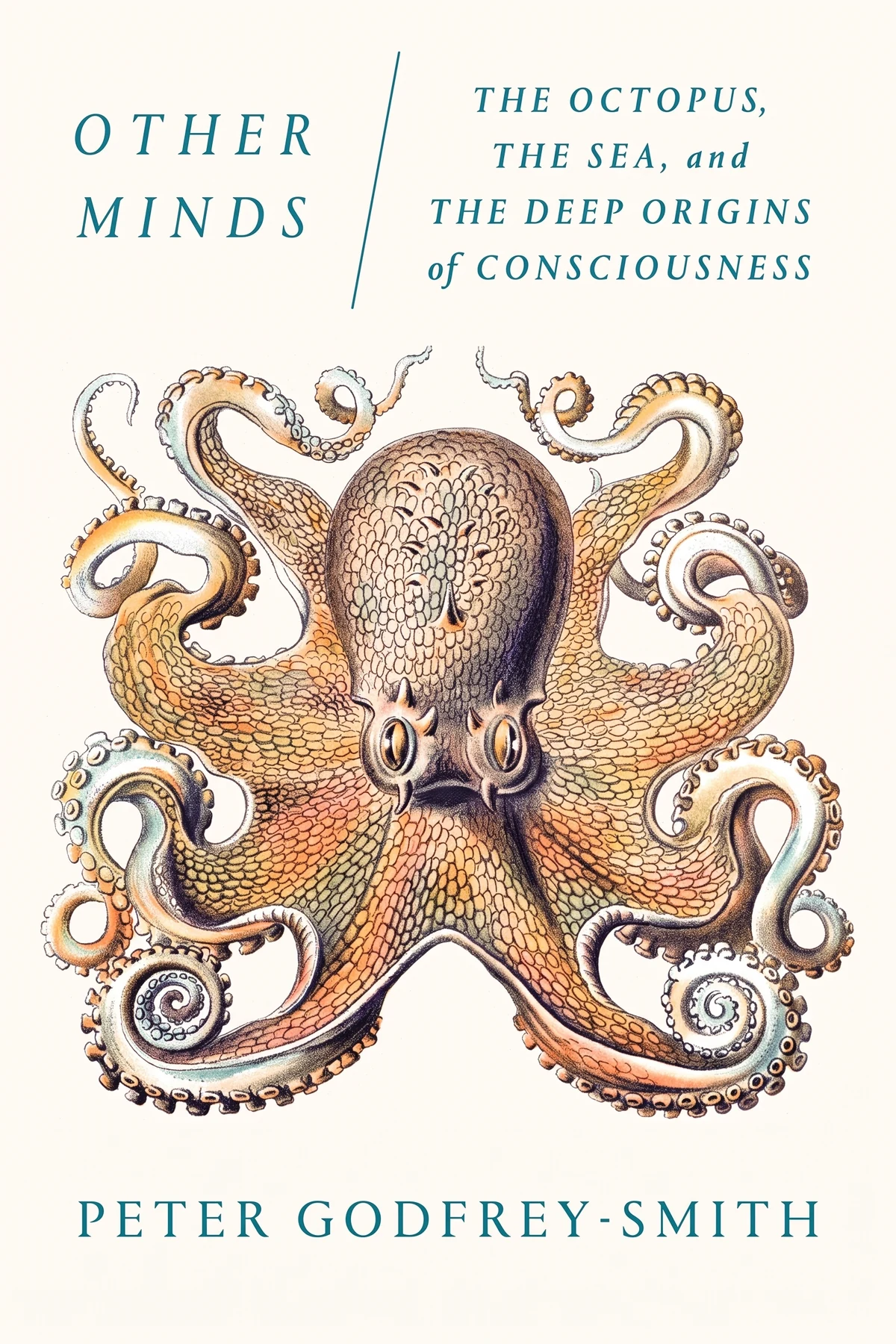
Follows the octopus from shelled sea-floor crawler to curious jet-propelled hunter, and uses its strange skin, short life and playful behavior to question the belief that only humans think with real awareness.
1 min 07 sec
Most of us carry an unspoken belief that real thinking and self-awareness belong to humans, while other animals run on automatic. In Other Minds, philosopher Peter Godfrey-Smith uses the octopus to shake that belief, beginning with a fact that sounds impossible: an animal thought to be colorblind can match the colors of a reef in moments, and its skin can keep changing color after being removed from its body.
Godfrey-Smith, who works in the philosophy of biology and of mind, traces how the octopus evolved from a harmless shelled mollusk into a creature that shows signs of something like a mind. The thread running through his case is simple. Behavior starts small, even in single cells, and the octopus shows how far it can grow, far enough to challenge the scientific view that animals act without awareness.
What follows is a new way to read the behavior of creatures unlike us, and an honest picture of what scientists still cannot settle about thought, language and consciousness.
1 min 56 sec
Long before brains existed, living things were already finding food and checking on their neighbors. A glowing partnership inside a squid suggests that the habit of responding to the world is far older than any animal.
1 min 42 sec
The ancestor of today’s octopus crept along the sea floor under a hard shell, closer to an oyster than a hunter. Two changes turned it into something else entirely, and the second, losing the shell, came at a cost.
1 min 47 sec
Cuttlefish and octopuses put on color displays no chameleon can match, yet lab tests suggest they cannot see color at all. Solving that contradiction changes where you might look for a mind.
1 min 34 sec
Divers often sense ancient wisdom in a cuttlefish’s eyes, as if it had met countless visitors. The truth about how long these animals live is far more fragile, and for mothers, far harsher.
2 min 09 sec
A woman who could barely see could still post a letter through a narrow slot. Her case became evidence that animals live without awareness, and Godfrey-Smith’s encounters underwater push hard against that conclusion.
1 min 35 sec
Darwin was sure that complex thought is impossible without language, and a study of young children seemed to back him. Then a few food-hoarding birds made the question much harder to close.
1 min 14 sec
The octopus ends up as a striking case for questions about animal consciousness. Its line passed through a shelled crawler, a set of grasping arms and a jet-powered hunter, and it still produced an animal that explores, tests and seems to play. Godfrey-Smith grants that science has not agreed on whether octopuses, or any animals, have complex thought or self-aware consciousness. His own view, drawn from his time with them underwater, is that the octopus is intelligent, resourceful, charming and a joy to be around.
What the book supports is a change in how you look. When an animal behaves cleverly, resist the quick verdict that it is merely running on autopilot, and remember that skill and awareness can come apart without telling you which one is missing. When someone claims that thinking requires words, hold that claim up against jays sorting hundreds of hidden meals by how soon they will spoil.
Behavior, on this account, has very deep roots. It began with bacteria counting their neighbors before they glowed, and in one soft-bodied branch it led to an animal that reaches out to touch the diver who came to study it.
Most people assume that rich thinking and self-awareness belong to humans, and that other animals react without knowing they are doing it. Philosopher Peter Godfrey-Smith tests that assumption against one of the strangest animals on Earth: the octopus. He starts far back, with single cells that already sense food and signal to their neighbors, then follows the octopus line from a harmless shelled mollusk to a soft, fast predator with grasping arms and a water jet. Along the way come puzzles that refuse easy answers. Octopuses and cuttlefish are thought to be colorblind, yet they match their surroundings in moments, and their skin can change color even when detached from the body. They live only a year or two. Godfrey-Smith weighs the scientific case that animals act without awareness, including a famous human brain injury and Darwin's claim that thought needs language, against octopuses that explore divers with apparent curiosity and jays that track hundreds of food stores. Readers get a clear map of an open debate and a sharper eye for intelligence in bodies unlike ours.
Curious readers who suspect animals understand more than science has admitted.
Students of biology, psychology or philosophy who want a clear entry into the debate on animal consciousness.
Divers and nature lovers who have met an octopus or cuttlefish and wondered what it was thinking.
Peter Godfrey-Smith is a philosopher who works mainly on the philosophy of biology and the philosophy of mind, the two fields this book joins. Born in 1965 and raised in Sydney, he earned a PhD in philosophy at the University of California, San Diego, and has taught at Stanford, Harvard and the CUNY Graduate Center before becoming a professor at the University of Sydney. His book Darwinian Populations and Natural Selection won the 2010 Lakatos Award, Other Minds was shortlisted for the 2017 Royal Society Science Book Prize, and he was elected to the American Philosophical Society in 2022.
Listeners find this work deeply fascinating and skillfully authored, offering a compelling blend of scientific facts and stimulating ideas regarding human awareness. It provides an exhaustive exploration of cephalopod intelligence, specifically focusing on octopuses, and prompts intriguing inquiries into their behavior. Listeners admire the prose, with one listener mentioning that the author uses a lot of questions to engage the audience. Feedback is mixed regarding the discussion of consciousness, as some listeners note the book is not primarily about this topic.
Wow. Peter Godfrey-Smith has achieved something truly rare here, blending deep philosophical inquiry with the wonder of marine biology. This book provides a profound shift in perspective regarding how we define intelligence, forcing us to reckon with a creature whose mind is distributed across its eight arms. The descriptions of 'Octopolis' in Australia are absolutely riveting, painting a picture of a secret society beneath the waves that defies our usual expectations of solitary cephalopods. I was particularly struck by the notion that evolution built complex minds twice over, once for us and once for them. It is perhaps the closest we will ever come to encountering an alien intelligence while staying on our own planet. While some might find the sections on neurons a bit dense, the writing is so conversational and curious that I couldn't put it down. The photos in the middle are a wonderful bonus that help bring the author's underwater encounters to life.
Show moreEver wonder what it actually feels like to have a decentralized nervous system where your limbs can essentially think for themselves? This book dives headfirst into that question, offering a brilliant look at the alien minds living in our oceans. Godfrey-Smith manages to bridge the gap between hard science and philosophical wonder, making complex topics like neural connections and subjective experience feel urgent and exciting. The stories of octopuses in laboratories are legendary, but seeing them through the lens of a philosopher adds a layer of depth that a standard biology book might miss. I particularly loved the section on the 'secret octopus garden' and the social interactions observed at Octopolis. The realization that we share a common ancestor with these creatures that was basically a flatworm is staggering. It makes their intelligence feel like a beautiful fluke of nature. This is easily one of the most unique books I've read in years, and I’ll never look at a calamari menu the same way again.
Show moreThis book is a masterclass in science communication, taking a subject as complex as the evolution of neurons and making it feel like a thrilling detective story. I was absolutely mesmerized by the descriptions of the Giant Australian Cuttlefish and their ability to change color and texture in a heartbeat. Godfrey-Smith asks the big questions: what is it like to be an octopus? How does a mind work when it's spread throughout eight arms? While he admits we may never truly know the answers, the journey of trying to understand is beautiful. The book is well-written, awe-inspiring, and contains some truly striking photos that help visualize the alien beauty of these animals. It’s a humbling reminder that we aren't the only intelligent life on this planet, even if our minds evolved on completely different paths. If you have any interest in nature or the mysteries of the brain, you need to read this.
Show moreAs someone who spends more time watching nature documentaries than reading academic texts, I was pleasantly surprised by the accessibility of this book. The author’s personal anecdotes about diving with giant cuttlefish and octopuses are the clear highlights, especially when he describes how they seem to recognize individual humans. It’s mind-blowing to think that an animal so biologically similar to a slug can exhibit such playful and sometimes petty behaviors, like squirting water at specific lab workers they dislike. The book does lean heavily into the philosophy of consciousness, which might not be everyone’s cup of tea, but I found it grounded enough in scientific data to remain engaging. I do wish there was more exploration into why such intelligent creatures live only a couple of years, as that feels like a cruel evolutionary joke. Overall, it's a thought-provoking read that will make you look at the 'floppy spiders of the sea' with entirely new eyes.
Show moreFinally got around to reading this, and it’s essentially like meeting an extraterrestrial in our own backyard. The central conceit—that the octopus is an independent experiment in the evolution of high-level intelligence—is handled with both grace and scientific curiosity. I was captivated by the description of the cuttlefish's skin, which functions almost like a high-definition computer monitor despite the animal potentially being colorblind. It’s a fascinating paradox. Godfrey-Smith writes with a genuine enthusiasm for his subjects, and his underwater observations bring a level of intimacy to the text that you don't often find in science books. To be fair, some of the philosophical musings on the 'self' feel a bit speculative, but they are necessary for the questions he’s trying to answer. It’s a short, punchy book that manages to be both educational and deeply moving, especially during the final chapter regarding our impact on the oceans.
Show moreThe chapter on the evolutionary tree really set the stage for how divergent we are from these cephalopods, and that was the hook for me. I’ve always been fascinated by how octopuses can squeeze through tiny holes, but learning about their three hearts and copper-based blue blood was a cool bonus. Godfrey-Smith does a solid job explaining how intelligence can emerge in different ways, though he does get a bit bogged down in the 'problem of consciousness' toward the middle. In my experience, these types of books can either be too dry or too 'woo-woo,' but this one hits a nice middle ground. The author's descriptions of his dives in Australia are vivid, and you can tell he has a real bond with the creatures he studies. It’s a bit of a shorter read than I anticipated, but it packs a lot of big ideas into its pages. Definitely recommended for fans of science and philosophy alike.
Show moreAfter hearing about 'Octopolis' on a podcast, I knew I had to dive into this one, and I wasn't disappointed. The writing is conversational but still smart, making you feel like you're on a dive with the author himself. There's something so charming about the stories of octopuses being mischievous, like recognizing individual researchers and holding grudges against them. It really highlights the 'otherness' of their minds while showing flashes of personality we can actually relate to. My only real gripe is that the book feels a bit repetitive in its structure, with every chapter following the same 'story then theory' formula. Still, the insights into how their skin works as a sensory organ are worth the price of admission alone. It’s a solid 4-star read that will definitely spark some interesting dinner conversations about what it means to be a sentient being.
Show moreNot what I expected after seeing so many people rave about the octopus facts on social media. While the information about cephalopod nervous systems is genuinely interesting, the author spends a lot of time on the history of single-celled organisms and early worm-like ancestors. I understand the need for context, but I felt like I was reading a biology textbook for the first third of the book. Look, the anecdotes about octopuses opening jars and escaping tanks are great, but they are spaced out between long discussions on the philosophy of mind that occasionally grow tiresome. I also struggled with the author's writing style, which involves a lot of 'as I will show in chapter four' and 'now that we have established X.' It feels a bit like an unedited academic paper in places. It is an okay read if you are deeply interested in the origins of life, but it might be too theoretical for casual readers.
Show moreLook, the science here is fascinating, but the author’s tendency to ask endless questions without providing concrete answers got old quickly for me. I get that the nature of consciousness is a mystery, but after the fifth time being told that something is 'unanswerable' or 'speculative,' I started to lose interest. The book is at its best when it focuses on the actual behavior of the animals, like the way they use camouflage or how they interact with divers. The parts about the Ediacaran 'bathmats' were a fun visual, though I'm still not entirely sure how much they added to the discussion of octopus minds. Personally, I would have preferred more about the studies at Octopolis and less about the philosophy of perception. It’s a decent book for a plane ride, but it didn't quite live up to the hype of being a definitive work on animal intelligence for me.
Show moreFrankly, I found the balance between biology and philosophy incredibly frustrating, and the book often feels like it's suffering from an identity crisis. Godfrey-Smith is a philosopher by trade, not a marine biologist, and his lack of scientific rigor shows in some of his stranger assertions about evolution being 'unfinished.' The beginning chapters are a slog through the fossil record and the Ediacaran period, which felt like filler if you already have a basic grasp of the evolutionary tree. I picked this up hoping for more stories about octopus mischief and their amazing camouflage, but those moments are overshadowed by dry academic self-referencing and endless questions about the nature of pain. Truth be told, watching a quick nature documentary would probably give you the same facts without the tedious tangents on aphasia or the internal dialogue of snails. It’s not that the subject isn't fascinating, but the delivery here is just too disjointed for my taste.
Show moreGodfrey-Smith uses the octopus to question the common view that only humans are self-aware. He traces how behavior began in single cells and how the octopus evolved from a shelled mollusk into a soft, jet-propelled predator. Scientists have not agreed on whether animals have complex thought or consciousness, but he argues from his own encounters that the octopus is intelligent, curious and resourceful.
Laboratory tests suggest octopuses and cuttlefish cannot tell apart objects that differ only in color, yet they match their surroundings with great precision. The general view among researchers is that their skin works independently of the eyes and brain. Octopus skin can even react to changes around it and shift color after it has been removed from the body.
Octopuses usually live only a year or two. Having lost their ancestors’ shell, their soft bodies are exposed to fast predators, and because they hunt, they cannot hide all the time. Females face an extra cost: they breed once, stay in the den guarding their eggs without feeding for the months before hatching, and starve by the time the young emerge.
The book leaves the question open. Darwin argued in 1871 that complex reasoning needs language, and a Harvard study found young children could not learn simple logical rules before understanding the word or. But researchers at Cambridge have shown that jays remember hundreds of food stores and visit those about to spoil first, a form of complex thinking without words.
Carl Zimmer

Bill Bryson

Jeff Hawkins




Lisa Kaltenegger


AUDIO SUMMARY AVAILABLE
Get the key ideas from Other Minds by Peter Godfrey-Smith, plus 5,000+ more nonfiction titles.









