

15 min 49 sec
Available in: English
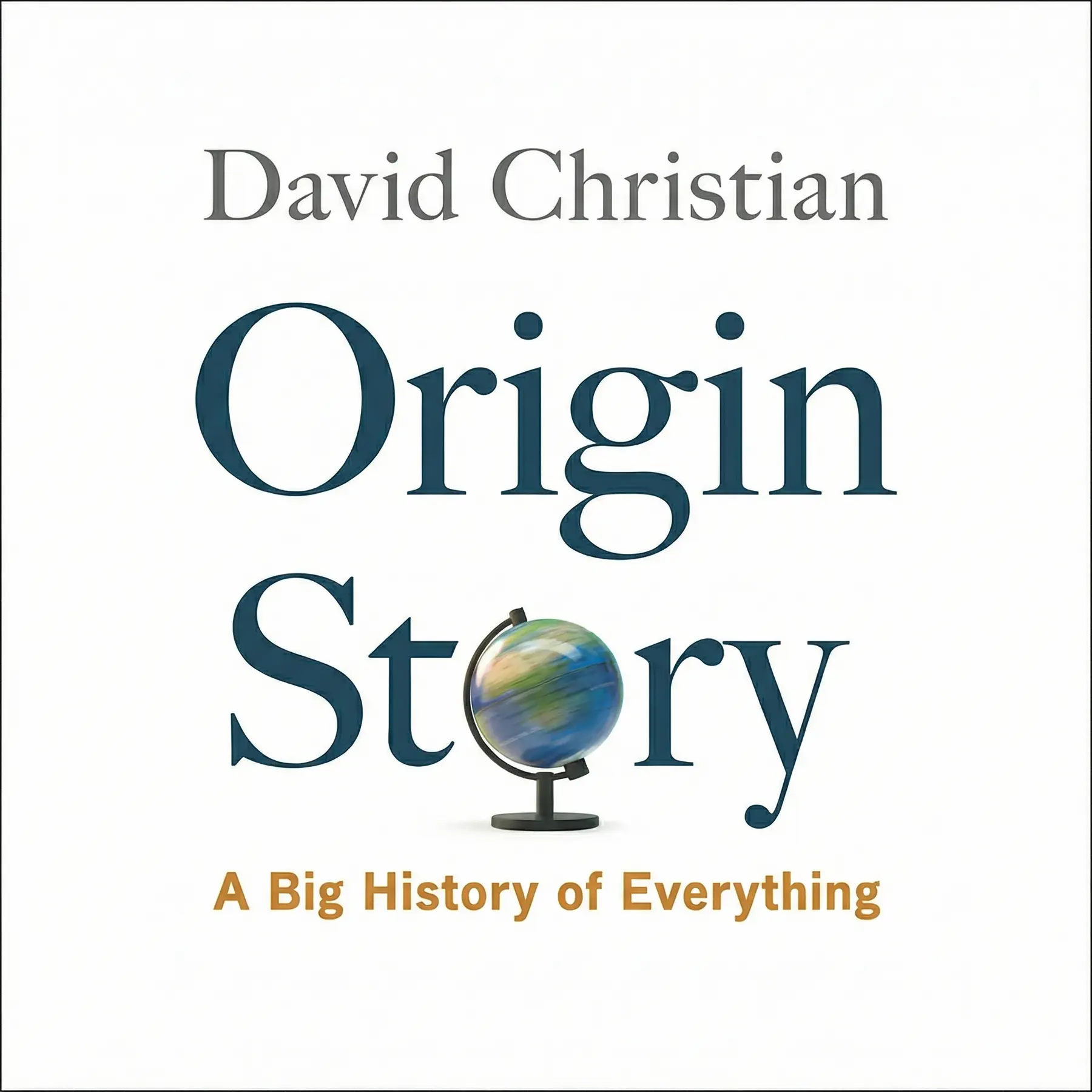
Origin Story: A Big History of Everything
Tells 13.8 billion years, from the Big Bang to climate change, as one story of rising complexity. It shows how energy and shared knowledge carried life and humans across each threshold, and why today's choices matter so much.
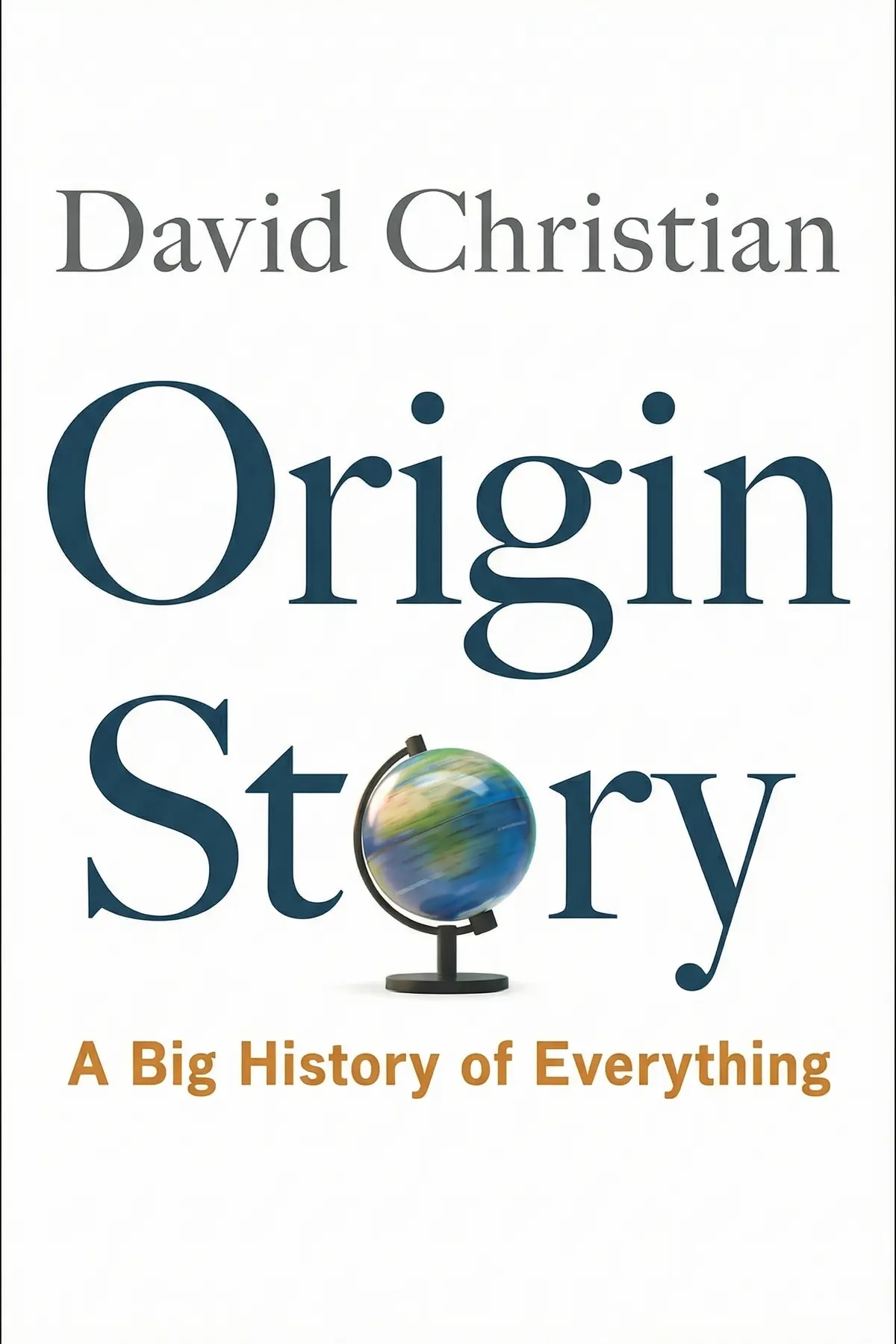
Table of Content
1. Introduction
56 sec
If the world feels like a heap of unrelated headlines, historian David Christian offers a way to see it whole. In Origin Story, he argues that everything from the first atoms to modern cities appeared at thresholds, moments when conditions were just right, with some great leaps powered by new energy from photosynthesis, farming and fossil fuels.
Christian calls these turning points thresholds. He follows them through stars, planets and the first cells, then through language, farming and coal, to a present in which one species has become the main force reshaping its planet. The pattern explains how we got here, and it also explains why the next few decades carry such weight.
By the end, you can retell 13.8 billion years in a few minutes, see where your own daily life sits inside that story, and judge the choices ahead with a much longer clock in mind.
2. Read all of history as a series of thresholds
1 min 37 sec
Most of the universe is cold and empty, yet stars, cells and cities keep appearing in it. One simple pattern explains every one of those arrivals, except the very first, which still has no explanation at all.
3. Trace the ground beneath you to dying stars
1 min 38 sec
The night sky looks eternal, but stars arrived late, and their violent ends mattered as much as their births. Without those deaths, there would be no rocky planet here to stand on.
4. Understand the thermostat that keeps Earth livable
1 min 36 sec
The sun has been heating up for billions of years, and Venus became an oven. Earth stayed mild thanks to a slow natural system that one species is now pressing on.
5. Each leap in life followed an energy boom
1 min 48 sec
A new way of feeding on sunlight filled the oceans, then nearly wiped out its own inventors and froze the planet. Out of that disaster came something that made evolution move far faster.
6. See why shared knowledge made humans different
1 min 31 sec
Chimpanzees can learn hundreds of words, yet they never built a city. The difference began with how early humans walked and ended with a kind of learning no other animal has.
7. Follow farming's surplus to every modern job
1 min 49 sec
Nobody chose farming because it looked appealing; the skeletons of its first practitioners show the strain. Yet the spare food it eventually produced is the reason most people today do anything other than grow their dinner.
8. See how coal and shared ideas sped up change
1 min 50 sec
Farming took ten millennia to circle the globe. Then information started traveling faster, a new fuel came out of the ground, and the gap between a horse messenger and an instant signal closed within a single century.
9. Understand what the next few decades will decide
1 min 53 sec
In one historian’s lifetime, the world gained five billion people and lost species at a startling rate. The tools for a stable future already exist, he argues, and the missing piece is not technical at all.
10. Conclusion
1 min 11 sec
Christian’s history reads as one long story of growing complexity in a universe that is mostly cold, dark space. Stars stay stable by burning fuel. Earth stays stable by burying and releasing carbon. Each new arrival, from the first cell to the first city, needed just-right conditions and a richer supply of energy, and the pace kept quickening until one species added five billion people within a single lifetime.
That leaves us at a possible threshold of our own. Christian hopes for a sustainable world, a society that regulates itself the way the planet does and could last thousands or even hundreds of thousands of years. The book gives a way of seeing that helps. Faced with anything new, ask what conditions allowed it and what energy feeds it. Treat shared knowledge as the human advantage it has always been, and add to it. And when leaders speak only to the next election, remember how long the effects of these decades will last.
It took 13.8 billion years to produce a species that can tell its own origin story. What that species does next is no longer left to asteroids and luck.
About this book
What is this book about?
Most of us know scraps of the big picture: a Big Bang somewhere, dinosaurs, farming, the steam engine, a warming planet. Rarely does anyone join them into one story. Historian David Christian does exactly that, starting before the first atoms and ending with the decisions humanity faces in the coming decades. His organizing idea is the threshold, a moment when something more complex than anything before it appears, made possible by goldilocks conditions that are neither too hot nor too cold. Stars, planets, living cells, sex, language, farming and fossil fuels each mark such a step. Again and again, the leap comes when conditions line up and a richer supply of energy or information becomes available. Readers get a single, memorable map of everything, built from cosmology, biology and history, plus a sober view of the Anthropocene. Christian shows how humans became the main force reshaping the planet, what that has brought in prosperity and in damage, and why he believes a stable, self-regulating human society is still within reach.
Book Information
Who it's for
Professionals curious about origins
Curious professionals who want one clear story linking the Big Bang, evolution and human history.
Students and educators
Students and teachers looking for a big-picture frame that joins science and history.
Worried about climate change
Readers worried about climate change who want to see how humanity came to hold so much power.
About the Author
David Christian
David Christian is a historian who began as a specialist in Russian history, earning his Oxford doctorate on nineteenth-century Russia in 1974. In 1989 he started teaching a course running from the Big Bang to the present, drawing on scholars across the sciences, social sciences and humanities. He is credited with naming the field Big History, is president of the International Big History Association and teaches at Macquarie University. With Bill Gates, he co-founded the Big History Project, which brings the course to high school students worldwide.
Ratings & Reviews
Ratings at a glance
What people think
Listeners find this work captivating and skillfully composed, offering a superb look at cosmic history with the right amount of detail. They value the thorough account of our beginnings and the deep reflections it inspires, with one listener noting how it puts humanity in perspective. The title earns praise for its educational value; one review highlights its integration of diverse academic traditions, while another mentions how it challenges religiously based origin stories. Listeners appreciate the historical approach, with one noting how it provides a new perspective on historical timelines.
Top reviews
Pan
Ever wonder how we actually got here without all the mythological fluff? I picked this up because of the Bill Gates recommendation and it didn't disappoint. David Christian manages to condense billions of years into a narrative that feels both grand and surprisingly intimate. By breaking the timeline into specific 'thresholds,' he makes the transition from the Big Bang to the Anthropocene feel logical rather than just a series of random accidents. It’s a lot of physics and chemistry at the start, but stick with it because the payoff when he reaches human history is immense. You really start to see how fragile our current moment is. To be fair, some of the science gets a bit dense in the middle, but the writing style is so accessible that it never feels like a chore. It completely changed my perspective on how I view our place in the universe. It’s the ultimate history book for people who want the biggest possible picture.
Show moreWorawit
Wow. I finished this book feeling both incredibly tiny and profoundly connected to everything around me. David Christian has a gift for making the most complex concepts in cosmology and biology feel like parts of a single, coherent epic. I loved how he framed our current ecological crisis within the context of the Anthropocene, showing that we are now the primary drivers of change on this planet. Not gonna lie, the realization that we are essentially star-stuff trying to manage a biosphere is a lot to process. The writing has a wonderful sense of the sublime, especially when discussing the sheer scale of the universe's timeline. It made me realize that my own anxieties are small in the face of 13.8 billion years, yet our collective actions today have massive consequences. This isn't just a history book; it's a guide to understanding our identity as a species. If you want a book that will make you rethink your existence, this is the one.
Show moreJackson
This book is a masterclass in synthesis. David Christian manages to pull together cosmology, biology, and history into a single, gripping story that makes total sense. I’ve always felt that history was taught in isolated chunks, but this approach shows how everything is connected. The chapter on the Goldilocks principle was a standout for me, explaining why life thrived here specifically. Personally, I found the section on the Anthropocene to be a sobering but necessary wake-up call about our impact on the planet. The writing is clear, the pacing is fast, and the insights are profound. It’s the kind of book you want to buy for everyone you know just so you have someone to discuss it with. An absolute must-read for anyone curious about our origins.
Show moreCameron
After hearing David Christian’s TED talk, I knew I had to dive into the full book. What he has created here is a unifying narrative for all of humanity, regardless of culture or religion. It’s incredible to see the history of the universe laid out so clearly, showing how we are part of a 13.8 billion-year-old process. The way he explains the 'Anthropocene'—this new era where humans are the dominant force—is both terrifying and empowering. It makes you realize that we are at a unique crossroads in history. The writing is engaging and moves at a brisk pace, never getting too bogged down in one specific era. Not gonna lie, I was worried it would be too dry, but the author’s enthusiasm for the subject shines through every page. It’s a thought-provoking read that leaves you with a much deeper appreciation for the miracle of our existence. Highly recommended.
Show moreAlejandra
As someone who has followed the Big History movement since its inception, this feels like a much-needed distillation of Christian's earlier work. While 'Maps of Time' was a foundational text, it often felt bogged down by its own ambition and academic weight. In 'Origin Story,' the prose is leaner and the focus on the 'Goldilocks conditions' provides a cohesive thread through disparate scientific fields. I particularly appreciated the updated section on the start of life, though the heavy use of biological jargon might alienate some casual readers. My main gripe is that human history feels like an afterthought, compressed into the final third of the book. It creates a slightly deterministic tone that suggests our evolution was inevitable, which is a common critique of this macro-scale approach. Still, the way it integrates geology, biology, and history into one seamless story is masterfully done. It's a solid read for anyone looking to bridge the gap between science and the humanities.
Show morePong
Finally got around to reading this after seeing it on so many 'best of' lists. It’s essentially a compressed version of the Big History course, and for someone without a strong science background, it was incredibly eye-opening. Christian uses these 'thresholds' to mark major leaps in complexity, which helps organize the massive amount of information. From the creation of chemical elements in dying stars to the rise of agrarian societies, the connections he draws are fascinating. Truth is, I had never really considered how much our history depends on the specific energy-flow conditions of the Earth. My only real complaint is the somewhat pessimistic tone of the epilogue regarding our future. While the author is right to highlight the dangers of climate change, it felt a bit like a sudden shift into a moralizing lecture. Regardless, the educational value here is immense. It provides a framework for understanding the world that most schools simply don't teach.
Show moreFort
Picked this up with high expectations, and for the most part, it delivered a fascinating new perspective. It’s a bold attempt to create a modern origin story based on scientific evidence rather than ancient myths. Christian’s ability to explain how stars created the elements in our own bodies is genuinely moving. However, the transition from biological evolution to human history felt a little rushed. One minute we're looking at single-celled organisms, and the next we're zooming through the Industrial Revolution. I would have liked more time spent on the complexities of early human societies. Gotta say, though, the way he links the flow of energy to the rise of complex civilizations is a brilliant framing device. It’s a very accessible entry point into Big History, even if it leaves you wanting a bit more detail in certain areas. Definitely worth your time if you enjoy authors like Harari or Bryson.
Show moreBond
The premise of a 'history of everything' is undeniably attractive, but the execution left me feeling a bit cold. David Christian spends a massive amount of time on the Big Bang and the formation of stars, which is great if you want a physics textbook, but human history doesn't even show up until halfway through. For a book that purports to be a history, it ignores the messy, contingent details of human cultures in favor of broad evolutionary lines. Look, I get that the goal is to see the 'bird’s eye view,' but at this altitude, everything looks flat and inevitable. The narrative voice is didactic, almost like a long lecture, and while I learned a few things about entropy and energy, I missed the 'human' element. Frankly, it feels a bit like a Bill Gates-approved curriculum rather than a nuanced historical analysis. It's an interesting overview for beginners, but those looking for deep historical insight might be disappointed by the lack of cultural depth.
Show moreYanin
The concept of 'Big History' is great, but I found this particular version to be a bit repetitive if you’ve already read 'Maps of Time.' It feels very much like a 'Big History Lite' for a general audience. While it’s more accessible and didactic, it loses some of the rigorous detail that made Christian's earlier work so impressive. The focus on 'thresholds' is a helpful teaching tool, but it can feel a bit formulaic after the fifth or sixth one. In my experience, the book works best as an introductory text for students or people new to the concept. For seasoned readers of popular science, it might feel a little too broad. To be fair, the updated sections on climate change and the future of the biosphere are timely and well-written. It’s a decent overview, but it didn't quite have the 'wow' factor I was hoping for after all the hype.
Show moreEli
Not what I expected based on the glowing blurbs on the back cover. I struggled to get through the first several chapters because the scientific jargon was just too thick. It felt less like a narrative and more like a dry summary of cosmic evolution that you could find on Wikipedia. Also, the book has a weirdly deterministic undertone, as if the entire 13.8 billion years of the universe were just a preamble to Western industrialization. To be fair, Christian is clearly brilliant, but the 'Big History' approach strips away all the interesting parts of being human—the art, the struggle, the individual choices—and replaces them with energy consumption graphs. It feels very cold and impersonal. If you’re looking for a book that celebrates the human spirit or dives deep into the nuances of different civilizations, keep looking. This is strictly for people who want to look at history through the lens of a physics equation. Not my cup of tea.
Show moreQuestions about this book
What is the main idea of Origin Story by David Christian?
Christian argues that the whole history of the universe is a story of increasing complexity. New and more complex things, from stars to living cells to cities, appear at turning points he calls thresholds. Each one happens under goldilocks conditions, when circumstances are just right, and usually when a richer source of energy or information becomes available. Humans have sped this process up so much that we now shape the planet’s future.
What are thresholds and goldilocks conditions in Big History?
A threshold is a moment when something more complex than anything before it emerges, such as the first atoms, stars, life, language, farming or fossil fuel societies. Goldilocks conditions are the narrow circumstances that make each threshold possible, not too hot and not too cold. Christian says science can explain the conditions for most thresholds, with one exception: nobody knows what allowed the Big Bang itself.
What does Origin Story say about climate change and the Anthropocene?
Christian describes the Anthropocene as the era in which humans became the main force changing Earth. It brought huge gains, such as fertilizers that feed billions more people, but also extinctions hundreds of times faster than normal and rising carbon dioxide. He cites the Stockholm Resilience Centre’s planetary boundaries, noting the biodiversity boundary is already crossed, and argues that what is missing is determination rather than knowledge.
How can I apply the ideas in Origin Story?
The book offers a way of seeing. When something new appears, in nature, business or society, ask what conditions allowed it and what energy sustains it. Value collective learning, the passing on of knowledge between people and generations, which Christian sees as humanity’s defining advantage. And judge today’s political and personal choices on a longer clock, since he argues the coming decades will shape Earth for thousands of years.
Who should read Origin Story?
It suits readers who want one coherent story of everything, from the Big Bang and the birth of stars to evolution, farming, the steam engine and climate change. Students and teachers get a frame linking science and history, and anyone concerned about the planet’s future gets a long view of how humans gained so much power over it.
Featured in
Readers also enjoyed
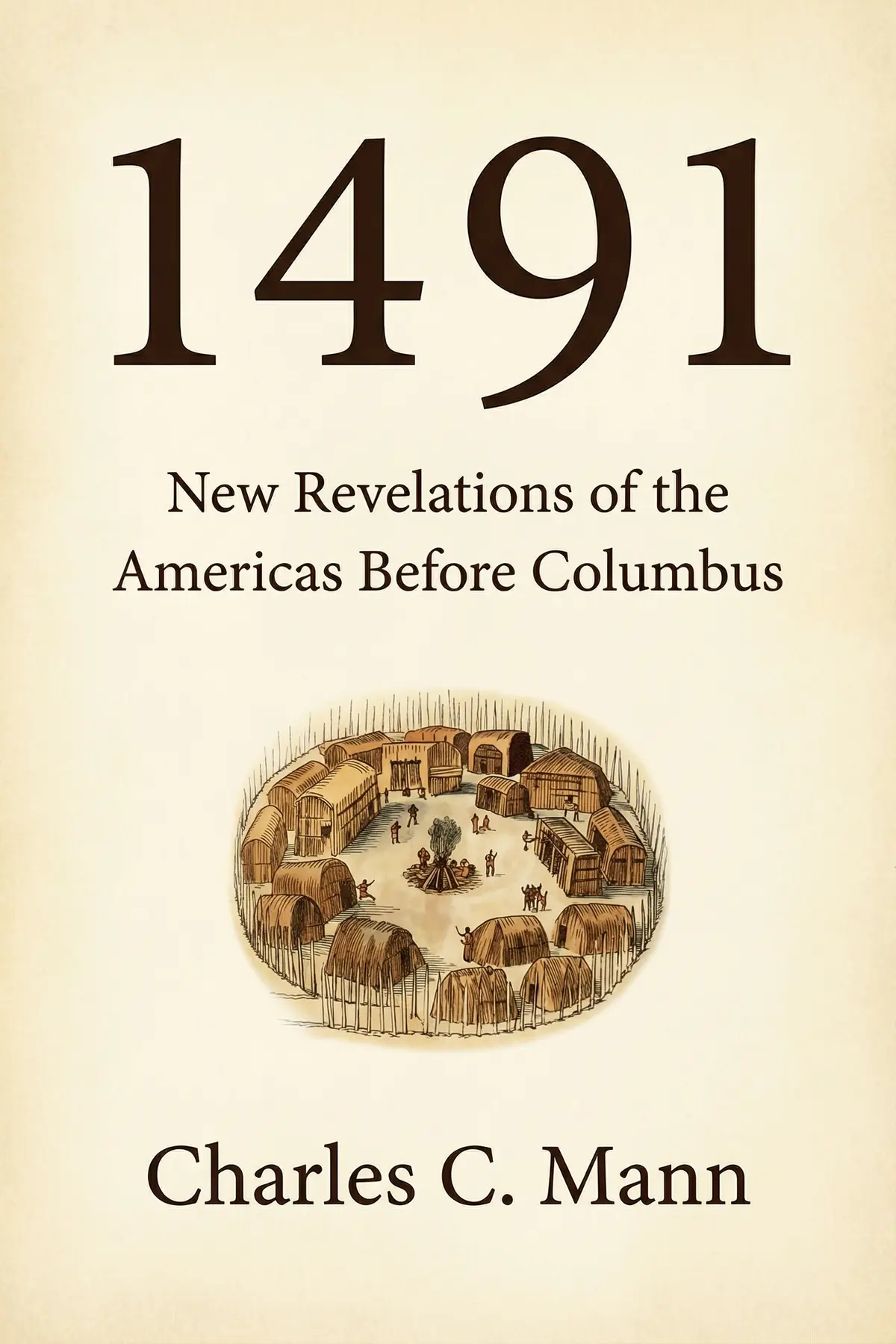
1491: New Revelations of the Americas Before Columbus
Charles C. Mann
Age of Anger: A History of the Present
Pankaj Mishra

A Life Decoded: My Genome: My Life
J. Craig Venter

1929: Inside the Greatest Crash in Wall Street History--and How It
Andrew Ross Sorkin

Agent Sonya: The Spy Next Door
Ben Macintyre

A Planet of Viruses
Carl Zimmer

A Biography of Loneliness: The History of an Emotion
Fay Bound Alberti
Alexander Hamilton
Ron Chernow

A Short History of Nearly Everything
Bill Bryson
AUDIO SUMMARY AVAILABLE
Listen to Origin Story in 15 minutes
Get the key ideas from Origin Story by David Christian, plus 5,000+ more nonfiction titles.
- 5,000+ titles
- Listen as much as you want
- 7-day free trial
- Cancel anytime









