

14 min 55 sec
Available in: English
Meltdown: Why Our Systems Fail and What We Can Do About It
Explains why oil spills, nuclear accidents and financial crashes share the same two causes. It then offers practical tools, from structured forecasts to open leadership, for keeping your own projects and organizations from failing.
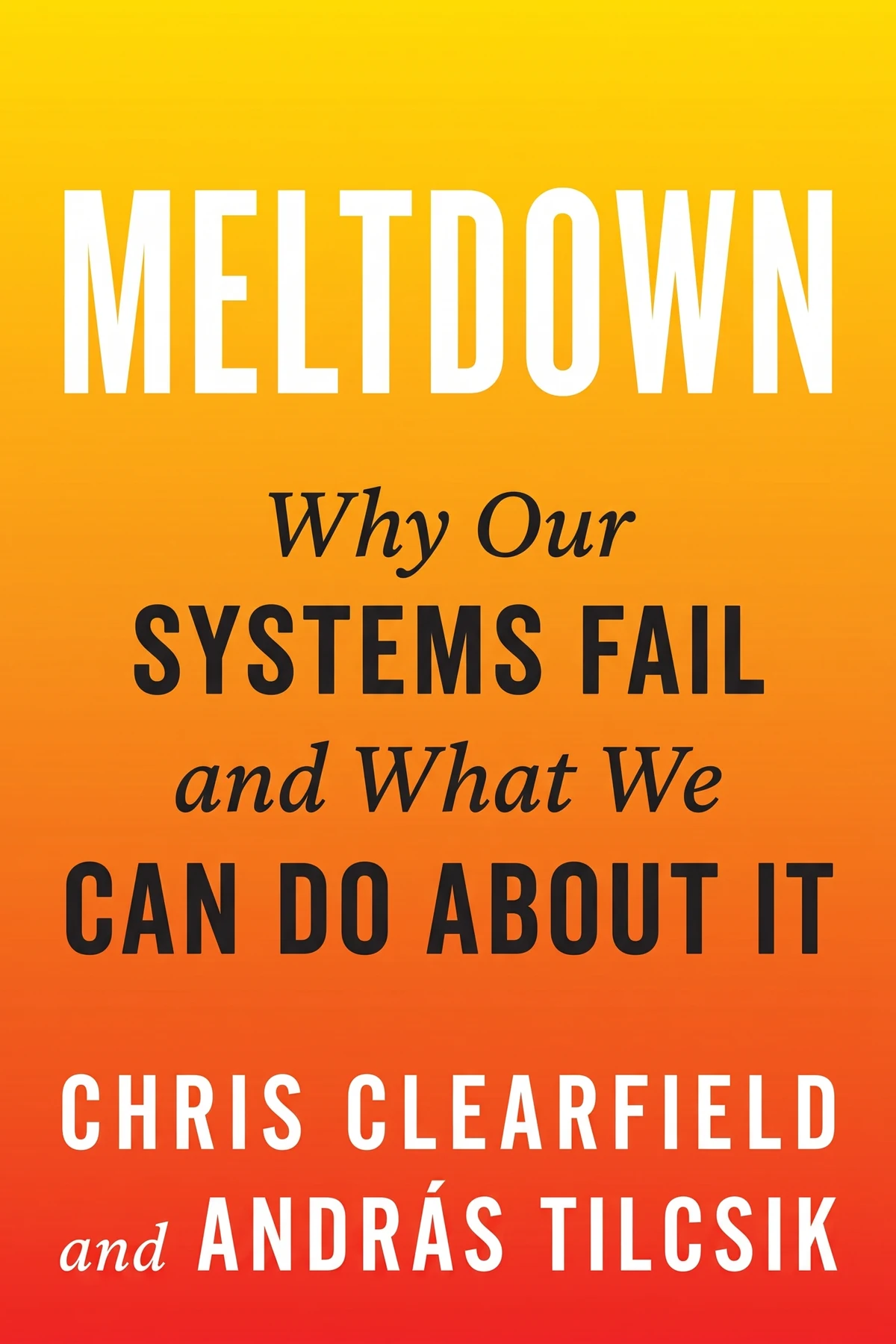
Table of Content
1. Introduction
55 sec
If you run projects or teams, the failure you fear most is the one nobody saw coming. In Meltdown, Chris Clearfield and András Tilcsik argue that such failures are less random than they look. The global financial crisis, the Fukushima nuclear disaster and the BP oil spill off the coast of the Gulf of Mexico all shared the same roots. When a system is both complex and tightly coupled, small errors can chain together into collapse.
The authors’ case is that you can defend against failure without predicting what shape it will take. That means making systems clearer and looser, deciding with structure, paying attention to small warnings and building teams that question each other. Their evidence comes from cockpits, trading floors, a hospital ankle rule and a family’s weekly meeting. By the end, you can check any plan for where it is most likely to break.
2. Spot the two traits behind most disasters
1 min 37 sec
A nuclear accident, a stock market and a holiday turkey dinner fail in surprisingly similar ways. One investigator’s discovery explains why, and it gives you a way to judge how fragile your own work really is.
3. Prevent failures you cannot predict
1 min 52 sec
A car’s elegant gearshift, a mountain that will never reveal its dangers and a bakery’s rushed launch all carry the same warning. Each also shows a different way to protect a plan before anything goes wrong.
4. Make better calls when instinct fails
1 min 45 sec
The engineers who planned Fukushima’s sea wall were confident in their numbers, and the ocean proved them wrong. Two simple decision tools, one from forecasting and one from Canadian medicine, guard against the same trap.
5. Turn near-misses into early warnings
1 min 49 sec
Three trains nearly collided under a river, and then everyone moved on. Four years later the bill arrived. Airlines took the opposite path with small errors, and their safety record shows what that is worth.
6. Challenge the senior voice to make teams safer
1 min 45 sec
Accident investigators found that crashes clustered around the most experienced person in the cockpit. The explanation had nothing to do with skill, and the fix offers any leader a simple change for their next meeting.
7. Build teams that catch each other's mistakes
1 min 59 sec
In a trading experiment run from Singapore to Texas, some groups priced stocks far better than others. The same research hints at what went wrong in 2008, and why the usual corporate fix often backfires.
8. Pause or adjust course when pressure is high
1 min 54 sec
A 20-year-old pilot told Steve Jobs he would not fly him, and his pay went up. A family tamed its chaotic mornings by holding regular meetings built around iteration. Both show how to handle a plan that is going wrong.
9. Conclusion
1 min 19 sec
Meltdown ends on a hopeful note: this age of frequent meltdowns can be brought to a close. The features that make modern systems so capable also make them fragile, but the remedy rarely depends on foresight. A gearshift that shows its setting, a launch date with slack, a captain who hears a first officer’s doubt and a trader who refuses to copy the crowd all protect against failures no one has named yet.
One tool from the book pulls these ideas together, and it costs a single meeting. Before your next project begins, run a pre-mortem. Assume the plan has already failed badly and ask what caused it. Research the authors describe shows that imagining failure as certain, which psychologists call prospective hindsight, brings up far more possible glitches than imagining success. Then look at what you wrote down. Wherever the work is hard to see into, make it visible. Wherever the parts are tightly linked, add time or capacity. And wherever someone junior might spot trouble, make sure they feel able to say so.
Above all, change one question in your planning. Stop asking how to make this work, and ask what could have made it fail, while there is still time to change the answer.
About this book
What is this book about?
Modern systems in transport, finance, medicine and power can do more than ever. They are also more complex and less forgiving than ever. Chris Clearfield and András Tilcsik argue that disasters as different as Fukushima, the global financial crisis and the BP spill that fouled the Gulf of Mexico all grow from the same roots. The authors build on the work of sociologist Charles Perrow. He showed that failure is most likely when a system is complex, meaning hard to see inside, and tightly coupled, meaning its parts have little buffer between them. You cannot know the exact form a failure will take, but you can see where a system is fragile and act on it. The book turns that insight into tools anyone can use. It covers transparent design and added slack, structured forecasting and fixed decision criteria, and treating near-misses as warnings, as airlines do. It also explains why leaders who speak last get better information, how diverse teams avoid the errors of groupthink and how a simple cycle of acting, checking and adjusting helps under pressure, whether in an emergency room or at a family breakfast table.
Book Information
Who it's for
Blindsided founders and leads
Project leads and founders who keep getting surprised by failures they did not see coming.
Leaders wanting early warnings
Managers who want their teams to raise problems early instead of hinting at them.
Professionals in high-stakes fields
Anyone working in finance, health, engineering or operations, where small errors can chain into big ones.
About the Author
Chris Clearfield
András Tilcsik teaches at the Rotman School of Management in Toronto and holds a Canada Research Chair in Strategy, Organizations, and Society. The United Nations rated his course on organizational failure the best of its kind in disaster risk management at any business school. Chris Clearfield is a former derivatives trader who chose writing about risk over taking it. He is also a certified flight instructor who teaches people to fly. The two are friends and longtime collaborators.
Ratings & Reviews
Ratings at a glance

What people think
Listeners view this work as a captivating study of systemic breakdowns, featuring fascinating examples ranging from the Fukushima reactor crisis to the blunder at the 2017 Academy Awards. Even though some listeners believe the concepts stem from established theories on complexity, many value the actionable techniques provided for reducing danger and handling "tightly coupled" environments. Furthermore, they appreciate the focus on how inclusive perspectives and organized disagreement can help organizations overcome groupthink. They also observe that the text offers a relevant caution for our automated age, with one listener commenting that it effectively identified the "common fault lines" underlying apparently disconnected disasters.
Top reviews
Ten
Clearfield and Tilcsik have crafted an incredibly unsettling yet necessary exploration of how our modern world is increasingly prone to systemic collapse as processes get faster. They masterfully explain the concept of "tightly coupled" systems where a minor glitch in one area cascades into a total meltdown without warning. I found the analysis of the Knight Capital algorithmic disaster particularly terrifying because it shows how automation eliminates the human margin for error. The authors don't just leave you in despair, though; they offer concrete strategies like nurturing dissent to break through groupthink. It is a gripping read that makes you look at every complex process with skepticism. This is a top-tier addition to your business shelf.
Show moreOmar
I picked this up because I’ve always been obsessed with "how things go wrong" stories, and Meltdown definitely delivered on that front. The narrative flows seamlessly from the Starbucks PR disaster to the tragic events at Fukushima, showing the common threads that link them together. What really struck me was the emphasis on "softening power cues" to allow lower-level employees to speak up when they see something wrong. It's a vital lesson for any leader who wants to avoid the trap of cognitive bias and groupthink. The writing style is punchy and accessible, making complex sociotechnical theories feel relevant to everyday decision-making. Frankly, this should be required reading for anyone in management.
Show moreKru
After hearing about the Fukushima analysis in this book, I can't stop thinking about how we design our critical infrastructure. The authors do a fantastic job of explaining why "tight coupling" is so dangerous: it leaves no room for error and allows failures to spread faster than we can react. I particularly loved the advice on bringing in amateurs or outsiders to challenge long-held assumptions within a company. This kind of cognitive diversity is clearly the best defense against the meltdowns the title warns about. It's an engaging, fast-paced read that manages to be both entertaining and deeply educational. Highly recommended for anyone interested in the intersection of psychology and strategy.
Show moreRuangrat
This is an essential manual for navigating the complexities of the 21st century. Clearfield and Tilcsik have a knack for taking high-level academic concepts and making them feel immediate and personal. I was particularly moved by the sections on how to build a culture where dissent is valued rather than punished. It's easy to see how so many of the disasters mentioned, from Enron to Flint, could have been avoided if someone had just listened to the outliers. The prose is clear and the pacing is excellent, making it a quick but impactful read. I walked away with a much better understanding of why systems fail and how to fix them.
Show moreNatchaya
Ever wonder why massive, multi-billion dollar companies seem to make such amateur mistakes during a crisis? This book provides a clear framework for understanding those failures through the lens of complexity and tight coupling. The case studies, ranging from the Fukushima nuclear disaster to the infamous Oscars mix-up, are well-researched and engagingly written. I appreciated the practical advice on performing "pre-mortems" to identify potential points of failure before they actually happen. While some of the theories on diversity felt a bit like standard management advice, the way they were linked to systemic resilience was genuinely insightful. This is a solid read for anyone who works in a high-stakes environment where one small error can lead to catastrophe.
Show moreRung
As a project manager, I found the insights regarding structured dissent and the dangers of automation to be highly relevant to my daily work. The authors argue that as we move toward an increasingly automated world, the risks of catastrophic failure actually grow because we lose our intuitive feel for the system. I liked the discussion on how diverse groups are naturally more skeptical and less likely to fall into herd mentality during a crisis. My only minor gripe is that some chapters felt a bit repetitive, hammering home the same points about coupling several times. Still, the practical takeaways for managing risk are excellent and easy to implement. It’s a very timely warning against the complacency that comes with technical progress.
Show moreWit
The chapter discussing the 2017 Oscars Best Picture snafu was a brilliant way to illustrate how poor design can lead to massive embarrassment. It wasn't just a human error by the PwC accountants; it was a systemic failure caused by the way the envelopes were printed. This book excels at showing how these "normal accidents" are baked into the very structures we build. I also found the section on the Theranos board of directors to be a chilling example of how a lack of diversity can lead to total blindness. While the tone is occasionally a bit too consultant-heavy for my taste, the underlying message is incredibly powerful. It forces you to look for invisible fault lines.
Show moreHemp
Not what I expected from a business book, as it reads more like a high-stakes thriller in several chapters. The explanation of the Knight Capital collapse, where $460 million vanished in minutes, was absolutely gripping and served as a perfect warning about the dangers of algorithms. I appreciated that the authors provided a checklist of ways to combat these issues, such as performing a "pre-mortem" to imagine what could go wrong. The book successfully argues that in our interconnected age, we can no longer afford to be complacent about small warning signs. It’s a great blend of storytelling and actionable advice, though it does occasionally repeat its main points. Overall, it’s a worthwhile read.
Show moreJoy
While the case studies are undeniably fascinating, I couldn't help but feel that much of the content was a repackaging of Charles Perrow’s older work. The authors do a decent job of updating the examples for the digital age, but the core "complexity plus coupling" thesis isn't exactly groundbreaking. To be fair, the sections on how diversity can help mitigate risk by forcing more rigorous thinking were a highlight for me. However, I was hoping for a more academic deep-dive into complexity theory rather than another breezy business book that skims the surface. It’s a fine introduction for newcomers to the topic, but seasoned readers of management theory might find it a bit derivative.
Show moreSamroeng
To be frank, I found the core thesis of this book to be quite thin despite the interesting historical anecdotes provided. It felt like the authors took a single, simple concept and stretched it out over 300 pages with recycled stories we have all heard before. The "solutions" they offer, like having more meetings or increasing diversity, felt like generic management platitudes rather than rigorous interventions. I was honestly expecting something far more original than this collection of Wikipedia summaries. If you have never read anything about systems thinking, you might enjoy it, but for me, it was a bit of a slog. Look, there are better books on complexity available.
Show moreQuestions about this book
What is the main idea of Meltdown?
Clearfield and Tilcsik argue that very different disasters, from BP’s oil spill to Fukushima and the financial crisis, share the same causes. Following sociologist Charles Perrow, they say failure is most likely when a system is complex, meaning hard to see inside, and tightly coupled, meaning its parts have little buffer. You don’t have to predict exactly what will go wrong to reduce the risk.
What is the Danger Zone in Meltdown?
The Danger Zone is Charles Perrow’s name for systems that combine complexity and tight coupling. In these systems, small failures interact and set each other off until the whole system breaks down. The authors use a turkey dinner to illustrate it. The dishes depend on each other and share one oven, and you can’t see inside the bird to tell whether it is cooked.
How can leaders use Meltdown to prevent failure?
The book suggests several practices. Add transparency and slack to your plans. Use structured tools such as SPIES forecasting or criteria fixed in advance. Treat near-misses as warnings, the way airlines do. Speak last in meetings so others share more facts. Build diversity through voluntary, formal mentoring rather than compulsory programs, which a study of more than 800 US firms found made companies less diverse.
What is a pre-mortem?
A pre-mortem is the reverse of a post-mortem. While a project is still being planned, you imagine that it has already failed badly and ask what caused the failure. The authors cite research showing that this prospective hindsight brings up far more potential problems, with more precise reasons, than imagining success does. It is a cheap way to find weak points before they cost anything.
Who should read Meltdown?
The book suits managers, founders and team leads who run complex projects, and professionals in fields such as aviation, medicine, finance and engineering where errors compound. Its tools also work on a small scale. The Starr family used a weekly cycle of reviewing, improving and committing to change to fix their chaotic mornings at home.
Featured in
Readers also enjoyed




A Year with Peter Drucker: 52 Weeks of Coaching for Leadership Effectiveness
Joseph A. Maciariello



Acting with Power: Why We Are More Powerful Than We Believe
Deborah Gruenfeld

All In: How Great Leaders Build Unstoppable Teams
Mike Michalowicz

AUDIO SUMMARY AVAILABLE
Listen to Meltdown in 15 minutes
Get the key ideas from Meltdown by Chris Clearfield, plus 5,000+ more nonfiction titles.
- 5,000+ titles
- Listen as much as you want
- 7-day free trial
- Cancel anytime









