

14 min 06 sec
Available in: English
Meetings Suck: Turning One of The Most Loathed Elements of Business into One of the Most Valuable
Shows how to turn costly, draining meetings into short, purposeful ones that save money, raise team energy, build skills and keep everyone working toward the same quarterly and three-year goals.
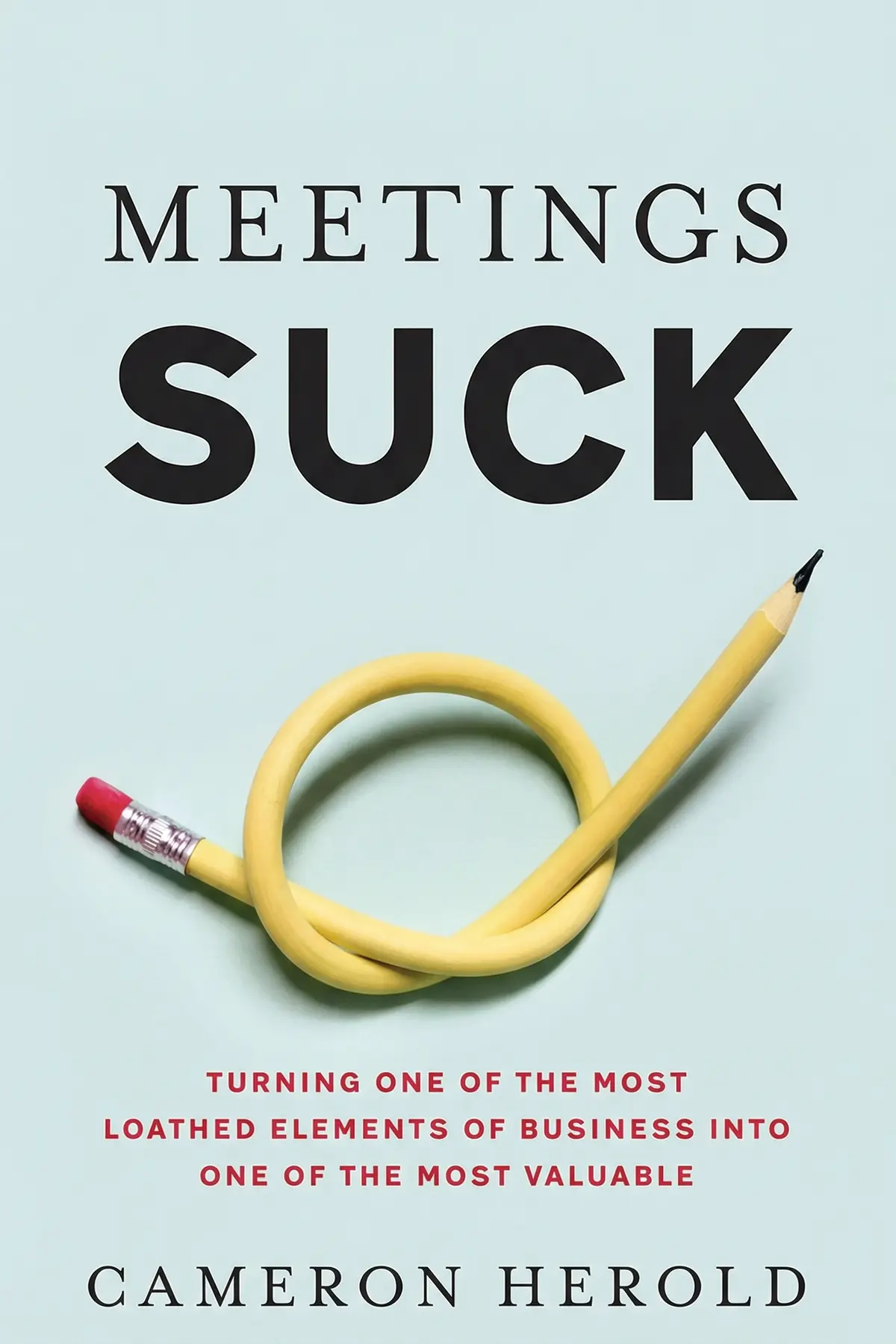
Table of Content
1. Introduction
59 sec
Most meetings cost more than they return, and the first fix can be as plain as asking people to arrive five minutes early. In Meetings Suck, Cameron Herold, who grew 1-800-GOT-JUNK? from $2 million to $106 million in revenue over six years, argues that the trouble lies in how leaders run meetings, and that the same hours can pay for themselves.
If your week is crowded with sessions that drain it, his case is that well-designed meetings save money, lift morale, train people in new skills and keep a whole company aimed at the same goals. The tools are specific. There is a sum that prices a wasted hour, a seven-minute huddle that ends in a cheer, roles that turn shy staff into moderators, a weekly review called WAR and a retreat where leaders picture the company three years ahead. What emerges is a meeting system you can adopt piece by piece, from the daily check-in to the yearly plan.
2. Stop paying for meetings nobody needs
1 min 43 sec
A single meeting carries a price tag that never shows up on any invoice. Once you see the figure, the way people arrive and who gets invited start to look like money decisions.
3. Seven minutes a day that lift a team's mood
1 min 48 sec
There are two moments in every workday when energy reliably sinks. Herold argues they are exactly when a team should stop working and gather, and he wants the gathering to end in a way that sounds faintly embarrassing.
4. Give every attendee a job that builds skills
1 min 41 sec
Most meetings ask people to sit and listen, which wastes a rare chance to stretch them. A handful of simple roles, handed out with care, can turn an ordinary weekly session into a training ground.
5. Calm the loud colleague and draw out the quiet one
1 min 41 sec
Every team has someone who talks over everyone and someone who barely speaks. Herold’s fix requires no difficult conversation and no reorganization, only a different seat at the table for each of them.
6. A meeting rhythm that keeps goals on track
1 min 55 sec
Goals set in January tend to drift out of sight by spring. Herold describes a layered calendar, from quarterly reviews down to a weekly session with a combative name, that keeps targets in front of everyone.
7. Picture the company three years out, then work back
1 min 40 sec
Strategy sessions often end with a whiteboard full of words nobody remembers. Herold’s version asks leaders to imagine small, oddly specific details about their future company, and one condition decides whether any of it happens.
8. Make remote meetings as useful as live ones
1 min 30 sec
On a call where nobody can see your face, normal conversation habits start to fail. Herold names the small changes in speech and tools that let a scattered team stay connected every single day.
9. Conclusion
1 min 09 sec
Herold’s book rests on a simple reversal. The meeting most people treat as a tax on their day is, in his account, one of the most valuable tools a company has, as long as leaders learn to run it well. Time spent together costs real money, so every minute has to earn something: energy for a tired shift, a new skill for a junior hire, a hard look at quarterly numbers, or a shared picture of the company three years out.
None of it needs a grand launch. Make five minutes early the meaning of on time, and send agendas with a timetable so people can judge whether they need to come. When someone reads it and declines, Herold would have you respect that, since a well-organized person may simply see they have nothing to add. Hand out the moderator, time-keeper and closer roles on purpose, with the quiet colleague in the chair and the dominant one on notes. Then try a short huddle at the late-morning dip and end it with a cheer, however silly it feels the first time.
A meeting people would rather skip is a cost. One they would hate to miss is how a company thinks together.
About this book
What is this book about?
Most people know the feeling: a meeting breaks up a productive morning, the loudest person in the room talks for an hour, and everyone leaves having heard things they already knew. Cameron Herold argues the problem is not that companies hold meetings. It is that few leaders know how to run them. Herold starts with cost. Multiply each attendee's hourly rate by the length of a meeting and the waste becomes plain. From there he builds a working system. On time means five minutes early. Agendas go out days in advance so people can opt out. Team meetings held at the mid-shift energy dips lift morale, brief daily huddles share good news and progress, and rotating roles such as moderator, time-keeper and closer let people build new skills. He adds a rhythm of quarterly reviews, a weekly action review he calls WAR, and weekly one-on-ones. The book then moves to strategy: a yearly leadership retreat that produces a detailed picture of the company three years ahead, worked backward into six-month goals. It closes with practical advice for remote and online meetings. Readers get a full set of meeting habits they can introduce one at a time.
Book Information
Who it's for
Managers and team leads
Managers and team leads whose calendars are full of meetings that drain the day.
Founders and operators
Founders and operators who want a simple rhythm of huddles, weekly reviews and quarterly check-ins.
Leaders wanting balanced discussions
Leaders who want quiet staff to speak up and dominant voices to listen.
About the Author
Cameron Herold
Cameron Herold is known as the COO Whisperer. He is the founder of the COO Alliance and of the Second in Command podcast. By thirty-five he had helped build two companies to $100 million each, and by forty-two he had grown 1-800-GOT-JUNK? from $2 million to $106 million in revenue over six years. As a speaker, mentor and coach, he has worked with hundreds of clients around the world on doubling revenue and profit in three years or less.
Ratings & Reviews
Ratings at a glance

What people think
Listeners find this book highly effective for facilitating productive meetings and value its practical advice. Furthermore, the text is straightforward to read and apply, with one listener noting it helps reduce meeting time significantly. They also appreciate the book's organization, with one review highlighting its well-thought-out structure, and find it useful for time management because it helps identify wasted time.
Top reviews
Lucas
The structure of this guide is absolutely brilliant for anyone looking to reclaim their work week. I’ve read dozens of management books, but this one cuts through the noise and provides actionable steps that you can use immediately. Since finishing it, our team meetings have become the foundation of our company values rather than a source of dread. The focus on transparency and making sure everyone has a place to land their ideas has significantly boosted our overall morale. I’m impressed by how Herold explains the 'why' behind regular communication while keeping the 'how' extremely simple. Not gonna lie, I was skeptical about the title, but the content is gold. If you follow this process, your staff will genuinely appreciate the respect you show for their time and their professional growth.
Show moreUbolrat
This book delivers exactly what the title promises by providing a clear roadmap for anyone struggling with calendar bloat. The practical tips on fostering a culture where employees can opt-out of meetings if they can't contribute are worth the price alone. I’ve already noticed a significant reduction in wasted time after implementing just a few of these suggestions with my team. The structure is well-thought-out and moves quickly from theory to implementation without getting bogged down in useless jargon. It’s true that time is money, and Herold treats your time with respect throughout these pages. I especially valued the focus on improving employee skill sets during these sessions rather than just rehashing old information. This is a must-read for any new manager feeling overwhelmed by their daily agenda.
Show moreTern
Finally got around to reading this because my calendar was a graveyard of productivity and I needed a change. Herold’s approach is incredibly practical and helps you identify exactly where you are losing hours every single week. I love the emphasis on agendas and ensuring that the most extroverted person doesn't just dominate the entire conversation. To be fair, some of the meeting types didn't feel relevant to my specific niche, but the overall philosophy is sound. The book is organized in a way that makes it easy to jump back in and reference specific checklists. It’s not just about stopping meetings, but about making the ones you have actually count for something. My team is already feeling more heard and less drained by the end of the day.
Show moreAir
Ever wonder why your team looks glazed over by 10 AM every Tuesday morning? This book identifies the exact reasons why that happens and offers a straightforward remedy for the common corporate headache. I found the section on different meeting types particularly helpful for identifying which of our gatherings were actually necessary and which were just habits. The actionable advice on letting employees take the initiative to decide their own attendance has empowered my staff. It’s not about being lazy; it’s about being effective and respecting the bottom line of the business. The writing is incredibly easy to digest, though I would have liked more specific strategies for handling timid team members. Overall, it’s a helpful guide that focuses heavily on time management and productivity.
Show moreTum
To be fair, I went in skeptical of another business book claiming to solve all my management problems. While it didn't solve everything, it did provide a solid framework for making our strategy meetings much more effective. I appreciated the author's call for transparency regarding budgets and long-term goals, as it helps everyone feel like they have a stake. Some of the logistical suggestions, like the frequent huddles, felt like they would be a nightmare to coordinate with our remote workers. However, the core idea that meetings can improve skill sets and strengthen teams is something I really needed to hear. It’s a quick read that identifies wasted time without being too condescending to the reader. Definitely worth a look if you’re drowning in invites and need to find a way out.
Show moreChanpen
As someone who spends half their day in Zoom calls, I was hoping for a miracle, but I found a mixed bag instead. The author’s points on growth, being heard, and creating a culture of accountability are actually quite refreshing and resonated with me. I particularly liked the section on making sure outcomes are defined before anyone even sits down. However, the suggestion for twice-daily huddles just isn't feasible for my department with our varying schedules and specific obligations. It felt a bit too 'corporate startup' for my taste. In my experience, while the concept of one-on-ones being sacrosanct is great, dedicating 60 minutes a week per person is a massive logistical hurdle. It’s a decent starting point if you need to overhaul your schedule, but it requires heavy filtering.
Show morePlernpiriya
After hearing several colleagues rave about this, I decided to see if it applied to our academic department. It turns out that while the setting is very corporate, some of the ideas about transparency and longer-term strategy still land well. I don’t handle budgets, yet I appreciated the call for sharing that information so everyone feels invested in the company's direction. The writing style is punchy and direct, making it an easy weekend read for a busy professional. My main gripe is that it doesn't offer enough strategies for getting the quiet introverts to contribute without putting them on the spot. We have people who just nod along, and I needed more than just 'leader, shut up.' It's a solid guide that needs some personal tailoring to really work.
Show moreKan
Look, the advice isn't revolutionary, but it is organized well enough to be a useful tool for a disorganized office. Most of us know that meetings need agendas, yet we rarely actually enforce that rule until we see the consequences in writing. The author defines the keys to effective sessions, but I felt like I was fishing through a lot of fluff to find the actionable bits. I also wish there was more commentary on why regular meetings often have unfulfilled agendas to begin with. Is it a meeting problem or a deeper systemic issue? The book touches on it but moves on too quickly. Still, the points about accountability and making sure everyone is on the same page are practical enough to justify the quick read.
Show moreMalee
Picked this up on a whim during a particularly frustrating week of back-to-back sessions. Truth is, it’s a very concise book on the basics of making communication work, though it doesn't dive deep into psychology. I appreciated the encouragement to make one-on-one check-ins sacrosanct, even if the 30-60 minute requirement feels like a lot. It’s a slippery slope when you start canceling these, and Herold is right that they are essential for long-term team health. I did find the tone a bit too aggressive at times, but the message eventually resonates if you stick with it. It’s a good reality check for leaders who have lost control of their schedules. Take the concepts and alter them to fit your own group’s dynamics because the huddle stuff isn't for everyone.
Show moreBun
Not what I expected from the hype. While the core message is valid—that we waste too much time in rooms talking about nothing—the book itself feels like a lot of fluff surrounding a few decent ideas. You really have to fish for that 10% of gold in 90% muddy water. Frankly, it lacks the deep, useful insight I was craving for complex organizational issues. It’s a very fast read, which is good because I wouldn't want to spend more than an afternoon on it. I wish there was more exploration of the 'slippery slope' of canceling meetings rather than just a brief mention. If you’ve never read a business book before, it might be okay, but for veterans, it’s pretty thin and repetitive.
Show moreQuestions about this book
What is the main idea of Meetings Suck by Cameron Herold?
Herold argues that meetings are essential to a well-run company, but most leaders run them badly. Since each meeting costs the combined hourly pay of everyone present, it must earn its time. Designed well, with punctual starts, optional attendance, assigned roles and a regular schedule, meetings save money and also raise morale, build skills, keep goals in view and shape long-term strategy.
How much do meetings cost a company according to Meetings Suck?
Herold suggests multiplying each attendee’s hourly rate by the meeting’s length. A room of executives can cost thousands of dollars, while each lower-level employee represents around $50 in lost revenue. In his estimate, an average company loses about $25,000 a year to meetings. That figure is why he insists on starting on time and letting people skip items that do not concern them.
What meeting roles does Cameron Herold recommend?
He describes a moderator or chair who keeps the discussion on the agenda, a time-keeper who keeps it on schedule, a closer who sums up commitments and deadlines at the end, and prepared participants who arrive on time. He suggests rotating the roles so people grow. A quiet employee might moderate, a customer service worker might close, and a bossy colleague might take notes.
What is a WAR meeting in Meetings Suck?
WAR stands for weekly action review. Herold describes it as a 60 to 90 minute weekly meeting where employees below leadership level go through their metrics, flag problems blocking their goals and brainstorm solutions. It keeps quarterly targets on track and holds people accountable for their progress. It sits alongside quarterly finance and business meetings and weekly one-on-ones between leaders and staff.
How can I apply Meetings Suck with my team this week?
Start small. Tell your team that on time means five minutes early. Send your next agenda a few days ahead with a timetable, and let people opt out of items that do not concern them. Assign a moderator, time-keeper and closer. Then try a seven-minute huddle at around 11 in the morning or 2 in the afternoon, sharing good news and ending with a short group cheer.
Readers also enjoyed




A Year with Peter Drucker: 52 Weeks of Coaching for Leadership Effectiveness
Joseph A. Maciariello



Acting with Power: Why We Are More Powerful Than We Believe
Deborah Gruenfeld

All In: How Great Leaders Build Unstoppable Teams
Mike Michalowicz

AUDIO SUMMARY AVAILABLE
Listen to Meetings Suck in 15 minutes
Get the key ideas from Meetings Suck by Cameron Herold, plus 5,000+ more nonfiction titles.
- 5,000+ titles
- Listen as much as you want
- 7-day free trial
- Cancel anytime









