

15 min 51 sec
Available in: English
Marissa Mayer and the Fight to Save Yahoo!
Nicholas Carlson traces how Yahoo rose from a student list of links to a $128 billion company, then lost its purpose. He also shows why Marissa Mayer's bold rescue as chief executive fell short.
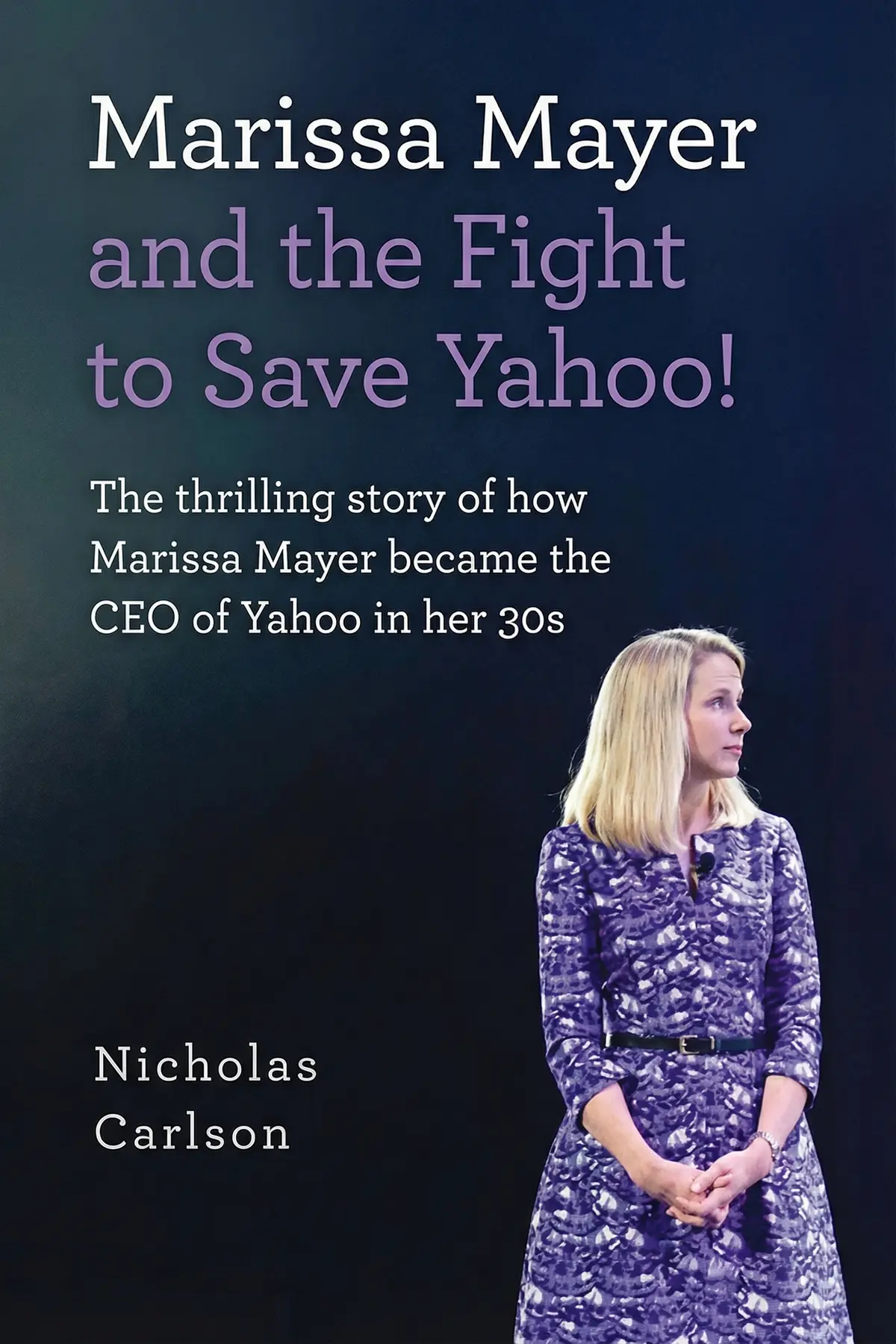
Table of Content
1. Introduction
1 min 01 sec
A company can own its market and still lose it, through a string of choices that each looked sensible at the time. In Marissa Mayer and the Fight to Save Yahoo!, business journalist Nicholas Carlson shows how Yahoo went from being, for many people, the internet itself to a service most users could lose without noticing.
His account follows one thread. Yahoo grew huge by making a confusing new web easy for ordinary people, and it slipped each time it put something else first: paying partners, its own sprawl, or a leader’s personal taste. Marissa Mayer, the Google vice president hired in 2012, brought focus and speed. She arrived, though, after others had already solved the problem Yahoo once owned.
The story reads like a set of warnings for anyone who runs a product, a team or a career. It shows what trust is worth, why a company needs one clear purpose, and what speed can cost.
2. Start with a guide people actually need
1 min 50 sec
A homemade list of favorite web pages drew tens of thousands of visitors a day before anyone tried to profit from it. Instead, the founders rejected America Online’s $2 million bid and gave Sequoia 25 percent of the business in exchange for $1 million.
3. Let user data decide what you build next
2 min 01 sec
Only a fifth of Yahoo’s booming traffic went to the directory that made it famous. The rest came from products built in a way most software companies of the day would have found strange.
4. Never sell the trust your audience relies on
2 min 01 sec
Start-ups paid Yahoo millions for its blessing, and investors rewarded them instantly. It looked like free money. Carlson shows who ended up paying the bill, and why it took years to repair.
5. Rebuild revenue by going out to find buyers
1 min 51 sec
After the crash, Yahoo still drew more visitors every day, but its ads earned far less because users no longer trusted them. A veteran sales manager explained the fix with a picture from a fishing boat.
6. See how a $1 million pass cost Yahoo its future
1 min 54 sec
A graduate student once offered Yahoo his thesis project for the price of funding his studies. The answer was no. Years later, a simple word game at a company retreat exposed how deep the damage went.
7. A clear direction for a company that did everything
1 min 53 sec
The new chief executive once spent hours in a meeting debating shades of blue. That obsession with detail gave Yahoo something it had lacked for years, and pointed it at a familiar kind of problem.
8. Know where your judgment stops being reliable
2 min 07 sec
Rising shares, a billion-dollar purchase and a wave of strong job applicants made the rescue look complete. Behind those signs, a careful decision-maker was making calls she would never have accepted in her own field.
9. Conclusion
1 min 13 sec
Yahoo’s story is one company learning, forgetting and relearning the same lesson. It grew enormous by making a strange new medium simple for ordinary people, guided by what those people actually clicked. It fell whenever it put something else ahead of them. First came partners who paid for the top of the page, then a sprawl of 400 products nobody could sum up in a word, and finally a leader’s taste in a field where she had no data. Mayer was right that Yahoo needed one purpose. The purpose she picked had simply been taken already.
The book leaves habits worth carrying into any job. Protect the trust behind every recommendation you make, remembering that Yahoo’s ad clicks fell from five percent to half of one percent once users stopped believing. Separate the decisions you can back with evidence from those that rest on taste, and get help with the second kind. Before racing to build something, check that no one has already solved the problem for everyone.
Yahoo was once simply where people went online. It earned that place by answering one real need, and size could never take its place.
About this book
What is this book about?
Yahoo was once, for millions of people, simply where the internet began. Today most of its services have better rivals. Business journalist Nicholas Carlson sets out to explain how a company that started as two friends sharing favorite links became worth $128 billion, lost 90 percent of that value in a year, and then hired a star from Google to bring it back. Carlson follows Yahoo through its best and worst decisions. It built hundreds of products by watching what users clicked. It sold its credibility to shaky dot-com partners and turned down Larry Page's offer of BackRub, the project that became Google, for $1 million. It then spread itself across so many markets that no one could say what it stood for. Then he turns to Marissa Mayer, a data-obsessed Google vice president who became chief executive in 2012, bet the company on mobile apps and still could not reverse the decline. Readers get a vivid case study in how companies win and lose relevance. It works as a set of warnings about trust, focus, speed and the limits of a leader's judgment.
Book Information
Who it's for
Founders and product heads
Founders and product leaders who want a real case of a giant losing focus.
Managers weighing forced rankings
Managers weighing speed, forced rankings and morale on their own teams.
Professionals curious about Yahoo
Professionals curious how Yahoo missed Google and why Marissa Mayer's rescue stalled.
About the Author
Nicholas Carlson
Nicholas Carlson is a business journalist who served as chief correspondent and later global editor-in-chief at Business Insider, where his investigative work covered Facebook, Twitter and Groupon. His Yahoo coverage won a Digiday award in 2014, and his New York Times Magazine cover story on Marissa Mayer was a Mirror Award finalist. He began his career at Merrill Lynch, later became CEO of Dynamo and co-hosts Business Explains The World.
Ratings & Reviews
Ratings at a glance

What people think
Listeners find this title to be an absorbing experience that delivers profound understanding regarding Yahoo’s background and business practices. The author’s approach is expertly handled, and listeners characterize the tone as both truthful and credible. They value the speed of the narrative, with one listener remarking that it truly is a page-turner.
Top reviews
Narut
Ever wonder how a tech giant with so much early promise ends up as a cautionary tale for Silicon Valley? Carlson delivers an incredibly candid and honest look at the internal friction that defined Yahoo's later years. I was gripped by the details of Mayer’s transition from Google, where she had already established herself as a meticulous, data-driven executive. The book does an excellent job of illustrating the impossible task she faced upon arrival. You get a real sense of the tension between her innovative vision and a company culture that was already deeply troubled. Not gonna lie, the reporting on the 'sexist gossip' regarding her wardrobe and maternity leave felt a bit unnecessary, but it accurately reflects the media circus of the time. This is a must-read for anyone interested in corporate governance and the high-stakes world of tech turnaround attempts.
Show moreElan
Finally got around to reading this, and it provides an incredibly authentic look at the chaos behind the famous purple logo. The book is effectively two stories in one: a tragic history of a pioneer that lost its way and a portrait of a leader trying to fix the unfixable. I was particularly fascinated by the breakdown of the Alibaba deal, which basically kept Yahoo on life support for years. Carlson’s tone is matter-of-fact, yet he captures the high-speed drama of the valley perfectly. It’s a refreshing change from typical 'hero-worship' biographies because it highlights the failures and the mismanagement just as much as the talent. The research into Mayer’s personal branding and her work ethic at Google serves as a great backdrop for her eventual move to the top spot. If you want to understand why some companies thrive while others stagnate, this is the book to grab.
Show moreSamroeng
This book is basically two stories woven into one: a tragic history of a pioneer that lost its way and a portrait of a leader trying to fix the unfixable. Nicholas Carlson’s writing is sharp, making the complex world of tech mergers and acquisitions feel surprisingly human. I was struck by the description of Yahoo’s lack of identity; they never quite knew if they were a media company or a tech company. Mayer’s attempt to pivot to mobile was a valiant effort, and this book documents every hurdle she faced with incredible detail. It’s a fascinating read that offers great insight into the systemic issues that plague aging tech giants. The story is a reminder that in Silicon Valley, even a massive head start isn't enough to guarantee survival. I highly recommend this for anyone who wants a behind-the-scenes look at the realities of corporate turnarounds. Truly an indulgent and educational read.
Show moreAraya
Nicholas Carlson manages to turn what could have been a dry corporate post-mortem into a legitimate page-turner. The narrative flows with a journalistic flair that captures the chaos of the early internet years and the eventual decline of a pioneer. I found the sections on the QPR system—that controversial forced ranking curve—to be especially illuminating because it explains so much about the internal morale collapse. It’s a bit heavy on the gossip side, which makes it feel like popcorn entertainment at times, but the factual timeline regarding the Microsoft bid and the Alibaba windfall remains solid. Frankly, it’s a fascinating study of how brand neglect can sink even the biggest titans. While some of the insights into Mayer’s personality feel speculative, the book offers a rare, insider perspective on the struggle of being a female CEO in a male-dominated industry. It is a well-constructed account that avoids being a simple success story.
Show moreThongchai
The chapter on Mayer’s decision to ban remote work was particularly revealing, especially given how it polarized the tech world at the time. This book is a masterclass in pacing, moving swiftly from the founding of the directory to the desperate search for a new identity. Carlson captures the 'secret access' feeling of being in the room during these pivotal meetings. I appreciated how the author balanced Mayer’s technical genius with the interpersonal friction she often caused. It’s an honest portrayal of a complex person who defies easy stereotypes. Even though the company's ultimate fate is well-known, the book reads like a thriller. My only minor gripe is that the ending feels a bit abrupt, but that’s likely because the story was still unfolding during publication. Overall, it’s a brilliant, insightful read for any tech enthusiast or business student.
Show moreRatthapong
As someone who followed the tech news during Mayer’s tenure, this book fills in so many of the gaps regarding what was actually happening in those boardrooms. The description of the management systems—specifically how they mirrored the 'forced curve' at Enron—was a chilling reminder of how corporate culture can be destroyed by good intentions. Carlson is a great storyteller who knows how to keep the reader engaged with short, punchy chapters. The truth is, Yahoo was likely beyond saving long before Mayer arrived, but seeing the specific ways they missed the mobile revolution is still painful. I loved the background on the various CEOs that came before her; it really puts the 'troubled company' tag into perspective. It’s a well-researched piece of journalism that manages to stay accessible to a general audience. This is definitely one of the better business books I've read lately.
Show moreAnong
Picked this up on a whim and was surprised by how much I learned about the broader ecosystem of AOL, Google, and eBay. The author does a fantastic job of weaving together the disparate threads of the internet's evolution. It’s clear that Mayer is a star to watch, regardless of the outcome at Yahoo, and her work ethic is clearly legendary. The book provides an authentic glimpse into the pressures of high-level leadership. I found the sections on her 'personal branding' at Google to be quite insightful for my own career. While the gossipy tone can be a bit much, it accurately captures the cutthroat nature of the industry. The narrative is fast-paced and well-executed, making it a very easy read for such a complex subject. It’s a solid 4-star book that balances business history with a compelling character study.
Show moreBee
While I appreciated the deep dive into the early days of Jerry Yang and David Filo, the second half of this book felt a bit too focused on tabloid-style speculation. The author relies heavily on anonymous sources and office rumors, which makes me question the absolute credibility of the more personal anecdotes. For example, trying to pin Mayer into a specific Myers-Briggs personality type felt a little forced and pseudoscientific for a serious business biography. To be fair, the writing is snappy and the pacing is excellent throughout the entire 300-plus pages. I learned quite a bit about the broader ecosystem involving AOL, Apple, and eBay that I hadn't considered before. It’s an enjoyable read if you take the 'insider' claims with a grain of salt. It just lacked the objective distance I usually prefer in journalistic non-fiction. Good, but definitely skewed by the author's subjective lens.
Show moreFah
To be fair, Carlson writes with a journalistic flair that keeps you engaged, but I finished the book feeling like I still didn't truly know the 'real' Marissa Mayer. A lot of the content is recycled from his Business Insider articles, which makes it feel a bit disjointed at times. The book excels when it focuses on the factual history of brand mismanagement and the missed opportunities with Microsoft. However, when it dives into the psychological motivations of the executives, it feels like it’s reaching. Personally, I would have preferred more focus on the technical shifts in the industry and less on the social dynamics of the 'Google elite.' It is a decent overview of a specific era in Silicon Valley, but it doesn't quite reach the heights of other classic tech biographies. It’s a good 'popcorn' read for a flight, but don't expect a deep, academic analysis.
Show moreJib
Not what I expected from a business biography, as it leans way too heavily on hearsay rather than hard data or direct interviews. The author seems more interested in the 'drama' of the boardroom than the actual mechanics of the business strategy. I found the constant focus on Mayer’s fashion choices and her two-week maternity leave to be quite regressive and distracting. It felt like the book was trying to capitalize on controversy rather than providing a balanced analysis of her leadership. Look, the historical context of Yahoo’s early growth is interesting, but the narrative is plagued by a 'he-said, she-said' vibe that undermines its authority. Many of the perspectives included are clearly from disgruntled former employees, which makes the whole thing feel one-sided. I was hoping for a more professional dissection of the tech industry, but this felt more like a long-form gossip column.
Show moreQuestions about this book
What is Marissa Mayer and the Fight to Save Yahoo! about?
Nicholas Carlson traces Yahoo from a 1993 list of favorite links to a company worth $128 billion, then through the dot-com crash, its refusal to buy Google, and years of sprawl. The second half follows Marissa Mayer, a Google vice president who became Yahoo’s chief executive in 2012 and bet on mobile apps. Carlson argues she gave Yahoo direction but has not yet found it a lasting purpose.
Why did Yahoo not buy Google?
In 1997 Larry Page tried to sell his thesis project, BackRub, to Yahoo for $1 million. Yahoo believed search would run on algorithms but preferred buying search from outside suppliers so it could switch providers whenever it liked. BackRub became Google, which soon outgrew every rival. Yahoo later tried repeatedly to buy it, offering as much as $6 billion in 2002, without success.
What mistakes did Marissa Mayer make at Yahoo according to the book?
Carlson says Mayer based tech decisions on data but ran media on instinct, turning down successful programs she disliked and blocking Gwyneth Paltrow’s hire for Yahoo Food. Pressure for speed left the new Yahoo Mail untested and prone to breakdowns. Her fixed-curve rating system forced every team to give someone a low score, which employees say set colleagues against each other and drove talented people away.
What lessons does the Yahoo story teach business leaders?
The book points to a few. Never sell the trust behind your recommendations: Yahoo’s ad clicks fell from about five percent to half of one percent after paid partners topped its results. Make sure people can describe your company in one word. Know where your evidence ends and your taste begins. And check whether a rival has already solved the problem you plan to attack.
Who should read Marissa Mayer and the Fight to Save Yahoo!?
It suits founders, product managers and team leads who want a detailed case of how a dominant tech company lost relevance. It also suits readers curious about Marissa Mayer’s career, from Stanford and Google to Yahoo. Anyone managing growth, sales or performance reviews will find concrete warnings in Yahoo’s choices about partners, focus and staff ratings.
Readers also enjoyed




A Year with Peter Drucker: 52 Weeks of Coaching for Leadership Effectiveness
Joseph A. Maciariello



Acting with Power: Why We Are More Powerful Than We Believe
Deborah Gruenfeld

All In: How Great Leaders Build Unstoppable Teams
Mike Michalowicz

AUDIO SUMMARY AVAILABLE
Listen to Marissa Mayer and the Fight to Save Yahoo! in 15 minutes
Get the key ideas from Marissa Mayer and the Fight to Save Yahoo! by Nicholas Carlson, plus 5,000+ more nonfiction titles.
- 5,000+ titles
- Listen as much as you want
- 7-day free trial
- Cancel anytime









