
12 min 11 sec
Available in: English
 ไทย
EnglishไทยLying
By Sam Harris
Sam Harris argues that every lie, even a kind white lie, wears down trust, adds stress and makes bigger public lies easier. He also shows how to stay honest without being cruel.
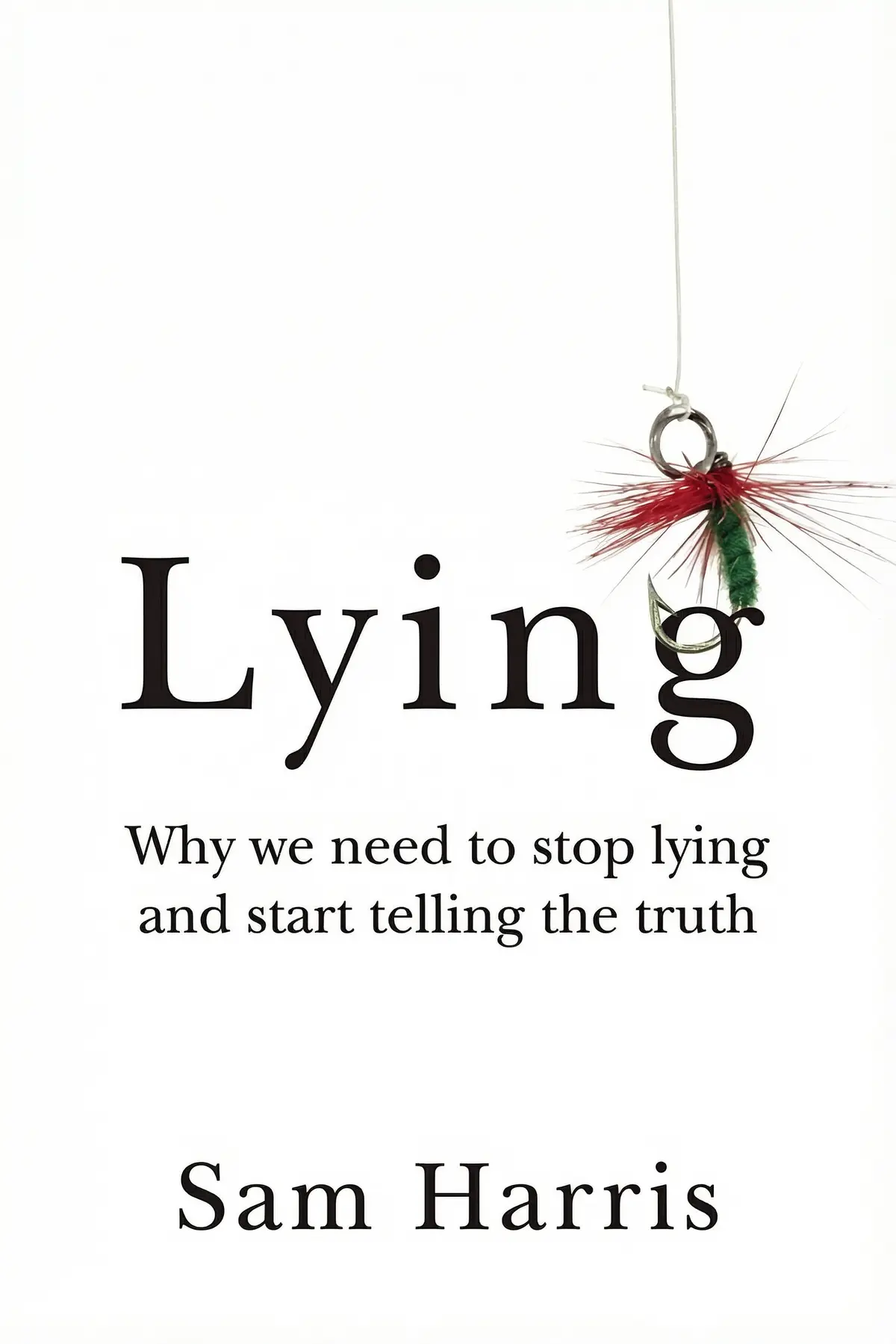
Table of Content
1. Introduction
1 min 06 sec
Most people who think of themselves as honest still hand out small untruths every day: praise for a gift they dislike, a story to talk their way out of a parking ticket, a welcome they do not feel. In Lying, a short essay by neuroscientist and writer Sam Harris, those little lies are the real problem, because each one makes deception a bit more normal and clears the way for large lies that can start wars or turn people against science. Harris takes a hard line. Big or small, kind or selfish, a lie should not be told.
His case rests on what lies cost: the trust of the people who hear them, the trust of the people who merely watch, the peace of mind of the person telling them, and in the end the honesty of a whole society. Along the way come concrete scenes, a father caught out by his daughter and a friend sitting on painful news, that show where small lies leak trust and what to say instead.
2. Spot the small lies that feed the big ones
1 min 39 sec
A false claim about hidden weapons helped justify a war and left many people skeptical of American foreign policy. The polite fib you told this morning seems a world away, yet Harris sees the two as close relatives.
3. Welcome guests without a lie your child repeats
1 min 30 sec
A father’s cheerful hello to his houseguests goes wrong the moment his young daughter speaks up. The scene shows how one harmless-seeming sentence can corner you, and what he could have said instead.
4. Keep your word worth something to everyone watching
1 min 33 sec
You may never be the target of a friend’s lie and still lose faith in them. Harris explains why simply watching someone deceive another person changes how much you believe them.
5. Tell the painful truth a friend deserves
1 min 44 sec
Discovering that a friend’s partner is cheating leaves you with an awful choice. Harris has a firm view on what you owe your friend, and on what your silence actually protects.
6. Drop the mental load of keeping stories straight
1 min 41 sec
Lies need upkeep: versions, audiences and the fear that people will compare notes. Harris argues the strain reaches further than most liars realize, all the way into how they see themselves.
7. Stop small lies to make big ones harder
1 min 47 sec
A disproved vaccine study still shapes what many people believe. Harris links that stubborn falsehood to the small lies of everyday life, and proposes an ordinary place to start changing the norm.
8. Conclusion
1 min 11 sec
Harris’s essay asks for something that sounds simple and is hard in practice: treat the kind lie and the cynical lie as the same act. One way to hear his argument is that trust works like a shared account. A false weapons claim drains it at the level of nations, and a father’s cheerful welcome drains it in front of his daughter. Every withdrawal makes the next one easier, until a disproved vaccine study can outlive the career of the doctor who wrote it.
The practical version starts small. When you feel the pull toward a polite falsehood, search for the sentence that is warm and also true, the way a host can welcome guests without claiming a joy he does not feel. When someone you care about needs bad news, give it to them, and accept the hard conversation as the price of being someone they can rely on. And when you catch yourself tracking which version of a story went to which person, take that as your signal to stop.
Harris’s bet is that honesty spreads the way lying does, one ordinary exchange at a time. The gift you did not like is a good place to begin.
About this book
What is this book about?
Most people see themselves as honest while telling small untruths every day: a fake compliment, a convenient excuse, a warm welcome they do not feel. In this short essay, Sam Harris argues that those everyday lies do real harm. Each one makes deception feel a little more normal, and that normality is what lets large lies take hold, including the kind that help start wars or erode faith in science. Harris builds his case on what lying costs. It damages trust with the people you deceive and with anyone who sees you do it. It traps you in stories you must keep straight. It denies others an accurate view of their own lives, and lying to yourself chips away at self-esteem. His examples range from the claim of hidden weapons used to justify the Iraq War, to a father caught out by his young daughter, to a doctor whose false vaccine research is still believed. Readers get one firm, plain standard, no lies of any size, along with practical ways to replace a polite falsehood with something both kind and true.
Book Information
Who it's for
Questioning their white lies
People who tell small white lies to keep the peace and wonder what those lies cost them.
Holding painful news
Friends and family members holding painful news they are unsure whether to share.
Tired of juggling stories
Anyone worn down by keeping different stories straight for different people.
About the Author
Sam Harris
Sam Harris holds a doctorate in neuroscience from the University of California, Los Angeles, and studied philosophy at Stanford University. He has practiced meditation for more than 30 years. His first book, The End of Faith, appeared in 2004 and won the PEN/Martha Albrand Award for First Nonfiction, and five of his books have been New York Times best sellers, translated into more than 20 languages. He hosts the Making Sense podcast, launched in 2013 as Waking Up, and created the Waking Up meditation app. Lying, published in 2011, is an essay.
Ratings & Reviews
Ratings at a glance

What people think
Listeners find this title to be a brief but engaging experience that provokes deep thought, noting the superb prose and useful guidance throughout. They value how the text offers a logical foundation for the importance of being truthful and explains how integrity is essential to civilized society. However, reactions to the book's duration are varied, with some describing it as concise and others labeling it as ridiculously short.
Top reviews
Elise
Finally got around to reading Harris’s essay on the ethics of honesty, and it’s remarkably sharp. He manages to articulate why those tiny, seemingly harmless white lies are actually corrosive to our relationships and our own integrity. The idea that false encouragement is a form of theft—stealing someone’s time and energy—really hit home for me. It’s a very quick read, essentially a long essay, but the weight of the ideas lingers long after you finish the last page. Frankly, I think we’d all be much better off if we took his advice to heart. It’s rare to find a book that offers such a clear, uncompromising basis for a moral life without resorting to religious dogma.
Show moreSupranee
Truth-telling is the bedrock of civilized society, and Harris defends this position with surgical precision. Unlike Brad Blanton’s "Radical Honesty," Harris offers a more nuanced approach that respects privacy while demanding total veracity. He effectively dismantles the idea that "white lies" are a kindness, showing instead how they rob our friends and family of the ability to interact with reality. The chapter on the damage lies do to the liar's own mind was particularly fascinating to me as a reader. I found the practical advice throughout to be immediately applicable to my own life. It’s a thin volume that packs a serious punch, and I've already recommended it to several friends.
Show moreLandon
As someone who has always struggled with "people-pleasing," this book was exactly the wake-up call I needed. I used to think I was being kind by telling white lies, but Harris convinced me that I was actually being selfish. By lying to avoid conflict, I was denying the people I care about the chance to know my true thoughts and feelings. The book is short, but it’s packed with insights that are immediately useful in the real world. It provides a moral compass that is easy to understand and even easier to respect. If you want to improve your relationships and clear your conscience, this is essential reading. Highly recommended.
Show moreAmara
The premise is deceptively simple: stop lying entirely. While it sounds impossible, Sam Harris provides a compelling framework for why honesty should be our default setting in almost every scenario imaginable. He doesn't shy away from difficult questions, like the classic axe-murderer-at-the-door dilemma, though his solution there felt a bit more theoretical than practical to me. To be fair, the book is incredibly brief—you can finish it in about forty minutes—which might frustrate some looking for a dense philosophical tome. However, the clarity of his prose and the punchiness of his arguments make it a worthwhile investment of time. It really forces you to examine those "fuzzy edges" of your own character.
Show moreKamol
Ever wonder why you feel slightly greasy after telling a tiny social lie just to avoid an awkward conversation? Harris explains that feeling by breaking down how dishonesty creates a mental tax we constantly have to pay. I loved his take on the "fat friend" scenario; instead of a fake compliment, he suggests a path of helpful, albeit difficult, truth. It’s a short, entertaining read that makes you think twice before defaulting to "I'm five minutes away" when you haven't even left the house yet. My only gripe is that it feels more like a blog post than a full book. I wish he had expanded more on the neuroscience of why we find it so hard to be direct.
Show moreTaw
After hearing about Sam Harris's take on Kant and the problem of lying, I had to see if his arguments held up. He takes a very consequentialist approach, arguing that the long-term damage of dishonesty almost always outweighs the short-term discomfort of the truth. I enjoyed his critique of how we use lies to "protect" people, which often just means protecting ourselves from having a difficult conversation. However, some of his logical leaps regarding the "axe-murderer" scenario felt a bit like lazy argumentation. He dismisses potential negative outcomes too quickly to suit his own narrative. Still, the core message is incredibly powerful and well worth the hour it takes to read.
Show moreDarawan
A quick, punchy read that left me reconsidering my social interactions for days. Harris writes with a certain directness that mirrors the honesty he advocates for in his personal philosophy. He makes you realize that most of the lies we tell are just shortcuts to avoid a momentary lapse in comfort. The book is definitely on the shorter side, almost to a fault, but every sentence feels intentional and weighted. In my experience, most people think they are honest until they actually track their speech for a day. This book provides a clear basis for valuing truth-telling over the easy way out. It's a great little guide for anyone looking to simplify their life.
Show moreAdam
This is less of a book and more of a pamphlet, which makes the price point a bit hard to swallow if you're buying a physical copy. That being said, the writing style is excellent—Harris is always clear and avoids the unnecessary jargon that usually plagues philosophy. He makes a solid case for how honesty underpins all civilized thought, but the arguments sometimes feel a bit repetitive. Look, I agree that lying is generally bad, but his refusal to acknowledge the utility of tact in certain social settings felt a bit rigid. It’s an interesting conversation starter, but it leaves many questions about interpersonal nuances completely unanswered.
Show moreBig
Not what I expected from a neuroscientist, as there is very little actual science or data in these pages. Instead, we get a series of philosophical thought experiments and personal anecdotes that feel a bit disjointed. Sam Harris fails to provide a strong enough argument for why his specific brand of honesty is objectively better in high-stakes situations. He treats morality as a black-and-white issue, ignoring the gray areas where most of human life actually happens. The flow of the writing is great, and the style is engaging, but the content feels a bit thin. It’s a decent essay for a Sunday afternoon, but it lacks the depth of his other works.
Show moreRosa
While I appreciate the effort to build a secular ethics, this essay feels like it was written from a position of extreme privilege. Harris argues that we should never lie, yet he ignores the reality that for many people, honesty can be a luxury they simply can't afford. Whether it's a low-wage worker lying to a boss to keep their job or someone in a marginalized group hiding their identity for safety, his "moral landscape" feels very narrow and Western-centric. The examples provided, like the friend asking if they look fat, seem trivial compared to the complex social dynamics many face daily. Frankly, it felt more like a moralistic lecture than a rigorous scientific or philosophical exploration of human behavior.
Show moreQuestions about this book
What is the main idea of Lying by Sam Harris?
Harris argues that lies of any size should not be told. Big lies, such as the false claim of hidden weapons used to justify the Iraq War, breed public distrust. Small white lies seem kind, but they erode trust with anyone who hears or witnesses them, add stress for the liar and make dishonesty feel normal, which helps larger lies spread.
Does Sam Harris think white lies are acceptable?
No. He holds that white lies cause damage too. His example is a father who tells houseguests he is happy to see them after saying the opposite in front of his young daughter, who then repeats it. He is left with no good option. Harris suggests a warm but truthful welcome would have avoided the trap entirely.
Why does lying cause stress, according to Harris?
Lies need upkeep. You must remember what you invented, and because people often tell different versions to different listeners, it becomes easy to forget who heard what and to fear they will compare stories. Being exposed outweighs any good the lie did. Harris adds that lying to yourself forces you to maintain a false image, which wears down self-esteem.
How can I apply the ideas in Lying?
Start with ordinary moments. When a polite falsehood tempts you, look for something warm that is also true. If someone gives you a gift you dislike, Harris suggests telling them, so they can choose better and respect your honesty. If you hold painful news, such as a friend’s partner cheating, he argues you owe them the truth because it serves them in the long run.
Readers also enjoyed


A Guide to the Good Life: The Ancient Art of Stoic Joy
William B. Irvine

A Little History of Philosophy
Nigel Warburton

A Theory of Justice
John Rawls


Anarchism: A Very Short Introduction
Colin Ward
AUDIO SUMMARY AVAILABLE
Listen to Lying in 15 minutes
Get the key ideas from Lying by Sam Harris, plus 5,000+ more nonfiction titles.
- 5,000+ titles
- Listen as much as you want
- 7-day free trial
- Cancel anytime









