

14 min 32 sec
Available in: English
Lost and Founder: A Painfully Honest Field Guide to the Startup World
By Rand Fishkin
A founder's frank account of what building a startup really costs. It covers the odds, investor pressure, honest leadership, strong teams, the risks of growth hacks and why current customers come before new ones.
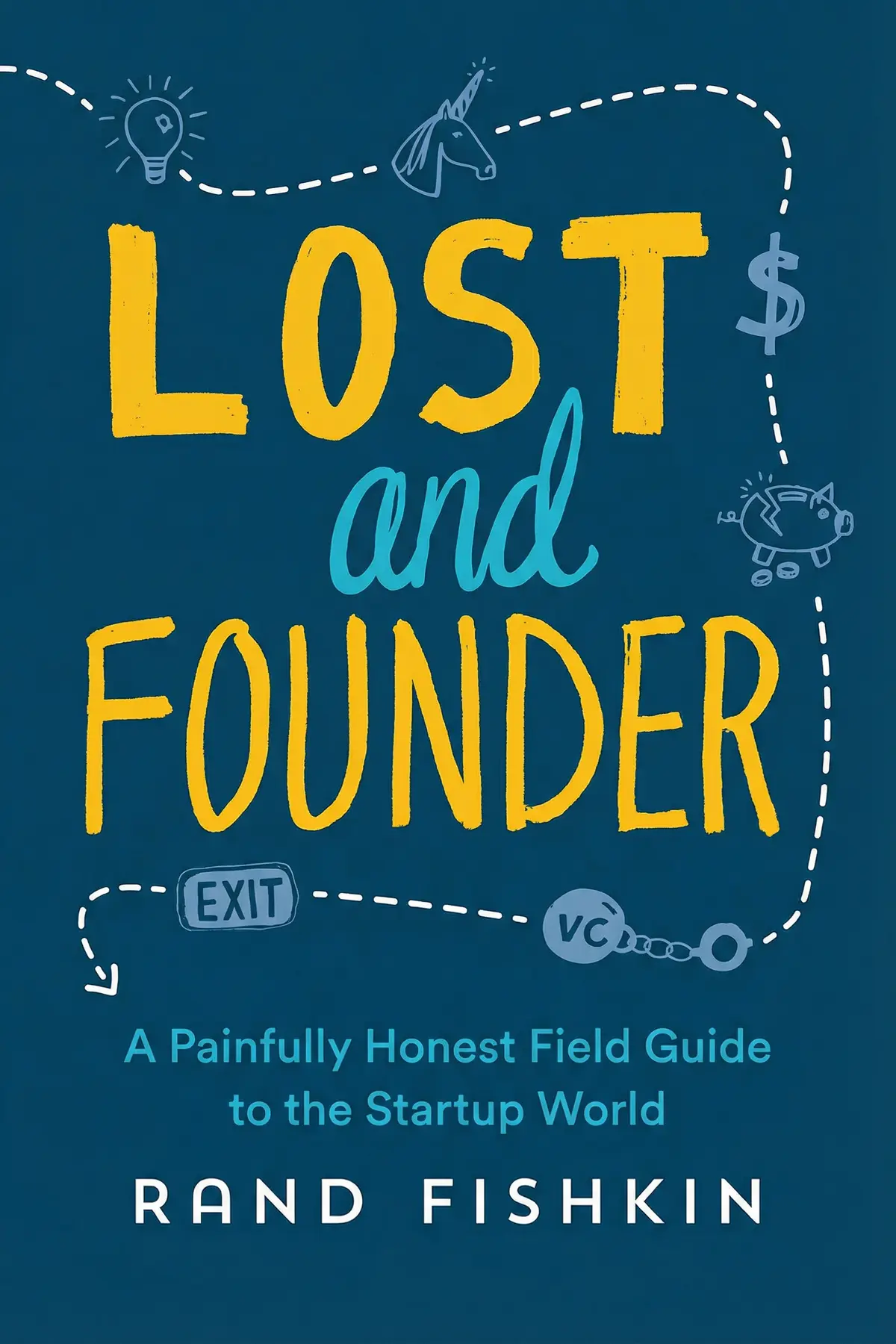
Table of Content
1. Introduction
58 sec
Most founders start out picturing the next Google, and most of them end up in a long, uneven decade instead. In Lost and Founder, Rand Fishkin, who founded the marketing software company Moz, starts with a blunt correction. Fewer than a quarter of early-stage startups backed by venture capital ever turn a profit, and across startups as a whole only about one in twenty delivers a return on investment. His own company needed thirteen years to find its footing.
Fishkin argues that the founders who last don’t win by chasing hype and shortcuts. They choose their money carefully and tell the truth to staff and customers. They hire around their own blind spots and make one product people love before they push for growth. Along the way he opens up his own mistakes: the investor whose goals pull away from yours, the half-built tool that cost half a million dollars, and the growth push that drains the customers you already have.
2. Plan for a decade, not a jackpot
1 min 41 sec
The famous startup stories hide a set of numbers most founders never look at closely. Even the companies that survive can leave their founders earning less than the engineers down the street, for years.
3. Find the gap customers already feel
1 min 28 sec
Some of the biggest startups of the last two decades invented almost nothing new. Their founders spotted something else first, and two of them found it hiding in plain sight in ordinary search data.
4. Know what venture money will ask of you
1 min 33 sec
An investor’s check can feel like freedom. Fishkin shows why it often works the other way, and why even friendly investors are under pressure that can push your company toward bets it cannot survive.
5. Share bad news early and keep trust
1 min 28 sec
When a startup hits trouble, hiding it feels like the kind thing to do. Fishkin argues it is the costly thing, and he describes a simple rule his executives follow every time they write an email.
6. Hire around your own blind spots
1 min 31 sec
The commanding, never-show-weakness leader is still the picture many founders carry. Research inside one of the world’s biggest tech companies points to a very different trait as the best sign of a winning team.
7. Build a diverse team with two ladders
1 min 37 sec
An office redesign at Moz began with one employee’s pregnancy. That small moment connects to a large financial gap between teams, and to a promotion problem that pushes good specialists into jobs they never wanted.
8. Skip the shortcuts that cost you later
1 min 38 sec
Growth hacks and stripped-down first products are startup gospel. Moz tested the second one and spent half a million dollars learning what it can do to a company with a reputation to protect.
9. Keep the customers you already have
1 min 30 sec
Chasing the next funding round can feel like progress while the business shrinks underneath you. Google’s first ten years show a slower path, and unhappy users explain why it matters so much.
10. Conclusion
1 min 08 sec
Lost and Founder works as an antidote to the garage-to-billions legend. Fishkin offers his own record as a map of the real ground: thirteen years before Moz found its rhythm, years of CEO pay below an average Seattle engineer’s, and a half-million-dollar tool that barely moved. It isn’t a warning against founding a company. The thread through all of it is honesty about the odds, about what investors need, about bad news, about your own gaps and about whether a product is ready.
That honesty becomes choices you can make now. Before taking investment, set venture money beside bootstrapping, angels, micro funds and crowdfunding, and ask what each would demand of you. Write your next hard email as if it will be leaked. Give a rough new product to a small group before a wide release, and give your team time to answer current customers before you chase new ones.
The founders Fishkin respects are rarely the ones who found a shortcut. They are the ones still standing, and still telling the truth, when the long middle finally ends.
About this book
What is this book about?
Stories about Google and Facebook make starting a company look like a fast road to wealth. Rand Fishkin, who founded the marketing software company Moz, tells a less flattering and more useful story. Most venture-backed startups never make a profit. Founders often earn less than ordinary engineers, and his own company needed more than a decade to settle into a steady rhythm. Fishkin's angle is radical honesty, about the market, the money and the people. He explains why venture capital ties a founder to investors' need for rare, giant wins. He argues for sharing bad news with staff and customers, and for hiring around the founder's own weak spots. He makes the case for diverse teams and for a career ladder that does not force experts into management. He also explains why growth hacks and half-finished products can damage a company that is trying to last. Readers get a field guide built from real mistakes, including a product that cost Moz 500,000 dollars and won almost no new customers. They also get practical rules for funding, culture and growth.
Book Information
Who it's for
First-time founders weighing funding
First-time founders deciding whether to raise venture capital or build more slowly.
Startup leaders facing setbacks
Startup leaders facing bad news, layoffs or a team that has stopped trusting them.
Product and growth teams
Product and growth people tempted by hacks and rushed launches who want a more durable path.
About the Author
Rand Fishkin
Rand Fishkin founded the marketing technology company Moz and led it as CEO before stepping down. He then cofounded SparkToro, an audience intelligence search engine, as well as Alertmouse and Snackbar Studio. Besides Lost and Founder, he wrote Zero Click Marketing, and he shares his thinking on marketing through videos, a blog and talks around the world. His years building Moz are the raw material for this book.
Ratings & Reviews
Ratings at a glance
What people think
Listeners find this work to be essential reading for startup founders, valuing its sincere perspective and practical guidance. The writing is also excellent and full of wisdom, with one listener pointing out how it illustrates many actual scenarios found in the startup world. Additionally, listeners commend its openness and narrative style, with one review emphasizing how it distributes useful knowledge throughout diverse sectors.
Top reviews
Look
This book is a breath of fresh air in a genre usually filled with survivorship bias and ego-driven narratives. Fishkin doesn't just talk about the wins; he dives deep into the messy, painful reality of building Moz from the ground up. To be fair, his level of transparency regarding personal finances and equity is something you rarely see in business literature. I found the sections on the 'Cheat Codes' of startup life particularly insightful because they challenge the traditional Silicon Valley playbook. It’s a well-written guide that doesn't shy away from the regrets of not taking an early exit. If you’re tired of the 'hustle culture' lies, this provides a grounded perspective on what it actually takes to scale a SaaS company. It's essentially a manual for avoiding the same pitfalls he encountered during his tenure as CEO.
Show moreDream
Picked this up thinking it would be another generic marketing book, but I was pleasantly surprised by the depth of the storytelling. Rand manages to weave together the history of SEO with the brutal realities of managing a large-scale software team. Frankly, the way he discusses his mistakes with such vulnerability is what makes this a must-read for anyone in a leadership position. The chapter on culture and 'the way we work' is something I’ve already started implementing with my own team. It presents real-life situations that many founders face but are too afraid to talk about openly. I especially liked the breakdown of how being well-positioned in a rising industry can look like genius when it's partly timing. It’s a masterclass in founder transparency that every creator should have on their shelf.
Show morePornpimon
The chapter on personal finances and the psychological toll of entrepreneurship is probably the most important thing I’ve read this year. Rand doesn't sugarcoat anything, especially when it comes to the regret of passing up life-changing exits for the sake of higher valuations. Not gonna lie, hearing a founder admit they would do things differently if given a second chance is incredibly refreshing. Most of these books are just 'how-to' manuals, but this is more of a 'how-not-to' guide for common startup errors. The storytelling is top-notch, keeping you engaged even through the more technical discussions of SEO and software architecture. It’s a profound look at the human element of business that is often ignored in favor of growth metrics. Truly a fantastic resource for founders who want to stay sane while they build.
Show moreSakura
Wow, I really wish I had found this book three years ago when I started my online education company. We were heading straight for several of the same pitfalls Rand describes, particularly regarding hiring and culture fit. The way he presents these real-life situations makes them feel immediate and applicable, rather than just abstract theories. Personally, I appreciated his vulnerability regarding his mental health and the stress of the CEO role. It makes the successes feel earned and the failures feel like lessons rather than finalities. This is an essential read for any creator who feels isolated in their journey and needs to know they aren't alone. It’s packed with actionable lessons that I’ve already highlighted for my co-founder to read. Truly an outstanding piece of business writing.
Show moreElise
After hearing Rand speak at a conference, I knew I had to pick this up, and it did not disappoint. The book is a masterclass in transparency, showing the guts of a venture-backed SaaS business in a way few others dare. I love how he breaks down the myth of the 'overnight success' and shows the years of grind that preceded the Moz we know today. Truth is, his insights into the SEO industry provide a perfect backdrop for the larger lessons on leadership and grit. The writing is snappy and the pacing is excellent, making it a very quick read despite the dense subject matter. It’s refreshing to see a founder admit that they don't have all the answers and that they made significant mistakes along the way. Highly recommended for anyone looking for an honest look at the startup world.
Show moreMeen
Ever wonder why so many venture-backed startups eventually lose their soul while chasing growth at all costs? Rand Fishkin provides a compelling answer through his own journey with Moz, moving beyond the polished PR versions of success we usually get. Personally, I appreciated how he broke down the math behind VC funding, showing how it can actually be a trap for founders who aren't careful. The book is packed with actionable lessons that apply even if you aren't in the tech sector specifically. While his tone can occasionally feel a bit self-critical, the raw honesty makes it worth the read for any aspiring entrepreneur. The truth is, the advice about hiring for values and mission is much more practical than the usual corporate jargon. It’s a solid 4-star read that offers a necessary reality check for the Silicon Valley echo chamber.
Show moreSavannah
As someone who has followed the Moz blog for a decade, seeing the 'behind the curtain' story was both enlightening and sobering. Fishkin’s writing style is engaging, mixing data-driven insights with a narrative that feels like a long, honest conversation over coffee. He details the struggle of transitioning from a service-based agency to a product-focused SaaS, which is a common hurdle many of us face. The book is incredibly well-written, though it occasionally feels like it’s aimed purely at people already deep in the tech scene. I found the advice on board meetings and investor relations to be the most valuable part of the entire text. Even if you aren't seeking venture capital, understanding those dynamics is crucial for long-term strategy. It's a great look at the true nature of scaling a business without the usual fluff.
Show moreOoi
Finally got around to reading this, and it reminds me a lot of Derek Sivers' work in terms of radical candor. Fishkin takes the 'fake it till you make it' mantra and throws it out the window, focusing instead on empathy and cultural alignment. In my experience, these 'softer' parts of running a company are the first things to go when pressure builds, so having this reminder was helpful. The book spreads valuable insights across various industries, even though its roots are firmly in the SEO world. My only gripe is that some of the recommendations feel a bit mainstream now, though they might have been novel when he first lived through them. Still, the perspective on different kinds of investors is worth the price of admission alone. It’s a very solid, candid look at the startup journey.
Show moreOn
Not what I expected from a guy I've followed on Whiteboard Fridays for years. While the transparency about the SEO industry is definitely there, the narrative tends to meander into a somewhat pessimistic outlook on the whole journey. Look, I appreciate the honesty, but his attitude towards people like Scott Adams felt unnecessary and really took me out of the story. It felt like he was letting his personal grievances cloud the professional insights he was trying to share. To be fair, the technical advice on SaaS metrics is excellent, yet the overall tone leaves an 'unfinished tale' taste in your mouth. If you can get past the occasional moments of self-righteousness, there are some gems here about the rise of Moz. However, it’s just not as inspiring as other founder stories I’ve encountered recently.
Show moreJib
The story of Moz is interesting at first, but the middle sections really started to drag for me. It felt like the company was mostly just well-positioned to take advantage of the SEO boom, which doesn't necessarily translate into universal advice. To be fair, Rand’s transparency is commendable, but the knowledge sharing part felt a bit methodically repetitive after a while. I was expecting more novel strategies, yet many of the recommendations are things you can find on any startup blog these days. It doesn't quite stand out compared to the origin stories of the big global tech unicorns that offer more radical shifts in thinking. It’s a decent read for those brand new to the startup scene, but veterans might find it a bit basic. The writing is good, but the content meanders too much for my taste.
Show moreQuestions about this book
What is Lost and Founder by Rand Fishkin about?
It is a frank field guide to the startup world from the founder of Moz. Fishkin argues that startup success is rare and slow, and that founders last by staying honest: about the odds, about what investors expect, about bad news, about their own weaknesses and about whether a product is ready. He draws heavily on Moz’s own mistakes, including a costly product launch.
What does Rand Fishkin say about venture capital?
He warns that venture money limits a founder’s freedom. Investors usually manage money from limited partners and aim to triple it within ten years, so they need rare, huge successes. Out of ten investments, five typically fail and three return little. Founders who fall short may face pressure, risky strategies or removal as CEO. He suggests weighing bootstrapping, angel investors, micro venture funds and crowdfunding first.
Why is Fishkin skeptical of MVPs and growth hacks?
Growth hacks can lift short-term sales while distracting from long-term product improvement, and tactics like deep discounts can teach customers not to pay full price. MVPs can disappoint users and damage a reputation. Moz’s Spam Score cost 500,000 dollars and won few customers. Fishkin says young companies can take the risk, but established ones should test with a small group first.
How can I apply Lost and Founder as a team leader?
Share hard news early, including money problems, and write messages as if they might be leaked, as Moz executives are asked to do. Admit your weak spots and hire people who cover them. Build a diverse team, and offer a senior track with manager-level pay for experts who don’t want to manage, such as product owner or engineering architect.
Who should read Lost and Founder?
It suits first-time founders deciding how to fund a company, startup leaders handling difficult news or layoffs, and product or marketing people tempted by quick-growth tactics. It also helps anyone weighing a startup job against a role at a bigger firm, since Fishkin shows that founder pay can stay modest for many years.
Readers also enjoyed




A Year with Peter Drucker: 52 Weeks of Coaching for Leadership Effectiveness
Joseph A. Maciariello



Acting with Power: Why We Are More Powerful Than We Believe
Deborah Gruenfeld

All In: How Great Leaders Build Unstoppable Teams
Mike Michalowicz

AUDIO SUMMARY AVAILABLE
Listen to Lost and Founder in 15 minutes
Get the key ideas from Lost and Founder by Rand Fishkin, plus 5,000+ more nonfiction titles.
- 5,000+ titles
- Listen as much as you want
- 7-day free trial
- Cancel anytime









