

A Planet of Viruses
Carl Zimmer
 English
Shows how a master clock in the brain and smaller clocks in every organ time your sleep, hunger, focus and immunity, and how light, meals and steady routines keep those clocks in step.
1 min 03 sec
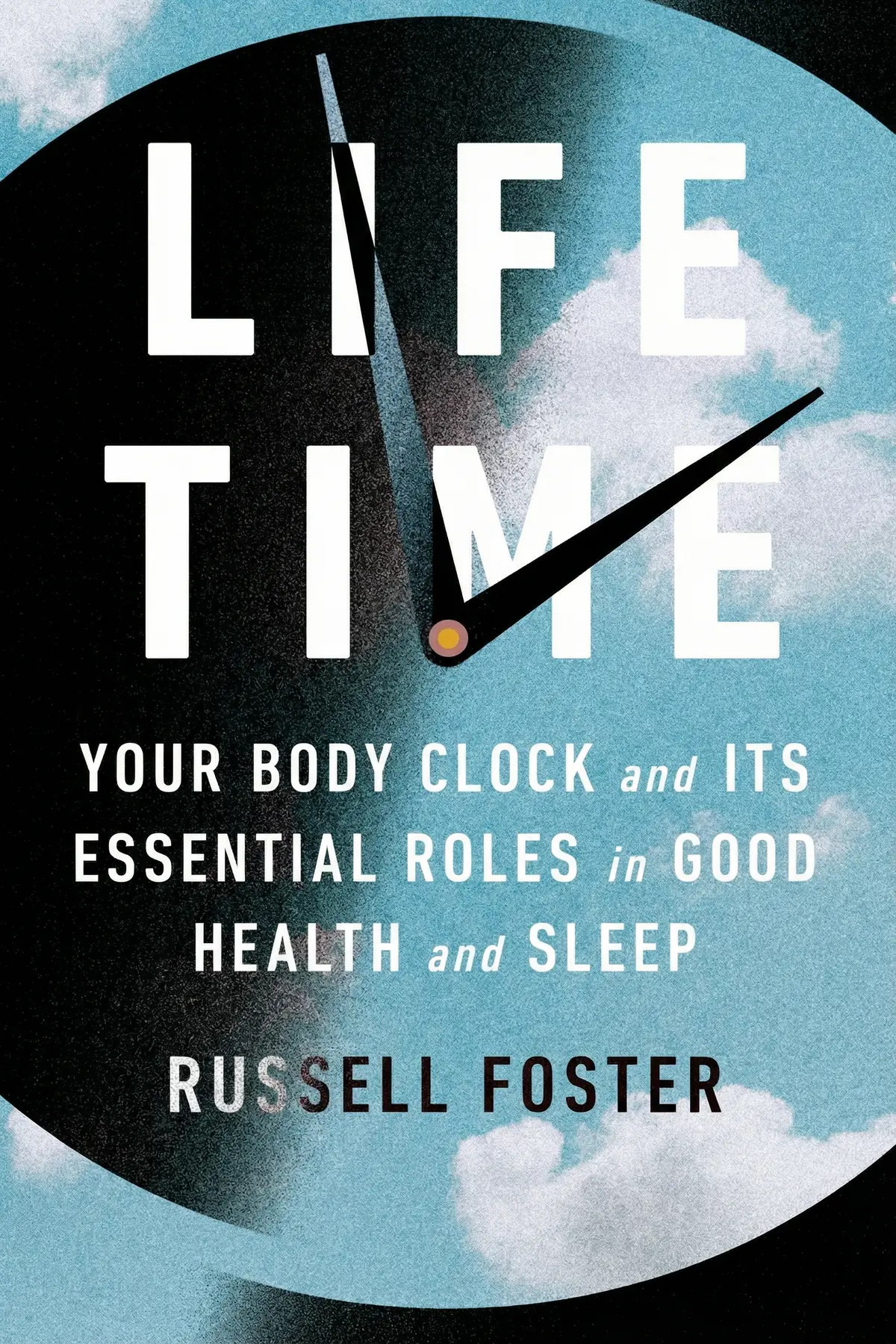
If your energy sags at odd hours and your sleep never quite settles, the problem may be one of timing. Inside your brain sits a cluster of about 50,000 neurons, no bigger than a grain of rice, that tells the rest of your body what hour it is. In Life Time, an Oxford circadian neuroscientist explains how that master clock, and smaller clocks in nearly every organ, decide when you are hungry, sharp, strong or ready for sleep.
His case is that health depends on when things happen as much as on what you do, and that modern light and schedules keep pushing the clock out of step. He traces the damage that follows, from extra calories to heart disease. Then he shows how the same rhythms make meals, workouts and even vaccines work better when timed well. What you take from it is a short set of daily choices about light, sleep and food that bring your body and your calendar back into line.
1 min 50 sec
A structure the size of a grain of rice keeps time for billions of cells, and your liver keeps a schedule too. Knowing that schedule changes which hour you should save for your hardest thinking.
1 min 47 sec
Being wide awake at midnight and foggy at noon is no mystery once you see the two forces behind sleep. Trouble starts when they stop agreeing, and modern life makes that easy.
2 min 00 sec
Your office may look bright, yet to your body it can feel like dusk all day. A set of cells in the eye that has nothing to do with seeing explains why.
1 min 58 sec
Night work and late weekends seem to cost nothing but a few hours of rest. Blood tests of shift workers tell a different story, and it reaches the heart, the waistline and the mind.
1 min 54 sec
The same vaccine, the same breakfast, the same pill: each can work very differently depending on the hour. This chapter shows how much of your health quietly depends on the clock face.
1 min 52 sec
You do not need a rigid timetable to live in step with your body. A few well-placed habits feed each other, and the place to start is smaller than most people expect.
1 min 09 sec
Life Time leaves you with a different way to read your own day. A slow morning after a late night, a blood sugar spike after a big dinner, a sour mood after a run of night shifts: these are not failures of character. They are a clock, shaped over billions of years, reporting that it has been given the wrong signals.
The book’s deeper point is that the clock is easy to mislead and also easy to help. It listens most to light, so the strongest single move is to get bright light early in the day and let your evenings grow dim, keeping screens and blue-heavy LEDs away from the hours before bed. Hold your wake-up time steady through the weekend, so Monday does not feel like a flight across time zones. And move the bigger meals toward breakfast and lunch, letting dinner be the smallest.
None of this demands strict rules. It asks you to treat time as an ingredient of health, alongside food, exercise and sleep. The 50,000 neurons in that rice-sized cluster will keep counting the hours whatever you do. All that is left to decide is whether the rest of your day counts with them.
Most people treat tiredness, late-night hunger or a slump after a run of night shifts as a matter of willpower. The Oxford circadian neuroscientist behind Life Time sees a timing problem. A tiny cluster of brain cells keeps a 24-hour schedule for the whole body, and organs from the liver to the pancreas keep local time of their own. The book explains how that system works, from the proteins that tick inside each cell to the light sensors in the eye that set the master clock. It shows what happens when artificial light, travel and irregular hours push it out of step: scrambled cortisol, extra calories, higher risks of heart disease and mood disorders. It also shows the upside, with morning vaccines producing stronger immunity and early meals producing smaller blood sugar spikes. The book closes with a flexible frame for daily life: steady sleep and wake times, bright days and dim evenings, earlier meals and well-timed exercise. Readers learn why their energy rises and falls when it does, and how to arrange their days so the body works with them.
Office workers who feel foggy indoors all day and wired at night.
Shift workers and frequent travelers trying to limit the toll irregular hours take on their health.
Anyone curious why the hour of a meal, a workout or a vaccine can change how well it works.
This British professor of circadian neuroscience at the University of Oxford has led the Nuffield Laboratory of Ophthalmology and the Sleep and Circadian Neuroscience Institute. He and his research group are credited with key work on the light-sensitive retinal ganglion cells in the eye that feed the body's circadian system. He has contributed to more than a hundred scientific publications, was made a CBE in 2015, and also wrote Rhythms of Life and a short introduction to sleep.
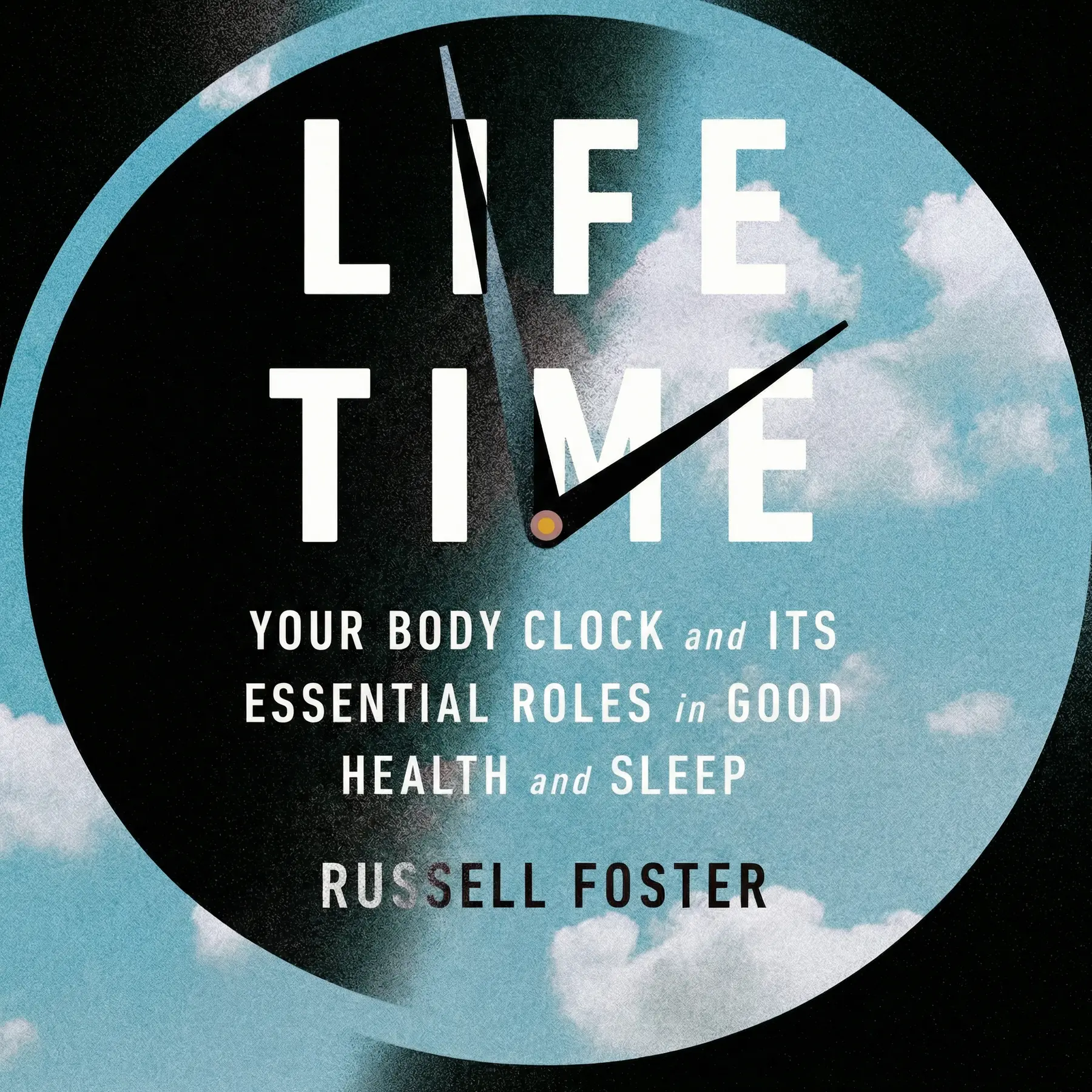
Listeners find the book engaging, with one individual noting that it delivers an excellent and thorough breakdown of circadian rhythm. Furthermore, the academic depth is well-received, as listeners value the high-quality information shared, and one person points out its focus on recent breakthroughs in the field of circadian cycles.
"Life Time" is a total game-changer for anyone struggling with their internal clock. Foster manages to inject humor into what could have been a dry academic text, making the science of circadian rhythms feel approachable and urgent. I especially appreciated the deep dive into how our sleep affects blood sugar control, which really resonated with my background in health. My sleep quality has noticeably improved since I started implementing his 'A to Z' remedies for better rest. This isn't just another wellness book; it's a rigorous, well-written manual for living in sync with your biology. If you want to stop guessing about your health and start following proven scientific research, this is the one. The information here is vital for modern life.
Show moreAs someone who has spent years battling erratic sleep patterns, this book provided the scientific clarity I desperately needed. Foster’s work on how our internal clocks impact everything from cancer risk to mental health is truly eye-opening and grounded in rigorous research. Truth is, I used to feel guilty for my unconventional sleeping habits, but this book helped me understand the biological "why" behind my behavior. It can get a bit technical in the middle chapters, but the humor and personal anecdotes help bridge the gap. It’s a comprehensive A-Z guide that finally allowed me to cut my bad sleep nights in half. Definitely worth the time if you are serious about your health.
Show moreThe chapter on blood sugar control was worth the price of the book alone, especially considering my family history with diabetes. Foster presents a compelling case for why we need to stop fighting our bodies and start listening to our natural rhythms. Look, it’s a bit scholarly and can feel like a lecture at times, but the information is too important to ignore. I appreciated the no-nonsense tone and the way he debunks common myths about sleep hygiene that just don't work. It’s a dense read, yet it feels more authoritative than most of the pop-science books currently cluttering the shelves. Highly recommended for those who want the full scientific picture rather than just bullet points.
Show moreEver wonder why you feel like a zombie at 3 PM regardless of how much coffee you drink? Foster provides an excellent detailed explanation of our internal rhythms, but it often feels like he’s retreading ground that's already been covered by other sleep experts. Personally, I didn't find much "new" ground here if you’ve already read the latest studies on disruptive sleep cycles or basic chronobiology. The sections on diabetes and blood sugar were fascinating, yet the sheer volume of data can be overwhelming at times. It’s a solid resource, but perhaps a bit more clinical than it needs to be for the average person. Look elsewhere if you want a quick summary of tips without the heavy science.
Show moreFinally got around to finishing this, and I have mixed feelings about the overall experience. On one hand, the author is clearly an expert who knows the field of circadian cycles inside and out. On the other hand, the writing style leans heavily into the minute details, which occasionally makes the core message get lost in the weeds. I liked the no-nonsense approach to fixing sleep, but I wish the book was about fifty pages shorter and more focused on practical application. It’s a good reference to have on the shelf, though I wouldn't call it a page-turner by any means. It’s useful but requires a lot of patience to get through the denser chapters.
Show moreNot what I expected given the hype, but still a decent read for those interested in the science of health. The book covers the advances in the field of circadian cycles with incredible precision, though I found the tone a bit too dry for a leisure read. Not gonna lie, I struggled to stay engaged during the more granular sections about cellular mechanisms and molecular biology. However, the practical advice on light exposure and meal timing was quite helpful for my own routine. It’s a bit of a slog, but there is definitely gold to be found if you are willing to dig. Just be prepared for a heavy dose of academic language along the way.
Show morePicked this up hoping for a quick guide to better sleep, but found a very detailed medical treatise instead. While the information is clearly based on the latest scientific research, the presentation is quite heavy on the minute details of circadian rhythms. In my experience, most readers will find themselves skimming through the more technical sections to get to the actual lifestyle recommendations. It’s a well-written book, but it lacks a certain spark that makes other science books feel accessible. It feels like a missed opportunity to bring this vital knowledge to a wider, non-medical audience without making it feel like homework. It's informative but requires a lot of focus to finish.
Show moreAfter hearing so much about the importance of sleep cycles, I wanted a book that would really dive into the "why." Foster certainly delivers on that front, providing an A-Z look at how our biological clocks govern our entire existence. Frankly, it’s a lot to take in at once, and the scholarly content might be a bit much for someone just looking for a few tips to feel better. I did enjoy the sections on shift work and how it disrupts our health, as that felt very relevant. It’s an informative book, but be prepared for a very slow and methodical journey through the science. It won't change your life overnight, but it explains the biology well.
Show moreWow, this was a lot more academic than I anticipated when I first saw the cover. Foster is an expert in the field of circadian cycles, and his passion for the subject shines through every page, but the level of detail is occasionally exhausting. I enjoyed learning about the correlation between sleep and long-term health issues like cancer, yet the writing felt more oriented toward medical professionals. It’s not that the book is bad—it’s just very specialized. Gotta say, I was looking for more help with my daily habits and less about the underlying chemistry. If you want a light read before bed, this isn't it; if you want a deep dive into biology, then go for it.
Show moreTo be fair, the scholarly depth in this book is undeniable, but it was just too dense for me to enjoy. I felt like I was reading a medical textbook designed for professionals rather than a guide for the general public. While the information regarding the correlation between cancer and our natural cycles is vital, I found myself wading through minute details that didn't feel applicable to my daily life. It’s definitely informative, but the pacing is sluggish and it lacks the punchy, actionable advice I was hoping to find. I ended up skimming significant portions just to find the actual tips. It’s too academic for a casual reader looking for a quick fix. I expected something much more accessible.
Show moreThe book argues that your health depends on timing as much as on behavior. A master clock in the brain, the suprachiasmatic nucleus, works with smaller clocks in organs like the liver and pancreas to schedule sleep, hunger, alertness and immunity across 24 hours. Light is its main signal. Artificial light, travel and irregular hours push it out of step, and aligning daily habits with it improves energy, sleep and long-term health.
Special cells in the eye called pRGCs measure light and report to the master clock. Morning light moves the clock earlier and evening light moves it later, and blue light from LEDs and screens has the strongest effect. The clock needs about 30 minutes of steady light to shift. Healthy rhythms need roughly 1,000 to 2,000 lux, while most indoor spaces give only 100 to 500.
The book describes sleep and circadian rhythm disruption, or SCRD. Shift workers show scrambled cortisol patterns that interfere with blood sugar control, raise hunger and blood pressure, and weaken immunity. People on irregular schedules eat 300 to 500 more calories a day. After 15 years of shift work, cardiovascular risk rises by 40 percent, and night workers have a 40 percent higher risk of mood disorders.
Keep the same sleep and wake times, including weekends. Get bright light early and dim your surroundings in the evening. Eat larger meals in the morning and early afternoon, and be careful with caffeine because its effects last longer than expected. Do hard workouts in the late afternoon and keep evenings gentle. Small changes support each other, so start with one and build.
According to the research the book describes, yes. Immune cells circulate in higher numbers during the day, and morning vaccinations produced 40 percent stronger immunity than afternoon ones with the same vaccine. Doctors increasingly time blood pressure medication to daily cycles to improve its effect, and cancer treatments can cause fewer side effects when timed with care. This field is called chronotherapy.
Carl Zimmer

Bill Bryson

Jeff Hawkins




Lisa Kaltenegger


AUDIO SUMMARY AVAILABLE
Get the key ideas from Life Time by Russell G. Foster, plus 5,000+ more nonfiction titles.









