
13 min 38 sec
Available in: English
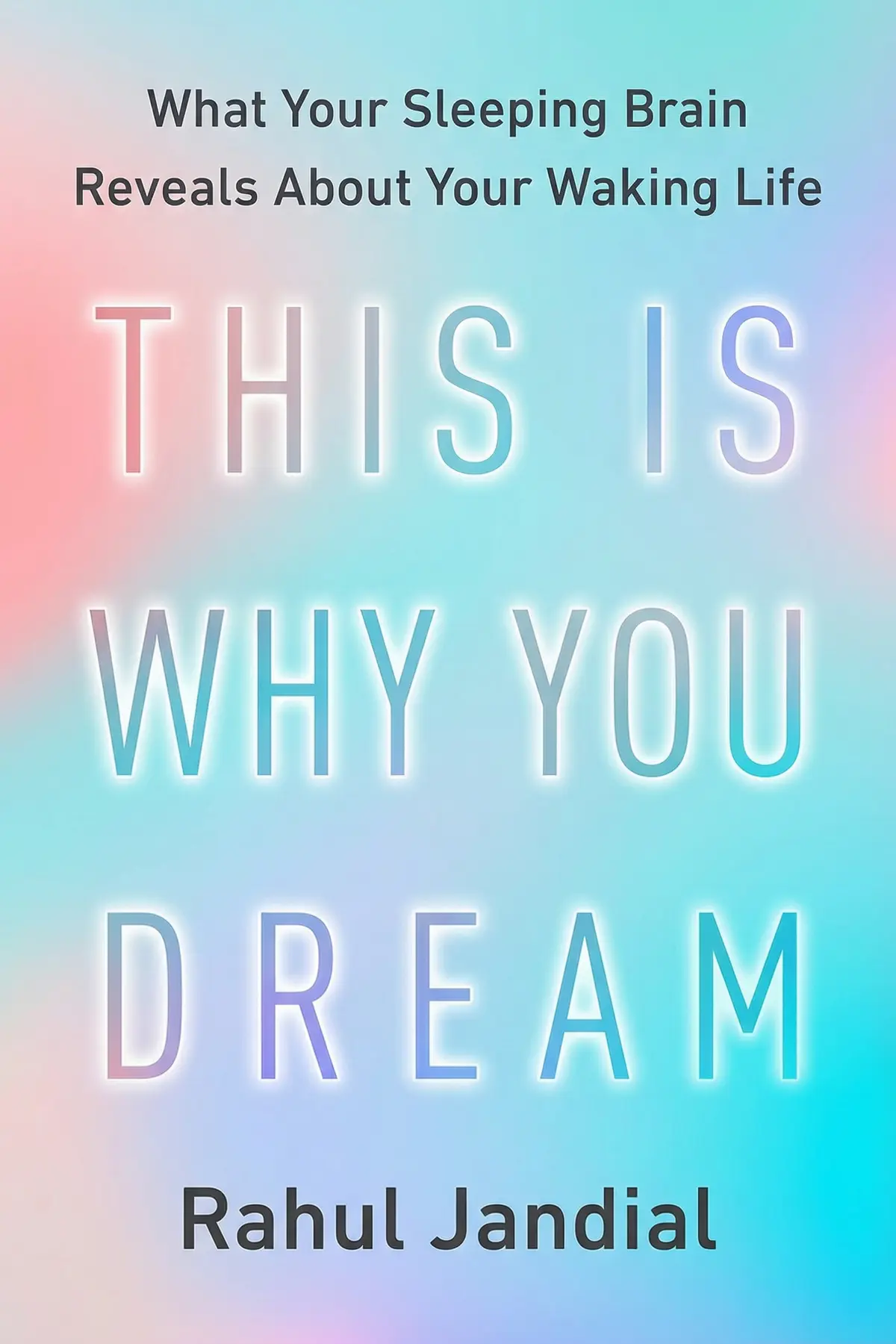
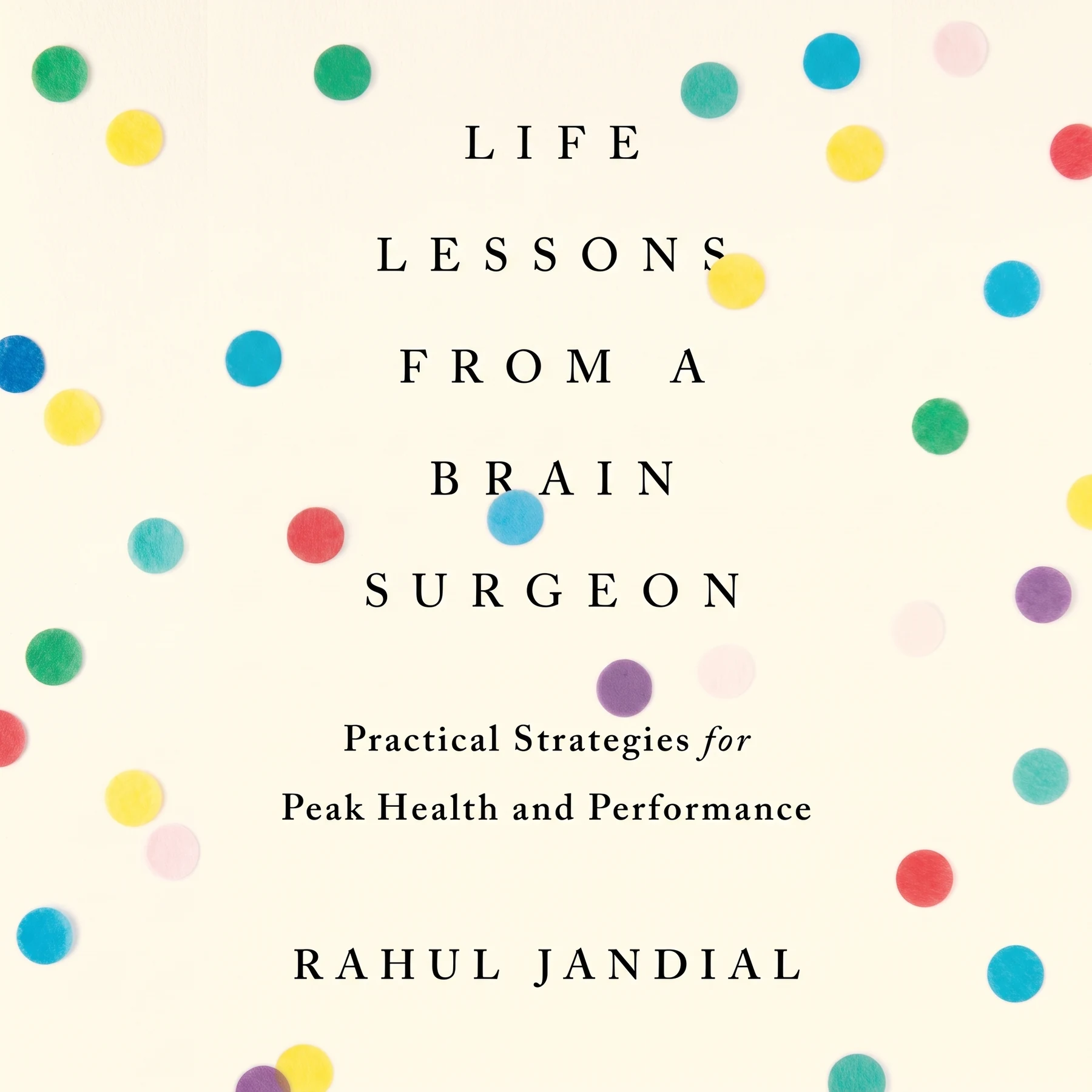
Life Lessons from a Brain Surgeon: Practical Strategies for Peak Health and Performance
A neurosurgeon explains how memory, language, creativity and sleep work in the brain. He also covers the everyday habits, from self-testing and outdoor walks to the MIND diet and exercise, that keep a mind sharp and lower dementia risk.
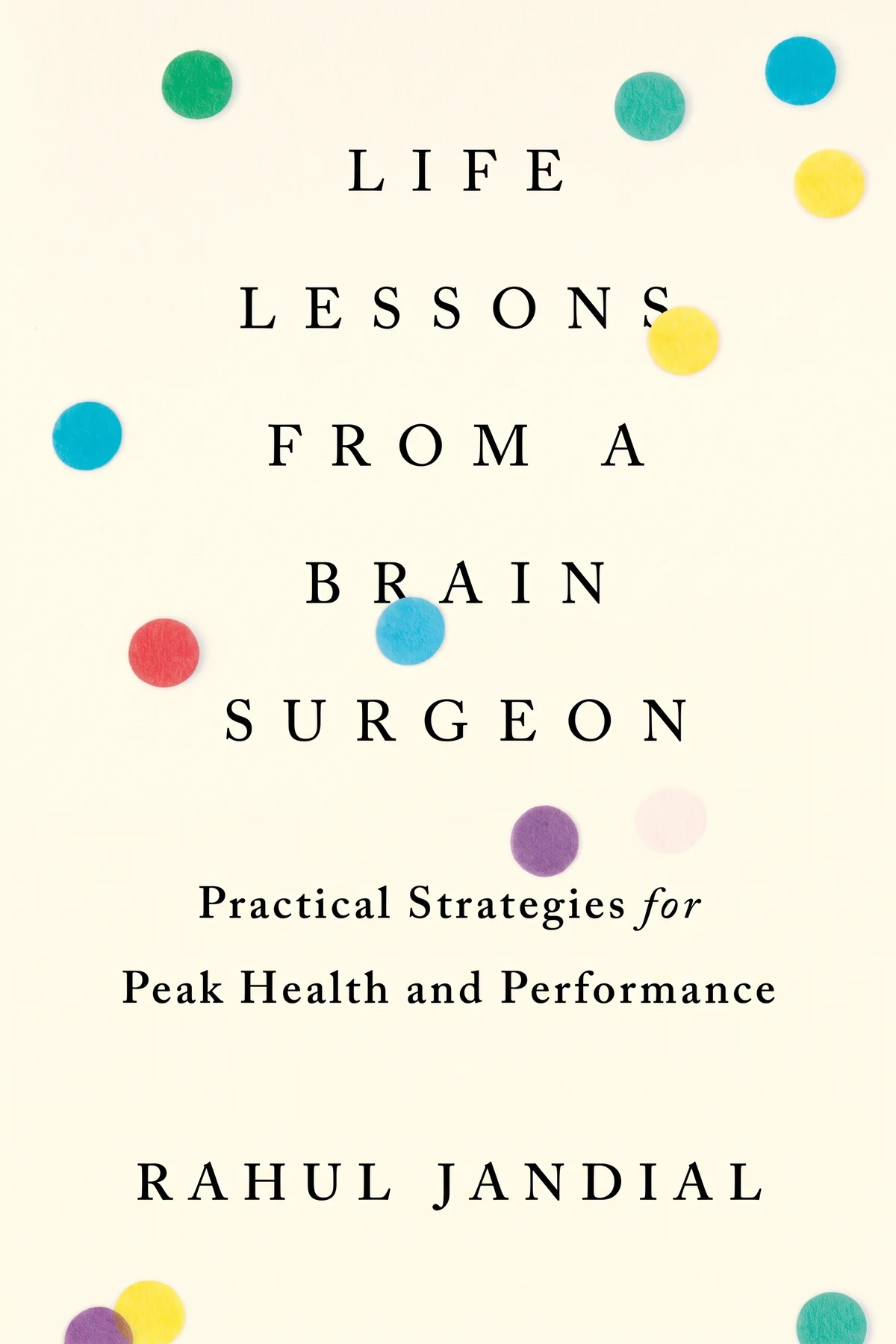
Table of Content
1. Introduction
1 min 00 sec
Most people assume their memory and mental sharpness were set at birth and can only decline from here. Yet across the twentieth century, average IQ scores climbed about three points every decade, a sign that the brain rises to the demands we place on it. In Life Lessons from a Brain Surgeon, neurosurgeon and scientist Rahul Jandial builds on that idea from years of operating on brain and spinal cancers.
His argument is that small daily choices shape how well your brain remembers, creates and ages. How you study, how many languages you speak, how you sleep, what and when you eat, and how much you move all leave a physical mark.
The book travels from the operating room to the kitchen table. Along the way it offers habits you can test this week: a smarter way to recall a shopping list, a bedtime reading routine, a twice-weekly fast and a four-count breath that settles the mind.
2. Sharpen your memory by quizzing yourself
2 min 06 sec
One brain game company paid for promises it could not keep, yet another program seems to protect against dementia. Between them sit two free tricks that make recall easier, and one of them starts in the grocery store.
3. A second language gives your brain spare capacity
1 min 54 sec
During surgery, a bilingual teacher had to decide which of her two languages she was willing to lose. Her story shows how physically language lives in the brain, and why speaking more than one pays off for years.
4. Find fresh ideas at the edge of sleep
2 min 03 sec
The popular split between logical left-brained people and creative right-brained ones rests on surprisingly little. Brain scans tell a different story about where ideas come from, and it suggests two easy places to look for them.
5. Sleep that turns today into lasting memory
1 min 53 sec
An all-night study session feels like extra effort, yet the brain does some of its most important filing only after the lights go out. It also throws most of the day away, and that turns out to be useful.
6. Eat and fast for a sharper mind
1 min 43 sec
The gut is not a second brain, whatever you may have heard. Still, what lands on your plate, and the hours when nothing does, appear to change your odds against Alzheimer’s in a big way.
7. Build a brain that ages well, from childhood on
1 min 49 sec
A surgeon who kept his children off the street until age ten still let them roam a ravine alone. That balance, and two habits for later life, show how to give a brain its best chance across a lifetime.
8. Conclusion
1 min 10 sec
A surgeon who has held living brains in his hands ends up giving surprisingly ordinary advice, and that is the book’s real message. The organ behind every thought and feeling is not sealed off from daily life. It answers to the class you attend, the walk you take, the hours you sleep and the meals you eat or skip. Marina’s brain, dotted with scraps of white paper marking Spanish and English, shows how physical these abilities are. Anything that physical can be looked after.
Jandial adds one last practice. Mindful breathing, he says, increases connections between neurons, calms negative emotions, helps regulate blood pressure and sharpens decisions. Sit somewhere quiet for ten to fifteen minutes. Breathe in through your nose for a count of four, hold for four, then breathe out through your mouth for four.
Begin smaller than feels necessary. Quiz yourself instead of rereading, and keep your bedtime steady. Choose one food habit or one fasting day, and ask someone close to hold you to it. Each choice is modest, and the brain, as Jandial has seen in the operating room, rewards the ones you keep repeating.
About this book
What is this book about?
Most people treat their memory, focus and creativity as a fixed inheritance that can only fade with age. Rahul Jandial, a neurosurgeon and scientist who operates on brain and spinal cancers, sees the brain differently. In his account it is an organ that responds every day to the way it is used. Jandial draws on his own operating room, where he once mapped a bilingual patient's brain language by language, and on research ranging from the Flynn effect on rising IQ scores to a study of backpackers' creativity. He explains where memories are stored and why sleep erases most of them, why the left-brain and right-brain idea does not hold up, and how food, fasting, education and exercise affect the risk of dementia. The result is a practical guide built on simple habits. Readers learn how to recall more by quizzing themselves and thinking in categories, how to invite ideas at the edge of sleep, how much rest each age needs, what the MIND diet asks of you, and how a four-count breathing exercise can calm the mind in a few minutes.
Book Information
Who it's for
Professionals and students
Professionals and students who want better recall, steadier focus and more creative ideas.
Worried about dementia
People in midlife worried about dementia who want habits backed by a brain surgeon.
Parents of growing children
Parents curious how sleep, food and free play shape a growing child's brain.
About the Author
Rahul Jandial
Rahul Jandial holds both an MD and a PhD. He is a neurosurgeon and scientist at City of Hope, a hospital and research center in Los Angeles, where he treats cancers of the brain, spine and spinal cord with medicine and surgery. He leads the Jandial Laboratory, a neuroscience research facility. He has written ten academic books and more than 100 papers, and has appeared on Nightline, Today, the Discovery Channel and National Geographic. His books, including This Is Why You Dream, have been translated into over 30 languages.
Ratings & Reviews
Ratings at a glance
What people think
Listeners find the material accessible and simple to follow, with one listener highlighting the book’s compelling storytelling style. Additionally, the caliber of information earns praise, as listeners value how it presents helpful brain fitness tips and provides an amazing update on the status of neuroscience.
Top reviews
Pita
Wow, I didn't realize how much misinformation I'd swallowed about the brain until I picked this up. Dr. Jandial is a master at making the complex simple. I loved the 'Neuro Geek' boxes; they provided just enough depth to satisfy my inner science nerd without being overwhelming. The description of the brain's iridescent surface under the operating room lights was incredibly vivid. It’s rare to find a book that offers both thrilling surgery stories and actionable health advice. I’ve already started implementing his suggestions for meditative breathing, and I genuinely feel more focused during my workday. This isn't just a book about surgery; it's a manual for living better. Highly recommended for fans of medical non-fiction.
Show moreSombat
Ever wonder if those 'brain games' on your phone are actually doing anything for your long-term health? Jandial addresses this head-on, along with dozens of other myths. What I love most is that he doesn't promise a miracle cure. He’s a surgeon who sees the brain at its most vulnerable, which gives him a unique authority on what actually works. The section on stem cells and the future of dementia treatment was both realistic and hopeful. To be fair, I was skeptical of the self-help angle at first, but the science is hard to argue with. It’s an amazing update on where we are in neuroscience today. This book actually makes you want to take better care of yourself.
Show morePang
After hearing Jandial speak on Impact Theory, I knew I needed the full breakdown of his 'neurofitness' philosophy. This book is a masterclass in clarity. He takes topics like the Flynn effect and makes them feel relevant to our daily lives. I was fascinated by the discussion on gray matter and how our world—dominated by visual images and symbols—is physically changing our brains. The layout is great, too, with the 'Neuro Gym' and 'Neuro Busted' sections breaking up the text nicely. It’s one of those rare books that is both intellectually stimulating and practically useful. I've recommended it to three people already. If you care about cognitive performance, you need this on your shelf.
Show moreCholada
This is the Oliver Sacks of the modern era, but with way more actionable advice for the average person. Look, there are plenty of books about the brain, but few are written by someone who actually puts his hands inside them every day. The balance of 'gore' and grace is perfect. You get the thrill of the operating room alongside gentle advice on how to reduce stress and improve memory. Honestly, the chapter on the Flynn effect alone was worth the price of the book. It’s written with a natural, easy style that makes 20 years of medical training feel accessible. A brilliant, life-affirming read that I’ll likely revisit every couple of years.
Show moreTom
Finally got around to reading Jandial's work after seeing him on a podcast, and I was pleasantly surprised. The way he describes the living brain as 'beigepink' and 'pearl' rather than the dull gray we see in jars is hauntingly beautiful. Truth is, many people find neuroscience intimidating, but he breaks it down into chunks that anyone can understand. I especially liked the section on the Flynn effect; it’s encouraging to think that our cognitively demanding world is actually making us smarter over time. There are a few moments where the advice feels a bit repetitive, especially regarding brain-training games, but the surgery anecdotes more than make up for it. This is a solid update on the current state of brain science.
Show moreAna
The fact that Dr. Jandial was once a college dropout really makes his perspective feel more grounded than your average specialist. He doesn't just lecture; he shares the journey of a man who worked his way into one of the hardest fields on earth. Personally, I found the debunking of the 'gut as a second brain' myth to be the most controversial but interesting part of the book. While some researchers would disagree with him, his surgical perspective on bowel removal patients was a unique take I hadn't considered. The book is easy to read and filled with helpful tips that don't require a PhD to implement. It’s refreshing to see a surgeon advocate for things like deep breathing without it feeling too 'woo-woo.'
Show moreSaengdao
Is this a medical textbook or a self-help guide? It’s a bit of both, actually. Jandial manages to weave complex topics like Electroconvulsive therapy and deep brain stimulation into a narrative that feels accessible. I was particularly moved by the case study of using DBS to treat severe OCD—it's the kind of high-stakes medicine that keeps you turning pages. My only gripe is his occasional dismissal of 'brain hackers' who lack formal credentials. It felt a bit elitist, especially since technology is democratizing research so rapidly. Regardless, the information quality is high, and the 'Neuro Gym' exercises are easy enough to incorporate into a busy schedule. A very informative read for anyone curious about what happens under the skull.
Show moreGame
Picked this up on a whim at the airport and it actually kept me awake for the whole flight. The author does a great job of separating 'the hype from the hope' when it comes to brain health. I've always been told that I'm 'right-brained' because I'm creative, so seeing that myth totally dismantled was eye-opening. The book provides a fantastic overview of how nutrition, sleep, and even the way we breathe impacts our cognitive longevity. Some of the statistics felt a bit specific—like the 23% stroke risk—but the general advice is sound. It’s a fast-paced, engaging narrative that doesn't get bogged down in too much jargon. Definitely worth a read if you want a better-functioning brain.
Show moreKasemsan
As someone who devours medical memoirs, this felt like a bit of a mixed bag. Dr. Jandial is clearly a brilliant man, but his writing doesn't quite have the lyrical, introspective quality of Henry Marsh or the narrative magic of Oliver Sacks. The chapter on 'smart drugs' and passing exams was genuinely fascinating, providing a grounded look at things like Adderall. However, the tone fluctuates wildly between being overly technical and using awkward slang like 'this is cool.' I appreciated the 'Neuro Gym' sections for their practicality, yet I can't help but feel that some of the 'Neuro Busted' myths were oversimplified. It is a decent book to dip into occasionally, but it didn't keep me up late reading. Useful, but not revolutionary.
Show moreMaksim
Not what I expected from a top-tier neurosurgeon, to be frank. While the stories from the operating room are gripping, the author spends far too much time peddling questionable lifestyle 'hacks' that feel more like influencer fodder than clinical advice. He makes bold claims about meditative breathing and intermittent fasting based on what feels like very slim evidence. I found the statistics on sleep—warning that anything outside a tight 6-to-9-hour window leads to a 23% higher stroke risk—to be incredibly alarmist for a general audience. It is a strange mish-mash of high-level science and preachy self-help that never quite finds its footing. If you want a deep dive into neurology, look elsewhere. If you want to know why he likes skipping breakfast, this might be for you. It’s a disappointing DNF for me.
Show moreQuestions about this book
What is the main idea of Life Lessons from a Brain Surgeon?
Rahul Jandial argues that the brain is shaped by daily choices rather than fixed at birth. He points to the Flynn effect, with IQ scores rising about three points per decade, as a sign the brain adapts to demands. He then shows how learning, a second language, sleep, diet, fasting, education and exercise affect memory, creativity and the risk of dementia.
How can I improve my memory according to Rahul Jandial?
Jandial recommends self-testing, since quizzing yourself beats rereading, and area-restricted searching, which means recalling everything within a single category before you move on to the next. A 2013 study found that giving people categories erased the gap between more and less intelligent participants. He also supports some brain training, naming Brain HQ, while noting that Lumosity was sued for $2 million over unsupported claims.
What does the book say about sleep and memory?
During sleep, short-term memories in the hippocampus move into long-term storage in the cortex, while most of the previous day’s memories are erased. Students who sleep before a test recall more than those who study all night. Jandial recommends seven to nine hours for adults aged 26 to 64 and a consistent sleep schedule rather than sleeping pills.
What diet does Rahul Jandial recommend for brain health?
His family follows the MIND diet, which favors vegetables, fresh fruit, nuts, chicken and fish and limits saturated fat, red meat and sugar. In one study it halved the risk of Alzheimer’s. He also fasts for sixteen hours twice a week, skipping both breakfast and lunch on Mondays and Thursdays, while still allowing an occasional burger or chocolate bar.
How can I lower my risk of dementia?
The book names several factors. Education lowers the risk, with even a high school diploma helping. Combining aerobic exercise with resistance training keeps cerebrospinal fluid at youthful levels. Jandial also links bilingualism and the MIND diet to protection, and he describes Brain HQ training as reducing risk. No single step guarantees prevention, he notes.
Readers also enjoyed

A Thousand Brains: A New Theory of Intelligence
Jeff Hawkins




Alien Earths: The New Science of Planet Hunting in the Cosmos
Lisa Kaltenegger




AUDIO SUMMARY AVAILABLE
Listen to Life Lessons from a Brain Surgeon in 15 minutes
Get the key ideas from Life Lessons from a Brain Surgeon by Rahul Jandial, plus 5,000+ more nonfiction titles.
- 5,000+ titles
- Listen as much as you want
- 7-day free trial
- Cancel anytime









