
14 min 21 sec
Available in: English
Leveling Up: 12 Questions to Elevate Your Personal and Professional Development
By Ryan Leak
Ryan Leak offers a set of honest questions that help ambitious people define success for themselves, see how others experience them, own mistakes, take sensible risks, act with integrity and actually enjoy their progress.
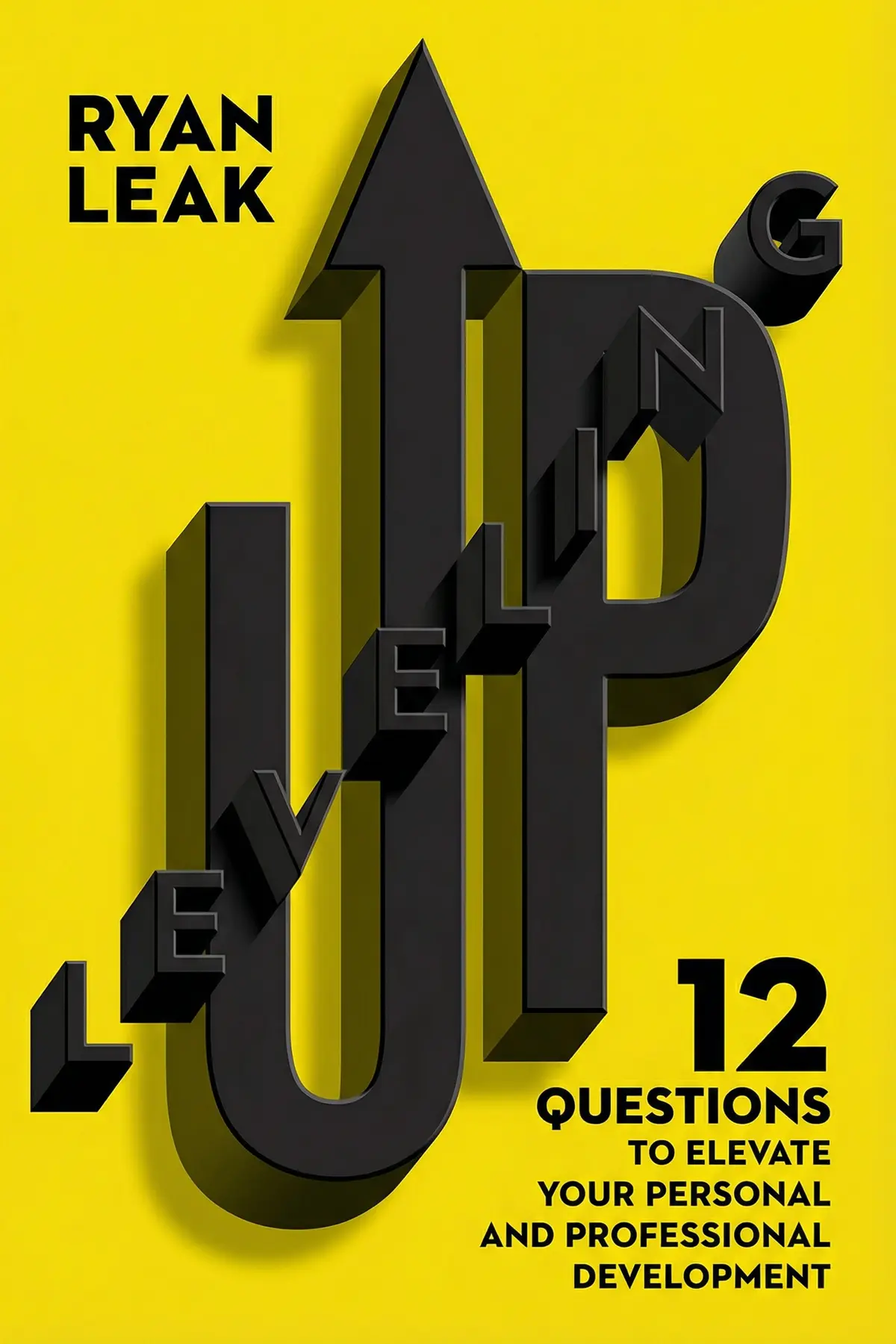
Table of Content
1. Introduction
55 sec
Plenty of driven people hit every target, earn every title and still suspect their ladder is propped against the wrong wall. In Leveling Up, executive coach and speaker Ryan Leak argues that the remedy is rarely more effort. It is a better question, asked before you climb any higher, because a good question checks your ambition against your values.
Leak builds his advice around a set of such questions, each with one job. One defines success, one shows how others experience you, and the rest guide your growth, push you to own mistakes, size up risk, steady your ethics and bring back joy. His argument is that honest questions, asked often, turn ambition on autopilot into progress you can both live with and enjoy. Each one ends in a test small enough to try this week.
2. Define success by rules you actually chose
1 min 34 sec
Some of the goals driving your week were set years ago, by people and pressures you never consciously agreed to. Leak shows why hitting them can still feel hollow, and what a definition worth chasing needs.
3. See yourself the way others see you
1 min 47 sec
The colleague who floods every inbox is showing poor judgment, not helpful communication. Leak explains why the confident are often the least aware, and the simple check that tells you what people really experience.
4. Measure growth by progress you can prove
1 min 52 sec
Aiming to be the best sounds motivating, yet it leaves most people discouraged. Leak swaps it for a target you can hit every day, protected by five kinds of insurance against the usual setbacks.
5. Owning your mistakes rebuilds trust faster
1 min 48 sec
Every conflict you have ever had shares one participant. Leak turns that awkward fact into a fast way to repair relationships, starting with four words most people avoid saying in an argument.
6. Take small risks that keep you moving
1 min 50 sec
The old script of steady career, marriage and children no longer fits most lives, and the pandemic showed that waiting is risky too. Leak describes how to bet often without betting everything.
7. Make choices you would explain out loud
1 min 44 sec
Padding an expense or shading a number feels harmless when nobody is watching. Leak explains how small shortcuts grow, and offers a simple test for decisions that would survive daylight.
8. Make enjoyment a daily choice you practice
1 min 51 sec
Some people reach every goal and still feel flat. Leak, drawing on positive psychology, argues that enjoyment is a skill with its own rules, and that waiting for the right conditions misses the point.
9. Conclusion
1 min 00 sec
Leveling Up opens on a checklist culture and ends somewhere more personal. Leak never asks you to drop your ambition. He asks you to interrupt it often enough to see whether it still serves the person you want to become, the people beside you at work and at home, and the life you actually have. Every question trades a flattering story for a truer one, about what winning means, how you come across, where you went wrong, what waiting costs and whether any of it brings you joy.
What holds the book together is that each honest answer turns into something small and visible. Send a few trusted people the question about how you can get better, and act on one thing they tell you. Open your next disagreement by admitting you could be wrong, and grant the other side a point. Run one modest experiment you can reverse. And tonight, name one thing that is good right now and that you would miss if it were gone.
Ambition will keep you climbing. The questions make sure the ladder leans where you meant it to.
About this book
What is this book about?
Many ambitious people follow a familiar checklist: hit the number, earn the title, repeat. Somewhere along the way they start to suspect the climb is leading somewhere they never chose. Executive coach and speaker Ryan Leak argues that pushing harder on autopilot rarely helps. Stopping to ask better questions does. Each question in Leveling Up has a specific job. The Vision Question challenges inherited definitions of success. The Self-Awareness Question asks how people actually experience you. Others turn insight into steady improvement, push you to own mistakes quickly, help you size up risk in a world without the old guarantees, hold your ethics steady when shortcuts are easy, and treat enjoyment as a daily practice. Every question comes with small, concrete tests: texting trusted people to ask how you can get better, opening a disagreement by admitting you could be wrong, running a modest experiment you can undo, or putting a wrong right today. Readers come out with clearer goals, steadier relationships, bolder decisions and a way of enjoying life now, without waiting for the next milestone.
Book Information
Who it's for
Professionals questioning their goals
Professionals who keep hitting targets but wonder whether they are chasing the right ones.
Managers and team members
Managers and team members who want honest feedback and a quicker way to repair strained working relationships.
High achievers feeling flat
High achievers who feel flat after each win and want to enjoy the life they are building.
About the Author
Ryan Leak
Ryan Leak is an author, speaker, executive coach and filmmaker who coaches leaders and teams on resilience, personal growth and handling difficult colleagues. He first drew a wide audience in 2013, when a film of his surprise wedding spread widely online: after two years of secret planning, he proposed to his wife, Amanda, and married her that same day. His later film, Chasing Failure, documents him confronting his fear of failure with a tryout for a team in the National Basketball Association. Leveling Up became a Wall Street Journal bestseller. He hosts The Ryan Leak Podcast, and his work is grounded in his faith.
Ratings & Reviews
Ratings at a glance
What people think
Listeners find this book deeply stimulating; one listener emphasizes its educational value and unique outlook on self-awareness. It is also seen as an absorbing and accessible read, with one listener especially valuing the chapter summaries. Furthermore, the author receives high praise for delivering a powerful message. Conversely, the specific prose style has drawn a variety of reactions from listeners.
Top reviews
Penelope
After hearing Ryan Leak speak at a conference, I was skeptical that the book would offer anything new beyond his keynote address. To be fair, many leadership gurus just recycle the same three anecdotes in every medium they touch, but Leak surprised me here. The written version dives significantly deeper into the "twelve questions" that define personal growth. I particularly connected with the section on "the fun question" because it forced me to confront how much I let the daily grind overshadow my gratitude. The chapter summaries and "do it now" action items make it incredibly practical for anyone who actually wants to change rather than just feel inspired. It’s a rare self-help book that manages to stay relatable without feeling shallow or overly corporate. My only minor gripe is that some of the transitions between chapters felt a bit abrupt, but the content itself is solid gold.
Show moreJai
Ever wonder why you feel like you're plateauing despite putting in the work? Leveling Up doesn't just give you a pep talk; it asks the uncomfortable questions that most of us spend our lives avoiding. I found the chapter on external self-awareness—how others perceive your leadership and presence—to be particularly transformative for my current role. Ryan Leak has this way of stepping on your toes with a smile on his face, making you realize your own blind spots without feeling attacked. Truth is, I started highlighting so many passages that I eventually just gave up and decided I need to buy copies for my entire management team. The focus on making measurable improvements instead of vague "betterment" is what sets this apart from the generic self-help fluff. Highly recommend for anyone ready to do some serious internal digging to get to that next level.
Show moreKomsan
The chapter on self-awareness alone is worth every penny you will spend on this book. Most people think they know themselves, but Leak distinguishes between internal and external awareness in a way that is both convicting and helpful. Personally, I found the "fun question" toward the end to be a necessary reminder that life doesn't need to be perfect to be enjoyed. The author narrates the audiobook himself, and while his passion is obvious, I’d actually recommend getting a physical copy instead. Having the text allows you to better reference the twelve questions and the helpful chapter recaps he includes. This isn't just a book for work; it’s a book for being a better human being in every facet of your life. It really helped me identify the specific areas where I was feeling stuck and provided a clear roadmap for getting out of that rut.
Show moreWatcharin
This is easily one of the most powerful leadership books I’ve picked up in years because of its raw relatability. Ryan Leak has a gift for taking "corporate" concepts and making them feel deeply personal and urgent for your everyday life. I found myself pausing frequently to ponder his question about what it’s like to be on the receiving end of my personality and leadership style. The chapter on owning your mistakes was a massive gut-punch that I desperately needed to hear as I navigate a new management role. Even though the ideas aren't necessarily "new" in the world of psychology, his specific "twist" and storytelling make them resonate in a fresh way. Every chapter ends with a summary that helps cement the ideas, which is great for those of us with short attention spans. I’ll be buying this for my friends.
Show moreGung
This book provides a really fresh take on self-awareness that I haven't quite encountered in other business-leaning titles. Frankly, the concept of "what it’s like to be on the other side of you" is a hauntingly effective way to reframe your interactions with coworkers and family. While some of the advice on humility and owning mistakes felt like things I’ve heard before, Leak’s delivery makes them feel urgent again. I appreciated how he organized the high-level goals into digestible questions that actually highlight where you are currently stuck in your career. The writing style is very conversational, which makes for a quick read, though it might feel a bit too informal for readers looking for a dense academic study. It’s perfect for a weekend reset or an intern book club where you want to spark real conversation and get people thinking.
Show moreBam
Not what I expected from a typical leadership book, but in a good way. Most of these titles focus on "grind culture," yet Leak emphasizes the importance of quitting things that aren't priorities and finding joy in the current season. I loved the "do it now" sections at the end of each chapter because they provide immediate steps to implement the theory. My personal favorite was the chapter on humility, which challenged me to stop overestimating my contributions while underestimating the friction I cause for others. Not gonna lie, the writing style can feel a bit repetitive at times, but the core messages are powerful enough to overlook that. It’s the kind of book you want to keep on your desk to flip through whenever you feel a bit lost in the weeds. It’s engaging, relatable, and makes the process of growth feel much less daunting.
Show moreSin
Finally got around to reading Leveling Up and I appreciate how Ryan Leak breaks down complex emotional intelligence concepts into simple, actionable steps. The structure of the book is its greatest strength, using twelve specific questions to guide the reader through a process of self-discovery and improvement. Look, we all know we should be more humble or more focused, but Leak gives you a framework to actually measure those traits in your daily life. I particularly liked the section on asking for feedback, even though the thought of doing it makes me break out in a cold sweat. It’s a very relatable read that doesn't feel like it’s talking down to you from a pedestal of perfection. My only minor complaint is that the volume consistency in the advice felt a bit uneven across different chapters, but the highs are very high.
Show moreWichai
Gotta say, I’m glad I gave this a chance after a coworker recommended it for our monthly book club. It’s an easy read that manages to pack a punch without requiring you to learn a whole new vocabulary of business jargon. I really appreciated the focus on work-life balance and the practical suggestion to cancel things that no longer serve your primary goals. Some parts of the book felt a little bit "fluffy," but the sections on self-awareness and the "fun question" more than made up for it. It’s a solid tool for anyone who feels like they are just going through the motions and needs a bit of a spark to get back on track. I’ll definitely be revisiting the chapter summaries in a few months to see if I’m actually applying what I learned to my daily routine.
Show moreMoo
Picked this up for a professional development group and I have mixed feelings about the overall experience. On one hand, the "what’s it like to be on the other side of you" framework is a brilliant tool for anyone working in a team environment. However, as someone who has read a lot of self-help and Christian leadership books, a lot of the other chapters felt quite redundant. It felt like a great entry-level guide for someone just starting their journey, but it lacked the "aha" moments I was craving as a more seasoned reader. To be fair, the author’s tone is incredibly encouraging and he seems like a genuinely great guy, which makes the book easy to get through. If you’re already very self-aware and have a solid work-life balance, you might find yourself skimming large portions of this to find the few nuggets of new information.
Show moreJom
Honestly, I struggled to stay engaged with this one despite the high praise it receives from other readers. While the author seems like an incredible person and a gifted speaker, the writing style felt a bit too generic and "high-level" for my taste. I was looking for deep, granular strategies for professional growth, but instead, I found a lot of common-sense advice about being nice and having integrity. In my experience, if you've read more than five self-help books in the last decade, you've already seen about 80% of what is covered here. I didn't find many of the "measurable improvements" promised on the cover to be particularly groundbreaking or new. It’s a fine book for a complete beginner, but for me, it just didn't have the intellectual depth or original research required to be a game-changer.
Show moreQuestions about this book
What is the main idea of Leveling Up by Ryan Leak?
Ryan Leak argues that ambitious people rarely need to push harder. They need to stop and ask better questions. Each question in the book has one job: defining success on your own terms, seeing how others experience you, improving steadily, owning mistakes, taking right-sized risks, choosing integrity and practicing enjoyment. Together they line up your goals with your values, your relationships and the life you actually have.
What is the Vision Question in Leveling Up?
The Vision Question asks how you define success. According to Leak, ready-made targets that feel natural come from every direction: your family, the norms of your community, your identity, the standards of your industry and the attention economy. He suggests an internal definition instead: goals with clear finish lines you can celebrate, an eye on what professional wins cost your personal life, and part of the definition anchored to who you are becoming, backed by visible habits at home and at work.
What are the five kinds of insurance in Leveling Up?
Leak describes five safeguards that protect self-improvement. The first, irrelevancy insurance, keeps you picking up new skills. Ego insurance stops past wins from excusing weak teamwork or empathy. With comparison insurance, other people’s excellence becomes a source of ideas while envy is set aside. Offense insurance helps you take feedback without becoming defensive. Roller-coaster insurance keeps you steady through highs and lows, by seeking input early and sorting it into what to keep, test or ignore.
How can I apply Leveling Up at work?
Leak offers small tests. Text three to five trusted people asking how you can get better, and agree on behaviors to begin, drop and keep. Open your next disagreement by saying you could be wrong and granting the other side a point. Run one modest experiment you can reverse. If you can fix a wrong today, such as a correction or a clear update, do it now.
Who should read Leveling Up?
It suits professionals who keep hitting targets yet feel something is off, managers and team members who want better relationships at work and at home, and high achievers who feel flat after each win. Leak, an executive coach who trains leaders and teams, writes for readers who want practical questions, each paired with an action they can try the same week.
Readers also enjoyed




A High-Performing Mind: Strengthen Your Mind and Live Your Best Life
Andrew D. Thompson

A Year with Peter Drucker: 52 Weeks of Coaching for Leadership Effectiveness
Joseph A. Maciariello



Abundance: The Inner Path to Wealth
Deepak Chopra


AUDIO SUMMARY AVAILABLE
Listen to Leveling Up in 15 minutes
Get the key ideas from Leveling Up by Ryan Leak, plus 5,000+ more nonfiction titles.
- 5,000+ titles
- Listen as much as you want
- 7-day free trial
- Cancel anytime









