

14 min 46 sec
Available in: English
Lead Like It Matters to God: Values-Driven Leadership in a Success-Driven World
Shows Christian leaders how to carry their faith into the workplace by leading with love, encouragement, humility, integrity and vision, and how to judge success by faithfulness instead of revenue or job titles.
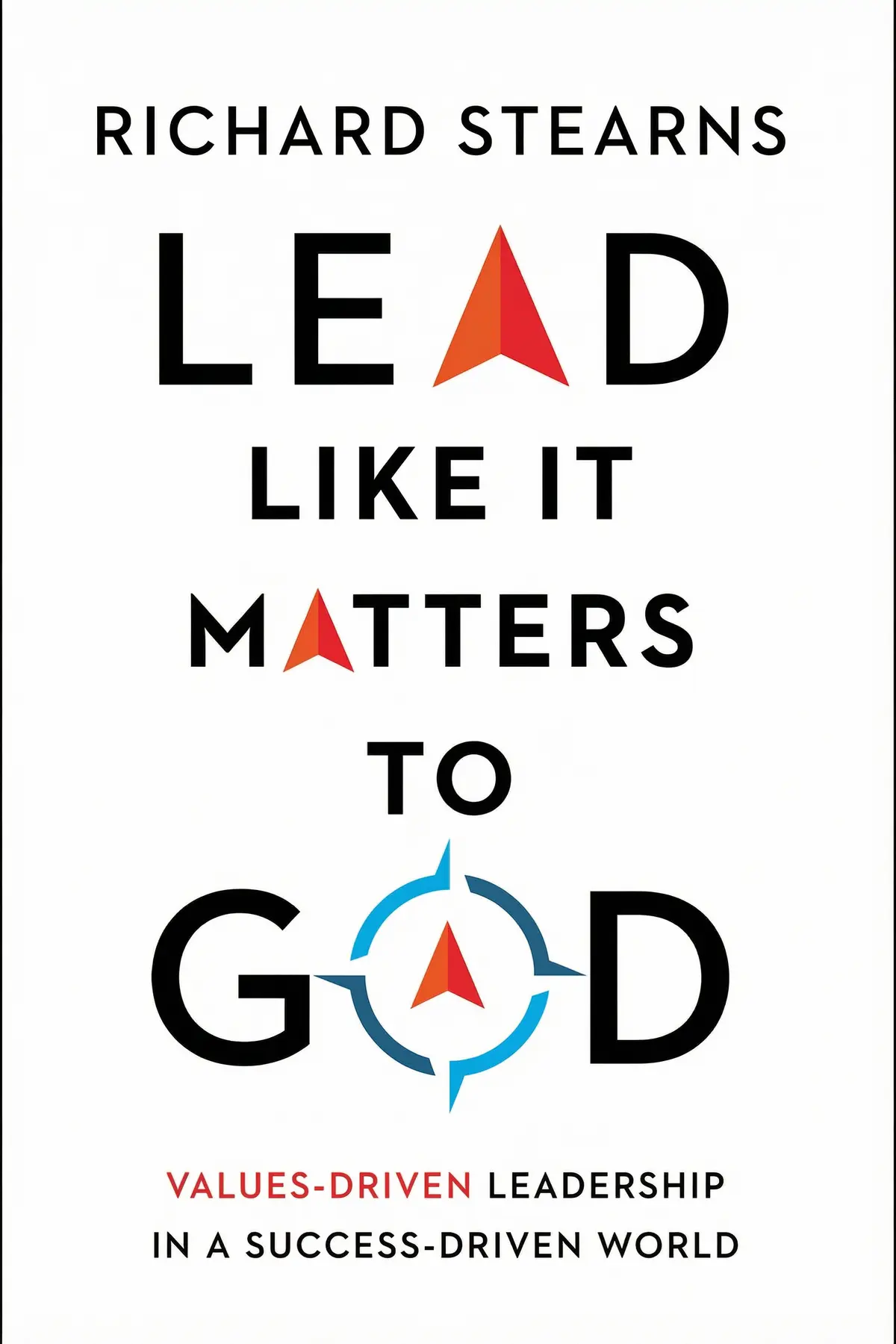
Table of Content
1. Introduction
1 min 03 sec
Many Christians walk into the office on Monday and leave their faith at the door, as if Sunday and the working week belonged to separate worlds. In Lead Like It Matters to God, Richard Stearns argues that this split is a mistake. He spent years running companies such as Parker Brothers and Lenox, then two decades leading World Vision in the United States, and his conclusion is simple: whatever the title, a believer has one real job at work, which is to represent Christ.
That single idea redraws good leadership. Kindness, praise, honesty, humility and courage become the work itself, and success gets measured by faithfulness more than by revenue or rank. The evidence comes from Stearns’s own career: a Santa suit with glittery shoes, a warehouse of pumpkin seeds that should never have stayed there, and a few dollars in the mail that helped raise an archbishop. Each story ends in a habit any leader, of two people or two thousand, can practice this week.
2. Bring one identity to church and the office
1 min 32 sec
Sunday and Monday can feel like two countries with different languages. Many believers solve the problem by keeping them apart, and Stearns thinks that quiet compromise costs more than it seems, especially for anyone who leads.
3. Stay calm under pressure by letting go first
1 min 37 sec
A young science student lost the woman he loved over a question of belief. What he did next shaped a career that took him from boardrooms to the world’s poorest children, and it explains where a leader’s steadiness comes from.
4. Ask what love would do with a difficult coworker
1 min 33 sec
A popular four-letter bracelet promised to make good behavior simple. Stearns admires the idea but finds it too vague for a tense meeting, and he offers a sharper question that works even with the colleague you least enjoy.
5. Praise and gentle humor lift a stressed team
1 min 44 sec
Imagine writing a performance review for an impulsive, inconsistent, hot-tempered employee. Jesus faced exactly that with one of his closest followers, and his response points to two free tools most leaders barely use.
6. See your blind spots before they cost you
1 min 38 sec
A seasoned chief executive sized up a colleague in a Ugandan village and decided she was out of her depth. The truth embarrassed him, and it shows why even experienced leaders need regular, uncomfortable mirrors.
7. Keep every promise to the people who trust you
1 min 37 sec
Thousands of small packets sat stacked in a charity’s warehouse, and the staff who left them there thought they were being sensible. Stearns saw a much bigger problem, and how he handled it reveals what a leader must never trade away.
8. Lead through fear with a vision you live
1 min 30 sec
Picture steering a bus along a dark, twisting road in a snowstorm while the passengers grumble about your driving. That is how Stearns describes leading change, and he explains what keeps a leader’s hands on the wheel.
9. Count the seeds you plant as real success
1 min 25 sec
A poor Kenyan boy, a few families thousands of miles away and a gap of several decades. Stearns uses their story to challenge the scoreboard most workplaces use, and to ask what a leader’s work is really for.
10. Conclusion
1 min 07 sec
Stearns finally asks a leader to change what they count. Revenue, rank and deadlines remain, yet they sit beneath one job that never changes: being Christ’s representative in the room. From there, a Santa suit, an honest staff meeting about pumpkin seeds and equal respect for the janitor and the chief executive are all the same work. Belief becomes visible as behavior.
He adds one guard against a familiar failure, work swallowing everything else. Leaders should set boundaries, expecting no one on the team to be available around the clock and refusing that demand on themselves. Time and energy saved for life outside the office make a person steadier, more productive and better at decisions.
The habits are small enough to start tomorrow. Ask what love would do before your next hard conversation. Praise someone in front of others. Invite honest feedback on your own leadership and listen without defending yourself. And when good work seems to produce nothing, think of a few dollars in the mail that helped raise an archbishop decades later.
About this book
What is this book about?
For many Christians, Monday morning feels like entering a different world. The workplace speaks the language of targets, titles and revenue, and faith gets left at the door. Richard Stearns, who spent decades running companies and then twenty years leading World Vision in the United States, argues that this split is a mistake. Whatever the title on the business card, a believer's real job is to be an ambassador for Christ. From that starting point, Stearns rebuilds what leadership looks like. He draws on the Bible and on his own career: a Santa suit worn to cheer fundraisers, a warehouse full of unsent pumpkin seeds, a misjudged colleague in rural Uganda, and a risky campaign for children affected by AIDS. Each story shows a value in practice: surrender, love, encouragement, humility, integrity, vision and courage. Readers get concrete habits to try with any team, from asking what love would do in a tense moment to inviting honest reviews of their own leadership. They also get a different definition of success, one built on faithfulness, which frees a leader to work hard without being ruled by the numbers.
Book Information
Who it's for
Christians who manage
Christian managers who feel their faith stops at the office door.
Founders and team leads
Team leads and founders who want a values-based way to handle praise, mistakes and hard decisions.
Professionals rethinking success
Professionals rethinking what success should mean as their careers and responsibilities grow.
About the Author
Richard Stearns
Richard Stearns led World Vision United States, a Christian relief and development organization, for twenty years from June 1998. Before that he built a business career at Gillette, Parker Brothers, The Franklin Mint and Lenox, becoming president of Parker Brothers Games in 1984 and president and chief executive of Lenox in 1995. He studied at Cornell University and earned an MBA from the Wharton School. He has written on poverty and AIDS for US newspapers and magazines, and his books include the award-winning bestseller The Hole in Our Gospel.
Ratings & Reviews
Ratings at a glance
What people think
Listeners view this book as a superb leadership guide, and one person notes that it offers hands-on lessons applicable to daily responsibilities. Additionally, the text delivers significant perspectives, with one listener drawing attention to its emphasis on devotion and ethics-based influence across 17 qualities. Listeners also commend the writing for being accessible and witty, while one individual mentions its strong grounding in the Holy Spirit. On the other hand, the work gets varied reactions concerning the subject of accountability.
Top reviews
Soontorn
After hearing so much about Richard Stearns’ transition from the corporate world to World Vision, I had high expectations for this book. It is a profound shift from typical leadership manuals that prioritize bottom-line results over the health of human souls. Stearns presents 17 specific values that redefine success as faithfulness to God's calling rather than mere organizational growth. His vulnerability regarding his own career setbacks—including the painful period of being "benched" for over a year—is incredibly refreshing for any leader feeling the constant pressure to be perfect. The prose is straightforward and accessible, even if it is not particularly "literary" in its execution. I found the short, digestible chapters helpful for morning reflections. It is rare to find a retired CEO who prioritizes character over capability so convincingly. Truly, this is essential reading for anyone wanting to be an authentic ambassador for Christ in their workplace.
Show moreJavier
The chapter on surrender really hit home for me, especially the idea that God wants our Mondays as much as our Sundays. Stearns manages to bridge the gap between high-level executive leadership and deep, Spirit-led discipleship without sounding preachy or disconnected. I particularly loved the story about his "shroud of Turin" moment where he walked into a glass door—it’s that kind of self-deprecating humor that makes his leadership principles feel attainable for the average person. He outlines seventeen values, from integrity to listening, and each one feels rooted in scripture rather than trendy management buzzwords. Personally, I think the section on "excellence" was the most challenging because it redefines quality as an act of worship rather than a way to get ahead. This isn't just a book for CEOs; it's a manual for anyone who wants their daily labor to reflect the Kingdom of God in a broken world.
Show moreAim
As someone who constantly struggles with work-life balance, Stearns’ emphasis on setting healthy boundaries was a massive wake-up call for my career. He reminds us that we are Christ’s ambassadors first and employees second, which completely changes the way I view my 9-to-5. The book is structured around seventeen values, and I found the section on "listening" particularly convicting, especially the "wisdom of crowds" concept he discusses. It is one thing to say you value your team, but Stearns shows how genuine humility actually leads to better decision-making and a more committed organization. His story about the woman in Uganda and his own subconscious bias was a powerful illustration of why leaders need regular 360-degree reviews. I’ve already started implementing some of the actionable advice regarding team availability and boundaries. This is a life-changing resource for any believer feeling burnt out by the secular success trap.
Show moreAurora
Wow, I didn't expect a retired CEO to be this vulnerable about his own failures and shortcomings throughout the book. Stearns doesn't just list values; he shows how he struggled to live them out during his decades at the helm of major corporations like Lenox and Parker Brothers. The emphasis on "surrender" as the starting point for leadership is a total 180 from the typical "take charge" mentality we see in the media. His insistence on 360-degree performance reviews for himself proves that he actually practices the humility he preaches to his readers. I loved the connection between being an ambassador for Christ and the daily tasks of marketing and management. It makes the mundane feel holy and purposeful. This book is a gift to the Church, providing a much-needed bridge between faith and the professional world that often feels so separate.
Show moreSukit
Ever wonder why Christian leadership feels so much like secular leadership lately? Richard Stearns tackles this head-on by suggesting that we’ve traded Kingdom values for worldly success and status. He argues that our character is our greatest witness, and I couldn't agree more with his assessment. The way he describes his "daily surrender" to God after being fired twice in two years is a powerful testimony to God's timing and grace. I found the correlating Bible verses at the start of each chapter to be incredibly thought-provoking and useful for grounding the advice in scripture. He makes a compelling case that integrity and generosity are more important to God than any resume of accomplishments. This is a book I will be buying for my entire management team this year; it's that important for our culture.
Show moreAubrey
Finally got around to reading this, and I was pleasantly surprised by how much humor Stearns weaves into his leadership advice. The "plunger incident" on his first day at Lenox is a classic example of why humility is the absolute foundation of effective management. While the book covers some familiar territory regarding integrity and vision, the focus on "forgiveness" and "humor" as executive values feels revolutionary. Truth is, most business books completely ignore the emotional and spiritual health of the leader in favor of productivity hacks. I did find some of the social commentary to be a bit distracting from the core leadership message, and the writing style isn't amazing, but the content is gold. Each chapter starts with a verse and a principle, making it very easy to digest during a busy work week. It’s a practical guide for Christians who want to lead differently.
Show moreChon
Picked this up looking for practical ways to integrate my faith at a secular office, and it delivered on several fronts. Stearns argues that God is more concerned with how we lead than the specific metrics we hit, which is a hard pill for most high-achievers to swallow. I appreciated the balance between his time at Gillette and Parker Brothers and his ministry years, as it proves these values work in both profit and non-profit worlds. Some might find the inclusion of certain social perspectives a bit polarizing, but his broader point about self-awareness and bias is sound and necessary. The pacing is good, though some chapters felt a little too short to really explore the nuances of the value being discussed. Overall, it’s a solid 4-star read that I would recommend to any graduating senior or young professional entering the workforce for the first time.
Show moreNatchaya
Look, leadership books are often dry and academic, but Stearns keeps things moving with short chapters and relatable anecdotes. I was struck by his definition of excellence: using God-given gifts to their fullest extent regardless of the final outcome. It takes the pressure off "winning" and puts the focus back on simple faithfulness. The story about his anger over pumpkin seeds at World Vision was a great reminder that even the most seasoned leaders are human and prone to small-mindedness. I do wish there was more discussion on how to handle leadership in toxic environments where you aren't the one in charge of the culture. Regardless, the 17 qualities he lists provide a fantastic roadmap for personal growth and spiritual formation. It is an engaging read that doesn't feel like a chore to get through, and the humor is a nice touch.
Show moreMatteo
To be fair, this is a solid read if you are currently sitting in a C-suite or managing a large team with clear reporting lines. However, for those of us leading peers informally or working in flatter organizations, much of the advice feels slightly out of touch with our reality. Stearns writes primarily from the vantage point of a powerful executive. While his heart is clearly in the right place, his anecdotes assume a top-down power structure that doesn't always translate to the modern workplace. I was hoping for more practical application on navigating office politics without formal authority. That said, his focus on humility and the "speck in the eye" analogy is always a good reminder for the soul. The writing is clear, but I found myself skimming some of the more corporate-heavy sections toward the middle. It is a decent book, just not as universal as I anticipated.
Show moreWaree
Not what I expected given the rave reviews I’ve seen on social media lately. While I respect Richard Stearns’ incredible career at World Vision and his obvious commitment to his faith, the book lacks a certain level of rigorous accountability for the leadership failures he mentions. Most of the "solutions" offered are internal character shifts, which are vital, but he doesn't tackle the systemic issues within organizational power structures that often contradict Christ's teachings. To be frank, it feels more like a collection of "greatest hits" anecdotes from a successful career rather than a deep dive into the cost of discipleship. The writing style is a bit repetitive, and the application points felt thin for someone looking for meaty, theological depth. It is well-intentioned, but it didn't offer the breakthrough insights I was hoping for after reading his previous work, "The Hole in Our Gospel."
Show moreQuestions about this book
What is the main idea of Lead Like It Matters to God?
Richard Stearns argues that a Christian’s real job at work is to be an ambassador for Christ, whatever their title. Faith should not be walled off from the workplace. For leaders, this means practicing love, encouragement, humility, integrity, vision and courage every day, and measuring success by faithfulness to those values more than by revenue, salary or rank.
What does What would love do mean in the book?
Stearns offers it as a more practical version of the 1990s slogan What Would Jesus Do. It draws on Jesus’s command to love your neighbor as yourself. At work, it can mean focusing on a coworker’s strengths, coaching people toward their goals, learning about their lives outside work and treating a janitor with the same respect as a chief executive.
How does Stearns handle integrity as a leader?
At World Vision he found thousands of donated pumpkin seed packets sitting in a warehouse, because junior staff thought sending them to African farmers was inefficient. Since donors had been promised the seeds would be used, he investigated and called an all-staff meeting. His rule was that missing a target is acceptable but unethical behavior is not.
Who should read Lead Like It Matters to God?
It suits Christians in leadership roles of any size who want their faith to shape how they manage people, as well as professionals questioning a definition of success built on income and titles. Its advice is concrete: yearly 360-degree reviews, public praise, gentle self-deprecating humor and clear boundaries between work and personal life.
How can I apply the book's ideas at work?
Start by asking what love would do before a difficult conversation. Praise people specifically and in front of others. Ask your direct reports for an honest annual review of your leadership and check your quick judgments for bias. Set boundaries so neither you nor your team is expected to be available around the clock, which Stearns says leads to better decisions.
Readers also enjoyed



A Year with Peter Drucker: 52 Weeks of Coaching for Leadership Effectiveness
Joseph A. Maciariello




A Force for Good: The Dalai Lama's Vision for Our World
Daniel Goleman

Acting with Power: Why We Are More Powerful Than We Believe
Deborah Gruenfeld

AUDIO SUMMARY AVAILABLE
Listen to Lead Like It Matters to God in 15 minutes
Get the key ideas from Lead Like It Matters to God by Richard Stearns, plus 5,000+ more nonfiction titles.
- 5,000+ titles
- Listen as much as you want
- 7-day free trial
- Cancel anytime









