

A Theory of Justice
John Rawls
 English
A clear tour of what it really takes to know something, from ancient skeptics to modern debates. It gives you tools to separate knowledge from belief, weigh secondhand claims and set the right standard of proof.
59 sec
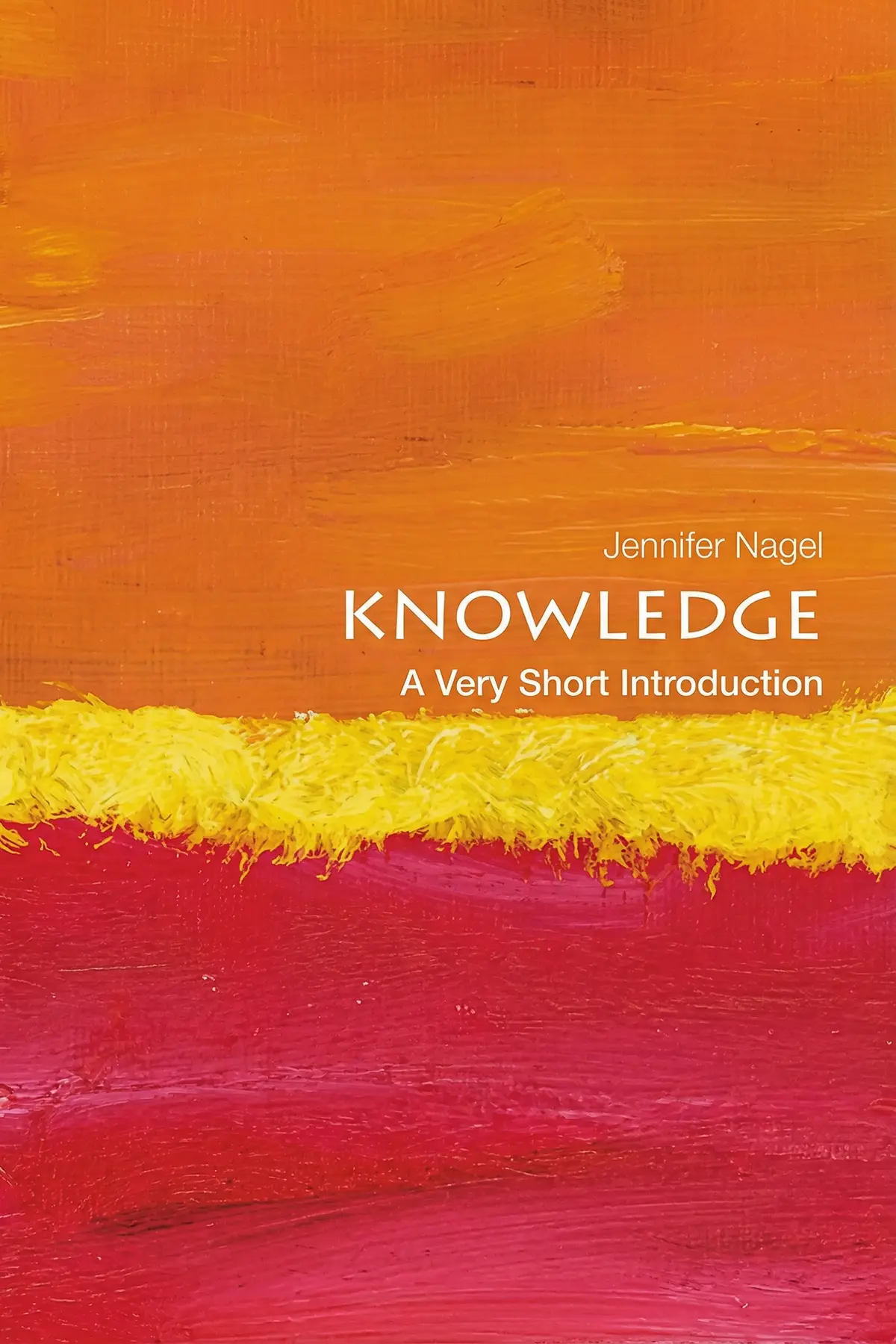
Every day brings a flood of claims, and most of us have no clear way to sort what we know from what we only believe. In Knowledge: A Very Short Introduction, philosopher Jennifer Nagel starts with one plain lesson: a fact is not knowledge until someone reaches it. A coin can lie heads up in a closed box, and that is true, yet nobody knows it until a person looks.
From there Nagel tours epistemology, the philosophy of knowledge, and its answers to one question: what does it take to really know something? Her answer, pieced together, is that knowing is never automatic. It depends on truth, on how a belief was formed, on whom you trust and on the standard a situation sets. A broken station clock, a painted donkey at a zoo and a can of peanuts hiding a rubber snake each become a tool for weighing the next claim that lands on your phone.
1 min 26 sec
Conviction feels the same whether you are right or wrong. A Greek thinker standing in a breeze offered one way out of that trap, and most philosophers since have decided he took the wrong road.
1 min 24 sec
Even the plain fact of whether you have shoes on can be made to wobble. Two ancient schools of skepticism argued over how far doubt should go, and both built on an older Stoic habit worth borrowing.
1 min 45 sec
One philosopher believed we are born holding certain truths. Another looked at babies and saw nothing of the kind. Their quarrel explains why two people can share a word and still mean different things.
1 min 30 sec
A traveler trusts a station clock, and a detective trusts a witness. One ends up without knowledge and the other keeps it, and the reason has defeated every tidy formula philosophers have tried.
1 min 31 sec
You are probably sure about the world’s tallest mountain, and probably cannot say how you learned it. Two camps of philosophers disagree on whether that counts, and both have a point you can use.
1 min 43 sec
By one strict rule, you cannot even know that the philosopher who made the rule ever lived. Other thinkers found a gentler standard, and a dinner-party argument about a famous album shows how it works.
1 min 37 sec
A man can be tall on his dating profile and short on the evening sports report, and both descriptions can be true. The same logic lets a skeptic and an ordinary person both be right.
1 min 41 sec
You choose between knows and thinks without a second’s thought, and a rubber snake in a peanut can shows a talent no chimpanzee has. The same talent trips up traders holding a secret.
1 min 13 sec
Nagel’s tour ends without a final definition, and that is honest: the experts still disagree about what knowledge is and how anyone gets it. What the book offers instead is a way of weighing claims. Truth sits outside us, a confident belief can still miss it, and the route by which a belief arrived matters as much as how strong it feels.
Knowledge also turns out to be shared more than owned. Nagel’s closing picture is an orchestra. The trumpeter knows the trumpet parts and the oboist knows the oboe parts, yet only the group, playing together, knows a whole symphony. A team can hold knowledge larger than any member’s share, which is a good reason to ask colleagues rather than guess.
The habits follow from there. Keep the Stoic pause before accepting a first impression. When a decision rests on a fact, sort what you checked yourself from what you took on trust, and weigh the source. Name the bar the situation needs, and remember that what you know is not what the person across the table knows.
None of this makes doubt the goal. The aim is to know which of your certainties have earned the name.
Information has never been easier to reach, or harder to trust. Facts, opinion and propaganda arrive mixed together, and most of us have no clear method for telling what we know from what we only believe. Jennifer Nagel argues that this problem has a long history, and that philosophy has built useful tools for it. Her guide to epistemology, the study of knowledge, moves from the doubters of ancient Greece to Descartes and Locke, then into modern debates about belief, evidence, testimony and context. Along the way she uses vivid puzzles: a broken station clock, a detective with a lying witness, a painted donkey at a zoo and a trader who cannot forget his insider tip. Each one shows a different way that knowing can succeed or fail. Readers get a working vocabulary for judging claims. They learn when a confident belief still falls short, how much evidence a fact needs, when to trust a source and why people so often misjudge what others know.
Professionals buried in news and reports who want a clear way to judge what is true.
Students starting philosophy who need a plain map of the main debates about knowledge.
Managers and teachers who keep assuming others know what they know.
Jennifer Nagel teaches philosophy at the University of Toronto Mississauga, where she works on epistemology, the philosophy of mind and metacognition. She has written on 17th century philosophy, especially John Locke and René Descartes, and on modern questions such as how the verb to know shifts with context. Much of her recent research looks at epistemic intuitions, the natural instincts people have about knowledge.

Listeners view this work as a superb introduction to epistemology, noting that it offers resources for continued exploration. The quality of the material is highly regarded, with one listener describing it as an outstanding synthesis of modern epistemology. While the book is considered a skillfully composed and accessible guide to the field, listeners express varying opinions regarding the clarity of the writing.
Jennifer Nagel manages to condense centuries of philosophical heavy-lifting into a remarkably readable little volume. She guides the reader through the foundational debates of rationalism and empiricism, moving seamlessly from Descartes’ search for certainty to Locke’s blank slate theory. I particularly appreciated how she brought the discussion into the modern era with sections on reliabilism and contextualism. It’s rare to find a book that feels both like a rigorous academic summary and a casual conversation with a brilliant professor. The distinction between Jennifer Nagel and Thomas Nagel is worth noting, as she has a distinct, accessible voice that makes high-level epistemology feel grounded. This serves as a perfect starting point for anyone looking to build a bibliography for deeper study. To be fair, it moves fast, but that’s the nature of the 'Very Short Introduction' format. It is a dense but rewarding journey through the history of thought.
Show moreAs someone who usually struggles with the dry nature of philosophy texts, I found Nagel’s writing to be a refreshing change of pace. She manages to synthesize the core concepts of epistemology—belief, truth, and justification—into a narrative that actually flows. The way she explains how contextualism changes our standards of knowing depending on the stakes was particularly enlightening. It’s not just a history book; it’s a manual for understanding how we navigate information in a world full of bullshitters and noise. To be honest, the brevity of the book is its greatest strength, forcing a level of clarity that larger tomes often lack. If you are looking for a bridge between classic thinkers like Descartes and modern theories like tracking, this is it. It’s an essential primer for any home library and serves as a masterclass in concise educational writing.
Show moreConcise, brilliant, and surprisingly fun for a book about the nature of truth. Nagel has a knack for making even the most abstract concepts feel relevant to how we live our daily lives. Whether she’s discussing the reliability of our memories or the way we process testimony from others, the insights are consistently sharp. This isn't just a list of dead philosophers; it's a living, breathing look at how we understand our place in the universe. I loved the way she balanced the historical context of Locke and Descartes with the cutting-edge questions of today. If you want to dive into philosophy but don't know where to start, this is the perfect gateway drug. It is a highly recommended read for anyone who enjoys a bit of intellectual vertigo and wants to explore the foundations of their own beliefs.
Show moreEver wonder if you're actually sitting in your chair or just a brain in a vat being poked by some futuristic supercomputer? This book dives straight into that delightful existential dread with a clear-eyed look at skepticism and the limits of human perception. Nagel explains complex theories like invariantism without drowning the reader in unnecessary jargon or archaic terminology. Frankly, I was impressed by how well she handled the transition from pre-modern thought to the messy, complicated world of contemporary epistemology. The chapter on testimony was a standout for me, especially regarding how we trust the word of others in a digital age. My only minor gripe is that some of the more abstract logical proofs could have used a few more real-world examples to really stick. Regardless, it is an excellent summary for the curious layperson looking for a readable primer.
Show morePicked this up because I wanted to understand why people keep arguing about what it means to 'know' something. It turns out that knowledge isn't just a collection of facts but a deeply complex relationship between the observer and the truth. Nagel does an incredible job of framing the history of these ideas, especially the way she handles the clash between internalism and externalism. I found myself rethinking my own confidence in everyday beliefs after reading the sections on the criterion of truth. The book is concise, as promised, yet it doesn't feel like it’s cutting too many corners on the big questions. Look, you won't walk away with all the answers, but you'll definitely have better questions to ask. It’s a solid read that I’ll likely revisit when I need a refresher on Gettier cases or the limits of empiricism.
Show moreIf you need a quick primer on why you can’t trust your own eyes, Jennifer Nagel has you covered. This tiny book packs a massive punch, covering everything from the 'I think, therefore I am' basics to complex modern theories of testimony. The prose is sharp and moves at a clip that keeps you engaged without feeling entirely overwhelmed by the weight of the subject matter. It’s a brilliant summary for anyone who wants to stop saying 'I know' and start wondering what that even means. Gotta say, the section on how groups can know things that individuals don't was a real eye-opener for me. A few more diagrams might have helped with the logic puzzles, but overall, it’s a very strong effort that provides excellent sources for further study. It makes a complicated field feel much more approachable.
Show moreAfter hearing a lot about the 'Gettier problem' in various podcasts, I bought this to finally understand the technical details. Nagel explains it perfectly, showing exactly why a justified true belief might still fall short of actual knowledge. The book serves as an excellent overview of epistemology, providing a map of the territory that makes further study much less intimidating for a layperson. I particularly enjoyed the chapter on how we use sensitive knowledge to navigate the physical world around us. In my experience, most introductory books either oversimplify or overcomplicate, but this one finds a happy medium that respects the reader's intelligence. A few parts on invariantism were a bit of a head-scratcher, but they didn't ruin the overall experience. It is a well-written and highly informative guide to a complex subject.
Show moreWhile the summary of contemporary epistemology is solid, I found the pacing of this book to be a bit uneven at times. Nagel is clearly a master of her field, but some sections on the causal theory of knowledge felt rushed compared to the historical bits. I appreciated the inclusion of social epistemology and the brief nod to the impact of modern technology like Wikipedia. However, I wanted more depth on how these theories apply to our current 'post-truth' political landscape. The book is definitely readable, but readable sometimes means it skims over the nuances that make philosophy interesting in the first place. Not gonna lie, I finished it feeling like I had the skeleton of the subject but was missing some of the meat. It’s a useful reference for students, but maybe not the only book you’ll need on the topic if you want a deep dive.
Show moreNot what I expected from the VSI series, which usually hits a sweet spot between introductory and exhaustive. This one felt a little too light on the pre-modern history for my taste, focusing heavily on the shifts from the 16th century onward. I was hoping for more on the ancient Stoic or Pyrrhonian roots beyond the initial overview provided in the early chapters. Truth is, the book is written with a very modern, analytical bias that might frustrate those looking for a broader historical survey. That said, the explanation of internalism was one of the clearest I’ve ever read in a textbook. It’s a decent enough primer if you just want the highlights of the current academic debate. Just don't expect a deep dive into the metaphysical implications of it all, as it remains strictly within the bounds of standard epistemology.
Show moreThe writing style felt incredibly dense despite the book's promise of being a 'very short' and accessible introduction to the field. I often found myself re-reading the same paragraph three times just to grasp the distinction between different types of skepticism. Perhaps I’m just not the target audience, but the jargon-heavy sections on tracking theory and reliabilism felt like they were written for other philosophers. Personally, I found the other reviews to be a bit misleading regarding how 'fun' this book actually is for a casual reader. It feels much more like a dry undergraduate lecture than an engaging exploration of the human mind. If you already have a background in logic, you might find it breeze-worthy, but for a complete novice, it’s a bit of a slog. I was hoping for more clarity and fewer abstract thought experiments that feel disconnected from reality.
Show moreJennifer Nagel shows that knowing something is harder to define than it seems. A fact only becomes knowledge when someone reaches it, and a belief can be confident and justified yet still fall short. She walks through ancient skeptics, Descartes and Locke, and modern debates on evidence, testimony and context, showing that knowing depends on truth, on how a belief was formed, on whom we trust and on the standard a situation sets.
Externalists, in Nagel’s account, hold that the right connection to a fact is enough to know it, even without evidence you can point to, so you can know Everest is the tallest mountain without remembering why. Internalists demand evidence you can reach yourself. The risk with the first view is that false facts, such as Sydney being Australia’s capital, can feel just as familiar as true ones.
Philosophers disagree. Locke said no, since knowledge comes only from perception. Reductionists say yes, if we use inference, memory and perception to judge the source. A third group treats testimony as knowledge in its own right, as long as the informant tells the truth, even a teacher who does not personally believe the theory being taught.
Pause between first impression and judgment, as the Stoics advised. When a decision depends on a fact, separate what you have checked from what you took on trust, and weigh the source. Set your standard of proof to fit the stakes, as contextualism suggests. And before explaining something, list what you know that your listener might not, because people tend to project their own knowledge onto others.
It suits readers who feel swamped by information and want better tools for judging it, and students who need a short, clear introduction to epistemology. Its puzzles, from a broken station clock to a painted donkey at a zoo, also make it useful for managers, teachers and anyone who explains things to others and wants to understand why people misjudge what others know.
John Rawls




William B. Irvine

Nigel Warburton
Colin Ward
AUDIO SUMMARY AVAILABLE
Get the key ideas from Knowledge by Jennifer Nagel, plus 5,000+ more nonfiction titles.









