

A River in Darkness: One Man’s Escape from North Korea
Masaji Ishikawa
 English
Traces how ISIS grew from one Jordanian militant's sectarian strategy into a disciplined army, helped by the Iraq war, prison networks, tribal deals and media attention, and why Western governments kept underestimating it.
58 sec
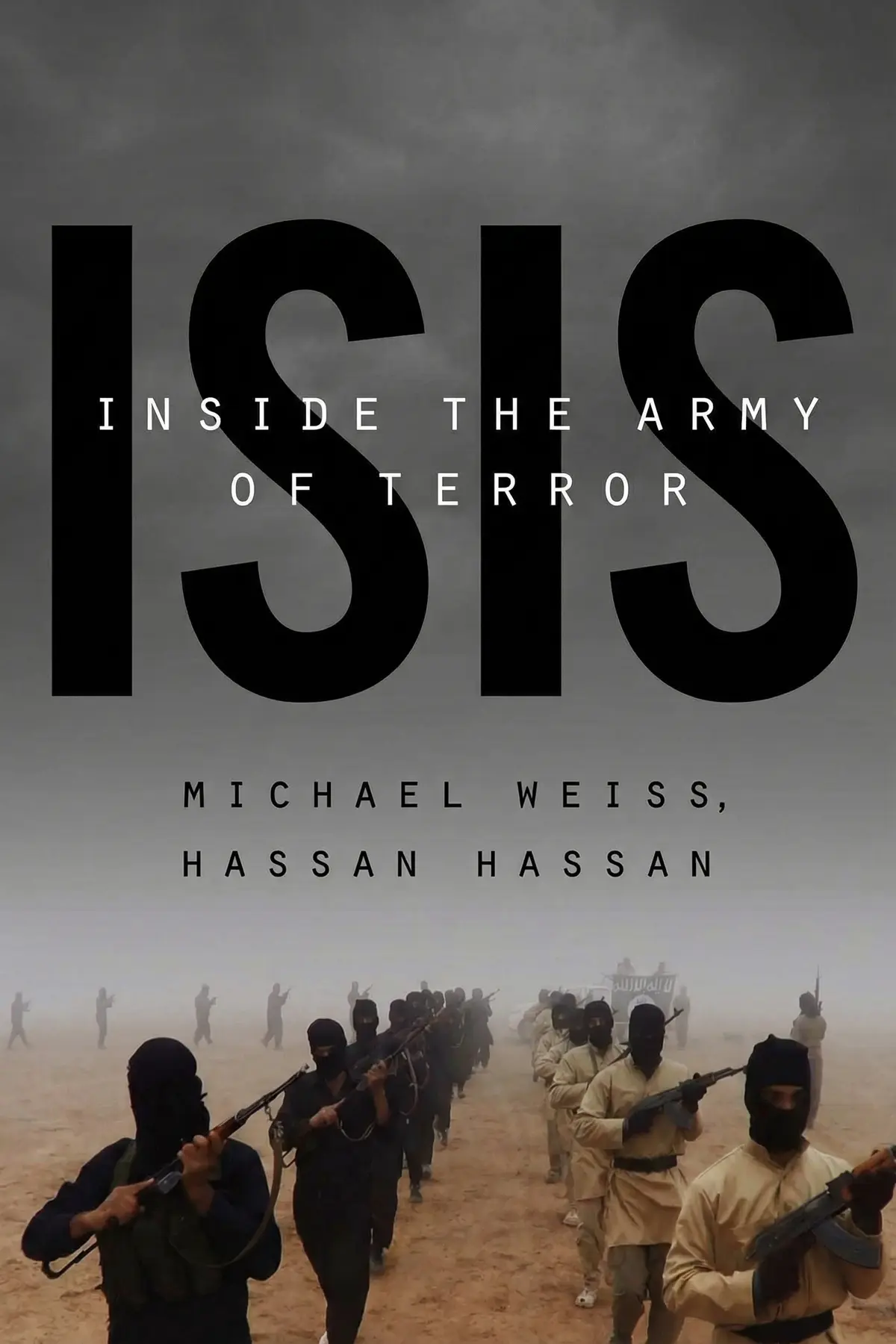
To most news watchers, ISIS seemed to come from nowhere and seize whole cities almost overnight. In ISIS: Inside the Army of Terror, journalists Michael Weiss and Hassan Hassan show the reverse. A group of only a few thousand members took land nearly the size of Great Britain because it had spent years building itself out of sight, with former advisors from Saddam Hussein’s government among its leaders.
The authors’ case is that ISIS is a disciplined, patient army, shaped by one Jordanian militant’s strategy, by the fallout of the Iraq war and by clever use of prisons, tribes and media, and that the West badly underestimated it. Follow the story from a semi-literate troublemaker to a self-declared caliphate and the headlines turn into a chain of causes you can explain to anyone, along with a sharper eye for how extremism feeds on chaos and exclusion.
2 min 04 sec
A teenager from Bahrain found ordinary rebel groups too soft and went looking for something harsher. His short life, and the towns that first welcomed ISIS, reveal what the group promises and what it delivers.
1 min 40 sec
His mother sent an unruly, barely literate boy to religious classes to calm him down. What he found there, and what a Jordanian prison did for his reputation, set a chain of events in motion.
2 min 05 sec
Bin Laden did not even like the Jordanian he chose to back. Their awkward partnership, a disputed case for war and a campaign by Saddam himself all pushed secular party men toward holy war.
1 min 56 sec
A small share of Iraq’s militants carried out a huge share of its attacks, and their real target was not who most viewers assumed. Then the tribes began to push back.
1 min 51 sec
Driven out of Baghdad and abandoned by the tribes, ISIS looked finished. Its members made an odd choice about American prisons, and a Syrian president’s double game did the rest.
1 min 53 sec
Its fighters numbered only in the thousands, yet ISIS drew volunteers from Europe and took cities that resisted for months. The tools it used were cheaper and quieter than tanks.
1 min 30 sec
Washington faced a request for help in Syria where both possible answers were wrong. The authors trace that trap back to choices made in Iraq years earlier.
1 min 07 sec
On the news, ISIS looks like pure savagery. Weiss and Hassan show it as something more unsettling: an organization. It had a founder with a strategy, officers who once served Saddam, a doctrine of who belongs and who must die, and the patience to wait in prisons and small towns until its enemies left. Each time a group was shut out, a tribe ignored or a beheading broadcast, the army of terror gained something it could use. The West’s great mistake, in the authors’ judgment, was underestimating a disciplined force with deep resources and support, and many people paid for it with their lives.
The book leaves habits of mind worth keeping. When a movement offers order after chaos, watch what it does once it holds the keys. When a group seems to rise from nowhere, look for the years it spent building where no one was looking. And when atrocity is turned into spectacle, remember that attention was one of the weapons. Al-Zarqawi dressed his victims in orange for the cameras, and the cameras kept rolling.
ISIS burst into Western headlines as if from nowhere, taking major cities in Iraq and Syria and declaring a caliphate. Michael Weiss and Hassan Hassan argue that this impression was a dangerous mistake. The group was the product of years of patient work, and its leadership included former advisors from Saddam Hussein's regime. The authors trace the story from Abu Musab al-Zarqawi, a semi-literate Jordanian radicalized in religious classes, through his uneasy alliance with Osama bin Laden, the 2003 invasion of Iraq and the anger of Sunnis shut out of the new Shia-led order. They show how ISIS survived defeat by hiding and recruiting inside US prisons, exploited Bashar Assad's double game in Syria, broke with al-Qaeda, courted tribes with oil money and seized cities with sleeper cells and sieges. Readers get a clear chain of causes behind the headlines, a picture of how the group recruited through social media and news coverage, and the authors' sharp verdict on American strategy in Iraq and Syria.
Readers who follow world news and want to understand how ISIS actually rose.
Students of politics, security or the Middle East looking for a clear chain of causes.
Professionals who must judge armed groups, sanctions or aid in conflict zones.
Michael Weiss writes columns for Foreign Policy, The Daily Beast and NOW Lebanon, holds a fellowship at the Institute of Modern Russia and edits The Interpreter. He has covered the Syrian uprising since 2011 and reported from the front lines in Aleppo in 2012. Hassan Hassan, born in 1982 in eastern Syria near the Iraqi border, writes about Islamist groups for outlets including the Guardian, Foreign Policy and the Financial Times, has advised policymakers in the US and the Middle East on extremism, and founded New Lines Magazine.

Listeners find this work remarkably educational and deeply researched, with one listener specifically praising the thorough breakdown of the organization's roots. The caliber of the writing is also widely appreciated, as one listener mentioned feeling completely drawn into the account. Furthermore, the book delivers significant context regarding the movement’s underlying goals and the complex political landscape of Iraq and Syria. On the other hand, clarity is a point of contention; some deem it a gripping narrative, whereas others find it challenging to track. Pacing also draws varied responses, with several listeners noting that the subject matter feels terrifying and distressing.
Wow. Weiss and Hassan have managed to peel back layers of a conflict that usually feels like a blurry mess on the nightly news. Frankly, it is one of the most immersive accounts of modern radicalization I’ve ever encountered. The way they link the US prison system in Iraq to the eventual leadership structure of ISIS is both brilliant and terrifying. You start to see how guys like Baghdadi weren't just born, they were forged in the vacuum left by Western intervention. The authors don't pull punches when discussing the role of the Iranian Quds force either. Every page feels like it’s backed by a dozen interviews. It’s an upsetting read because of the brutality described, but it’s necessary for anyone who wants to look past the headlines. The writing quality is top-notch, making complex geopolitical shifts feel immediate and visceral.
Show moreThe chapter on Abu Musab al-Zarqawi alone makes this worth the purchase price for anyone trying to understand the genesis of modern jihadism. This is a masterful piece of reporting. Weiss and Hassan have managed to get closer to the subject than almost any other Western journalists. I found the interviews with active ISIS members to be particularly illuminating, as they reveal a level of pragmatism that the media often ignores. It’s a harrowing read, especially when you realize how many of these issues were avoidable. The documentation is exhaustive, and the authors' deep knowledge of the region shines through in every paragraph. It’s upsetting, yes, but that’s because the truth of the situation is grim. This book is a vital piece of the puzzle for understanding the current state of the Middle East.
Show moreEver wonder how a ragtag group of insurgents transformed into a pseudo-state with its own economy and courts? In my view, this is the definitive account of that transformation. The authors go way beyond the beheading videos to look at the advanced logistics and recruitment strategies that make ISIS so effective. It’s a terrifyingly immersive read. The way they explain the symbiotic relationship between Assad and the extremists was a real eye-opener for me. It’s complex, but the authors break it down with clarity and precision. While some might find it difficult to follow at times due to the complexity of the subject, the effort is well rewarded. This is a thoroughly documented, frighteningly relevant book that every citizen should read. It completely changed my perspective on the failures of the Iraq War.
Show moreThis book is essentially a deep dive into the absolute chaos of the Middle East post-2003. Truth is, the authors do a fantastic job of tracing how the remnants of Saddam’s Baathist regime merged with radical Salafism to create a monster. It’s thoroughly informative and well-documented, especially when discussing the tactical failures of the US occupation. I appreciated the specific details on how the Al-Maliki government’s sectarianism pushed Sunnis into the arms of extremists. However, the narrative can get a bit bogged down in the sheer number of names and acronyms. It’s not exactly a beach read, and the pacing is often interrupted by dense political analysis. Still, for anyone wanting to understand why the 'mission' was never actually 'accomplished,' this is indispensable. It provides a sobering look at how regional players like Iran and Syria manipulated the insurgency for their own ends.
Show moreAs someone who follows foreign policy, I found the analysis of the Baathist-Salafist convergence to be the strongest part of the narrative. Not gonna lie, the section on the early days of Zarqawi is genuinely gripping. The book does a great job of showing how ISIS isn't just a terrorist group, but a highly organized military and bureaucratic machine. This isn't just about religion; it's about power and political disenfranchisement. My only real complaint is that the writing can be a bit repetitive, hammering home the same points about the Maliki government multiple times. Still, the quality of the research is undeniable. It’s a frightening look at a resilient enemy that was decades in the making. Definitely worth your time if you can handle the dense prose.
Show morePicked this up hoping for a clear roadmap of how we got here, but it’s a dense trek. To be fair, Weiss and Hassan have clearly done their homework. The documentation is impressive and the interviews with former members provide a chilling look inside the caliphate’s machinery. My main gripe is the readability; the prose is often dry and assumes the reader has a PhD in Middle Eastern studies. One moment you are reading a compelling account of Zarqawi’s rise, and the next you are lost in a sea of confusing tribal alliances. It’s a frightening and upsetting book, which is expected given the subject matter, but the lack of a strong narrative thread made it hard to stay engaged. It works better as a reference text than a cohesive story. If you want a deep dive into the minutiae of the Syrian civil war, go for it.
Show moreAfter hearing so much about the 'Army of Terror,' I expected something more sensational, but this is a scholarly, almost clinical account. Gotta say, the information regarding the 'Sahwa' or Sunni Awakening and its subsequent betrayal by the Baghdad government was the highlight for me. It explains so much about the current Sunni-Shia divide. However, the pacing is quite uneven. Some sections fly by with intense reporting, while others feel like a repetitive list of intelligence reports. I found it difficult to follow the various splinter groups in the latter half of the book. It’s a valuable resource for sure, but the readability is mixed at best. You really have to focus to keep the timeline straight as it jumps between Iraq and Syria. It’s informative but lacks the narrative drive of similar non-fiction works.
Show moreLook, the level of detail here is staggering, yet I found myself constantly flipping back to previous chapters to remember who was who. Personally, I think the authors are experts, but they might be too close to the material to realize how confusing it is for a layperson. The book provides incredible insights into the group's motivations, specifically how they use order and social services to win over war-torn populations. That's a side of the story we rarely see in Western media. But the transition between the history of AQI and the modern Syrian conflict felt rushed. I struggled with the dry tone during the more analytical sections. It’s a heavy, upsetting book that requires a lot of mental energy. It is well-documented, no doubt, but it isn't always a 'compelling' read in the traditional sense.
Show moreFinally got around to reading this, and it’s certainly a sobering look at how the US essentially helped create a vacuum for radicalization. In my experience, most books on this topic are either too shallow or too academic, and this one sits uncomfortably in the middle. The insights into the Baathist influence within ISIS were fascinating. It really challenges the idea that this is purely a religious movement. On the downside, the chapters on the Syrian civil war felt incredibly cluttered. There are so many moving parts that the authors fail to synthesize into a clear picture. The pacing is upsettingly fast in parts where I wanted more detail, and slow where I wanted a summary. It’s a mixed bag. It’s informative, yes, but be prepared for a difficult, often frustrating reading experience.
Show moreNot what I expected at all, and I honestly found it a chore to finish. While it is obviously well-researched, the focus is so narrow that it loses the forest for the trees. The authors seem to have a very specific political lens, particularly when discussing the role of Iran and the Assad regime. I felt like the role of Western intelligence was glossed over in favor of blaming local actors for every single development. The writing is dense and the pacing is incredibly slow, making it difficult to follow the evolution of the group. It felt less like a book and more like a collection of long-form journalism pieces stitched together. For a topic this explosive, the prose was surprisingly flat. I wanted to understand the 'why' behind the movement, but I mostly just got a list of names and dates.
Show moreMichael Weiss and Hassan Hassan trace how ISIS grew from the ideas and networks of Abu Musab al-Zarqawi, a Jordanian militant, into a disciplined army that declared a caliphate across Iraq and Syria. They follow its alliance with bin Laden, its use of the Iraq war and Sunni anger, its survival in hiding, its break with al-Qaeda and the tactics that won it cities. Their key message is that the West seriously underestimated it.
The authors argue the 2003 invasion and its aftermath pushed many Sunnis and former members of Saddam’s Baath party toward jihadist groups. De-Baathification produced a Shia-led government, and many excluded Sunnis joined armed cells. Some Baathists had already been drawn to Salafism through Saddam’s own religious campaign. Al-Qaeda recruited them, and many later fought for ISIS, whose top leadership included former advisors from Saddam’s regime.
The book describes recruitment through the group’s own videos and magazines, spread on Facebook, Twitter and Zello, plus constant Western news coverage of its brutality, which appealed to its target audience of young men. Recruits included extremists, opportunists and bored young people, and over 18 percent came from nations including the United Kingdom and Belgium. Members also deliberately got arrested so they could recruit inside US prisons.
Weiss and Hassan point to three methods. ISIS courted Syria’s powerful tribes with oil money and protection, which helped it take Deir Ezzor. It placed sleeper agents inside the Free Syrian Army and al-Qaeda, ready to strike on command. And it combined months of siege and starvation with those agents assassinating commanders while regular troops attacked, as in Mosul and al-Bab.
It suits readers who want to understand the headlines about ISIS as a chain of causes rather than a sudden horror, including students of the Middle East and professionals working on security or policy. Its lessons reach beyond one group: how exclusion feeds recruitment, how prisons can strengthen extremists, and why outsiders who misread local tribes and grievances can make a conflict worse.
Masaji Ishikawa

William J. Bernstein

John Rawls

Ben Macintyre




James Shapiro

Miles Taylor

Ben Macintyre
AUDIO SUMMARY AVAILABLE
Get the key ideas from ISIS by Michael Weiss, plus 5,000+ more nonfiction titles.









