

15 min 34 sec
Available in: English
Inclusify: The Power of Uniqueness and Belonging to Build Innovative Teams
Shows managers how unconscious bias hides inside six common leadership styles, and gives each style concrete actions that help people feel valued for their differences and part of the team.
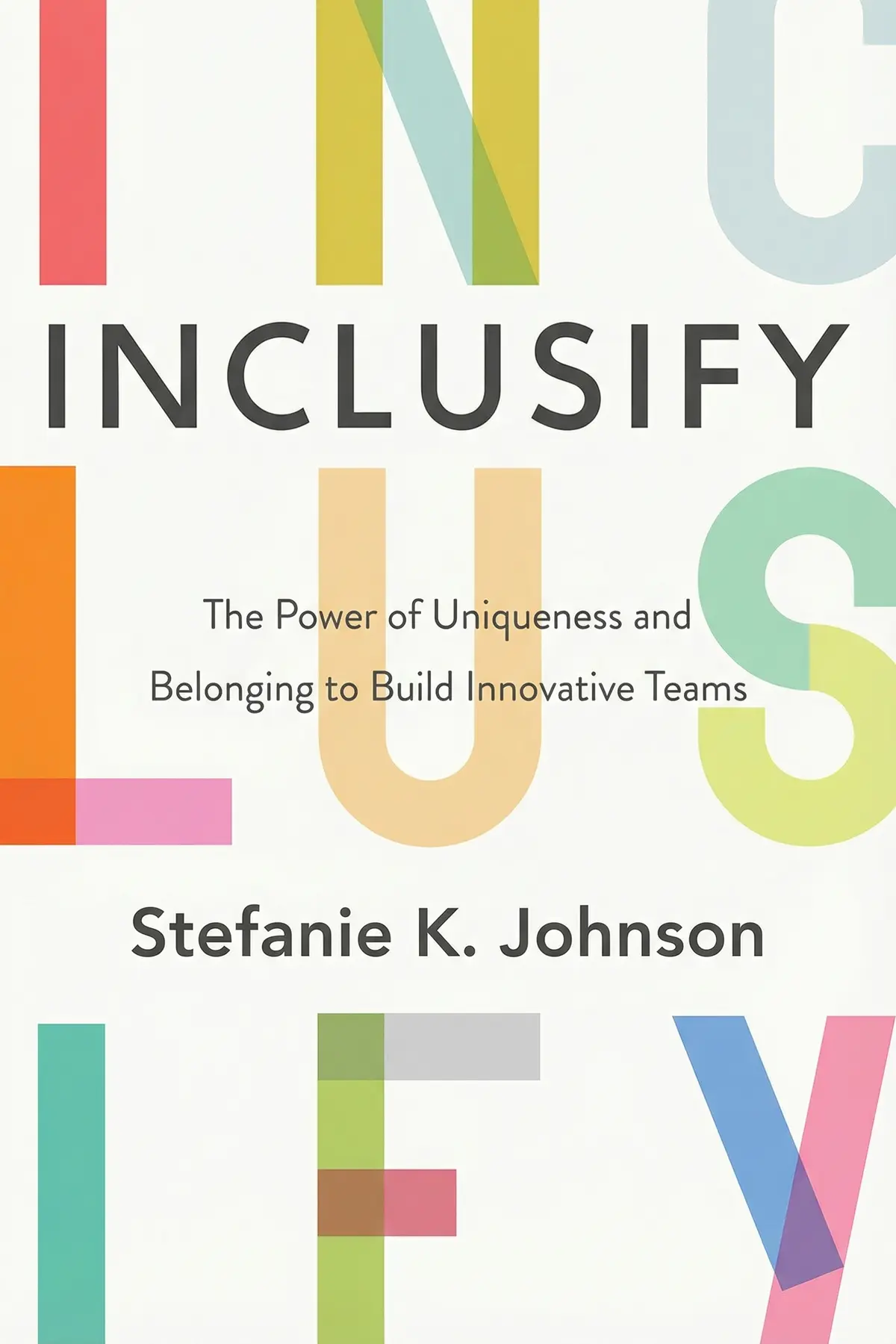
Table of Content
1. Introduction
1 min 02 sec
You can believe in diversity and still lead a team where people hide who they are. In Inclusify, business professor Stefanie K. Johnson argues that the cause is usually bias, and that it lives inside leaders who mean well. Getting this right pays. She cites a 2013 Gallup study finding that the most engaged workers produce up to 21 percent more and earn their companies 22 percent more profit.
Johnson’s ideal leader, the Inclusifyer, does two things at once: values what makes each person unique, and makes sure everyone feels part of the group. Most managers fit one of six types, from the merit believer to the cheerful optimist. Each type has its own blind spot, and each has its own way out. Along the way come a PayPal hiring motto, a Google memo that backfired and a simple way to take bias out of hiring. By the end you should be able to name your own type and the habit to change first.
2. Belonging pays off once you see your bias
1 min 49 sec
Ask most people to picture a powerful chief executive and the same image appears. That reflex looks harmless, yet it helps explain who gets mistaken for the cleaner in a law office.
3. Stop trusting a merit system built on bias
1 min 58 sec
Two résumés, identical in every line, went to hundreds of hiring professionals. One detail changed the scores, and it says a lot about any manager who trusts the numbers to be fair.
4. Hire for more than people you'd drink with
1 min 53 sec
A friendly hiring rule at a young payments company produced a staff of near copies. A later CEO closed a pay gap at what was likely a cost of millions, and the company’s growth afterward is worth a look.
5. Reach back and help others rise with you
2 min 06 sec
Some of the leaders slowest to open doors for others are the ones who once had every door closed to them. Johnson explains the fear behind that pattern and three ways out of it.
6. Rescue less and expect more from people
1 min 42 sec
A manager sends the only woman on the team home early before a deadline, and he means it as a kindness. Johnson shows why the gesture backfires, and what fairness looks like instead.
7. Support one group without leaving others out
1 min 52 sec
A memo meant to make managers more sensitive ended up setting colleagues against each other. The case shows how support for one group can read as exclusion to everyone else.
8. Turn good intentions into public goals
1 min 49 sec
Some leaders praise inclusion and trust time to deliver it. One company’s memo shows how long workplaces can wait, and a nonprofit chief shows what happens when a promise goes public.
9. Conclusion
1 min 23 sec
None of Johnson’s six managers is a villain. The merit believer, the culture builder, the self-made climber, the rescuer, the protector and the optimist all think they are doing right, which is exactly why their blind spots last so long. Inclusify asks leaders to hold two goals together, letting people be different and making them feel they belong, because either one alone fails. A team of copies has belonging without uniqueness. A divided team, like a school lunchroom where kids sit apart by race, has the reverse. Johnson argues that when both exist, people tend to be more content, get more done and are less inclined to leave their jobs.
The most direct move she recommends is to take names out of judgment. The National Symphony Orchestra, among other organizations, made its whole evaluation and selection process anonymous to support equality. You can begin smaller, by removing names from job applications before anyone reviews them. Then do the other half: when you hire or promote someone, tell the rest of the organization exactly how the choice was made.
Anonymous at the start, open at the end. In the résumé study, the hiring professionals saw the same record twice. Only the name changed, and the name won.
About this book
What is this book about?
Many managers support diversity in principle and still lead teams where people hide parts of themselves to fit in. Stefanie K. Johnson argues that the cause is rarely bad intent. It is bias, often unconscious, built into hiring, rewards and everyday habits, and it shows up even in leaders who believe they are being fair. Johnson describes six types of manager: the Meritocracy Manager, the Culture Crusader, the Team Player, the White Knight, the Shepherd and the Optimist. Each one has a typical blind spot. She illustrates them with cases from GitHub, PayPal, Google, Under Armour and Squarespace. Her goal for all six is the Inclusifyer, a leader who values each person's uniqueness and also makes everyone feel they belong. To get there, she offers two sets of tools, SELF and TEAM: support, empathy, learning and fairness, then transparency, empowerment, alignment and motivation. Readers learn to spot their own type and share out office chores fairly. They also learn to set public diversity goals and to make hiring and promotion both anonymous and transparent.
Book Information
Who it's for
Managers who sense exclusion
Managers who support diversity but sense their team still does not feel included.
Removing hidden workplace bias
Founders and HR leads redesigning hiring, pay and promotion to remove hidden bias.
Leaders from minority groups
Leaders from minority groups weighing how to help others without looking like they play favorites.
About the Author
Stefanie K. Johnson
Stefanie K. Johnson is an author, professor and keynote speaker. She is an associate professor at the Leeds School of Business at the University of Colorado Boulder, where she teaches leadership and inclusion to undergraduate and graduate students. Her research looks at how unconscious bias shapes the way leaders are judged and what leaders can do to reduce it. She has published 60 journal articles and book chapters, contributes often to Harvard Business Review and was named to the 2020 Thinkers50 Radar List.
Ratings & Reviews
Ratings at a glance
What people think
Listeners find the text insightful, with one individual observing how the research reinforces the practical advice, and many regarding it as a must-read for those in corporate leadership. The book earns positive feedback for its style of leadership, with one listener emphasizing the evidence-based strategies for inclusivity, and listeners appreciate the concrete steps offered. They value the emphasis on diversity and find the book effective, with one listener noting its usefulness in both professional and personal situations. The pacing receives mixed reactions from listeners.
Top reviews
Pacharapol
Ever wonder why diversity initiatives feel like a chore instead of a competitive advantage? Dr. Johnson’s framework on the dual need for uniqueness and belonging is the missing piece of the puzzle for many corporate leaders. I found the 'Inclusifyer' quiz particularly enlightening because it moves past the vague 'be better' advice and gives you a specific archetype to work on. Whether you are a 'White Knight' or an 'Optimist,' the mirror this book holds up is necessary for growth. The research undergirding the practical recommendations makes it feel credible rather than just another feel-good HR manual. It provides a clear, evidence-based approach to fostering a culture where people don't just fit in, but actually stand out for the right reasons. This is a must-read for anyone serious about building innovative teams that actually function well in the real world.
Show moreDavid
The research undergirding Dr. Johnson’s recommendations provides the kind of empirical backbone often missing from corporate leadership guides today. I was especially impressed by the focus on how uniqueness and belonging are not inversely related to merit, which is a common misconception in many boardrooms. The book illustrates how 'Inclusifying'—the act of celebrating individual differences while maintaining a cohesive group identity—actually drives innovation. I’ve already started implementing the 'aggressive transparency' tactics in our hiring process to mitigate confirmation bias. It is refreshing to read a leadership book that uses data to prove that diversity isn't just a moral imperative but a functional necessity for high-performing teams. Every executive should have a copy of this on their desk. The stories are relatable, the data is solid, and the results of following these steps are immediate.
Show moreRoongsak
Truth is, most leadership books are dry, but the storytelling here regarding the six leader archetypes made the concepts stick for me. I love how she doesn't just tell you what to do but shows you the 'follies' you're likely already committing. I found myself cringing a few times as I recognized my own tendencies in the 'Team Player' description, specifically how I've assimilated so much that I've lost my own unique edge. This book is a great tool for self-reflection and provides a concrete path toward becoming a more empathetic and effective leader. It’s effective because it focuses on the human instinct to both stand out and fit in. This isn't just for the office; the lessons on belonging are useful in almost any social context. Truly a great book for our times!
Show moreGai
In my experience, the tension between wanting to stand out and needing to fit in is the defining struggle of the modern workplace. Dr. Johnson tackles this head-on with her 'Inclusify' concept, and the result is a masterclass in team dynamics. I appreciated the specific strategies for the 'Optimist' leader, especially the reminder that silence is often interpreted as a lack of commitment to change. The book is packed with graphs and real-world scenarios that make the concepts feel tangible rather than theoretical. It’s one of those rare business books that you finish and immediately want to discuss with your entire department. It creates a common language for discussing bias and inclusion without making people feel attacked. If you want to build a team that actually feels like a team, read this. You won't regret it.
Show moreArt
After hearing so much buzz about Johnson's work, I picked this up expecting a quick read, but I found myself slowing down to take notes on every page. The way she breaks down how leaders miss the mark—even when they have the best intentions—is incredibly insightful. I've read plenty of books on diversity, but this one focuses on the 'how' in a way that feels very fresh. The section on 'aggressive transparency' changed the way I think about our internal promotions. While the pacing has some mixed reviews from others, I found the detailed examples necessary to fully grasp how to 'Inclusify' a legacy culture. It is a brilliant, evidence-based guide for corporate leaders who are tired of the same old diversity training. This is how you actually move the needle.
Show moreFrida
As a manager who has always identified as an 'Optimist,' reading this was a bit of a wake-up call for me. I used to think that culture would just evolve naturally if I hired good people, but Johnson shows why that passivity leads to the status quo. The breakdown of the six archetypes is easily the strongest part of the book because it identifies the 'follies' we all fall into. I realized I was often acting as a 'Culture Crusader,' prioritizing a hive-mind mentality over the unique perspectives my team actually needs. The advice is actionable, even if some of the chapters feel a bit repetitive towards the end. It helped me confront some uncomfortable truths about the tailwinds I’ve enjoyed in my own career as a white male. The journey to change is long, but this guide provides the right tools for the first few steps.
Show morePia
Finally got around to finishing this for my company's DEI board, and I was pleasantly surprised by the depth of the case studies. Johnson does a great job of demonstrating how even well-meaning leaders can accidentally stifle their teams by being 'White Knights' or 'Shepherds.' The concepts of 'Support, Empathize, Learn, and Be Fair' might sound like common sense, but the book shows how rarely they are actually practiced in tandem. I did find the pacing to be a little uneven, as some sections on the archetypes felt much more fleshed out than others. However, the practical checklists at the end of each chapter are gold for anyone who wants to start making changes tomorrow. It’s a very applicable book for our current times. I highly recommend it for any leader who wants to bridge the gap between diversity goals and actual inclusion.
Show moreTong
Frankly, this reads more like a polished synthesis of existing HR journals from the last five years than a groundbreaking manifesto. If you haven't been keeping up with academic literature on management, you will find a lot of value in how Johnson distills complex ideas into a 7th-grade reading level. It is very accessible, which is a strength, but for those of us already working in DEI, there isn't much here that feels revolutionary or new. The tone is quite conversational—perhaps a bit too much for my personal taste—making it feel more like a long blog post than a deep dive. Still, it’s a decent enough primer to hand off to a slightly dense boss who needs to understand the basics of 'uniqueness + belonging.' It’s not a bad book, just a very safe one that stays within well-trodden territory.
Show moreBenjamin
While I appreciate the intent, I was deeply troubled by how much this book overlooks the trans and non-binary communities. For a work published in the wake of significant Supreme Court cases regarding gender identity, the heavy reliance on a rigid gender binary feels incredibly dated and exclusionary. The author constantly groups 'women, POC, WOC, and LGBTQ' as a catch-all phrase that starts to feel like a dehumanizing copy-paste after the first few chapters. It provides a very narrow view of diversity that seems centered primarily on the experiences of people who look and think like the author herself. If you are looking for a truly intersectional guide to modern inclusion, you might want to look elsewhere. It gives plenty of lip service to being inclusive, but the actual content ignores those who face the most severe workplace discrimination today. It was quite a letdown.
Show moreMethinee
Disappointing is the only word that fits when a book about uniqueness spends so much time obsessing over rigid group labels. I took the quiz and scored as an Inclusifyer, but the actual text of the book left me feeling alienated. The author seems to believe that the only way to value someone is to first categorize them by their race, gender, or political orientation. To me, that is the literal opposite of valuing a person’s uniqueness. Furthermore, the claim that merit is somehow secondary to these group dynamics is unsubstantiated and frankly unconvincing to anyone who has worked in high-stakes environments. It felt like the book was trying to force a specific political worldview rather than providing objective management strategies. I wanted to like this, but the logic just didn't hold up under scrutiny.
Show moreQuestions about this book
What is the main idea of Inclusify?
Stefanie K. Johnson argues that teams thrive when people feel both valued for their uniqueness and part of the group. Bias, often unconscious, gets in the way, even in well-meaning leaders. She describes six manager types, from the Meritocracy Manager to the Optimist, each with a typical blind spot, and shows how each can become an Inclusifyer using actions grouped under two acronyms, SELF and TEAM.
What are the six manager types in Inclusify?
Johnson names the Meritocracy Manager, who trusts results that bias can skew; the Culture Crusader, who hires for fit; the Team Player, a minority leader who climbed alone and sides with the majority; the White Knight, who rescues people who did not ask; the Shepherd, a minority White Knight who risks looking like a favorite-player; and the Optimist, who expects inclusion to happen by itself.
What do SELF and TEAM stand for in Inclusify?
The letters of SELF mean support, empathy, learning and fairness, the individual actions that honor each person’s uniqueness. The letters of TEAM mean transparency, empowerment, alignment and motivation, which are the group actions that build belonging. Johnson matches different parts of each to each manager type, for example fairness and empowerment for White Knights, and support and motivation for Optimists.
How can a manager apply Inclusify right away?
Johnson’s most direct advice is to remove names from job applications before reviewing them, as the National Symphony Orchestra and others did with their selection process, and then explain openly how each hire or promotion was decided. She also suggests rotating office chores such as coffee runs and cleaning up after meetings, and setting public diversity goals tracked through performance reviews, as Bob Wendelgass did at Clean Water Action.
Why does Inclusify criticize meritocracy?
Johnson points to a study in which more than 400 HR professionals rated two identical résumés, one with a man’s name and one with a woman’s, and favored the man when judging on merit. Her lessons are that the playing field is not level and that systems create inequality. GitHub, whose former CEO displayed a meritocracy slogan on a mat, was a hard place for its few women employees.
Featured in
Readers also enjoyed




A Year with Peter Drucker: 52 Weeks of Coaching for Leadership Effectiveness
Joseph A. Maciariello





Acting with Power: Why We Are More Powerful Than We Believe
Deborah Gruenfeld
AUDIO SUMMARY AVAILABLE
Listen to Inclusify in 15 minutes
Get the key ideas from Inclusify by Stefanie K. Johnson, plus 5,000+ more nonfiction titles.
- 5,000+ titles
- Listen as much as you want
- 7-day free trial
- Cancel anytime









