
15 min 03 sec
Available in: English
 ไทย
EnglishไทยI Contain Multitudes: The Microbes Within Us and a Grander View of Life
By Ed Yong
Ed Yong shows that the microbes living in and on us are mostly partners. He explains how they build bodies, train immunity and give animals strange abilities, and what that means for how we eat, clean and treat disease.
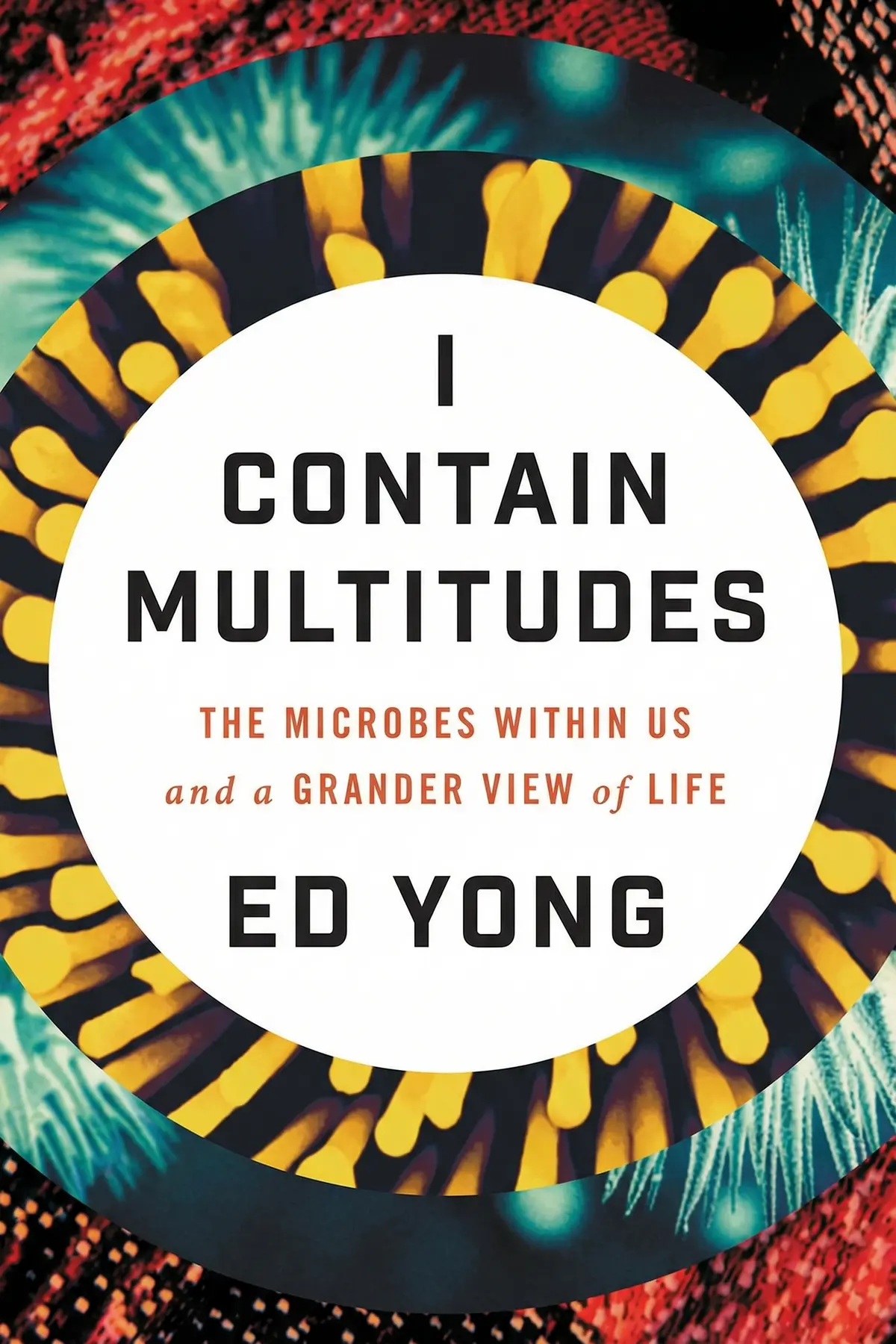
Table of Content
1. Introduction
55 sec
Most of us treat germs as enemies to scrub away, yet more than half of the cells in a human body are microbes. In I Contain Multitudes, science journalist Ed Yong argues that these tiny organisms are mostly our partners, and that every animal body, yours included, works like a crowded ecosystem. His central claim is that whether a microbe helps or harms depends on where it lives and how balanced its community is. Health, then, is a matter of tending that community well.
The evidence runs from the first oxygen on Earth to a squid that glows to hide from predators, a moth that keeps autumn leaves green and a stool transplant that can save lives. By the end, you will know what to eat to feed your own microbes, why too much cleanliness can tip the immune system toward allergies, and which microbe health claims deserve your doubt.
2. Count yourself as more microbe than human
1 min 46 sec
Popular science once offered a dramatic ratio of microbes to human cells. The true count is smaller than the legend, and still strange enough to change how you think about a mirror, a meal and a bottle of disinfectant.
3. The tiny builders behind every breath you take
1 min 58 sec
Long before plants, animals or people, something too small to see was already remaking the planet. A single calendar year shows how long that work has been running, and how late our own species arrived to it.
4. Learn how babies feed gut microbes that protect them
1 min 47 sec
A mother’s milk carries ingredients a baby’s body cannot use at all. The reason reveals a hidden partner in early immunity, and a stink bug shows that other animals have their own ways of passing it on.
5. See how microbes give animals unlikely powers
1 min 53 sec
A moth that stops leaves from changing color and a squid that hunters cannot see owe their tricks to the same kind of ally. Yong argues that such stories are far more ordinary than they sound.
6. Tell helpful microbes from harmful ones by location
1 min 54 sec
Only a small number of microbes are known to harm people, yet the very same bacteria can feed you or endanger you. Farmers turn that fact into a pesticide, and your body uses it to stand guard.
7. Tune your immune system with dirt and fiber
1 min 47 sec
An immune system can be set too low or too high, and both settings carry real risks. Childhood mud, city showers and the contents of your plate all play a part in where yours ended up.
8. Discover how stool transplants succeed where yogurt fails
1 min 54 sec
A popular grocery remedy for digestion often does little, while a far less appealing treatment can turn a dangerous infection around. Meanwhile, researchers are building bacteria that change color to report on a patient.
9. Conclusion
1 min 09 sec
Yong’s grander view of life is a change of scale. Seen his way, an animal is a partnership with a crowd: a squid lit by its tenants, a termite that is half helpers by weight, a baby whose first milk feeds someone else so that it can be fed in turn. Illness, in this picture, often means a microbe in the wrong place or a community thrown out of balance.
That view has everyday uses. Before buying another antibacterial spray, recall that only about a hundred kinds of microbes are considered harmful to us. Feed the community you carry with a varied plate full of fiber-rich fruits and vegetables, because many busy microbes leave less room for bad ones. Keep your hopes for a single probiotic modest, and pay attention to treatments that work on whole communities, the way a stool transplant can help a patient beat a stubborn infection.
Someday, bacteria that change color may report on what is happening inside us. The habit worth starting now is simpler: treating your body as a place many lives share, and looking after it the way you would look after any living ecosystem.
About this book
What is this book about?
Germs usually come to mind as something to wipe away. Ed Yong argues that this picture misses almost everything. More than half of the cells in a human body are microbes. Every animal carries its own communities of them, called its microbiome, and these communities help digest food, guide development and calibrate the immune system. Yong ranges from the first oxygen in Earth's atmosphere to moths that keep autumn leaves green, a squid that glows to hide from predators and termites that are half microbe by weight. His key point is that no microbe is simply good or bad. What matters is where it lives and whether its community stays in balance, which is why bodies build barriers such as gut acid, mucus and white blood cells. Readers learn why a heavily sanitized city life can leave the immune system badly tuned, why a varied diet rich in fiber supports a healthy gut, and why probiotic yogurt often disappoints. They also see how stool transplants and engineered bacteria point toward a new kind of medicine.
Book Information
Who it's for
Confused by gut-health claims
Health-conscious readers confused by probiotics, cleaning sprays and gut-health claims.
Parents unsure about hygiene
Parents wondering how much dirt and hygiene their children actually need.
Professionals curious about microbes
Curious professionals who want a clear picture of the microbiome and where microbe-based medicine is heading.
About the Author
Ed Yong
Ed Yong is a British-American science journalist who has reported for The Atlantic, with work also published in National Geographic, the New Yorker, Wired and Nature. In 2021 he won the Pulitzer Prize for explanatory reporting for his coverage of the COVID-19 pandemic. I Contain Multitudes, his first book, came out in 2016 and became a New York Times bestseller. His second, An Immense World, followed in 2022 and explores animal senses.
Ratings & Reviews
Ratings at a glance

What people think
Listeners find the work thoroughly researched and easy to follow, praising the clear scientific prose for making complex themes approachable. Furthermore, the content is deeply absorbing and rich with anecdotes, offering an educational adventure through the microscopic realm. Listeners call the experience eye-opening, with one noting it fundamentally shifts their perspective on nature. However, reactions to the pacing are varied, as some stay fully immersed while others suggest the material becomes slightly dense after extended periods.
Top reviews
Joseph
This book is a total game-changer for how I perceive my own body and the world around me. I used to think of myself as a single individual, but Yong convincingly argues that I’m actually a walking, talking ecosystem—a literal zoo enclosed in skin. The prose is sparkling and accessible, making even the most complex symbiotic relationships feel like a high-stakes drama. I was particularly struck by the idea that we’ve evolved alongside these microbes for billions of years; they aren't just guests, they're part of our blueprints. It’s rare to find a science book that feels this profound yet remains so easy to digest. Frankly, I’ll never look at a hand sanitizer bottle the same way again.
Show moreTod
The chapter on the Hawaiian bobtail squid absolutely blew my mind. Yong describes how these creatures have essentially built a specialized light organ for their bacteria, and it reads more like science fiction than a biology textbook. This book is an absolute masterclass in science communication. It shifts the perspective from 'germs are bad' to a much more nuanced understanding of how we are essentially an archipelago of life. I appreciated how he balanced the wonder of discovery with the necessary caution about the limitations of current research. Every page offers a big new look-at-the-world moment that makes you want to stop and share a random fact with whoever is in the room.
Show moreTen
Ever wonder what’s actually going on inside your gut while you’re eating dinner? Ed Yong turns the human body into a fascinating travelogue, showing us that we are never truly alone. The way he describes the composition of breast milk—containing sugars that infants can't even digest, purely to feed specific gut bacteria—is just stunning. It’s a beautiful reminder of how interconnected all life is. The book is filled with these 'aha!' moments that make you reconsider your place in the universe. Yong’s tone is friendly and humored, never making you feel like a dolt for not knowing the difference between a bacterium and an archaeon. It’s simply brilliant and highly recommended.
Show morePaiboon
Wow, I never expected a book about bacteria to be this poetic and deeply philosophical. Yong manages to make the invisible world feel massive and vibrant. He has this incredible ability to take a tiny, microscopic interaction and show how it has shaped the entire history of life on Earth. I was captivated by the descriptions of how we pick up our first partners during birth—it’s such a fundamental part of being human that we rarely talk about. This is the kind of science writing we need more of: clear, engaging, and genuinely transformative. It’s not just about health; it’s about the very definition of what an individual is. Truly a masterpiece of the genre.
Show moreOrawan
After hearing so much buzz about Ed Yong, I finally dove into this exploration of the microbial world. The writing is incredibly well-researched, and Yong has a gift for metaphors that keep you from drowning in jargon. I loved the deep dives into how microbes influence everything from our moods to the survival of coral reefs. However, I found the pacing to be a bit uneven in the latter half of the book. Some chapters felt like an educational romp, while others were a bit heavy and dense, requiring a lot of mental energy to push through. Truth be told, it’s a lot of information to take in at once, but the eye-opening payoff is worth the effort.
Show moreSupranee
As someone who works in healthcare, I found Yong’s discussion on antibiotics and the 'scorched earth' approach to medicine incredibly timely. We spend so much time trying to sanitize our environments, often forgetting that we are destroying our internal allies in the process. The way he explains dysbiosis—a biological version of a collapsing society—helped me conceptualize patient health in a totally new light. My only minor gripe is that I wish he had spent more time on the potential dangers of gene-editing microbes or the darker side of this technology. He touches on the risks, but the ethical Pandora's box feels like it deserved a dedicated chapter. Still, it’s a brilliant, essential read.
Show moreUbolrat
Picked this up on a whim and was immediately sucked into the 'zoo' living within our own skin. The narrative flows like a series of interconnected stories rather than a dry academic lecture, which I really appreciated. I loved learning about how our immune systems are more like park rangers managing a complex ecosystem than soldiers fighting a war. It’s a subtle but powerful shift in thinking. My only criticism is that the pacing occasionally stutters when the focus shifts too far away from humans for too long. While the evolution of insects is cool, I found myself skimming a bit to get back to the human microbiome stuff. A very solid and educational read.
Show moreCharlotte
Personally, I think Yong belongs in the same pantheon as David Attenborough or Mary Roach for his ability to distill complex data into pure wonder. I’ve read a lot of pop-science books lately, and this one stands out for its sheer breadth of research. He covers everything from the deep ocean to the neonatal ward with equal curiosity. To be honest, I did find the sheer number of examples a bit overwhelming at times. It’s a lot of 'and here’s another cool animal,' which is fun but can feel repetitive after a while. Nevertheless, the central thesis—that we are an integrated part of the microbial world—is presented with such clarity that it sticks with you.
Show moreSomporn
To be fair, while the science here is undeniably fascinating, the middle section felt like a bit of a slog for a non-biologist. I really enjoyed the initial premise of containing multitudes and the vivid descriptions of various animal-microbe partnerships. But eventually, the sheer volume of different species and Latin names started to make my eyes glaze over. It's clearly a high-quality piece of journalism, but the density makes it hard to read for long stretches. I was hoping for a bit more focus on human health and practical probiotics, but the book spends a massive amount of time on wasps, bees, and obscure deep-sea worms. Interesting, but perhaps a bit niche for the average reader.
Show moreKatya
Not what I expected, as the focus was much more on animal symbiosis than just human health, which left me wanting more practical advice. I found the sections on the US Navy and mucus weirdly specific and a bit dry compared to the rest of the book. While Yong is clearly an expert writer, the book felt like a collection of long-form articles stitched together rather than a cohesive narrative journey. It’s a bit of a heavy read if you're not already a biology buff, and I struggled to finish the last few chapters. It’s definitely well-researched, but I didn't get that 'Kaboom' feeling that other reviewers mentioned. It's an okay introduction, but perhaps too academic for me.
Show moreQuestions about this book
What is the main idea of I Contain Multitudes?
Ed Yong argues that microbes are mostly partners. More than half of the cells in a human body are microbial, and every animal carries its own microbiome, communities that help digest food, guide development and calibrate the immune system. Whether a given microbe helps or harms depends on where it lives and how balanced its community is, so Yong suggests seeing bodies as thriving ecosystems instead of lone individuals.
Are microbes good or bad according to Ed Yong?
Neither, in Yong’s view: it depends on the setting. Only about a hundred kinds of microbes are considered harmful to people. Gut microbes that help digest food could infect a wound if they reached the skin. Farmers use this with Bacillus thuringiensis, which kills caterpillars by letting their own gut bacteria into the blood. Bodies rely on barriers such as gut acid, mucus and white blood cells to keep microbes in place.
How does I Contain Multitudes suggest keeping your microbiome healthy?
Yong points to diversity. When many good microbes stay active competing for nutrients, harmful ones struggle to settle in. A varied diet with plenty of fruits and vegetables helps, because their fiber is harder to digest than processed food and feeds a wide range of microbes. Early exposure to dust, dirt and mud also helps set the immune system at a healthy level, something sanitized city life makes rarer.
Does probiotic yogurt work, according to I Contain Multitudes?
Yong explains why it often disappoints. A microbiome is so large and complex that adding one kind of microbe rarely has a noticeable effect, and the cultures in yogurt are not native to the human gut, so they struggle to leave a lasting mark. Transplanting a whole community works differently: through a project called RePOOPulate, stool from a healthy relative helps patients recover from Clostridium difficile infection.
Who should read I Contain Multitudes?
It suits readers who want to understand the microbiome beyond headlines: people weighing probiotics and antibacterial products, parents thinking about how clean their children’s world should be, and anyone curious about evolution and animal life. Its stories range from microbes that created Earth’s oxygen to a squid that glows to hide and engineered bacteria that turn blue to signal whether a patient took antibiotics.
Readers also enjoyed




A Life Decoded: My Genome: My Life
J. Craig Venter
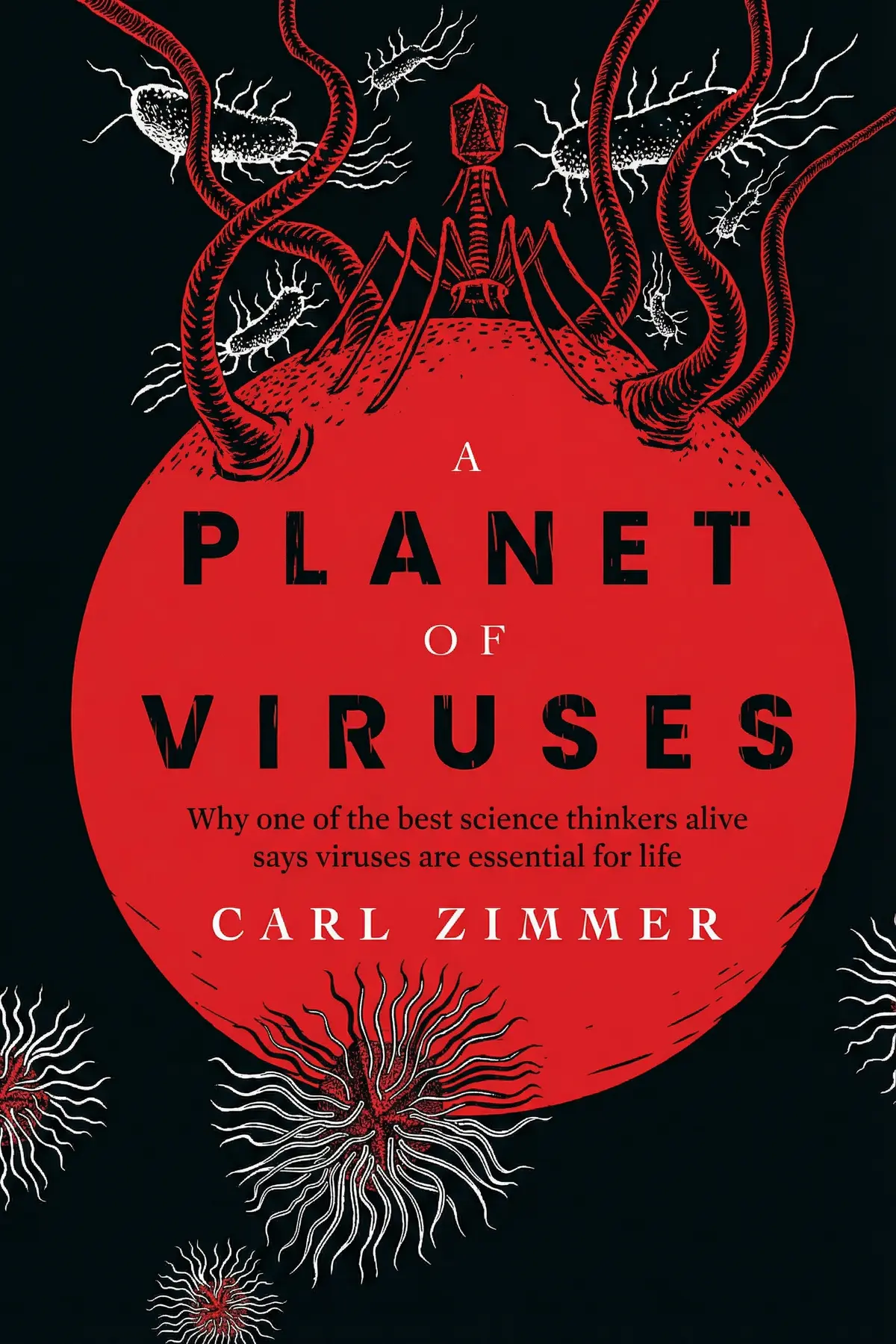
A Planet of Viruses
Carl Zimmer

A Short History of Nearly Everything
Bill Bryson

A Thousand Brains: A New Theory of Intelligence
Jeff Hawkins


AUDIO SUMMARY AVAILABLE
Listen to I Contain Multitudes in 15 minutes
Get the key ideas from I Contain Multitudes by Ed Yong, plus 5,000+ more nonfiction titles.
- 5,000+ titles
- Listen as much as you want
- 7-day free trial
- Cancel anytime









