

15 min 29 sec
Available in: English
How to Be an Epicurean: The Ancient Art of Living Well
Catherine Wilson shows that the philosophy of Epicurus is much more than a taste for luxury. It is a complete view of the world without gods, with a practical ethic of prudent, moral pleasure for living well now.
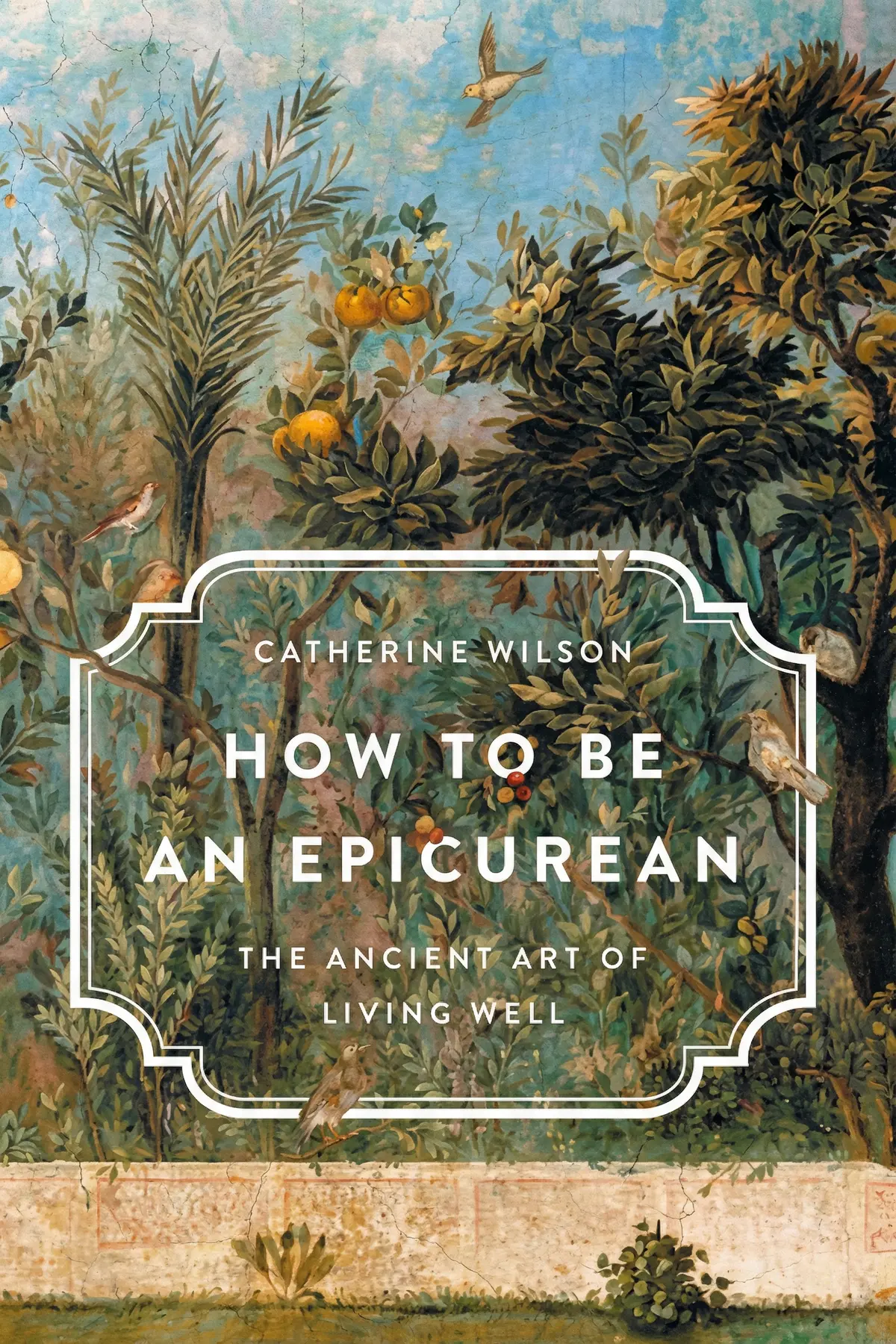
Table of Content
1. Introduction
1 min 03 sec
If your days feel like a race toward the next promotion and a bigger house, an ancient Greek thinker offers a simpler test: choose pleasure, avoid pain, and look ahead while you do it. In How to Be an Epicurean, philosopher Catherine Wilson shows that this rule from Epicurus means far more than wine cellars and rich dinners. Epicurus and his Roman follower Lucretius built a whole picture of the world around it. Their world is made of atoms and shaped by chance, with no gods in charge and no life after death.
Wilson argues that this picture is still a sound guide to living. Pleasure pursued with prudence and decency, inside an honest view of nature, is enough for a life that feels full and meaningful. Expect an ancient atom theory that anticipated Darwin and a way to judge an insurance policy. There is also a test for telling hard facts from human inventions, and a case that an empty trophy shelf does not mean a wasted life.
2. Read Epicureanism as a map of the whole world
1 min 51 sec
The word Epicurean now suggests a gourmet with a full wine cellar. The real philosophy reached from physics to ethics, shaped thinkers from Hobbes to Jefferson, and offered an early atomic theory that, though wrong in its details, holds up well for an ancient idea.
3. Explain life and mind without any gods
1 min 49 sec
A robot vacuum and a mouse both move around a room, but only one of them feels afraid. That difference helps explain why awareness exists at all, and what becomes of it when a life ends.
4. Weigh today's pleasure against tomorrow's pain
1 min 55 sec
Should you insure your home against a disaster that will almost certainly never happen? The Epicurean answer is surprising. The Marquis de Sade, who claimed to be an Epicurean, shows where the pursuit of pleasure goes badly wrong.
5. Make peace with the pains of love and death
2 min 00 sec
Their rivals called passion a sickness. The Epicureans welcomed it, jealousy and heartbreak included. They also took an unusually calm view of death, one that rejects fear without pretending that dying is good.
6. Tell what is fixed from what people made
2 min 01 sec
A coin, a queen and a human right have something in common, and it isn’t obvious. Knowing which parts of life nature fixed and which ones people invented changes what you think can be changed.
7. Act on the best evidence without full certainty
1 min 45 sec
In the 1980s, scientists told people to swap butter for margarine, and the advice turned out to be wrong. That failure tempts many people to ignore scientists. The Epicurean lesson from it points the other way.
8. A good life needs no trophies or conquests
1 min 56 sec
Stoicism is popular again, and it promises a meaningful life. The Epicurean reply asks what meaningful really means. It also asks what happens to people who chase achievement too far.
9. Conclusion
1 min 09 sec
What Wilson offers is a way to stop asking more of life than it can give. The Epicurean world has no gods steering it and no judge waiting at the end. The self is a lucky arrangement of atoms that will one day become something else. On Wilson’s reading, that makes this life count for more. If this is the only life we get, then pleasure matters and kindness matters. So do the laws and customs people built to protect both.
Before a choice, weigh what it gives you now against what it may cost you or others later. When something feels fixed and unfair, ask whether nature made it or people did, because what people made can be remade. When you cannot be certain, follow the best evidence and act. And when the race for promotion and a bigger house starts to feel like the point of living, think of Epicurus in his garden outside Athens. He had his friends around him, women were welcome as equals, and nobody kept score.
The atoms in you were here long before you and will go on long after. For now, they make up someone who can enjoy being alive.
About this book
What is this book about?
Many people spend their lives chasing the next promotion or a bigger house and still wonder what it is all for. The ancient Greek philosopher Epicurus had a plain answer: seek pleasure and avoid pain. Today his name suggests fine wine and rich dinners. Catherine Wilson argues that this reputation hides a far broader philosophy, a theory of everything that often sounds strikingly modern. Wilson draws on Epicurus and his Roman follower Lucretius to rebuild the whole system. It starts with atoms and chance and finds no gods behind nature. It explains the mind through atoms alone, and its story of how animals arose foreshadows Darwin. Its ethics weigh pleasure against long-term pain and the needs of others, with an honest acceptance of love's sorrows and of death. It separates what nature fixes from what people invent, and it takes an evidence-first approach to truth. Readers get a clear guide to everyday choices, from insurance policies to climate change. They also get a firm reply to Stoicism and a case that a life without trophies, spent working and loving the people close to you, can be meaningful.
Book Information
Who it's for
Professionals tired of striving
Professionals worn down by endless striving who want a calmer, evidence-based idea of a good life.
Weighing Stoicism against alternatives
Readers torn between Stoicism and other philosophies who want a non-religious alternative that welcomes emotion.
Curious about Epicurean science
Curious minds who want to see how an ancient school anticipated atoms, Darwin and modern thinking about the mind.
About the Author
Catherine Wilson
Catherine Wilson is a philosopher who has been a visiting professor of philosophy at the Graduate Center of the City University of New York. She holds a B.A. from Yale, a B.Phil. from the University of Oxford and a Ph.D. from Princeton University. Her earlier books include Leibniz's Metaphysics, Descartes's Meditations: An Introduction and A Very Short Introduction to Epicureanism, so this guide grows out of long study of the history of philosophy.
Ratings & Reviews
Ratings at a glance
What people think
Listeners find the book to be an enjoyable read. Opinions on the academic material are varied; some enjoy the methodology, but others point out that it deviates from standard instructional manuals. Perspectives on the philosophical depth and accessibility are also split, as one listener considers the arguments well-crafted, while another characterizes the work as dry philosophical analysis. The clarity of the prose gets inconsistent responses, with one listener finding the writing easy to understand and another highlighting muddled sentence structure.
Top reviews
Tom
Picking this up was a revelation for me. I’ve always felt a certain kinship with the idea that life should be about more than just duty and suffering, and within the first hundred pages, I realized I’ve been an Epicurean all along. Catherine Wilson does a fantastic job of stripping away the modern misconceptions that Epicureanism is just about wine and orgies. Instead, she presents it as a thoughtful, disciplined way to find peace in a chaotic world. To be fair, it’s not your average 'how-to' guide with bulleted lists and exercises, but the intellectual scaffolding she provides is much more valuable. It’s the kind of book that changes how you look at your morning coffee and your deepest friendships. Simply wonderful.
Show moreSirirat
What does it mean to live a life of pleasure without falling into the trap of mindless gluttony? Wilson answers this by building a comprehensive intellectual scaffolding for the modern reader. Truth is, I walked into this expecting a light self-help book, but I came away with a profound appreciation for the Epicurean view of the natural world. The sections on Lucretius and the atomic nature of the soul were particularly enlightening. It’s refreshing to see a philosophy that doesn’t demand we suppress our human needs, but instead teaches us to manage them with wisdom and friendship. While some might find the prose a bit dense in the middle chapters, the clarity of the overall argument is impressive. It’s a bold, thoughtful reclaim of a denigrated school of thought that feels incredibly relevant today.
Show moreVilaiporn
Ever wonder why Stoicism gets all the love while Epicureanism is left in the dust? Catherine Wilson tries to correct that imbalance here, providing a readable, often entertaining defense of the 'Garden' over the 'Porch.' I appreciated how she grounded the philosophy in materialism and ancient science, showing how the Epicureans were precursors to our modern understanding of the universe. However, the 'how-to' aspect of the title is a bit misleading. This isn't a step-by-step guide to happiness, but rather a scholarly yet accessible overview of a belief system. My main gripe is that she occasionally projects her own modern political views onto ancient texts, which can feel a bit forced. Still, for anyone tired of the grit-and-bear-it Stoic trend, this offers a much-needed alternative perspective on seeking tranquility through modest pleasures.
Show moreWacharapol
The chapter on science and materialism is easily the strongest part of the book, illustrating how these ancient thinkers paved the way for the Enlightenment. Wilson is clearly a scholar who knows her Lucretius, and her analysis of De Rerum Natura is both deep and intelligible. Frankly, I found this much more engaging than the typical dry philosophical analysis you get in academic journals. However, the book does lose some steam when it tries to tackle modern economics and health care. Those sections felt less like Epicureanism and more like a rationalization of the author's own political opinions. If you can look past the occasional bias, there is a wealth of wisdom here about living a meaningful, moderate life. It’s an excellent bridge between ancient thought and modern science.
Show moreKenji
Finally got around to reading this, and while it’s entertaining, I have to warn potential readers about the Stoicism section. Wilson clearly has a bone to pick with the Stoics, but her characterization of their school is frankly inaccurate. If you've read Massimo Pigliucci or actual Stoic texts, you’ll see where she misses the mark on their ethics. That aside, the overview of Epicureanism itself is quite good. I loved the focus on 'ataraxia' and the idea of minimizing pain rather than just chasing thrills. The author makes a compelling case for why this philosophy is a better fit for the modern scientific age than its rivals. It’s a bit scholarly for a general audience, but the effort is rewarded with a much deeper understanding of why pleasure—rightly understood—is a noble pursuit.
Show moreMalee
Wilson’s attempt to bridge ancient atomism with contemporary social justice issues is, frankly, a bit of a stretch. While I appreciate the effort to make Epicurus relevant to the 21st century, the book often feels like a rationalization of the author's own beliefs rather than a pure exploration of the philosophy. There are very few references to primary texts, which is a bit disappointing for a book with such a scholarly tone. I found the chapter on economic growth and social justice particularly poorly argued, as it seemed to stray far from the original Epicurean focus on personal tranquility. That said, the writing is generally clear and the book is entertaining to read if you don’t mind the occasional political detour. It’s a decent introduction, but I’d recommend reading Lucretius alongside it to get the full picture.
Show moreSumalee
To be fair, I expected a practical guide, but what I got was a dry philosophical analysis that felt more like a textbook at times. The title 'How to Be an Epicurean' is a bit of a bait-and-switch; don't go in expecting '10 steps to a happier life.' Instead, you get a deep dive into the ethics of pleasure and pain, which is interesting but occasionally muddled by complex sentence structures. I struggled with the author’s tendency to gloss over certain topics—like the actual day-to-day practices of the ancient Garden—while spending pages on abstract modern applications. It’s an intelligible work, but it lacks the 'pop' of other recent philosophy books. If you enjoy a slow, academic burn that makes you question your own materialistic habits, you'll find value here, even if it isn't the smoothest ride.
Show moreOmar
After hearing so much about the Stoic revival, it was refreshing to finally see a defense of the Garden. Wilson manages to make the ancient concepts feel relevant, though the book is far from a standard self-help manual. It’s more of a scholarly exploration than a 'how-to' guide, which might frustrate some readers looking for quick fixes. Personally, I found the comparisons between Epicureanism and later thinkers like Hobbes or Marx to be a bit of a stretch, as they ignore a lot of historical context. It’s an odd sort of book that jumps from ancient physics to modern abortion debates in the same breath. While I enjoyed the intellectual challenge, I think a tighter focus on the primary texts would have made for a stronger argument. It’s a solid three-star read that offers good food for thought but lacks a bit of focus.
Show moreMay
Look, the writing is intelligible enough in some parts, but the author spends far too much time on her own political leanings instead of the actual philosophy. I found the sentence structure to be quite muddled in the later chapters on social justice, which made it a slog to finish. I was hoping for more practical tips on how to actually live as an Epicurean today—you know, the 'how-to' part promised by the title. Instead, it’s a lot of dry analysis that feels disconnected from the core teachings of Epicurus himself. It’s not a total waste of time, but you’ll probably learn more about Catherine Wilson’s worldview than you will about ancient Greek ethics. If you're looking for a rigorous, unbiased introduction to the Garden, you might want to look elsewhere.
Show moreSatit
Remarkably fuzzy thinking permeates these pages, leaving me more frustrated than enlightened. Wilson argues that Epicureanism supports various modern progressive stances, but her logic is circular. She suggests morality isn't absolute, yet she treats her own specific political leanings as if they are the natural evolution of enlightened thought. If there are no eternal truths, then society isn't 'advancing,' it’s just changing its mind. The author fails to address the glaring issue of enforcement: if there’s no higher moral law and only social pressure keeps us in check, then cheating is fine as long as you don't get caught. No real solution is offered for this moral vacuum. It felt less like a discovery of Epicurus and more like a convenient scaffold for the author’s personal biases. A disappointing, muddled read that lacks rigor.
Show moreQuestions about this book
What is the main idea of How to Be an Epicurean?
Catherine Wilson argues that Epicureanism is a complete worldview, not a taste for luxury. Everything is made of atoms, nature works without gods, and death is the end. Within that picture, the right way to live is to seek pleasure and avoid pain, while weighing long-term consequences and following moral conventions. She presents this as a practical way to live well today.
Does Epicureanism mean living for pleasure at any cost?
No. Epicurus and Lucretius warned that too much pleasure now can bring pain later, as a hangover shows. They asked for prudence, weighing short-term and long-term effects. They also insisted on morality and human-made laws. Wilson points out that the Marquis de Sade, who claimed to be an Epicurean while torturing people, ignored this core teaching about acting within moral conventions.
What is the difference between Epicureanism and Stoicism?
Wilson explains that the Stoics compared emotions and passion to diseases, while Epicureans see feeling, and the wish to feel pleasure, as natural. A Stoic might call a pleasant life selfish. The Epicurean replies that meaning comes from planning, working and loving the people close to you, and that pushing achievement to excess can pull us away from our human nature.
What do Epicureans believe happens after death?
Nothing. Consciousness comes from the body, so it ends when the body dies, and our atoms simply become something else. Epicurus still described death as the very worst fate that can befall us, yet he said it was nothing to fear, since every life has a natural limit. With no afterlife and no cosmic system of reward or punishment, Wilson says the reason to live well is here and now.
How can I apply Epicurean ideas in daily life?
Wilson’s book suggests several habits. Before a decision, weigh pleasure and pain over the long run, the way a dentist visit prevents a worse cavity. Count peace of mind as a real benefit. Ask whether a problem comes from nature or from human convention, since conventions can change. Act on the best evidence available even without certainty, and measure a good life by friendship and love, not trophies.
Readers also enjoyed

A Guide to the Good Life: The Ancient Art of Stoic Joy
William B. Irvine

A Little History of Philosophy
Nigel Warburton

A Theory of Justice
John Rawls


Anarchism: A Very Short Introduction
Colin Ward

Anarchy, State, and Utopia
Robert Nozick
AUDIO SUMMARY AVAILABLE
Listen to How to Be an Epicurean in 15 minutes
Get the key ideas from How to Be an Epicurean by Catherine Wilson, plus 5,000+ more nonfiction titles.
- 5,000+ titles
- Listen as much as you want
- 7-day free trial
- Cancel anytime









